
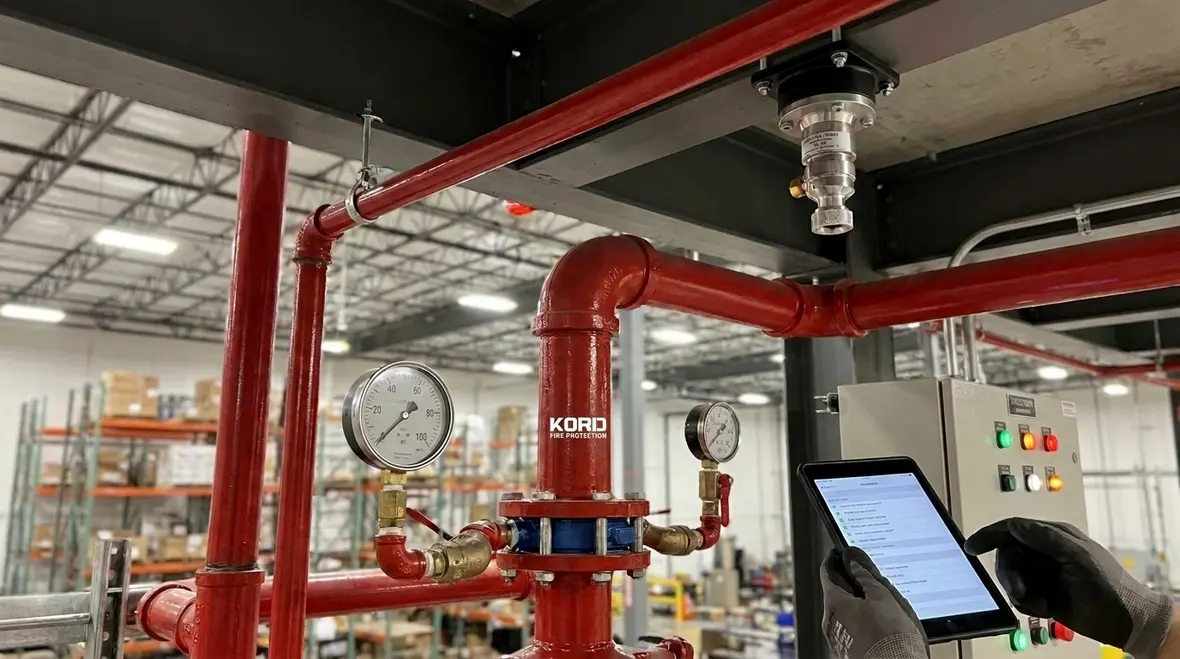
NFPA 15 Section 12.2: The 100-Millisecond Response Time Requirement for Ultra-High-Speed Water Spray
Quick Answer: NFPA 15 Section 12.2 requires ultra high speed water spray systems to deliver water within 100 milliseconds after activation. This depends on maintaining water filled piping, fast operating actuation, and strict inspection and maintenance to prevent delays caused by air, valve lag, or system configuration drift.
Facilities dealing with fast-response water based protection may also benefit from reviewing fine water mist fire suppression and ultra fog systems, especially where speed, nozzle behavior, and controlled discharge patterns all need to work together.
Why NFPA 15 12.2 response time matters in real facilities
NFPA 15 12.2 response time 100 milliseconds water-filled piping requirements exist because ultra high speed water spray performance depends on rapid water arrival at the hazard. In commercial and industrial occupancies, early water application can be the difference between localized control and rapid fire growth. In retail and light commercial spaces, the compliance challenge often centers on keeping the water delivery path consistent over time while meeting operational constraints such as tenant buildouts, seasonal shutdowns, and recurring maintenance work.
From a compliance standpoint, NFPA 15 12.2 is not just a design note. It creates an expectation that the system behaves the same way when new as it does after years of service. That includes ensuring the piping remains water filled, actuating components function within their rated response times, and inspection practices detect conditions that would add even small delays to water delivery.
What NFPA 15 12.2 actually requires
Section 12.2 targets a specific performance outcome: water delivery must occur within 100 milliseconds of system actuation. For ultra high speed water spray arrangements, that performance relies on a fast, predictable hydraulic response. The phrase “water-filled piping” is central because any air in the piping can introduce compressibility and delay the arrival of water at the nozzles.
Facilities commonly implement these systems with a dedicated actuation strategy and piping configuration designed to avoid air entrapment and to maintain immediate water flow. In practice, meeting NFPA 15 12.2 response time 100 milliseconds water-filled piping involves discipline across design, commissioning, acceptance testing, and ongoing maintenance verification.
The 100 millisecond chain of performance
The 100 millisecond target is the outcome of multiple time components, including:
- Time for detection and electrical or mechanical initiation
- Valve and control device actuation time
- Hydraulic transit time within the water-filled piping
- Nozzle and discharge response characteristics
- Any delay caused by air, obstructions, or degraded components
Even when hydraulic calculations look correct, field conditions can break the chain. Loose connections, partially closed valves, sediment accumulation, or a system that has been inadvertently drained and refilled in a way that leaves air behind are common causes of delayed discharge.
How water-filled piping enables fast discharge
NFPA 15 12.2 response time 100 milliseconds water-filled piping exists because water-filled piping reduces the delay associated with compressing air and reestablishing flow. When the piping remains fully water filled, the system does not need to overcome the “air evacuation and pressure stabilization” sequence that slow systems typically experience.
Typical equipment and design elements that influence response
Ultra high speed water spray systems often rely on components with tight performance tolerances. Key elements include:
- Fast acting control valves: Any valve with sluggish actuation, contamination, or internal wear can add delay.
- Arrangements that avoid air pockets: Pipe slopes, fitting selection, and configuration matter, especially after maintenance.
- Reliable power and control circuits: Electrical faults or intermittent power can delay initiation even if hydraulics remain correct.
- Correct water supply conditions: Pressure stability and water quality influence valve operation and discharge consistency.
Common failure points that create delay
Compliance issues frequently show up after operational changes rather than during initial acceptance. Common failure points include:
- Air introduction during servicing, line interruption, or improper refill procedures.
- Valve travel reduction from scale, corrosion, or debris that restricts full opening.
- Partial closure or mispositioned valves after maintenance or upgrades.
- Unauthorized modifications to piping runs that change flow path characteristics.
- Hydraulic imbalance caused by installation errors such as incorrect fittings or nozzle substitutions.
Commercial facilities often face workflow pressures that increase risk: frequent contractors, multi scope maintenance windows, and tenant improvements. The result can be subtle changes that affect response time without obvious signs until testing or an incident occurs.
Operational compliance: testing, inspection, and verification
NFPA 15 compliance does not end with design calculations. Facilities must maintain system integrity and be able to demonstrate that the system will perform under real conditions. That includes inspections that confirm water-filled operation and verification that actuation and discharge remain within the required response performance intent.
Commissioning and acceptance testing expectations
During commissioning, qualified parties verify that the water distribution system components operate as required and that the system configuration supports the ultra high speed concept. Acceptance activities typically include confirming the actuation sequence, checking valve and control device function, and verifying that the piping remains water filled without persistent air pockets.
For owners and managers, the practical challenge is ensuring the commissioning plan matches the as built configuration, especially after late design changes. Any field changes to pipe routing, valve selection, or installation method should be evaluated for impact on response performance before the system is considered compliant for operation.
Ongoing inspection and maintenance requirements
To support NFPA 15 12.2 response time 100 milliseconds water-filled piping performance over time, maintenance programs should focus on the highest risk contributors to delay. A strong program commonly includes:
- Periodic operational checks that confirm control logic, power availability, and actuation reliability.
- Valve inspections for debris, corrosion, proper seating, and full travel.
- Air control assurance through procedural control during any draining, hydrostatic testing, or repair work.
- Verification of water quality where scaling or sediment may accumulate and impair valve response.
- Documentation control to ensure changes are recorded and cross referenced to the approved plan.
Kord Fire Protection supports commercial facilities with compliance oriented service that emphasizes repeatable procedures and documentation. This matters because ultra high speed systems are sensitive to conditions created during “routine” work. A documented, trained approach reduces the risk of introducing air or misaligning valves during service activities.
Commercial facility compliance challenges and how teams manage them
NFPA 15 12.2 requirements often collide with day to day operational realities. In retail, storage areas may be modified for seasonal displays. In industrial facilities, production downtime can trigger system isolation. In both, the water-filled piping concept must remain stable.
Change control for tenant improvements and contractor work
Projects frequently introduce small piping changes: adding a chase, rerouting a cable tray near a valve bank, or replacing a component during remodeling. Those activities may not be intended to affect the fire protection system, but they can. The most effective management strategy includes:
- Maintaining an active “red tag” process for any work near ultra high speed water spray components
- Requiring updated schematics after any physical modifications
- Scheduling maintenance windows that allow full functional verification after changes
Maintenance windows and refilling procedures
One of the most preventable causes of delayed response time is improper handling during repairs or shutdowns. A reliable program treats refilling and air removal as a controlled process, not a quick operational reset. If air is introduced and not fully cleared, discharge performance can degrade in ways that are not always immediately obvious.
For a deeper understanding of water spray fixed system considerations, see: NFPA 15 enhancing fire safety with water spray fixed systems.
How to plan for compliance with the right partner
Meeting NFPA 15 12.2 response time 100 milliseconds water-filled piping requirements depends on more than selecting the correct hardware. It depends on operational discipline, accurate documentation, and service that protects performance through time.
Kord Fire Protection acts as a vital commercial service partner by supporting inspection planning, maintenance execution, and recordkeeping aligned to the intent of ultra high speed water spray design. This approach helps owners reduce the probability that field conditions such as air introduction or valve degradation will undermine the system’s response performance.
For additional industry resources related to fire pump and water delivery systems, refer to firepumps.org, which provides practical guidance that can complement NFPA 15 system performance planning.
Frequently Asked Questions
Conclusion and Call to Action
NFPA 15 Section 12.2 focuses on outcomes, not assumptions. Owners and managers should treat water-filled piping response performance as a maintained condition, not a one time installation result. Engage a qualified service partner to evaluate system configuration, confirm actuation and valve readiness, and verify that maintenance activities protect the ultra high speed performance intent. If you want help building a compliance aligned inspection and maintenance plan, contact Kord Fire Protection today.

Join Our Newsletter!
Get the latest fire safety tips delivered straight to your inbox From our Newsletter.



