
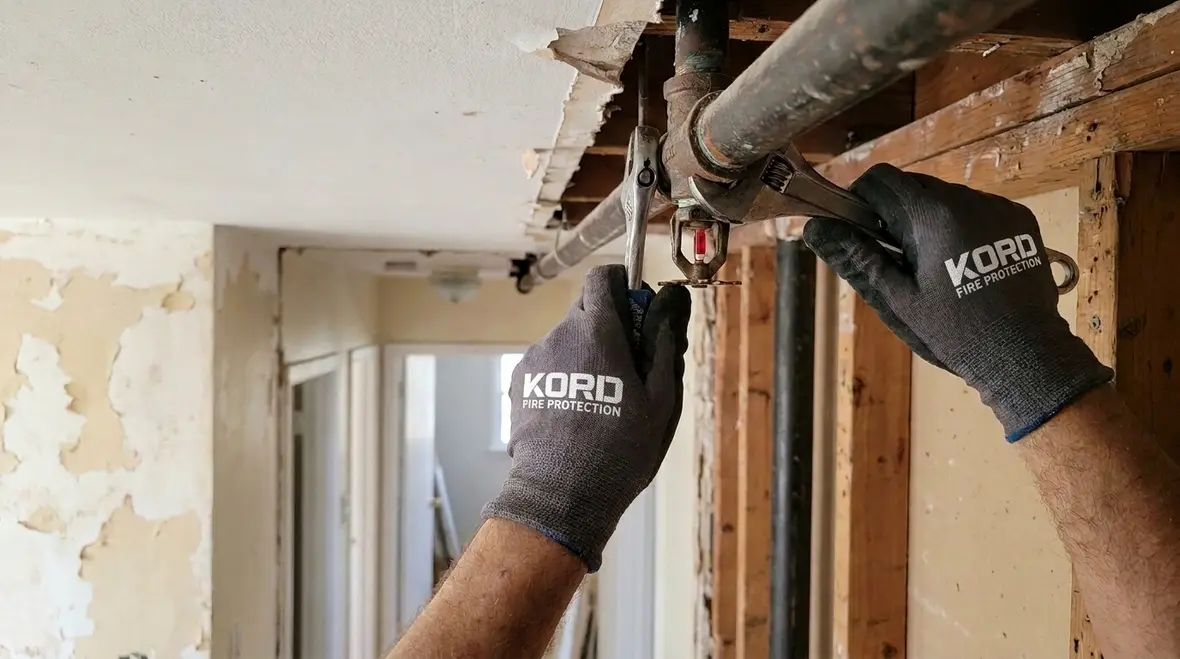
NFPA 13R Section 1.3 Retroactivity: When Existing Homes Must Meet Current Sprinkler Code Requirements
Quick Answer
NFPA 13R Section 1.3 addresses when sprinkler provisions in older residential buildings must be updated to match newer code. In practice, “retroactive” trigger points usually occur during alterations, renovations, or system modifications, not during routine service. Local adoption and authority guidance also control enforcement.
Before diving into the trigger points, teams planning renovation work often benefit from reviewing Kord Fire Protection’s fire sprinkler retrofit benefits for older buildings guide for practical context on aligning older systems with present building use.
Why NFPA 13R 1.3 Retroactivity Matters for Existing Residential Systems
Owners, facility managers, and contractors often treat NFPA 13R sprinkler systems as “installed and complete.” NFPA 13R 1.3 retroactive requirements existing residential systems create an important compliance reality: the obligation to meet current sprinkler code can arise when work changes the building, the risk profile, or the system itself. The exact trigger is not always obvious from a visual inspection, so a technical review during planning phases becomes essential.
For commercial, industrial, and retail facilities that include residential occupancies or mixed-use buildings, confusion around retroactivity can delay permits, extend outages, and complicate testing schedules. Kord Fire Protection typically coordinates code review, water supply verification, sprinkler alterations, and inspector-ready documentation to keep projects moving.
What NFPA 13R Section 1.3 Actually Covers (and What It Usually Does Not)
NFPA 13R Section 1.3 is designed to define the scope of how and when newer sprinkler requirements apply to existing buildings. The key concept is that the code does not automatically require a full system replacement simply because the calendar moved forward. Instead, retroactive application typically relates to specific conditions such as:
- Alterations that affect the sprinkler system layout, performance, or coverage areas.
- Renovations that change occupancy classification, use, or combustible load assumptions.
- Modifications that require extensions, reconfiguration, or component replacement.
- Work that results in a code compliance review by the authority having jurisdiction (AHJ).
In other words, the existing system typically remains acceptable as originally installed until a project triggers the need to bring specific portions up to current rules. NFPA 13R retroactivity existing residential systems is best handled as a scoped compliance assessment, not a blanket replacement decision.
Common Retroactivity Triggers During Renovations and Repairs
1) When the building footprint changes
Any change that affects room boundaries, corridors, or concealed spaces can require sprinkler re evaluation. Even if the work seems minor, inspectors may treat the resulting coverage gap as a performance issue. Common examples include partition additions, converting storage rooms into residential bedrooms, or reusing unfinished spaces.
2) When the sprinkler system itself changes
If plumbing, piping, fittings, or valves must be relocated or replaced, the AHJ may expect the modified sections to comply with the current edition’s requirements. This can include updated placement, density, or design criteria depending on the scope.
3) When fire protection components reach end of life
Older sprinkler systems may still function properly, but component condition matters. During replacement of corroded piping, defective devices, or noncompliant appurtenances, installers often uncover related deficiencies. Typical failure points include hidden corrosion at branch lines, improperly sized or obstructed strainers, aging check valves, and inadequate supervision arrangements.
4) When inspections reveal prior nonconformities
Maintaining compliance is not only about retroactivity. A plan review can uncover earlier work that did not match the adopted requirements at the time. AHJs commonly address these issues through corrective actions tied to the current permit scope, which can expand the retroactive impact beyond the originally planned work.
Operational Impacts: Water Supply, Valves, and Documentation
Retroactivity decisions often become practical engineering constraints. For example, if the project requires additional sprinkler coverage or updated layouts, the water supply evaluation must confirm pressure, flow, and duration for the design demand. Systems can pass acceptance at installation, but still fail later when changes increase demand or when supply components degrade.
Water supply verification that inspectors expect
- Hydraulic calculations tied to the current scope and any modified areas.
- Verification of static pressure, residual pressure, and available fire flow.
- Assessment of booster pumps, if present, including reliable operation and control logic.
Valves, supervision, and impairment control
During alterations, valve positions and supervision circuits often require retesting and documented restoration. A frequent compliance failure occurs when valves return to normal operation, but supervision switches are not correctly verified or are left in a nonreporting condition.
For broader system installation fundamentals and the operational workflow for automatic sprinkler projects, facilities teams often reference Kord Fire Protection guidance: NFPA 13 overview for automatic fire sprinkler system installation. While that page focuses on NFPA 13, the planning logic and commissioning expectations align with how sprinkler modifications are validated during real projects.
How Commercial Facilities Should Manage Retroactivity Risk
Even when the building is residential or residential-like, the management model benefits from commercial discipline: document first, plan second, execute with inspection readiness third. This approach reduces surprises during AHJ reviews and prevents avoidable system downtime.
Adopt a project trigger checklist
Before design finalization, facilities teams should require a sprinkler impact assessment that addresses:
- Which rooms or concealed areas change use or occupancy assumptions.
- Whether any sprinkler heads, branch lines, or mains require relocation or replacement.
- Whether riser components, monitoring arrangements, or water supply elements are modified.
- Whether system testing and acceptance procedures must be repeated or extended.
Plan for inspection-ready testing and maintenance documentation
Compliant retrofits depend on records. Inspectors expect accurate as-built diagrams, valve schedules, inspection and test histories, and current impairment logs if devices are taken out of service. A well-run maintenance program reduces the time spent proving system readiness during the retroactivity decision.
Kord Fire Protection supports commercial and multi use facilities with ongoing testing, corrective maintenance, and documentation control. This helps teams meet both life safety expectations and operational continuity requirements, especially when renovations must align with tenant schedules and business continuity requirements.
Frequently Asked Questions
Next Step: Get a Scope Based Compliance Review Before You Submit
To reduce permit delays and avoid costly redesigns, request a scope based NFPA 13R compliance review for existing residential systems before demolition, rough in, or riser work begins. Kord Fire Protection can help evaluate retroactivity triggers, confirm water supply readiness, plan testing, and prepare inspector ready documentation so your project stays on schedule. Contact Kord Fire Protection to align retroactive requirements with your renovation timeline and operational constraints.

Join Our Newsletter!
Get the latest fire safety tips delivered straight to your inbox From our Newsletter.



