How to Tell If a Fire Extinguisher Is Expired Safely
How to Tell If a Fire Extinguisher Is Expired
The quiet red canister on the wall does not ask for much. It just waits. Yet when the moment comes, it must perform like a hero stepping into a spotlight. To tell if a fire extinguisher is expired is to make sure that hero still remembers its lines. Within the first few minutes of a safety talk, Kord Fire Protection technicians often explain that expired equipment does not announce itself with fireworks or sirens. Instead, it fails quietly, which is far worse. Therefore, this guide takes a calm, steady walk through the signs, the science, and the smart habits that help people understand when a fire extinguisher has reached the end of its working life.
Along the way, there will be clarity, a few light jokes, and just enough pop culture to keep things human. Think less boring lecture and more wise narrator voice, the kind that could explain penguins or prison escapes with equal grace.

Understanding Fire Extinguisher Lifespans Without the Headache
First, it helps to know that fire extinguishers are not immortal. Even the best made models have a shelf life, much like milk, just with fewer tragic breakfasts involved. Most portable fire extinguishers last between five and fifteen years. However, the exact span depends on the type, the manufacturer, and how well the unit has been treated over time.
Kord fire protection technicians often explain that extinguishers live a hard life. They sit in heat, cold, dust, and sometimes neglect. Therefore, time alone does not decide their fate. Instead, wear, pressure loss, and chemical breakdown play leading roles. Because of that, learning to tell if a fire extinguisher is expired means looking beyond the calendar and into the condition of the unit itself.
Moreover, different extinguishers age in different ways. Water based units may corrode inside. Dry chemical units can pack down and clog. Carbon dioxide models may lose pressure slowly. Each has a story to tell, if someone knows how to listen.
Want the deeper dive?
If you want to zoom out from this specific question and look at the bigger picture of extinguisher life cycles, the Kord team has a helpful companion article, “My Fire Extinguisher Is Expired?” that walks through lifespans and risk in more detail.
How to Tell If a Fire Extinguisher Is Expired by the Label
This is the one section where a question earns its keep. How does someone tell if a fire extinguisher is expired just by looking at it. The answer begins with the label, which is essentially the extinguisher’s birth certificate and diary rolled into one.
Most modern extinguishers show a manufacture date or a service date stamped on the body or printed on the label. Kord fire protection technicians remind clients that this date is not decoration. It sets the timeline for inspections, maintenance, and eventual replacement.
Additionally, some extinguishers include an explicit expiration date. When that date passes, the manufacturer no longer guarantees performance. While the unit may still look fine, trusting it becomes a gamble. It is like assuming an old phone battery will hold a charge because it did last week. Sometimes it does. Sometimes it dies at the worst moment.
Furthermore, missing or unreadable labels create another red flag. Without clear information, there is no reliable way to confirm the unit’s age or service history. In those cases, technicians often advise replacement rather than guesswork.
Physical Warning Signs That Speak Louder Than Words
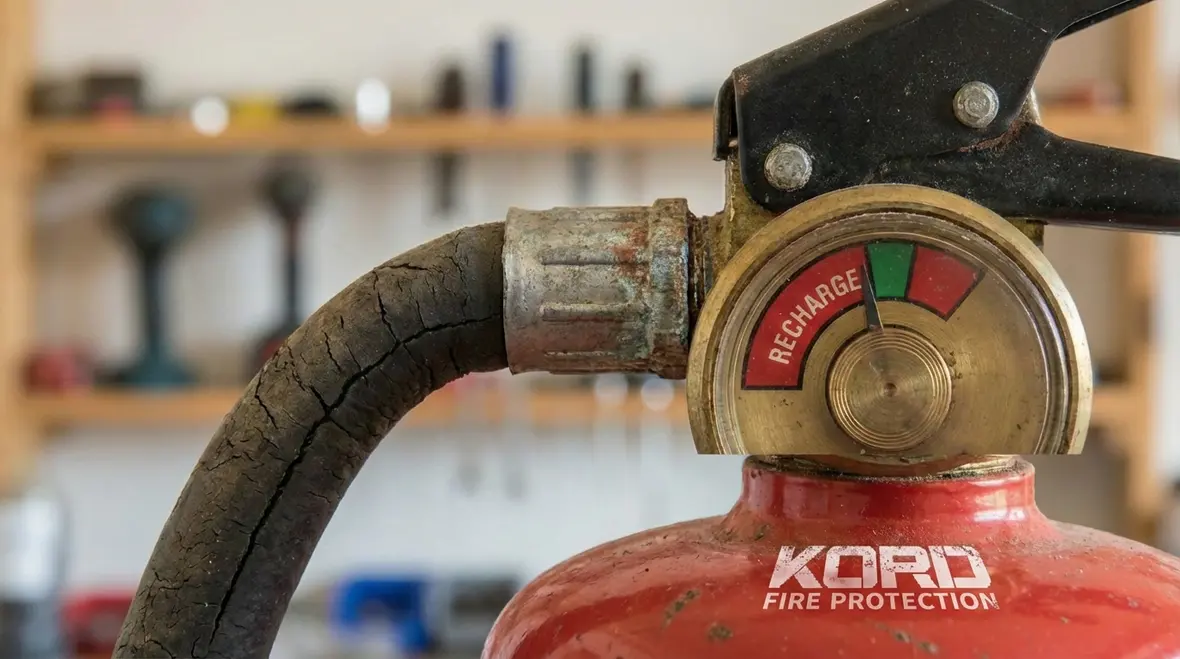
Even without reading a single word, a fire extinguisher can communicate its condition. The body, the hose, and the gauge all offer clues. Kord fire protection technicians like to say that extinguishers talk to those who look closely.
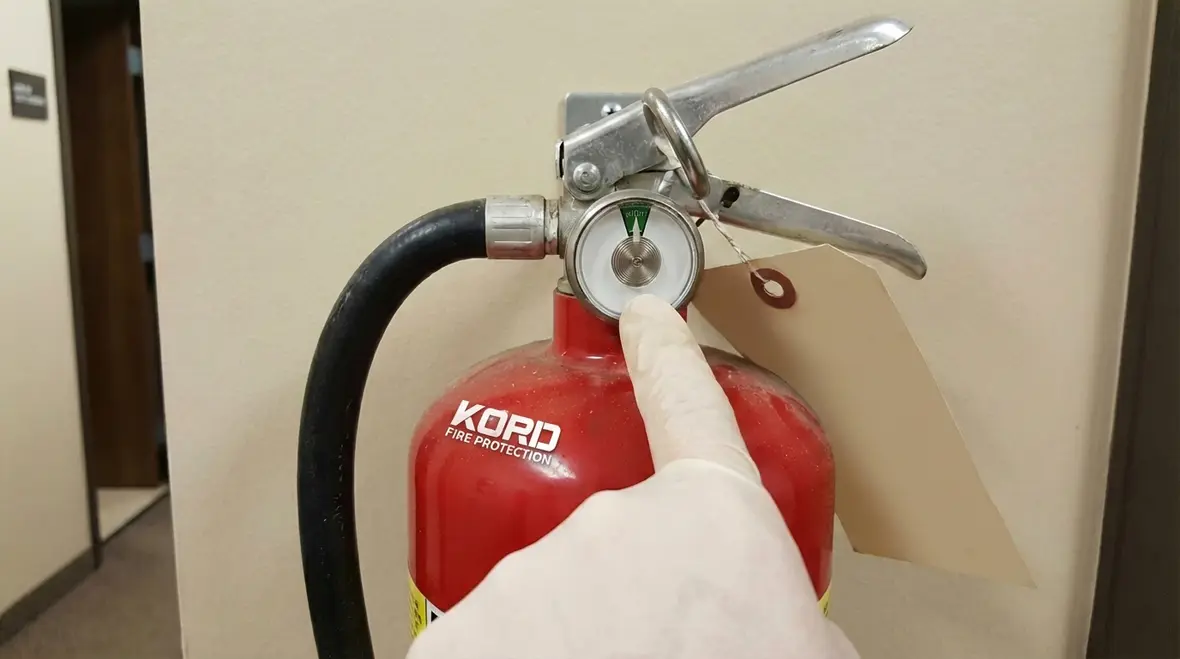
Start with the pressure gauge. If the needle sits outside the green zone, the unit cannot perform as designed. Low pressure means weak discharge. High pressure risks failure. Either way, it signals trouble.
Next, examine the hose and nozzle. Cracks, clogs, or brittleness suggest age and exposure. A hose that snaps instead of bends is not ready for action. Also, check the pin and seal. A missing or broken seal may mean the extinguisher was used or tampered with.
Finally, inspect the body. Rust, dents, or corrosion weaken the shell. Over time, these flaws can lead to leaks or even rupture. While that might sound dramatic, it is a real concern, not a movie explosion, but still not something to ignore.

Why Internal Chemistry Decides the Real Expiration
Here is where things get interesting, in a quietly scientific way. Inside every extinguisher lives a chemical agent designed to interrupt fire. Over time, that agent changes. Dry chemical powders can compact, forming hard masses that block discharge. Water based units can grow corrosive. Even clean agents lose effectiveness.
Kord fire protection technicians explain this with patience. They note that shaking an old extinguisher does not magically restore it, despite what a well meaning uncle might claim. Chemistry does not care about optimism.
Because of this, expiration is not just about age. It is about whether the agent can still flow, spread, and suppress flames as intended. Once that reliability fades, the extinguisher becomes a wall ornament, not a safety tool.
A Quick Comparison of Signs and Actions
Sometimes, clarity comes from contrast. The table below offers a simple two column view, something Kord fire protection technicians often use during on site training.
| Observed Sign | Recommended Action |
| Pressure gauge outside green zone | Remove from service and inspect or replace |
| Visible rust or corrosion | Replace unit to avoid failure |
| Missing or unreadable label | Consult technician or replace |
| Hose cracked or blocked | Do not use, replace immediately |
| Past manufacturer service life | Dispose and install new extinguisher |
Maintenance, Inspections, and the Role of Professionals
Knowing when to tell if a fire extinguisher is expired also means understanding maintenance. Regular inspections catch problems early. Monthly visual checks and annual professional inspections form the backbone of extinguisher care.
Kord fire protection technicians stress that professional service goes deeper than a glance. They weigh the unit, check internal pressure, and inspect components not visible from the outside. This process keeps compliant extinguishers in service and removes unsafe ones before they become liabilities.
Moreover, proper documentation matters. Inspection tags and service records tell a story of care. Without them, confidence drops. With them, safety rises.
For a more detailed look at service intervals, internal maintenance, and hydrostatic testing, Kord’s guide on how often a fire extinguisher needs to be serviced breaks down the timelines in plain language.
Common Myths That Refuse to Retire
Every industry has its myths, and fire safety is no exception. One popular belief claims that extinguishers last forever if never used. Another insists that shaking an old unit once a year keeps it fresh. If only fitness worked that way.
Kord fire protection technicians gently but firmly dismiss these ideas. Time, environment, and chemistry always win. An unused extinguisher still ages. A shaken unit still degrades. Accepting this truth is not pessimistic. It is practical.
Another myth suggests that expired extinguishers can still handle small fires. While that may sound reasonable, it ignores unpredictability. In emergencies, partial reliability equals risk. Fire does not offer second chances or refunds.
Local Codes, Liability, and Peace of Mind
Beyond safety, there is responsibility. Local fire codes often require functional, up to date extinguishers. Using expired equipment can lead to fines, failed inspections, or worse, legal trouble after an incident.
Kord fire protection technicians often frame this point with calm honesty. Compliance is not about fear. It is about peace of mind. Knowing that equipment meets standards allows people to focus on life, work, and the occasional coffee break without worry.
In addition, insurance providers may deny claims if expired safety equipment played a role in damages. Suddenly, that old extinguisher becomes an expensive decoration.
FAQ
Conclusion and Call to Action
Fire safety rewards attention and punishes neglect. Taking time to tell if a fire extinguisher is expired protects people, property, and peace of mind. Kord fire protection technicians stand ready to explain, inspect, and guide with calm authority. Now is the moment to look at those red canisters with fresh eyes.
If you are staring at a tag you do not trust, a label you cannot read, or a gauge that is giving you the side eye, treat that as your cue. Your future self will never complain that you replaced an extinguisher too early, only that you waited too long.
Schedule an inspection, replace what needs replacing, and let preparedness stand quietly in the corner, ready for its cue. Kord Fire provides full fire extinguisher services across Southern California, from walk in inspections to ongoing maintenance programs that keep you ahead of expiration dates instead of chasing them.
To move from “I hope this works” to “I know this is ready,” contact Kord Fire through the main Fire Extinguisher service team today and turn those quiet red canisters back into reliable heroes.
Know Your Weapon Before You Fight the Flame
Kord Fire Protection is your go-to when it comes to all things fire protection. For over 20 years, we’ve been serving Southern California with the quality service and equipment to keep your home or business safe at all times. Our competitive prices reflect our unwavering commitment to protecting what matters most in the event of a fire emergency. Give us a call, send an email, or use that form!

Join Our Newsletter!
Get the latest fire safety tips delivered straight to your inbox From our Newsletter.