Fire Sprinkler Temperature Ratings and Activation
How Sprinkler Head Temperature Ratings Affect Activation
Every building has a quiet guardian resting on the ceiling. It does not wear a cape. It does not shout warnings. It waits. And when heat rises beyond a specific point, it acts. Understanding how that moment happens begins with a solid fire sprinkler temperature rating guide. Within the first few pages of such a guide, readers learn a simple truth. Sprinkler heads do not respond to smoke. They respond to heat. More precisely, they respond to a carefully engineered temperature threshold. Kord Fire Protection technicians often explain that choosing the correct rating is less about guesswork and more about science, environment, and timing. The rest of this article explores that science in depth, with clarity, calm authority, and perhaps a well placed chuckle along the way.
The Science Behind Sprinkler Activation
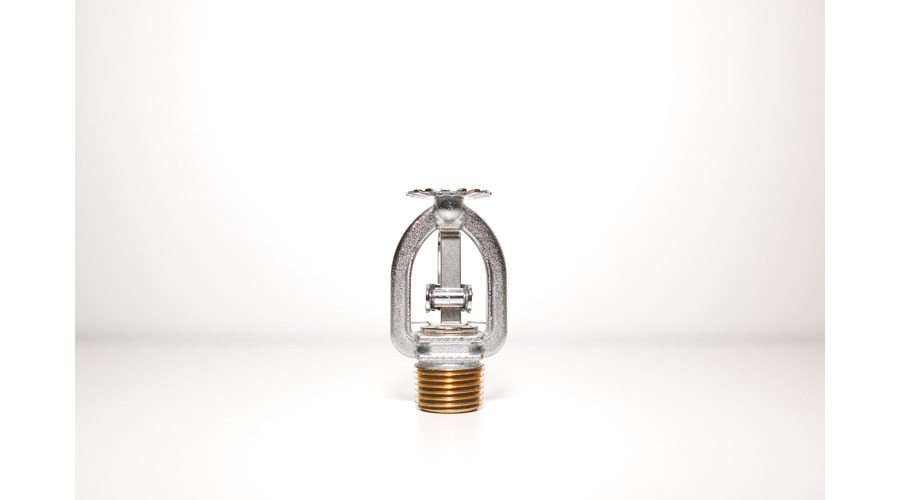
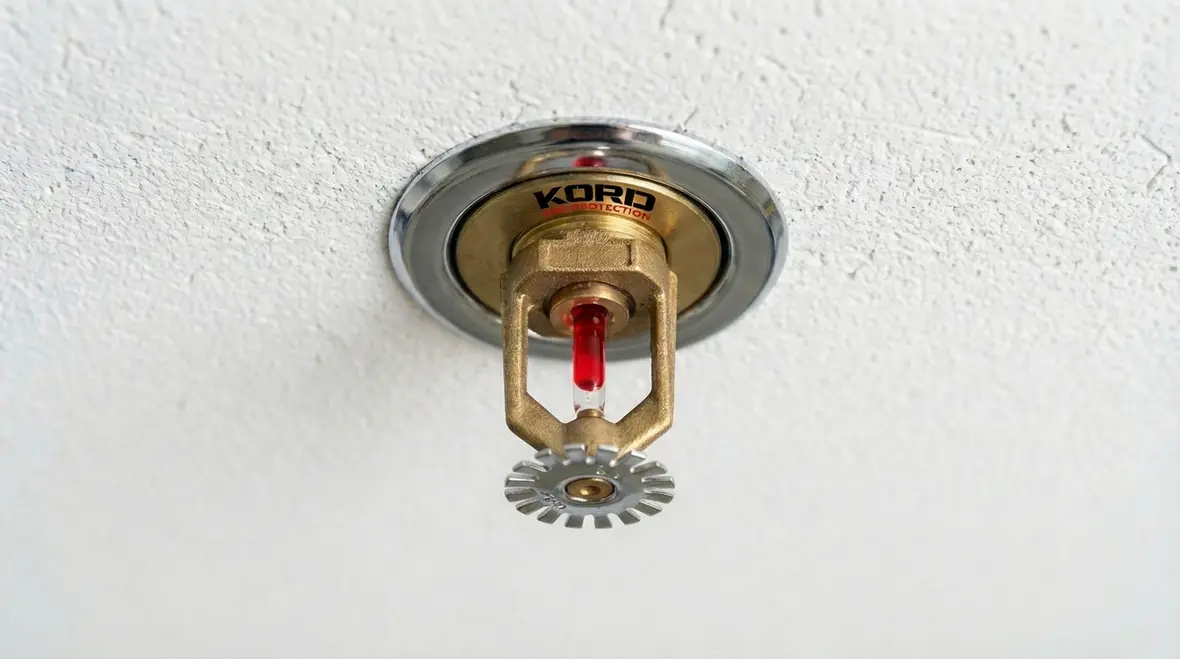
Sprinkler heads activate when the surrounding air reaches a specific temperature. Inside each head sits either a glass bulb filled with liquid or a fusible metal link. As heat builds, the liquid expands or the metal softens. Eventually, pressure breaks the bulb or melts the link. Water flows immediately.
However, that process is not random. Engineers design each sprinkler with a distinct activation point. For example, an ordinary temperature head might activate at 155 degrees Fahrenheit. A high temperature model could wait until 286 degrees or more. That difference matters.
Because heat rises, ceilings often reach higher temperatures faster than the floor. Therefore, the rating must match expected ambient conditions. If it activates too soon, the system may discharge unnecessarily. If it activates too late, the fire gains strength. In other words, timing is everything. Even action movie heroes understand that.
Kord Fire Protection technicians often describe it this way. A sprinkler head is like popcorn. Apply enough heat and eventually it pops. Yet just as microwave settings matter for popcorn, temperature ratings matter for sprinklers. Too little heat and nothing happens. Too much delay and things burn.
Understanding Temperature Classifications in a Fire Sprinkler Temperature Rating Guide
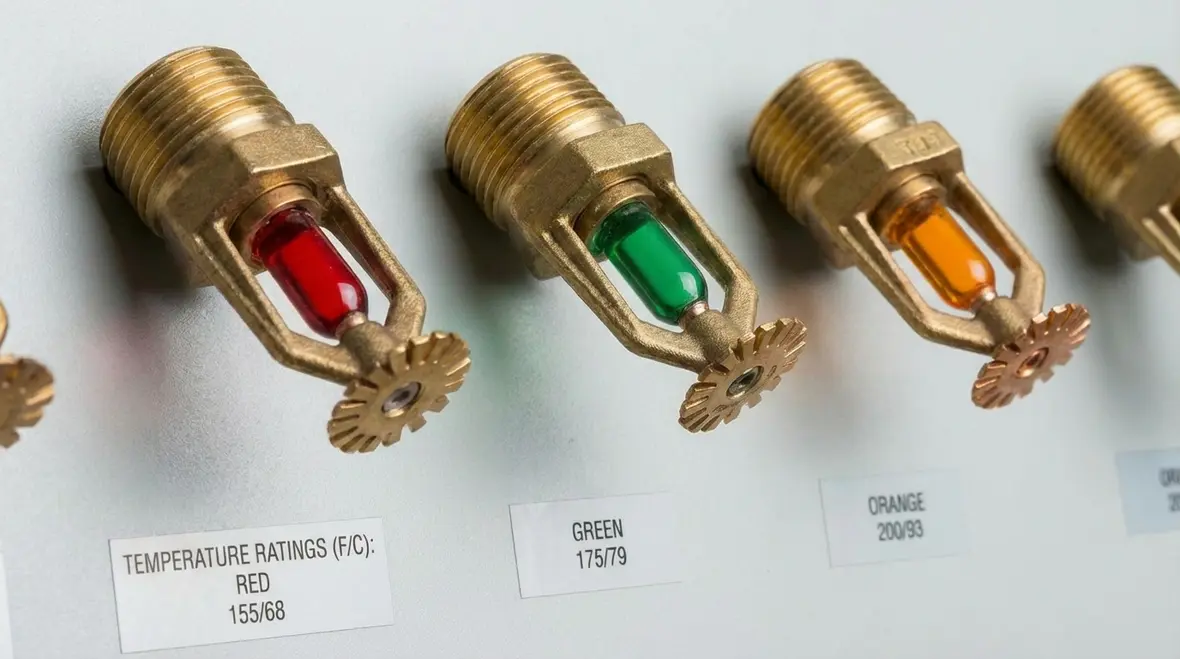
A proper fire sprinkler temperature rating guide outlines several standard classifications. These categories help designers match sprinklers to specific environments.
Common Temperature Classifications
Ordinary Temperature
135 to 170 degrees Fahrenheit
Typical for offices, schools, and residential buildings.
Intermediate Temperature
175 to 225 degrees Fahrenheit
Used where ceilings may get warmer, such as commercial kitchens.
High Temperature
250 to 300 degrees Fahrenheit
Often installed near industrial equipment or mechanical rooms.
Extra High and Very Extra High
325 degrees Fahrenheit and above
Designed for environments with extreme heat exposure.
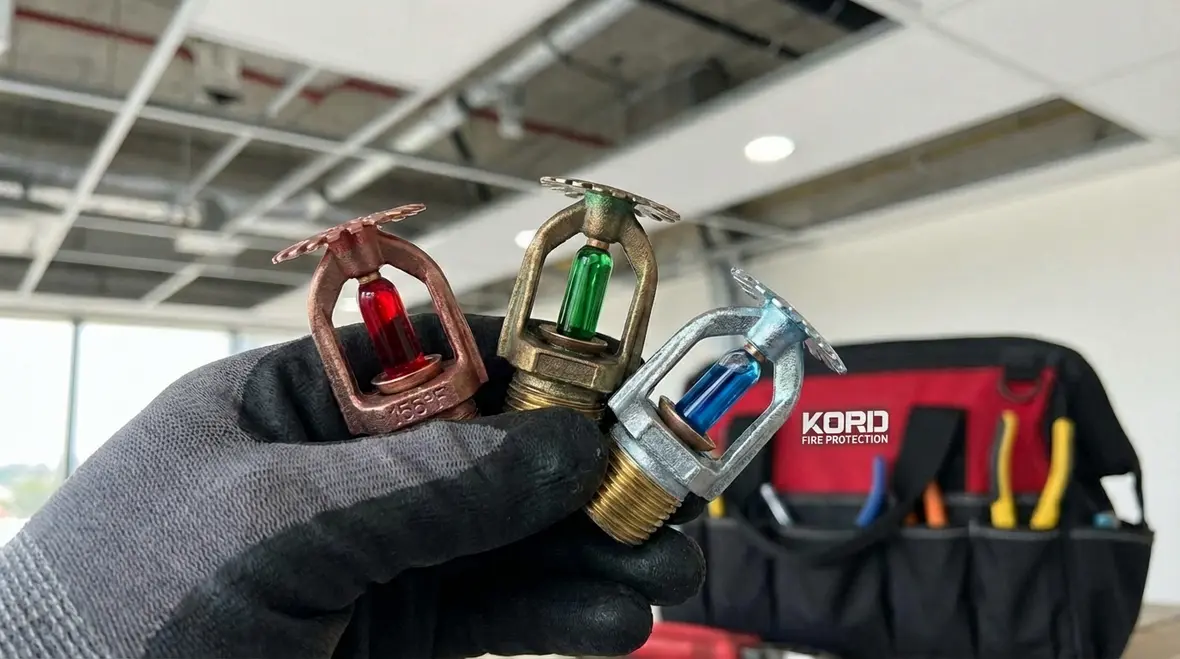
Each classification also corresponds to a color code on the glass bulb. For instance, red typically signals ordinary rating, while green or orange may indicate higher thresholds. Consequently, trained technicians can identify ratings quickly during inspections.
Kord Fire Protection technicians emphasize that these categories are not arbitrary. They stem from decades of fire testing, data collection, and standards set by organizations such as NFPA. Therefore, selecting a rating is not a matter of preference. It is a matter of compliance and performance.
Why Proper Temperature Selection Matters in Real World Settings
Too Sensitive vs Too Slow
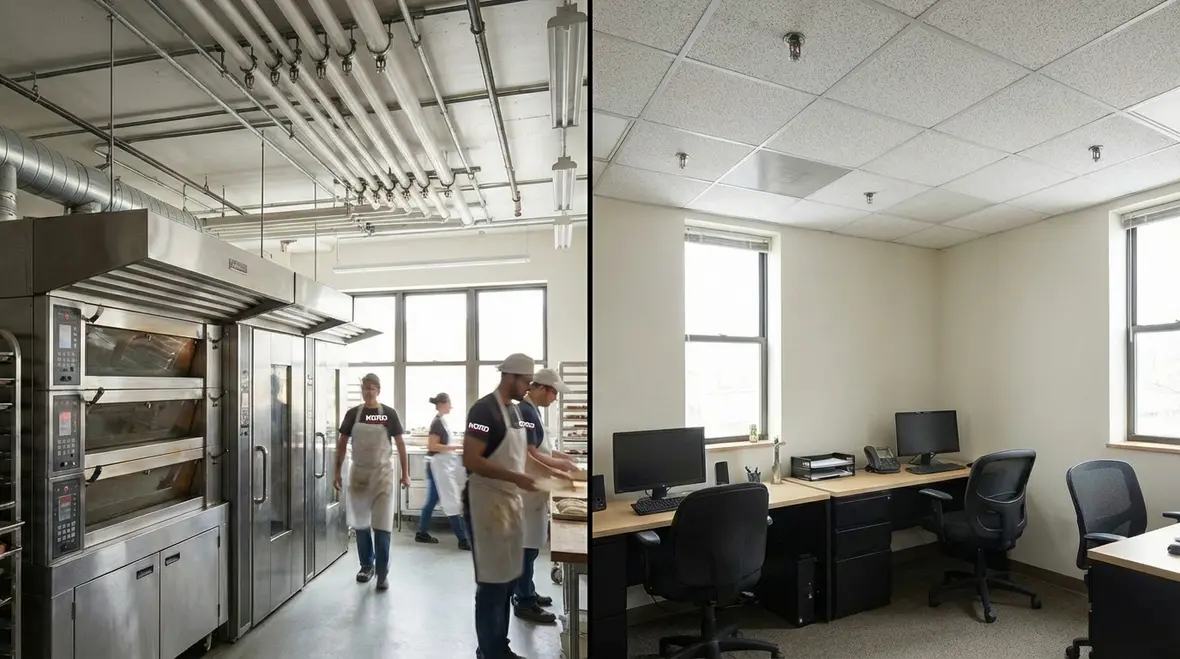
Imagine installing an ordinary temperature sprinkler in a commercial bakery. Ovens roar daily. Heat lingers near the ceiling. Eventually, the sprinkler activates without a fire. Flour flies. Dough gets drenched. The morning rush turns into a soggy mess that even a celebrity chef could not fix.
Now flip the scenario. Suppose a high temperature sprinkler sits in a small office where ambient heat rarely climbs. A fire starts in a wastebasket. The ceiling temperature rises slowly. Because the sprinkler waits for a higher threshold, activation delays. That delay allows the fire to grow.
Balancing Two Critical Goals
Therefore, correct selection balances two goals:
- First, prevent accidental discharge caused by normal environmental heat.
- Second, ensure rapid activation during actual fire conditions.
Kord Fire Protection technicians routinely assess ceiling height, airflow, nearby heat sources, and occupancy type before recommending a rating. They do not simply glance upward and hope for the best. Instead, they analyze the environment in detail. As a result, systems perform as intended when seconds matter most.
How Environment and Ceiling Conditions Influence Activation
Ceiling Height, Air Movement, and Roof Design
Temperature rating does not operate in isolation. Several environmental factors influence how quickly a sprinkler head reaches its activation point.
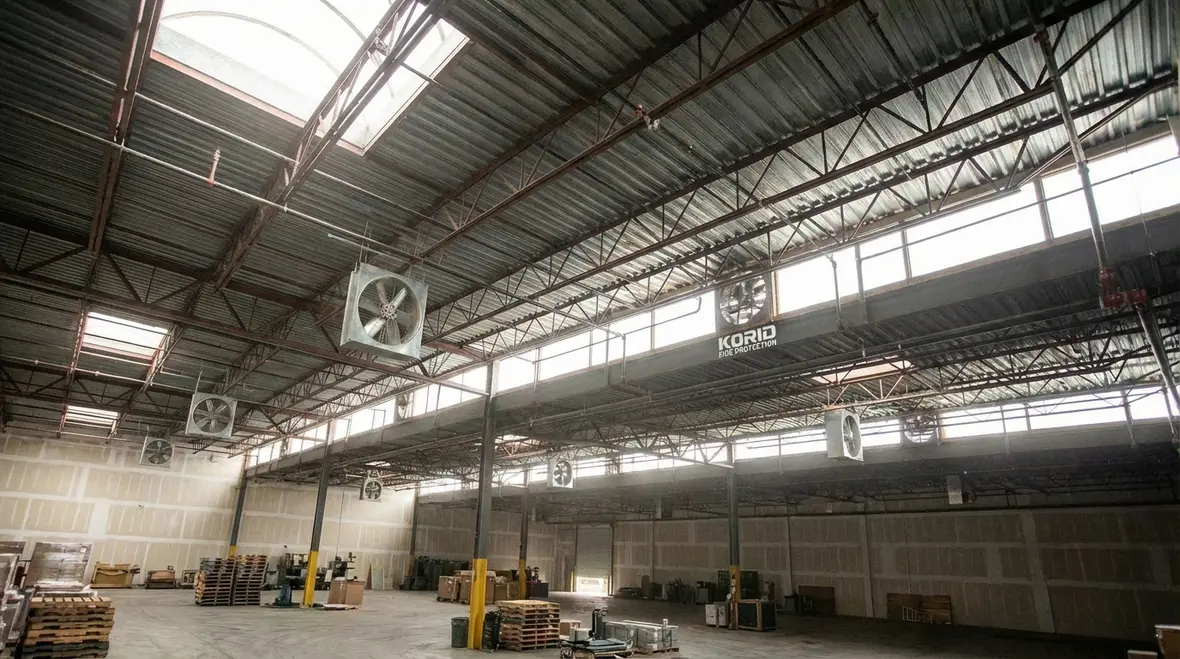
Ceiling height plays a major role. Higher ceilings allow heat to spread and cool slightly before reaching the sprinkler. Therefore, activation may take longer. Conversely, low ceilings concentrate heat, often triggering faster response.
Air movement also affects performance. Strong ventilation can redirect hot gases away from a sprinkler head. As a result, the temperature at the ceiling may rise unevenly. In warehouses or manufacturing plants, large fans and open spaces require careful planning.
Additionally, insulation and roof design matter. Metal roofs under direct sunlight can raise ambient temperatures significantly. In hot climates, attic spaces may approach intermediate levels even without fire. Consequently, technicians consult a fire sprinkler temperature rating guide during design reviews to prevent nuisance activations.
A Simple Way to Visualize Heat Behavior
Kord Fire Protection technicians frequently explain this concept using a simple comparison. Think of heat like steam in a shower. In a small bathroom, mirrors fog quickly. In a large spa with tall ceilings, that same steam disperses. The sprinkler head reacts in a similar way to trapped heat.
Comparing Temperature Ratings and Typical Applications
This side by side comparison highlights how each rating aligns with real conditions. Moreover, it shows that selection depends on predictable heat patterns, not dramatic worst case assumptions.
| Temperature Classification | Activation Range | Common Applications | Why It Works There |
| Ordinary | 135 to 170 F | Homes, offices, retail spaces | Ambient temperatures remain moderate and stable |
| Intermediate | 175 to 225 F | Kitchens, boiler rooms | Handles higher background heat without false activation |
| High | 250 to 300 F | Industrial facilities | Prevents discharge from machinery generated heat |
| Extra High and Above | 325 F plus | Special hazard locations | Designed for extreme environments |
What Happens During the Critical Seconds Before Activation?
When a fire begins, hot gases rise rapidly. The ceiling traps those gases, forming a hot layer. As the temperature climbs, the liquid inside the glass bulb expands. Pressure increases steadily. Eventually, the bulb shatters.
At that instant, water strikes the deflector plate and disperses in a precise spray pattern. Importantly, only the sprinkler closest to the fire typically activates. Despite what Hollywood sometimes suggests, all heads do not discharge at once. If that were true, every minor kitchen mishap would resemble a water park attraction.
The activation temperature determines how soon this sequence unfolds. A lower rated head reacts sooner, often controlling a fire in its early growth stage. A higher rated head waits longer, which is appropriate only when background heat demands that patience.
Kord Fire Protection technicians stress that activation time is tied directly to life safety. Faster control reduces smoke production, limits structural damage, and improves occupant escape conditions. Therefore, selecting the correct rating supports both property protection and human survival.
Inspection, Maintenance, and Long Term Reliability
Why Maintenance Matters As Much As The Rating
Even the most accurate fire sprinkler temperature rating guide cannot compensate for poor maintenance. Over time, dust, paint, or corrosion can affect sprinkler performance. Although the temperature rating remains the same, external buildup may delay heat transfer.
What Technicians Look For During Inspections
Regular inspections identify these issues early. Technicians check for:
- Obstructions near the sprinkler head
- Signs of corrosion or physical damage
- Improper replacements with mismatched ratings
- Environmental changes that alter heat conditions
For example, converting an office into a commercial kitchen without adjusting sprinkler ratings creates risk. Similarly, adding new heating equipment beneath an ordinary temperature head can lead to unintended discharge.
Kord Fire Protection technicians often remind building owners that fire protection systems are not decorative ceiling ornaments. They require attention. Fortunately, routine inspection keeps them reliable for decades.
Integrating Codes, Design Strategy, and Practical Experience
Beyond Minimum Code Requirements
National and local fire codes provide clear direction on temperature selection. However, codes establish minimum standards. Experienced designers go further. They consider building use, future modifications, and operational patterns.
For instance, a warehouse storing paper products presents different heat release characteristics than one storing metal parts. Although both may fall under similar occupancy classifications, fire growth potential differs. Therefore, sprinkler spacing, response type, and temperature rating must align.
Using a comprehensive fire sprinkler temperature rating guide during planning ensures that decisions rest on tested data. At the same time, field experience refines those decisions. Kord Fire Protection technicians combine both elements. They review drawings, inspect mechanical systems, and discuss daily operations with facility managers. As a result, the final system reflects real world conditions, not just theoretical diagrams.
In many ways, selecting the correct rating resembles casting the right actor for a role. The script may outline the character, but chemistry and context determine success. Choose wisely, and the performance saves the day.
FAQ: Fire Sprinkler Temperature Ratings
Precision Protects What Matters Most
For expert evaluation, system design, or inspection services, connect with Kord Fire Protection today and let experience safeguard every ceiling above. Explore their fire sprinkler services to align temperature ratings, code compliance, and long term reliability across your entire property portfolio.

Join Our Newsletter!
Get the latest fire safety tips delivered straight to your inbox From our Newsletter.