Fire Sprinkler Clearance Requirements Los Angeles
In Los Angeles, fire safety is not a suggestion. It is a standard measured in inches. Local codes and national standards outline specific fire sprinkler clearance requirements for Los Angeles, especially when it comes to space below ceilings. Obstructions such as lights, ducts, storage racks, and even decorative beams can disrupt proper sprinkler discharge patterns. Therefore, building owners must pay close attention to vertical and horizontal spacing to stay compliant and protected. Kord Fire Protection technicians often explain that a sprinkler head is only as effective as the space around it. In other words, give it room to breathe, and it will return the favor when it matters most.

The Science Behind Proper Sprinkler Discharge Patterns
Fire sprinklers are not random water fountains bolted to the ceiling. They are engineered devices designed to distribute water in a specific spray pattern. That pattern depends on pressure, temperature activation, and most importantly, unobstructed space below the deflector.
When heat activates a sprinkler, water strikes the deflector plate and spreads in a controlled arc. However, if an object blocks that path, the water cannot reach the fire evenly. As a result, hot gases may continue to rise, and flames can travel beyond the intended coverage area.
Kord Fire Protection technicians often describe it like this: imagine trying to water a garden while someone holds a pizza box over half the sprinkler. Sure, some plants get water. The rest? Not so lucky. Similarly, ceiling obstructions interrupt the design intent of the system.
Moreover, clearance rules exist to ensure that spray patterns overlap properly. Without that overlap, gaps in coverage appear. And in fire protection, gaps are not charming quirks. They are liabilities.
NFPA 13, NFPA 25, and why spacing is not optional
Standards such as NFPA 13 and NFPA 25 back up this science with hard numbers and inspection criteria. They specify how sprinklers must be spaced and maintained so that those carefully designed spray patterns actually work when a fire starts. Kord Fire Protection teams in Los Angeles routinely reference these standards during design, installation, and inspection work, translating dense code language into clear, practical guidance for building owners.

What Are the Required Clearance Distances Below Sprinklers?
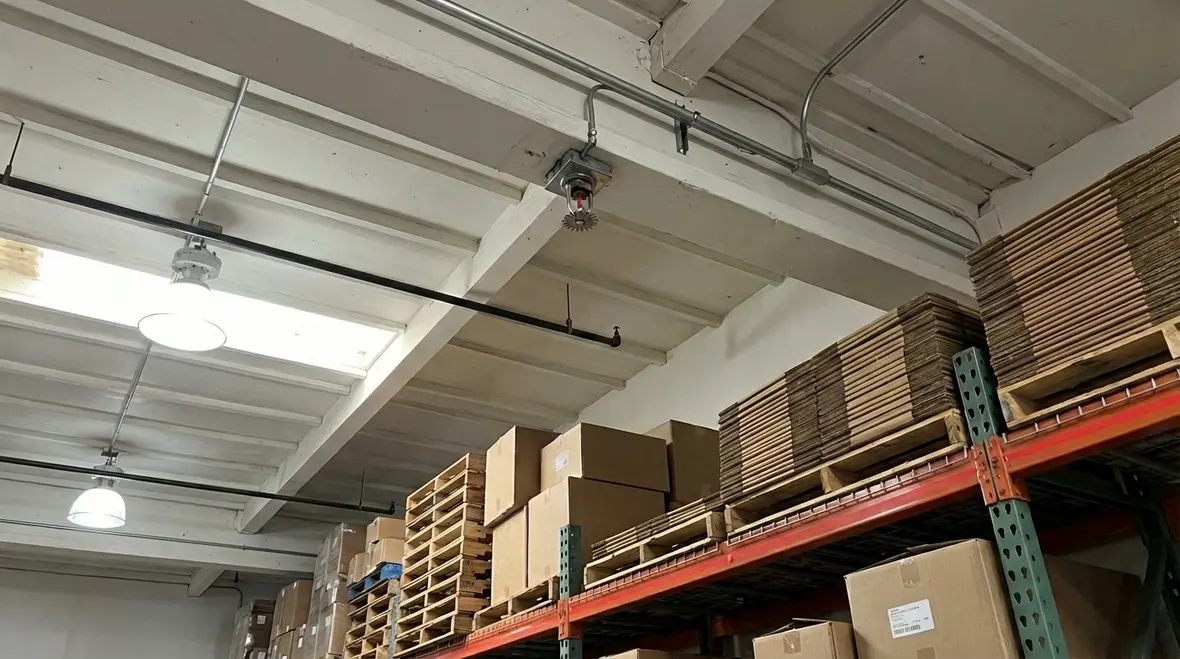
Many property owners ask a simple question: how much space is required below a sprinkler head? The answer depends on the type of sprinkler and the applicable code. However, a common rule under NFPA standards requires at least 18 inches of vertical clearance below standard spray sprinklers.
This means storage, shelving, and equipment must not extend into that 18 inch space. Furthermore, certain ceiling configurations may demand additional spacing adjustments.
To clarify, here is a simplified overview often discussed by Kord Fire Protection technicians during inspections:
Minimum vertical clearance
Standard spray sprinklers: 18 inches below deflector
Extended coverage sprinklers: May vary based on listing
Residential sprinklers: Follow manufacturer specifications
Common obstructions to watch for
Lighting fixtures
HVAC ducts
Cable trays
Decorative ceiling features
Over stacked storage
Additionally, horizontal obstructions near the sprinkler can also interfere with discharge patterns. For example, large beams or soffits may require sprinklers to be installed below them. Therefore, design professionals must evaluate both vertical and lateral spacing.
How 18 inches ties into repositioning and service
That 18 inch rule is so central that it often drives the need for sprinkler repositioning and fire sprinkler service in Los Angeles. When new equipment, racking, or décor sneaks into the clearance zone, Kord Fire Protection technicians can adjust head locations or system layouts to bring a space back into compliance without sacrificing usability.
How Clearance Requirements Impact Commercial Buildings in Los Angeles
Los Angeles presents unique challenges. Warehouses stack goods high to maximize real estate costs. Retail spaces install decorative ceilings to create ambiance. Restaurants hang lighting fixtures like they are auditioning for a home makeover show. Yet, despite creative design choices, compliance remains non negotiable.
The fire sprinkler clearance requirements for Los Angeles align with state and national codes, but local enforcement tends to be strict. Inspectors pay close attention to storage heights and ceiling obstructions. Consequently, even a few inches of noncompliance can trigger correction notices.
Kord Fire Protection technicians frequently encounter facilities where storage gradually creeps upward over time. At first, it is just one extra box. Then another. Before long, the clearance zone disappears. As they calmly explain to clients, gravity works down, but heat and fire move up. Blocking the spray path only helps the fire win.
Moreover, high piled storage facilities often require additional design considerations. Increased commodity hazards may demand in rack sprinklers or specific discharge densities. Thus, clearance is not merely about passing inspection. It directly affects system performance.
Linking clearance to overall system health
Clearance is one part of a much larger picture that includes water supply, detection, and response time. Pairing proper spacing with regular maintenance and testing helps avoid delayed activation, clogged heads, and impaired coverage. For example, understanding the causes of delayed fire sprinkler activation gives owners another lens for evaluating whether their system really is “good enough” for a worst-day scenario.

Common Ceiling Obstructions and How to Address Them
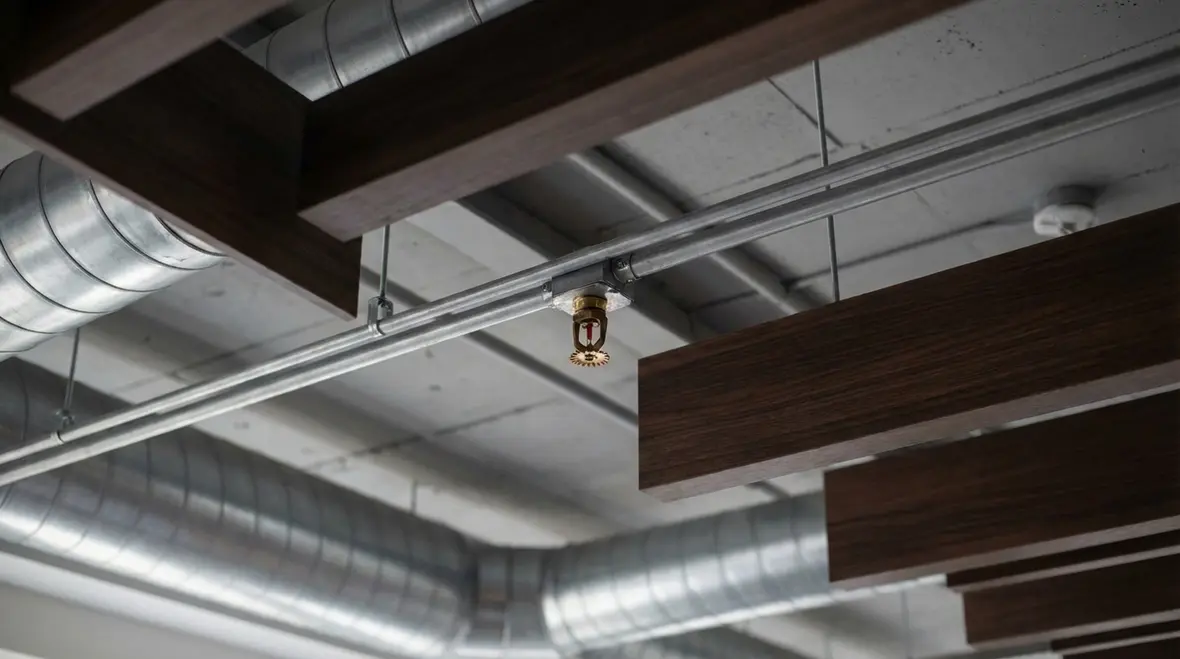
Modern buildings love complexity. Exposed ductwork, open ceilings, suspended lighting grids, and acoustic clouds create visual appeal. However, each feature introduces potential interference with sprinkler discharge patterns.
For instance, ducts wider than four feet can obstruct heat flow and water distribution. In such cases, sprinklers may need to be installed below the obstruction. Likewise, continuous soffits that exceed certain widths require additional heads on both sides.
Additionally, ceiling fans pose a unique challenge. While they keep occupants cool, they can disrupt thermal layering during a fire event. Therefore, placement relative to sprinkler heads becomes critical.
Kord Fire Protection technicians often walk clients through these scenarios with practical examples. They might gesture toward a decorative beam and say, with a slight smile, “It looks great. But if it blocks water like an umbrella at a pool party, we need to rethink it.”
Design adjustments
- Relocating sprinkler heads below obstructions
- Adding supplemental sprinklers
- Reconfiguring duct or lighting layouts
Operational changes
- Lowering storage heights
- Marking maximum storage lines on walls
- Training staff on clearance zones
As a result, coordination between architects, contractors, and fire protection professionals becomes essential early in the design phase.
Why 18 Inches Matters More Than Most People Think
Eighteen inches may not sound dramatic. It is shorter than a yardstick and smaller than most movie theater popcorn buckets. However, in fire protection terms, it is the difference between controlled suppression and uncontrolled spread.
When storage sits too close to the deflector, water spray hits the top of the obstruction first. Consequently, the lower burning surfaces may receive limited coverage. Meanwhile, heat continues to rise and activate additional sprinklers, increasing water damage without effectively controlling the source.
Furthermore, obstructed spray patterns can delay fire control time. Even a brief delay allows temperatures to climb rapidly. In commercial settings, that escalation can threaten structural integrity and occupant safety.
Kord Fire Protection technicians emphasize that compliance with clearance rules protects more than inventory. It protects time. And in a fire scenario, time is the most valuable currency in the room.
Connecting sprinkler clearance with other life safety systems
Balanced life safety involves more than just sprinklers. Fire doors, alarms, extinguishers, and egress systems all play their part. Resources such as Kord Fire’s guides on NFPA 80 fire door safety and NFPA 10 portable extinguisher guidelines show how every component must be clear of obstructions and properly spaced. The same mindset applies overhead: give sprinklers the clean, obstacle-free space they need to respond quickly.
Designing for Compliance From the Start
Smart projects consider sprinkler clearance during the planning stage. Rather than retrofitting after inspection failures, proactive design integrates proper spacing into architectural drawings.
First, engineers review ceiling heights and structural elements. Next, they coordinate with mechanical and electrical teams to prevent conflicts. Then, they verify that storage layouts respect vertical clearance limits.
In Los Angeles, early coordination proves especially important. Because real estate costs remain high, businesses often maximize vertical space. However, pushing storage too close to sprinkler heads risks violating fire sprinkler clearance requirements for Los Angeles and triggering costly modifications later.
Kord Fire Protection technicians frequently participate in plan reviews and preconstruction meetings. During these sessions, they translate technical standards into practical advice. They explain not just what the code says, but why it matters. Clients appreciate this approach because it removes mystery from compliance.
Additionally, clear documentation helps during inspections. Marked storage limits, accurate as built drawings, and accessible sprinkler heads demonstrate due diligence. Inspectors notice that level of care.
Inspection Insights From Kord Fire Protection Technicians
Inspections reveal patterns. Over time, certain issues appear again and again. Storage stacked too high. New light fixtures installed without reviewing sprinkler spacing. Decorative renovations completed without consulting fire protection professionals.
However, most violations stem from oversight rather than intent. Businesses evolve. Inventory changes. Layouts shift. Therefore, routine inspections serve as guardrails.
Kord Fire Protection technicians approach inspections as educational opportunities. Instead of issuing stern lectures, they explain how discharge patterns function and why clearance supports performance. Their tone remains steady and reassuring. After all, no one wants to feel scolded over cardboard boxes.
Moreover, they encourage facility managers to conduct internal checks. A simple visual scan upward can reveal encroachments into the clearance zone. If something sits within 18 inches of a sprinkler deflector, it deserves attention.
In many cases, quick adjustments resolve the issue. Lower a shelf. Move a pallet. Shift a display. Small actions prevent larger consequences.
Frequently Asked Questions
Protecting Space So Sprinklers Can Do Their Job
Ceiling clearance may seem like a minor detail. Yet, it shapes how effectively a fire sprinkler system performs under pressure. By respecting fire sprinkler clearance requirements for Los Angeles, property owners protect lives, property, and peace of mind. Kord Fire Protection technicians stand ready to evaluate, explain, and guide improvements with calm authority. When inches matter most, their expertise ensures nothing stands between a sprinkler and its mission.
Schedule an inspection today and give safety the space it deserves. If you are planning renovations, changing storage layouts, or simply want to confirm your system is ready, Kord Fire Protection can help with full-service fire sprinkler installation, testing, repair, and service throughout Los Angeles. A quick call and a careful look upward now can prevent far bigger problems later.
Know Your Weapon Before You Fight the Flame
Kord Fire Protection is your go-to when it comes to all things fire protection. For over 20 years, we’ve been serving Southern California with the quality service and equipment to keep your home or business safe at all times. Our competitive prices reflect our unwavering commitment to protecting what matters most in the event of a fire emergency. Give us a call, send an email, or use that form!

Join Our Newsletter!
Get the latest fire safety tips delivered straight to your inbox From our Newsletter.