Fire Extinguisher Replacement Guide and Service Lifespan
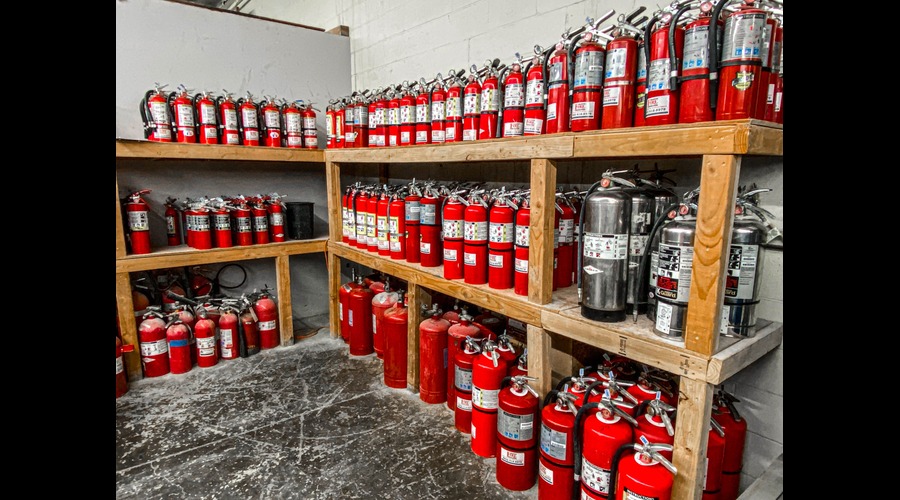
Fire safety rarely makes the highlight reel. It is not flashy. It does not trend on social media. Yet when a fire starts, nothing in the building matters more. That is why the Fire Extinguishers complete replaceement guide from Kord Fire Protection exists. It lays out what most people never think about until it is too late. How long do fire extinguishers last. When do they expire. And when should they be replaced instead of repaired. In the sections ahead, Kord Fire Protection technicians explain it all in clear terms, so businesses and homeowners can make confident decisions and avoid unpleasant surprises.

Understanding Fire Extinguisher Expiration and Service Life
Yes, fire extinguishers expire. Not in the way milk does, thankfully. You will not find a bold date stamped on the front that says toss after Tuesday. However, every unit has a limited service life.
According to NFPA 10 standards, fire extinguishers require routine maintenance and testing at specific intervals. Over time, pressure can drop. Internal parts can corrode. Extinguishing agents can settle or degrade. Even a unit that has never been used can become unreliable if ignored.
In most cases, the practical end of life falls between 10 and 12 years. That timeline depends on the type of extinguisher, its maintenance history, and its overall condition. Therefore, expiration is not about a single date. It is about whether the unit can still perform safely under pressure.
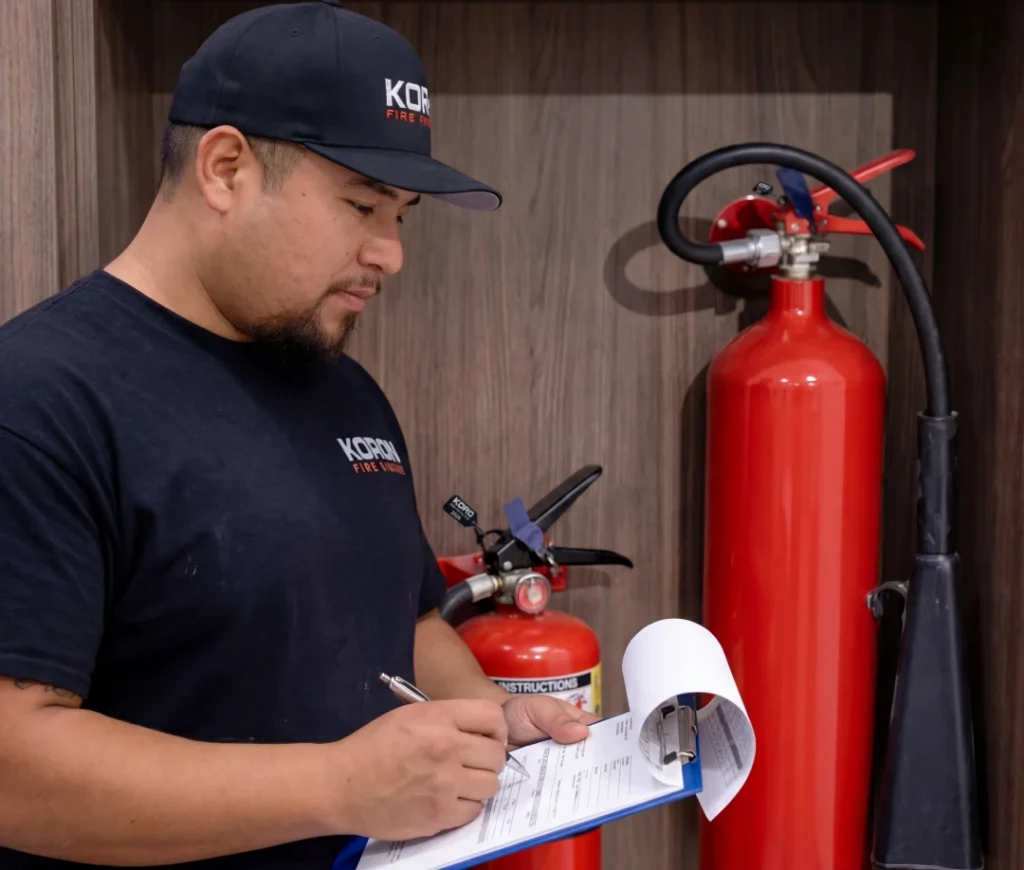
Kord Fire Protection often explain it this way. A fire extinguisher is like a spare tire. You hope you never need it. But if you do, it has to work the first time. There is no sequel. For more depth on what happens when time catches up to your equipment, Kord’s article My Fire Extinguisher Is Expired – Is It Dangerous & What Should I Do? walks through real world risks and next steps.
Service life vs. the myth of a simple expiration date
Manufacturers and codes talk about inspections, testing intervals, and replacement criteria instead of a one size fits all date. That is because an extinguisher that is well maintained and protected from damage will outlast a neglected one purchased on the same day. Service history, storage conditions, and construction quality all shape the real lifespan.
Where to Check the Age and Condition of Fire Extinguishers
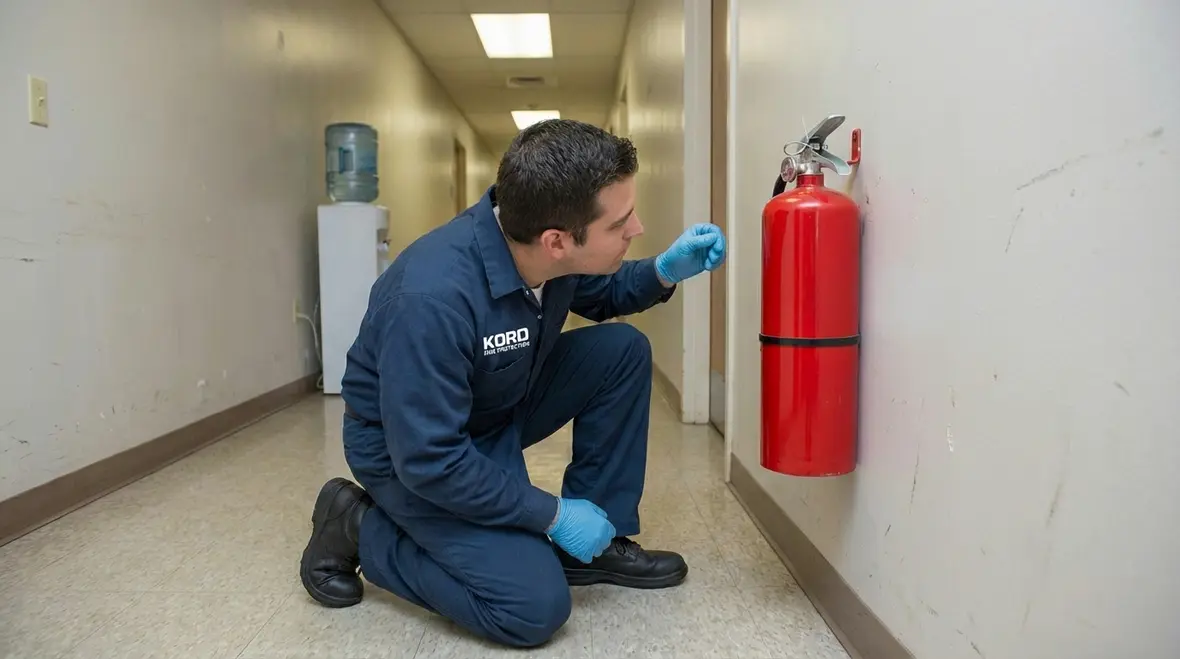
Most people search for an expiration date and come up empty. Instead, they need to look at three key indicators.
Manufacture date
Manufacture Date
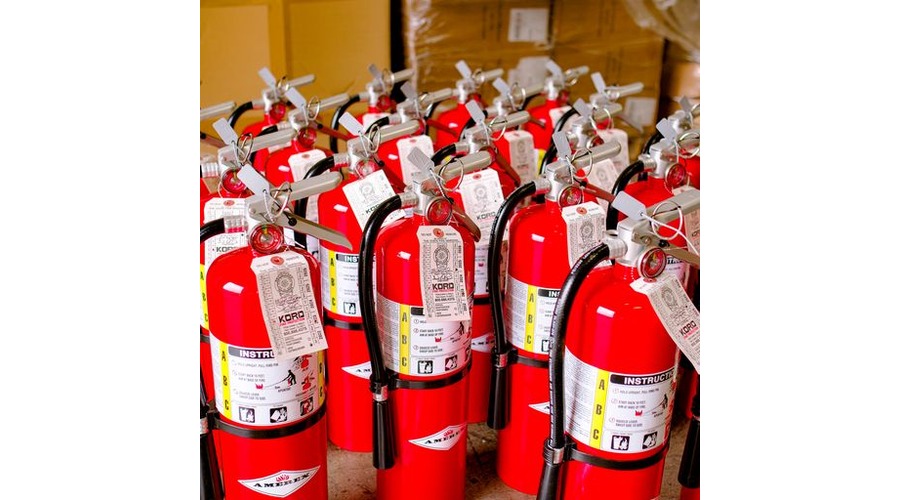
Stamped on the bottom of the cylinder or printed on the nameplate label. This date tells you how old the unit is and serves as the starting point for calculating service intervals.
Inspection tag
Inspection Tag
Attached near the neck of the extinguisher. This tag shows monthly inspections, annual maintenance, and any recharging history. If the tag looks blank or outdated, that is a red flag.
Pressure gauge
Pressure Gauge
The needle should sit firmly in the green zone. If it drifts into red, the unit needs service immediately.
Moreover, if a fire extinguisher is more than 12 years old and lacks clear maintenance records, Kord Fire Protection technicians recommend a professional evaluation. Guesswork has no place in fire safety.
When that “maybe” extinguisher becomes a “replace it now” extinguisher
If you are staring at a faded tag, a scratched label, and a gauge you are not sure you trust, it is time to stop guessing. Scheduling a walk in visit or inspection with a licensed provider removes the uncertainty and trades it for clear documentation, which is exactly what an AHJ or insurance carrier will want to see later.
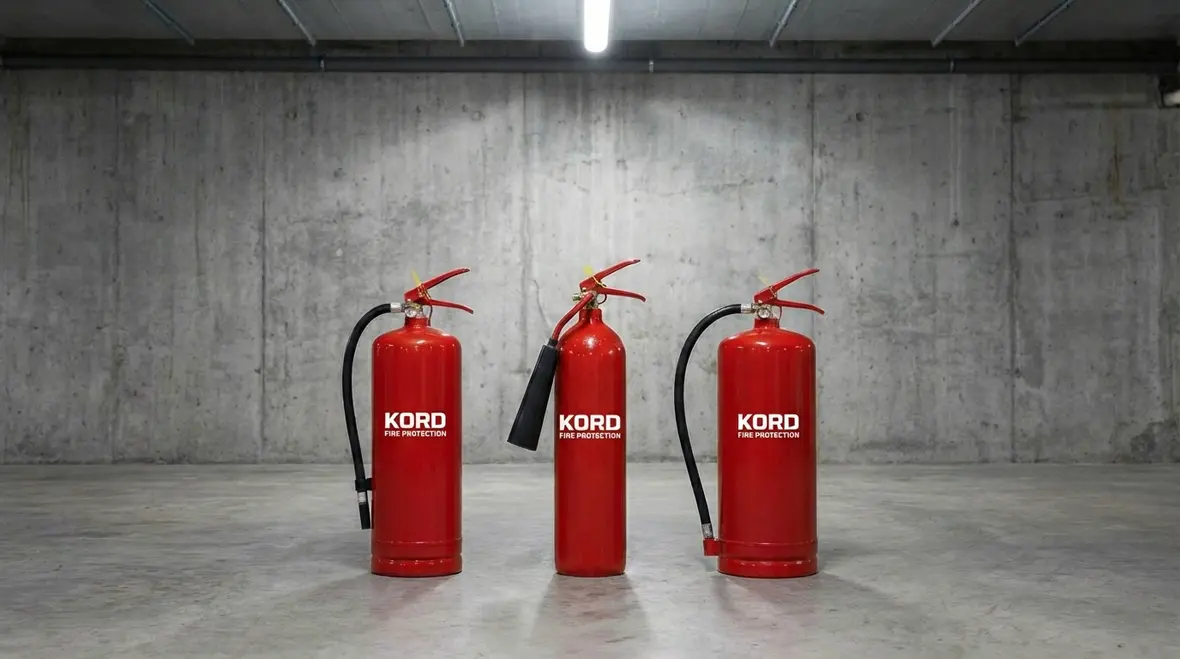
How Long Do Fire Extinguishers Last in Real World Conditions
The lifespan depends on whether the extinguisher is rechargeable or disposable. That difference matters more than most people realize.
Rechargeable fire extinguishers
Rechargeable Fire Extinguishers
These units typically last 10 to 20 years or more with proper maintenance. They have metal valve assemblies and gauges marked charge or recharge. Most commercial ABC dry chemical, CO2, and water based extinguishers fall into this category.
However, longevity depends on consistent care:
- Monthly visual inspections
- Annual professional inspection
- Recharge every 6 years or after use
- Hydrostatic testing every 5 to 12 years
- Internal examination at 6 year intervals
With proper servicing, these units can remain reliable for decades. In fact, many businesses keep the same extinguishers for years while simply maintaining compliance.
Disposable fire extinguishers
Disposable Fire Extinguishers
These units usually last up to 12 years from the manufacture date. They have plastic valve assemblies and gauges marked full or empty. Once discharged or depressurized, they cannot be refilled.
Although they cost less upfront, they often prove less economical for businesses that require regular compliance checks. In many cases, replacement becomes routine rather than occasional.
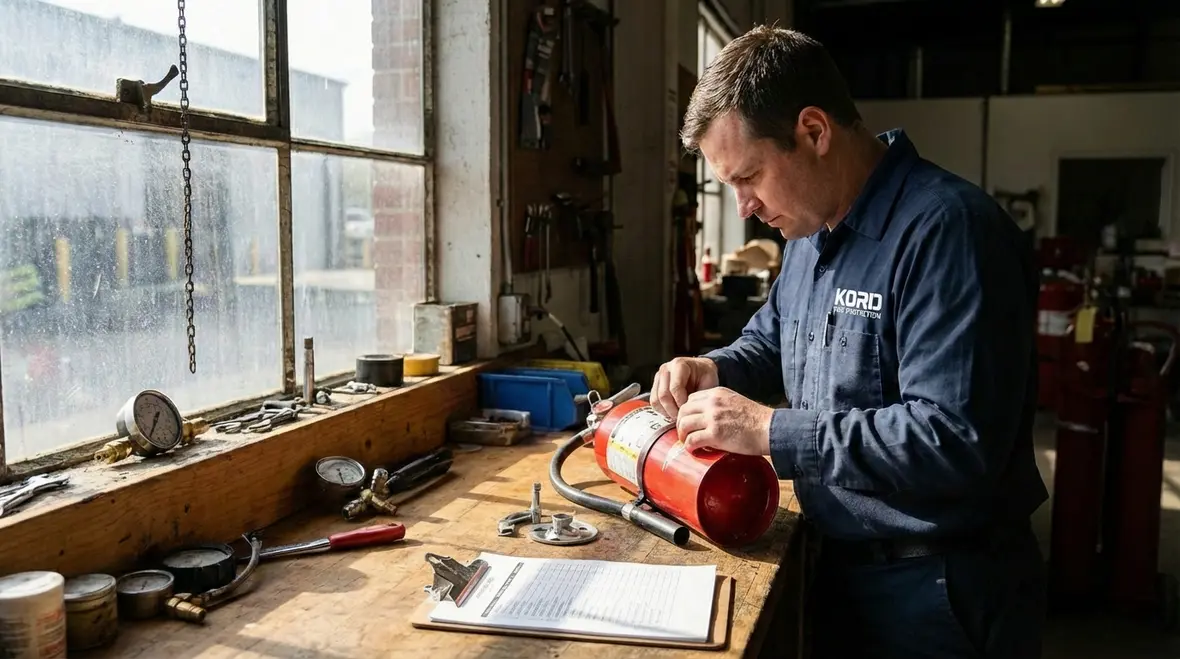
Professional Maintenance Requirements Explained Clearly
Maintenance is not busywork. It ensures the extinguisher will function during a real emergency. In addition, it keeps organizations compliant with OSHA and NFPA standards.
Monthly visual inspections
Monthly Visual Inspections
These checks confirm the extinguisher is in its designated location, accessible, properly pressurized, and free from visible damage. They also verify that the safety pin and tamper seal remain intact.
Annual professional inspection
Annual Professional Inspection
Performed by qualified technicians, this inspection involves examining mechanical components, verifying pressure levels, and updating service documentation. Kord Fire Protection technicians explain findings clearly, so property owners understand both compliance and safety implications. Their guide to how often extinguishers need to be serviced breaks down these intervals step by step.
Six year internal maintenance
Six Year Internal Maintenance
Rechargeable extinguishers require disassembly and internal inspection at six year intervals. Technicians replace worn parts and recharge the unit, a service often called a six year breakdown or teardown.
Hydrostatic testing
Hydrostatic Testing
This pressure test checks cylinder strength. Depending on the type, testing occurs every 5 to 12 years. If a cylinder fails, it must be replaced.
Although these steps may sound technical, they follow a logical rhythm. Inspect. Maintain. Test. Repeat. It is less dramatic than an action movie, but far more useful.
When Replacement Becomes the Smarter Choice
Eventually, every extinguisher reaches a point where replacement makes more sense than repair.
Replacement becomes necessary when:
- The unit fails hydrostatic testing
- The cylinder shows deep rust or corrosion
- The extinguisher is 12 to 15 years old without records
- A disposable unit has been discharged
- The model uses outdated agents such as Halon 1211
If repair costs approach 50 to 75 percent of replacement cost, especially for units over 10 years old, most professionals recommend replacement. Kord Fire Protection technicians often guide clients through this decision, weighing cost, safety, and compliance together.
Comparing Types and Lifespans Side by Side
Different fire risks require different extinguishers. Their service intervals also vary. The table below provides a clear comparison.
| Type | Service Life With Maintenance | Common Use | Testing Interval |
|---|---|---|---|
| ABC Dry Chemical | 10 to 20 years | General commercial and residential | Every 12 years |
| Carbon Dioxide CO2 | 15 to 25 years | Electrical rooms and labs | Every 5 years |
| Class K | 10 to 12 years | Commercial kitchens | Every 5 years |
As shown above, not all extinguishers age the same way. Therefore, businesses should avoid treating them as identical pieces of equipment. Each type serves a specific purpose and follows its own testing rhythm.
Risks of Using Expired or Neglected Units
An expired extinguisher does not simply refuse to cooperate. It can create real hazards.
First, the unit may fail to discharge. Second, it may discharge with insufficient pressure. In rare cases, severe internal corrosion can cause rupture. None of those scenarios belong on anyone’s safety plan.
Additionally, code violations carry consequences. Fire marshals can issue citations and fines for expired equipment. Insurance carriers often require proof of maintenance. If documentation is missing, coverage disputes can follow.
Moreover, liability increases when safety systems fail. If someone is injured because a fire extinguisher did not function properly, investigators will review inspection records closely.
This is where the practical value of a structured maintenance and replacement resource becomes clear. A well organized Fire Extinguishers complete replaceement guide provides clarity before problems arise. It moves decisions from reactive to proactive.
How to Dispose of Expired Fire Extinguishers Safely
Fire extinguishers should never be tossed into regular trash. Even when empty, they contain pressurized components.
Proper disposal involves:
- Fully discharging the unit outdoors in a safe area
- Removing the head valve to make it inoperable
- Taking the cylinder to a recycling center that accepts scrap metal
- Using hazardous waste collection services if available
However, never attempt to disassemble a unit that still contains pressure. When in doubt, contact a professional service provider such as Kord Fire Protection. Their technicians handle disposal safely and in compliance with local regulations. You can also reference their Expired Fire Extinguisher Disposal and Safety Guide for step by step direction.
In other words, do not treat it like an old coffee maker. It deserves more respect than that.
Frequently Asked Questions
Take Action Before You Ever Need It
Fire safety works best when handled calmly and early. Instead of waiting for an inspection notice or a close call, schedule a professional evaluation. Kord Fire Protection technicians stand ready to inspect, test, recharge, or replace equipment with care and precision. Contact Kord Fire Protection today and ensure every extinguisher on the wall will perform exactly as intended when it matters most.
If you are in Southern California and know some of your units are past their prime, pairing this guide with Kord’s hands on services closes the loop. From fire extinguisher walk in service in Los Angeles to full Los Angeles County fire extinguisher replacement and testing, their team can handle expired, leaking, or out of date extinguishers in one visit so your building stays both compliant and ready.
Know Your Weapon Before You Fight the Flame
Kord Fire Protection is your go-to when it comes to all things fire protection. For over 20 years, we’ve been serving Southern California with the quality service and equipment to keep your home or business safe at all times. Our competitive prices reflect our unwavering commitment to protecting what matters most in the event of a fire emergency. Give us a call, send an email, or use that form!

Join Our Newsletter!
Get the latest fire safety tips delivered straight to your inbox From our Newsletter.