Fire Extinguisher Accessibility Clearance Fix
Fire Extinguisher Blocked by Storage: How to Fix the #1 Inspection Failure
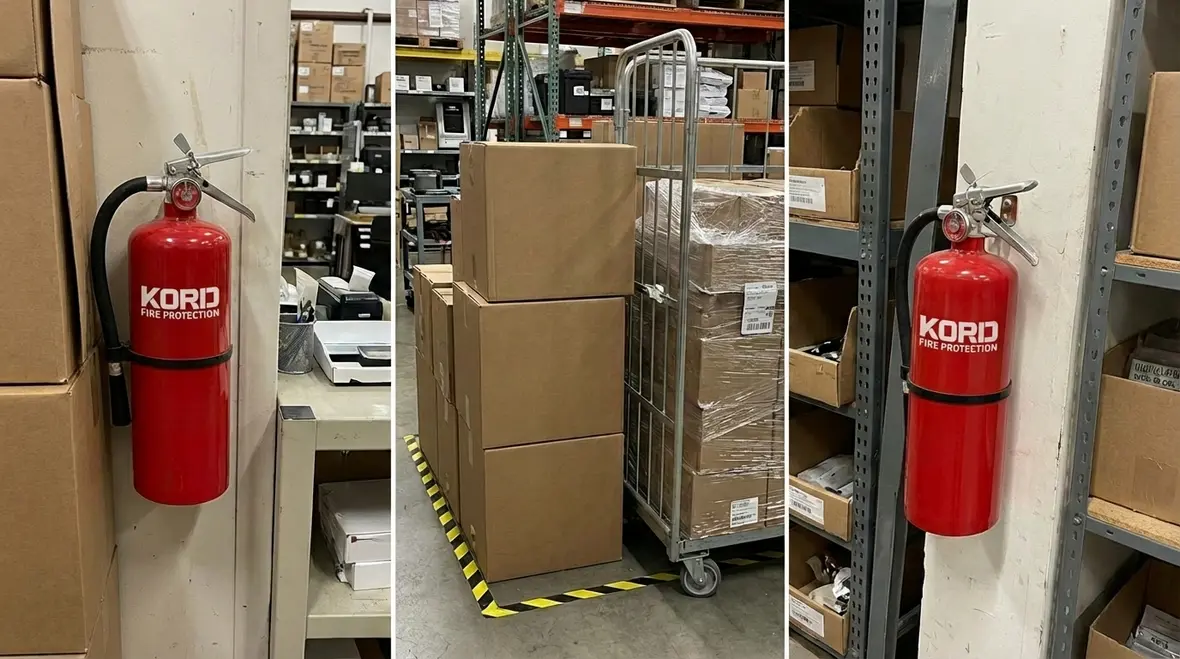
Fire extinguisher accessibility clearance sounds simple. Keep the extinguisher visible. Keep it reachable. Keep junk away from it. And yet, across warehouses, offices, restaurants, and retail stores, blocked extinguishers remain the number one inspection failure. Inspectors see it every day. A stack of boxes. A rolling cart. A tower of paper towels that somehow grew legs and wandered in front of life saving equipment.
Kord Fire Protection technicians often explain it this way. In an emergency, nobody wants to play hide and seek with a fire extinguisher. Seconds matter. Smoke builds. Stress rises. Clear access is not a suggestion. It is a requirement rooted in safety standards and common sense.
So why does this issue persist? More importantly, how can it be fixed for good? Let us take a calm, steady walk through the problem and the practical solutions that work.

Why Blocked Fire Extinguishers Top Inspection Reports
First, storage creeps. It starts with one small box placed nearby “just for now.” Then another. Before long, the extinguisher sits hidden like a forgotten relic behind inventory. People do not mean harm. However, convenience often wins over compliance.
Additionally, many facilities underestimate how strict inspectors are about fire extinguisher accessibility clearance. The standard is clear. The path must remain unobstructed. The extinguisher must be visible and easy to reach without moving obstacles. If an employee has to shift a cart or drag a pallet, that is already a failure.
Moreover, businesses often change layouts without updating safety plans. A new shelving unit goes up. Seasonal merchandise arrives. Temporary storage becomes permanent. Unfortunately, the extinguisher does not move with the same attention.
Kord Fire Protection technicians frequently point out that blocked extinguishers signal deeper issues. Poor housekeeping. Lack of training. Weak safety culture. In other words, that small obstruction tells a bigger story to an inspector.
If you are already dealing with repeated extinguisher issues, pairing access improvements with regular monthly inspection and annual service can quickly tighten overall compliance and reduce surprise violations.

What Inspectors Actually Look For During Fire Extinguisher Accessibility Clearance Checks
Many facility managers ask what inspectors truly focus on. The answer is refreshingly straightforward.
Visibility
The extinguisher must be clearly visible from a distance. If it hides behind stacked materials or blends into a cluttered wall, it fails the visibility test.
Unobstructed Access
There must be a clear path to the unit. No boxes. No carts. No furniture. Think of it as a direct line from a person to the extinguisher without an obstacle course in between.
Proper Mounting Height
Extinguishers must sit at the correct height based on their weight. Mounting too high or too low can create accessibility issues.
Signage
If the extinguisher is not immediately obvious, proper signage must mark its location.
Because of these checkpoints, even minor storage changes can trigger violations. Therefore, regular internal reviews are essential. Kord Fire Protection technicians often recommend monthly walk throughs to spot problems before inspectors do, alongside code-driven servicing like the schedules explained in their fire extinguisher service frequency guide.
How to Fix a Fire Extinguisher Blocked by Storage
Now for the practical side. Fixing this common failure does not require a massive budget. It requires discipline and structure.
Step 1: Remove the Obstruction Immediately
This sounds obvious. However, quick fixes must become permanent habits. Clear the area and reset expectations with staff.
Step 2: Establish a No Storage Zone
Mark the floor around the extinguisher. Paint lines. Use bright tape. Create a visible buffer zone that signals “nothing belongs here.”
Step 3: Train Employees
Explain why fire extinguisher accessibility clearance matters. When staff understand that blocked equipment could delay response during a real emergency, compliance improves.
Step 4: Assign Accountability
Give a specific person responsibility for checking extinguishers weekly. Shared responsibility often becomes no responsibility. Clear ownership prevents that.
Step 5: Reevaluate Storage Layout
If clutter repeatedly builds near extinguishers, the storage system itself may be flawed. Adjust shelving or relocate materials to reduce temptation.
Interestingly, when facilities take these steps, inspection scores often improve across the board. A clear extinguisher area usually reflects broader operational discipline.
The Real World Consequences of Ignoring Clearance Rules
It is easy to think of inspection failures as paperwork problems. However, blocked extinguishers create real risk.
In the early stage of a fire, a portable extinguisher can stop a small flame from becoming a major disaster. Yet that only works if someone can grab it instantly. If smoke fills the room and an employee must move storage first, precious seconds vanish.
Furthermore, insurance carriers notice repeated violations. Fines may follow. In severe cases, authorities can issue citations or require corrective action plans. No manager enjoys that conversation.
Kord Fire Protection technicians sometimes describe it with a bit of humor. Having a blocked extinguisher is like owning a seatbelt that is locked in the trunk. Technically present. Completely useless.
Although that image may raise a smile, the message remains serious. Accessibility is not cosmetic. It directly impacts life safety.
Designing Spaces That Protect Fire Extinguisher Accessibility Clearance
Prevention works better than correction. Therefore, smart design plays a powerful role.
During renovations or new construction, planners should consider extinguisher placement early. Units should sit along normal paths of travel. They should not hide behind doors that stay open or near loading zones where pallets stack daily.
Additionally, facilities can use visual management techniques:
Wall mounted cabinets with clear fronts
These protect the extinguisher while keeping it visible.
Overhead signage
Bold markers help employees spot equipment quickly, even in crowded areas.
Floor striping
Painted outlines reinforce the no storage zone.
Kord Fire Protection technicians often guide clients through these layout decisions. Because they see patterns across many industries, they can predict problem spots before they develop.
As a result, thoughtful design reduces repeat violations and strengthens overall compliance.
Common Storage Mistakes and Smarter Alternatives
Some storage habits almost guarantee blocked extinguishers. Recognizing them helps prevent repeat issues.
Temporary Overflow Near Exits
During busy seasons, staff place excess stock wherever space appears open. Unfortunately, extinguisher locations often seem convenient.
Mobile Equipment Parking
Carts and pallet jacks frequently end up in front of wall mounted units.
Bulk Deliveries Left Unsorted
Incoming shipments sometimes sit untouched for hours or days.
Instead, facilities can adopt smarter alternatives. The comparison below highlights practical shifts.
Problem Practice Safer Alternative
Stacking boxes near extinguishers Designate overflow zones away from safety equipment
Parking carts against walls randomly Create marked cart parking areas
Ignoring daily clutter buildup Schedule end of shift safety resets
By adjusting these habits, businesses protect fire extinguisher accessibility clearance without slowing operations. In fact, organized spaces often improve workflow.
Training Teams to Respect Safety Equipment
Policies alone do not change behavior. Culture does.
Therefore, leaders should speak about extinguisher access during onboarding and safety meetings. Short reminders work well. Clear examples work better. Show employees what a violation looks like. Then show them the correct setup.
Kord Fire Protection technicians often take time during service visits to explain the why behind the rules. When staff hear stories from real inspections and real fire events, the message lands differently. It becomes personal.
Additionally, managers can reinforce expectations through routine walkthroughs. Praise clear areas. Correct issues immediately. Consistency shapes habits.
And yes, a little humor helps. One technician once joked that if an extinguisher needs its own GPS tracker, something has gone terribly wrong. People laughed. Then they cleared the area. Message delivered.
How Often Should Businesses Check for Obstructions?
Facilities should perform visual checks weekly at minimum. However, high traffic environments may require daily reviews.
Moreover, any time inventory shifts or large deliveries arrive, staff should confirm that fire extinguisher accessibility clearance remains intact. Quick checks prevent long term violations.
Annual professional inspections remain essential. During these visits, Kord Fire Protection technicians assess not only the extinguisher condition but also its placement and surrounding environment. Their outside perspective often catches issues internal teams overlook, especially when combined with services like recharging and pressure checks.
Consistency is key. Small actions repeated regularly build strong compliance over time.
Frequently Asked Questions
Clear the Path and Stay Ready
Blocked extinguishers may seem minor. However, they represent the thin line between readiness and regret. Clear access protects people, property, and peace of mind. Kord Fire Protection technicians stand ready to help businesses evaluate risks, improve layouts, and build lasting compliance. Do not wait for an inspection report to point out the obvious. Clear the path today and strengthen your safety culture so every extinguisher stands ready when it matters most.
If your facility needs expert help, schedule a visit with Kord Fire Protection’s fire extinguisher specialists. Whether you need monthly and annual inspections, pressure checks, or extinguisher replacements, their team can design a plan that keeps every unit visible, accessible, and code compliant. Request your fire extinguisher inspection and service and turn blocked equipment into a clearly protected asset.
Know Your Weapon Before You Fight the Flame
Kord Fire Protection is your go-to when it comes to all things fire protection. For over 20 years, we’ve been serving Southern California with the quality service and equipment to keep your home or business safe at all times. Our competitive prices reflect our unwavering commitment to protecting what matters most in the event of a fire emergency. Give us a call, send an email, or use that form!

Join Our Newsletter!
Get the latest fire safety tips delivered straight to your inbox From our Newsletter.