Commercial Fire Alarm Power Backups for Australia
Quick Answer: Commercial fire alarm systems need steady, uninterrupted power to keep signals reliable during outages, maintenance, and storms. Best practice means planning for backup power, inspecting batteries on a schedule, monitoring battery health, and testing transfer behavior under realistic loads. Kord Fire Protection can support facilities across Australia with coordinated power and fire life safety service.
In commercial settings across Australia, a fire alarm system cannot “kind of” work. When the grid dips, the system must still supervise, alarm, and guide response teams without hesitation. That is why commercial fire alarm power backups matter so much. They protect not only equipment, but also compliance, business continuity, and peace of mind for the people who live and work inside the building. And yes, while power failures are never on the schedule, neither are downtime emergencies. The right backup strategy turns chaos into a controlled event.
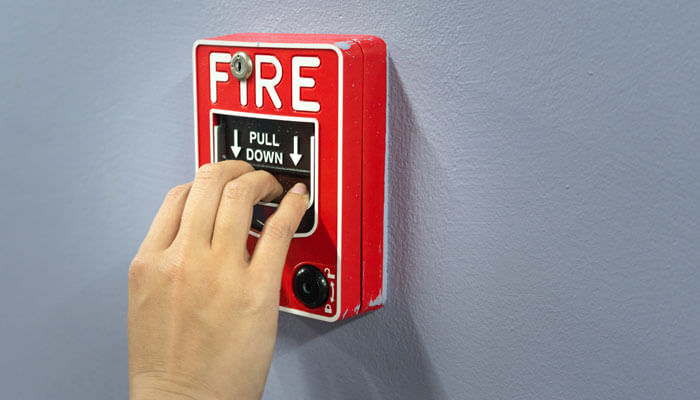
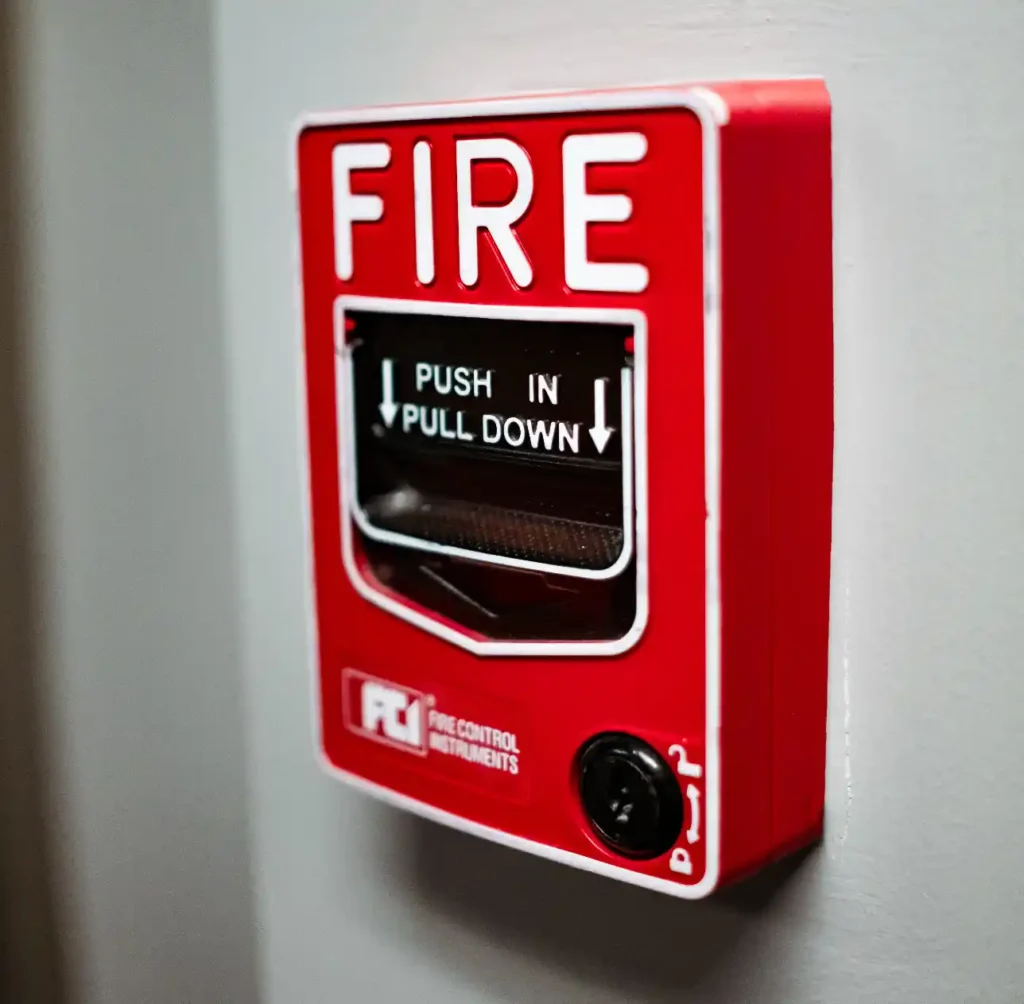
Near the top of any smart planning conversation, it also helps to connect backup strategy with broader full fire protection services and specialized fire alarm service systems. That way, backup power is not treated like a lonely add on in a cabinet. It becomes part of a coordinated life safety program that actually holds together when the building has a bad day.
Why continuous power decides whether alarms stay dependable
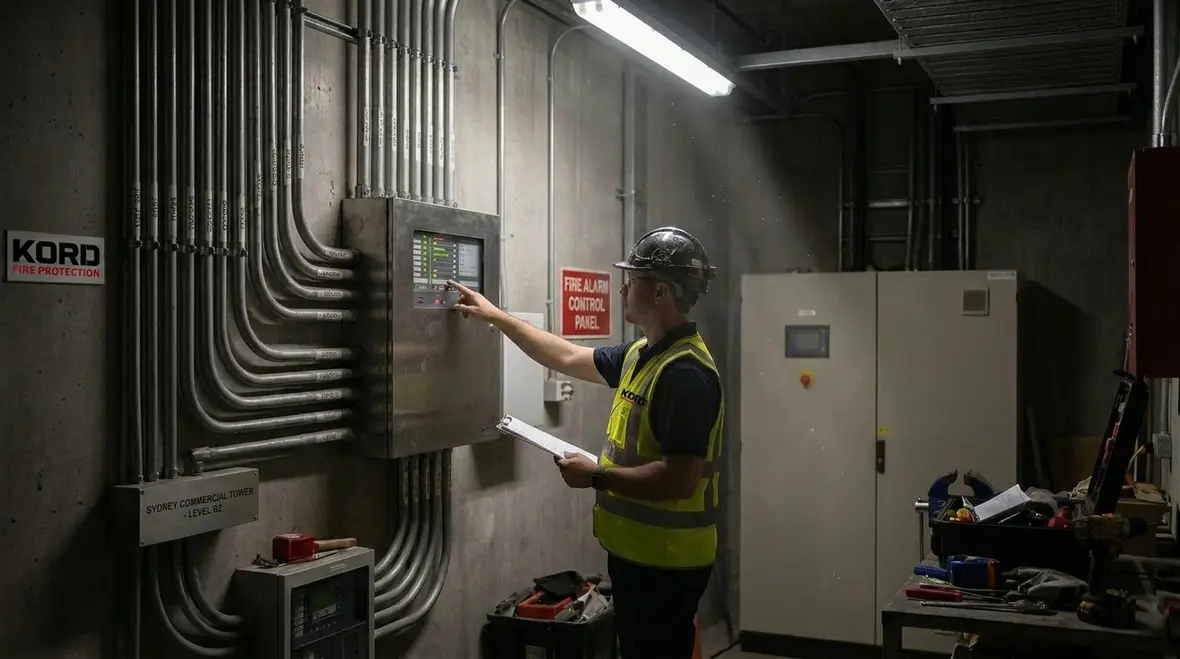
Third person experts know that most alarm failures during real incidents trace back to power issues. Therefore, the goal goes beyond “having a backup.” It is about ensuring the alarm system maintains required functions from the first second of a disruption through the entire incident window.
Continuous power also supports supervision. Fire panels constantly watch circuits, monitor device states, and report status. If the power chain breaks or resets, the system can lose critical awareness. As a result, responders may receive delayed or confusing signals. For facilities managers, that is the difference between a clean evacuation and a slow-motion scramble that nobody wants to explain to an auditor.
Steady power protects more than the panel
A dependable backup setup supports strobes, horns, communication pathways, supervisory reporting, and the general confidence that the building will not go oddly quiet at the exact wrong moment. In large commercial environments, that matters because confusion spreads faster than smoke rumors in a lunchroom. If the alarm response is inconsistent, people hesitate. If the system stays stable, response becomes faster, calmer, and much easier to manage.
How to design a power backup plan that fits the building
Every facility has different loads, cabinet layouts, and operational risk. So the power backup plan must match the site. First, the service team should identify the alarm panel type, notification appliance circuits, monitoring modules, and any interface equipment. Then they should confirm the expected operating time required by the relevant rules and the specific building risk profile.
Next comes distribution design. Power backups should not just sit in a room like a spare umbrella that nobody checks. Instead, the installation should ensure stable voltage to the fire alarm control panel and critical sub circuits, and it should reduce nuisance resets. Additionally, the system should handle both normal operation and transfer events without instability.
Kord Fire Protection becomes a vital partner here because they coordinate fire life safety planning with practical power implementation. They help clients align the electrical reality of a site with the operational intent of the fire system, which keeps teams from discovering problems during commissioning or, worse, during an emergency.
Planning for the building you actually have
That sounds obvious, yet it gets missed all the time. A retail tenancy, industrial site, office tower, aged care facility, and mixed use property do not behave the same way under load or during outages. Expansion over time also changes system demand. New devices, new interfaces, and new tenant improvements quietly add draw. A backup plan that worked perfectly three years ago may now be operating with less breathing room than anyone realizes.
Battery care and inspection routines that prevent surprise failures
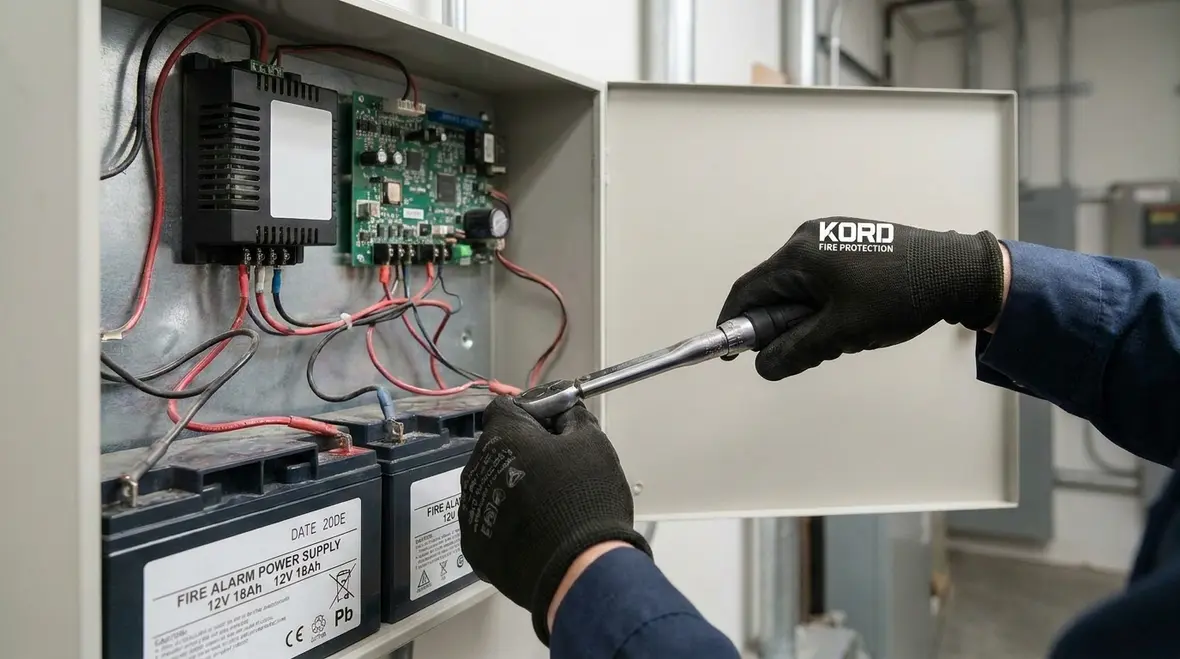
Batteries rarely fail like they do in movies. Instead, they degrade quietly, then drop capacity under load. Consequently, a strong inspection routine must include more than checking voltage with a quick glance.
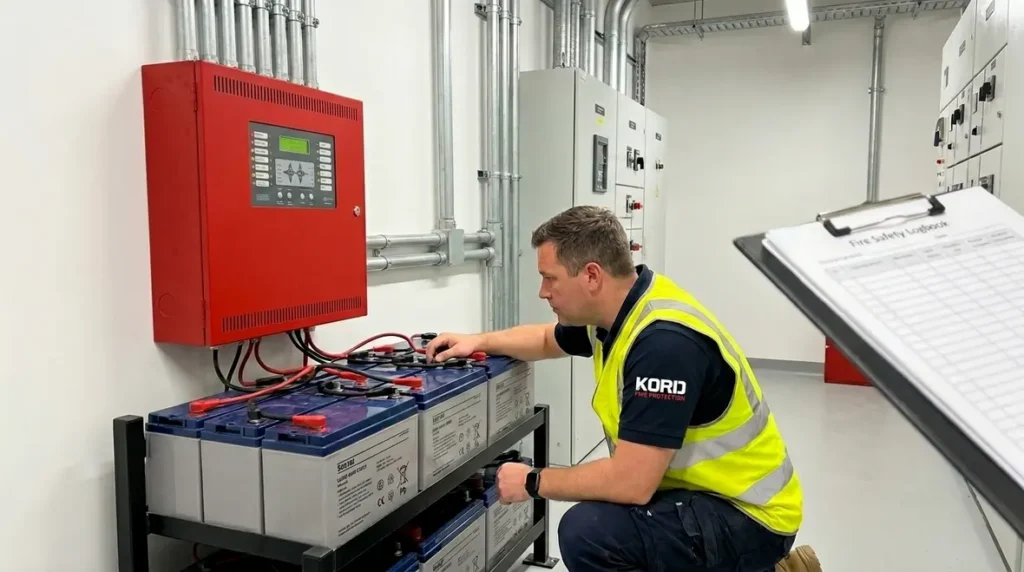
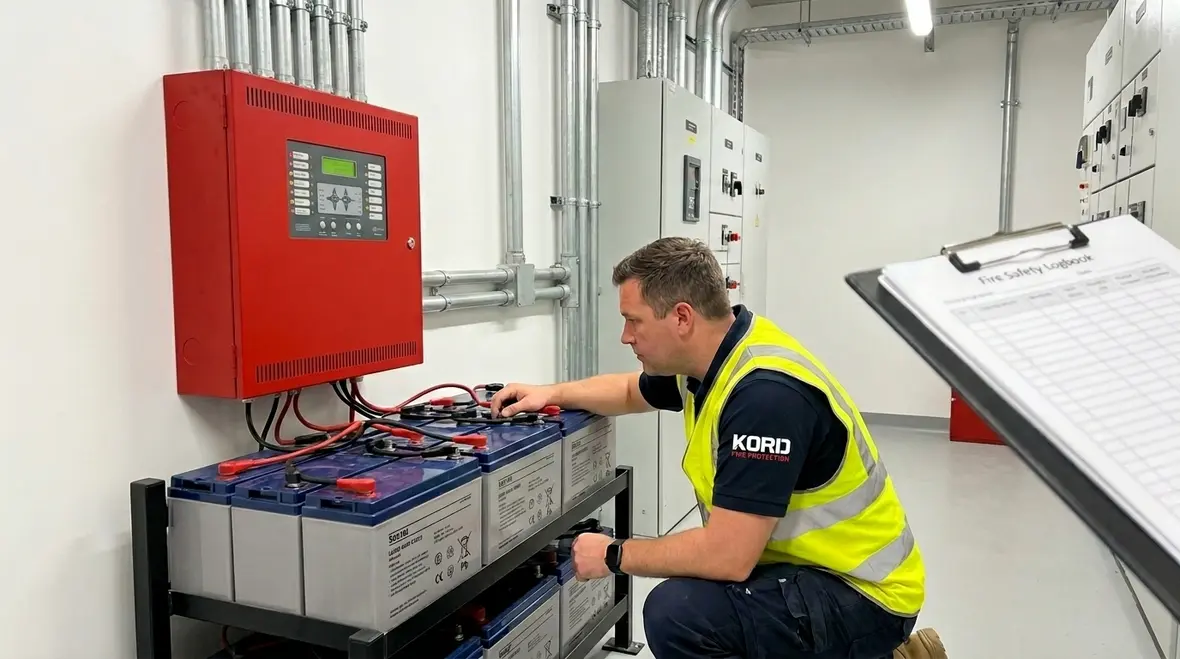
Best practice focuses on performance and history. Service teams should review prior test results, installation dates, and any temperature exposure that may shorten life. They should perform load testing at intervals aligned with manufacturer guidance and site risk. Also, they should verify proper charging behavior. If charging voltage drifts, batteries can age faster than expected.
Just as important, terminals and connections need attention. Loose connections can create heat, corrosion, or intermittent behavior that only shows up when the lights go out. Therefore, routine visual checks and torque verification help keep commercial fire alarm power backups stable and trustworthy.
Why history tells the truth faster than hope
One test is a snapshot. A documented history is a pattern. When facilities teams track capacity changes over time, they can spot decline before it becomes failure. That makes replacements more predictable, budgets more sensible, and emergency callouts less dramatic. Nobody misses the thrilling experience of learning about a weak battery during an outage at 4:47 a.m.
Testing transfer behavior under real conditions
When utility power fails, the system must switch smoothly to backup power. However, many organizations test only the presence of a battery, not how the system behaves during the handover. That is where serious gaps hide.
To close the gap, teams should run functional tests that mimic the site scenario. They should observe panel behavior during transfer, check notification appliance performance, and confirm any monitored fault states are handled correctly. Then they should verify alarm signaling pathways remain clear and consistent.
After that, the service team should document results and trends. If test outcomes vary, the cause often points to charging parameters, cable resistance, battery condition, or control logic settings. When facilities handle these issues early, they avoid repeated troubleshooting during busy periods like peak retail seasons or industrial shutdown windows.
A test should feel realistic, not ceremonial
A backup system is not there to impress a clipboard. It is there to carry real load under real pressure. That is why transfer testing needs to reflect actual operating conditions as closely as practical. If the test is too gentle, the result is too flattering. Systems love passing easy exams. Buildings, unfortunately, do not always offer easy exams back.
Monitoring, alarms, and remote visibility for facilities teams
Power continuity is not useful if no one knows the system is drifting out of spec. So modern facilities benefit from monitoring strategies that detect weakness early. This includes panel supervision features, fault reporting, and maintenance alerting.
Remote visibility also supports decision making. If a site receives a pre-failure warning, the facility team can schedule replacement without disrupting operations. Meanwhile, service providers can prepare the right batteries or components before arriving. That reduces labor time and prevents the classic “we need it now” scramble.
For industrial, retail, and multi-site commercial groups, the value is even clearer. When one location shows reduced battery performance, leadership can review similar assets across other facilities. Kord Fire Protection can support that approach by aligning service data with on site schedules and practical maintenance planning across Australia.
Common mistakes that quietly undermine backup performance
Even experienced teams can miss details. Therefore, the following mistakes deserve attention before they cause operational surprises. Consider these the greatest hits of problems that sound small, then become expensive.
- Installing backup components without matching capacity requirements for the real notification load
- Skipping load testing and relying only on static voltage readings
- Ignoring charging system checks, which can shorten battery life
- Allowing connections to loosen due to vibration, heat, or cabinet handling
- Testing only panel alarms and not the transfer behavior during power disruption
- Forgetting that different equipment adds different draw, especially in mixed industrial or retail fit outs
And yes, sometimes the mistake is simply scheduling. If testing happens too rarely, the system may fail at the one time it matters most. Power continuity demands rhythm. Fortunately, strong procedures and a reliable partner make that rhythm easier to maintain.
Why Kord Fire Protection can be an ongoing power partner
Facilities do not need a one time fix. They need confidence that the system will perform during outages, maintenance events, and storm season. Kord Fire Protection can support organizations as a continuous service partner by combining fire alarm expertise with practical power backup management.
This partnership approach helps teams coordinate inspections, battery services, performance testing, and documentation. It also supports multi facility operations by keeping standards consistent across industrial sites, retail centres, and commercial offices. As a result, the facility team spends less time reacting and more time planning.
In short, they help keep commercial fire alarm power backups from becoming a line item that nobody looks at until it becomes a problem worth explaining on a stressful Monday morning.
FAQ
CTA: lock in continuous power with a service plan
Facilities across Australia can reduce risk fast by treating power continuity as a managed program, not a last minute scramble. Kord Fire Protection can help coordinate inspections, battery performance checks, transfer testing, and clear documentation so the fire alarm system stays dependable.
Reach out to get a tailored service plan for your building type and operating schedule. Because when power fails, the only acceptable outcome is calm action. That is the whole point of backup power: less panic, better response, and far fewer unpleasant surprises when the mains decide to take the day off.

Join Our Newsletter!
Get the latest fire safety tips delivered straight to your inbox From our Newsletter.