NFPA 52 Section 24.2 Application: Which Onboard Equipment Is Covered
Quick Answer
NFPA 52 Section 24.2 focuses on the specific onboard components installed on vehicles or mobile equipment that process, store, or transport liquefied petroleum gas or other regulated fuel systems. The covered equipment depends on function, installation location, and interaction with the fuel system, piping, and controls.
Why Section 24.2 Matters in an NFPA 52 Onboard Review
Commercial fleets, transit operators, industrial mobile equipment users, and retail fueling locations that serve these vehicles often face the same compliance challenge: many “vehicle onboard” parts are installed by multiple vendors and certified to different standards. NFPA 52 onboard automotive equipment application requirements become critical when onboard items affect leak potential, ignition control, pressure regulation, ventilation, or the safe shutoff of fuel flow. During inspections, the determining factor usually is not the brand of the component, but the component’s safety function and how it interfaces with the onboard fuel system.
In practical terms, fire safety teams must be able to answer three questions during compliance documentation reviews:
- Is the equipment part of the onboard fuel system function defined by NFPA 52 Section 24.2?
- Is the equipment installed in the intended location and configuration without introducing prohibited exposure pathways?
- Is it maintained and inspected at intervals that support continued safe operation?
If your facility is also tightening broader inspection readiness processes, Kord Fire Protection’s fire pump service and inspection support offers a practical example of how documented maintenance programs stay organized and audit-ready.
Which Onboard Equipment Typically Falls Under NFPA 52 Section 24.2?
NFPA 52 Section 24.2 is applied to onboard equipment that supports safe containment, controlled release, and controlled use of the onboard fuel system. Although the exact scope depends on the type of vehicle, fuel system design, and operational intent, coverage generally focuses on components that can contribute to a hazardous condition if they fail, loosen, corrode, clog, overpressure, or lose intended control function.
Onboard components tied to fuel containment and pressure control
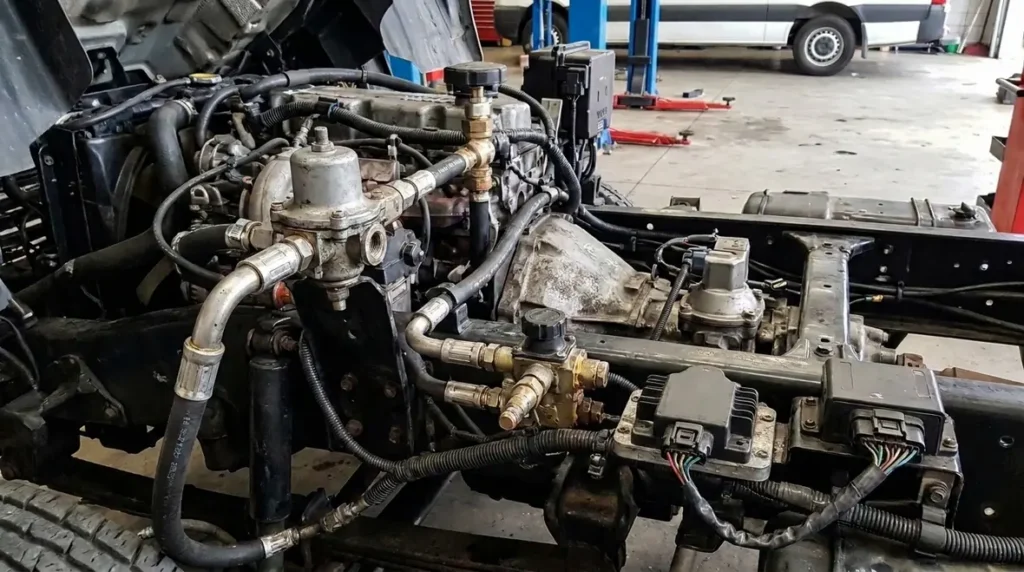
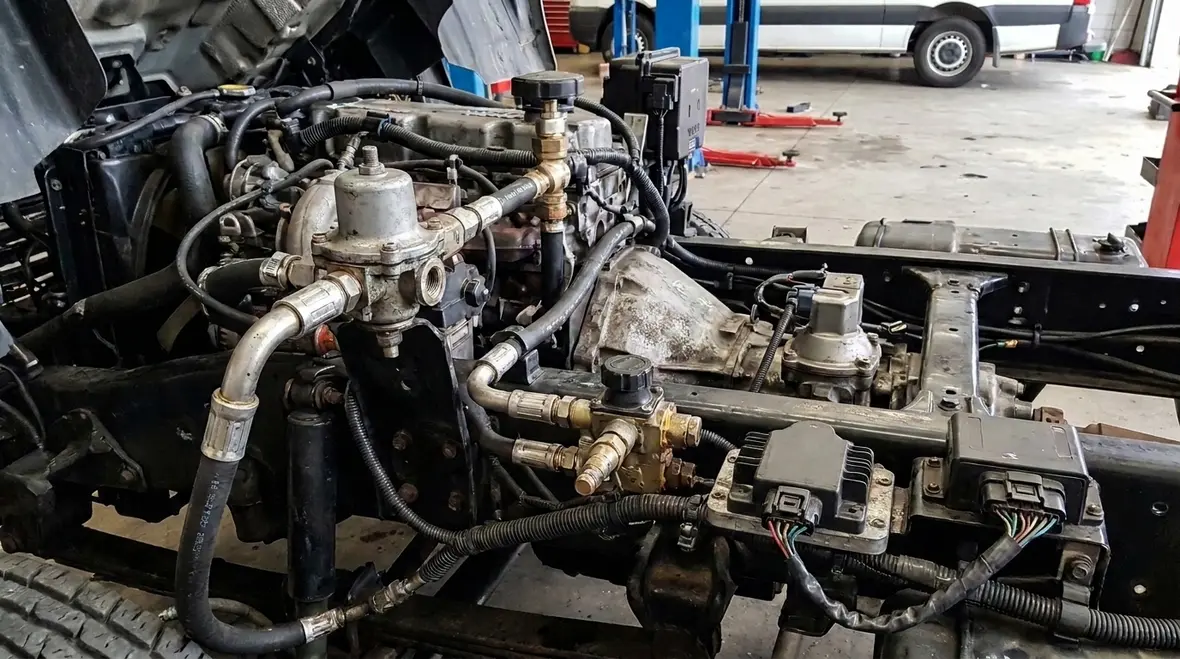
Onboard equipment commonly includes items such as valves and regulators that directly control pressure and flow from onboard fuel storage to downstream components. These elements can create major escalation risk if they stick, leak at fittings, or fail to regulate properly under abnormal operating conditions.
Onboard components tied to distribution and controlled delivery
Components that route fuel to an engine or auxiliary loads can also be within the intent of Section 24.2. This includes equipment used for distribution that can affect hose or tubing integrity, connection security, or the ability to stop flow when required.
Onboard electrical and control interfaces that influence safety functions
Where electrical controls or sensing functions determine fuel shutoff behavior, regulator operation, or other safety-critical functions, they may be evaluated as part of the covered onboard arrangement. Inspections often uncover “non-obvious” compliance gaps when aftermarket control modules, altered wiring paths, or unmanaged splices are introduced during maintenance or fleet modification.
How Inspectors Determine Coverage in the Field (Operational and Documentation Cues)
NFPA 52 onboard automotive equipment application determinations often hinge on observable installation and on the safety function the equipment performs. In commercial and industrial settings, this is where facility standards, maintenance practices, and recordkeeping create measurable outcomes.
1) Equipment function and location
Field evaluation starts by mapping each onboard item to the fuel system workflow. Inspectors look for the item’s role in containment, pressure regulation, distribution, shutoff, and controlled combustion. Location also matters because mechanical damage exposure, corrosion environment, and proximity to ignition sources can change the risk profile even when the same component model is used.
2) Evidence of approved installation practices
Compliance depends on more than component labeling. Inspectors look for correct routing, proper mounting, secure fittings, and the absence of unapproved modifications. Common findings include:
- Improper hose or tubing routing that increases chafing and vibration wear.
- Loose or degraded connections at service points.
- Aftermarket additions that bypass engineered shutoff behavior.
- Missing protective components intended to reduce impact damage.
3) Maintenance condition and change control
Vehicle maintenance and change control determine whether onboard equipment continues to meet safety intent. Facilities that operate at scale often struggle with version control for wiring diagrams, regulator settings, and approved component lists. For compliance, technicians must verify that the onboard system returned to service matches the design basis after inspections, repairs, or part replacement.
Common Failure Points That Trigger Compliance Issues
Even when original installations were compliant, failure modes can shift during operational life. These failure points are frequent across commercial, industrial, and retail service environments where vehicles operate in varied temperatures, vibration conditions, and maintenance schedules.
Leaks at fittings, joints, and service interfaces
Leak risk typically increases with vibration cycles, thermal expansion, and repeated service activity. Maintenance that does not include correct torque procedures, appropriate joint compound or sealant types, and verified pressure testing can result in recurring nonconformities.
Regulator or valve malfunction from contamination and wear
Regulators and valves can stick due to debris, corrosion, or insufficient cleaning during service. Another frequent issue is incorrect adjustment after troubleshooting, which can cause unsafe operating conditions that are not immediately obvious during routine checks.
Electrical or control wiring changes that degrade safety behavior
Incorrect grounding, inadequate strain relief, or unsupported splices can degrade sensing accuracy and shutoff performance. Facilities should ensure that electrical modifications follow controlled procedures and that documentation remains current to support the NFPA 52 onboard automotive equipment application review.
Hose and tubing deterioration and improper replacement practices
Hose and tubing degrade from abrasion, chemical exposure, and environmental extremes. Replacement parts that are functionally compatible but not intended for the same onboard system design can create compatibility risks. Inspectors may treat this as a coverage and installation noncompliance issue under the intent of Section 24.2.
Compliance Workflow for Commercial Fleets and Facilities
Facilities reduce risk by treating NFPA 52 onboard automotive equipment application requirements as a system verification process. Kord Fire Protection supports teams with practical compliance planning, inspection readiness, and ongoing maintenance verification that aligns with real facility operations.
Step 1: Build and maintain an onboard equipment inventory
Create a vehicle class level inventory that identifies onboard components tied to the fuel system function. Include part numbers, approval documentation, and installation dates. For fleets, track differences between vehicle models and retrofit configurations.
Step 2: Align maintenance procedures with coverage requirements
Update maintenance plans to include the specific checks that protect safe operation: connection inspections, leak checks, regulator performance verification, and functional tests of safety related shutoff behavior as applicable.
Step 3: Verify documentation during inspection readiness reviews
Inspection readiness must include current maintenance records, repair logs, and any change control documentation for electrical and mechanical alterations. This reduces the most common compliance delay: missing proof that the system returned to the approved condition after service.
Step 4: Perform periodic verification and trend failure indicators
Trend recurring issues such as recurring leaks at the same service interface, regulator adjustment complaints, or repeated damage to a specific routing path. Trend analysis improves maintenance effectiveness and helps facilities prioritize engineering corrections rather than repeating reactive repairs.
For more information on commercial fire protection support and inspection readiness, visit Kord Fire Protection to discuss a compliance strategy tailored to your fleet and facility environment.
Frequently Asked Questions
Get Help Confirming Coverage and Readiness
Confirming which onboard items are covered by NFPA 52 Section 24.2 requires more than component labels. Contact Kord Fire Protection to develop an onboard equipment inventory, align maintenance procedures with practical compliance expectations, and support inspection readiness with a documented, defensible verification approach for your fleet and facilities.

Join Our Newsletter!
Get the latest fire safety tips delivered straight to your inbox From our Newsletter.