
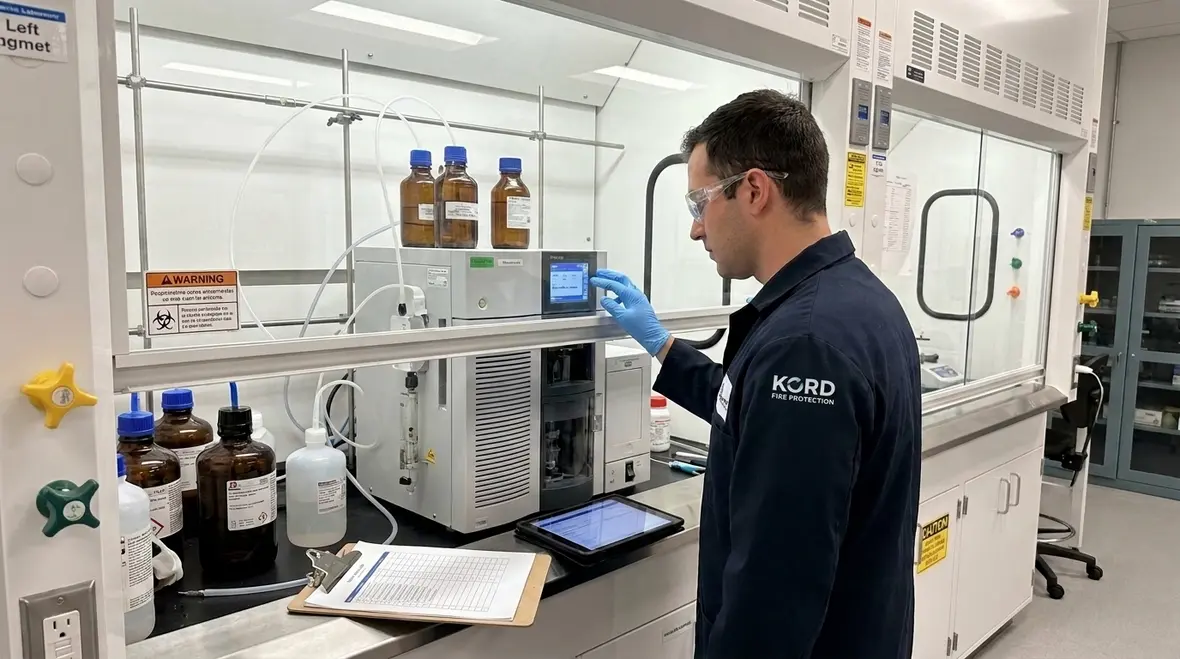
NFPA 45 Section 11.1 General: Overview of Lab Operations and Apparatus
Quick Answer
NFPA 45 Section 11.1 provides a practical baseline for managing laboratory operations and the apparatus used in those spaces. It focuses on how equipment is operated, maintained, and controlled so fire and explosion hazards are addressed in day to day work, not only during commissioning.
For a related look at ongoing inspection, testing, and maintenance fire protection practices, it helps to connect Section 11.1 requirements with the real service routines that keep laboratory safeguards ready between audits.
Why NFPA 45 Section 11.1 matters in day to day lab work
NFPA 45 laboratory operations general requirements set the tone for how a commercial or industrial laboratory controls ignition sources, manages hazardous processes, and maintains equipment reliability. In real facilities, compliance gaps usually appear not in the written hazard analysis, but in how apparatus is used across shifts, during maintenance, and when workflows change.
Section 11.1 creates the operational lens for that reality. It expects labs to treat fire and explosion protection as an ongoing activity tied to apparatus performance, staff procedures, and maintenance discipline. When those elements are inconsistent, even a well designed lab can become vulnerable due to compromised safeguards, improper operation, or deteriorated components.
What Section 11.1 covers: operational control of laboratories and apparatus
NFPA 45 Section 11.1 establishes general expectations for laboratory operations and the apparatus within those operations. While the exact structure and wording may vary by edition, the core compliance intent remains consistent: laboratory work must be conducted in a manner that limits fire spread potential and reduces the likelihood of ignition during normal operations, maintenance activities, and foreseeable abnormal conditions.
From a facility perspective, Section 11.1 pushes organizations to align operational procedures with the hazards created by apparatus. This includes ensuring that equipment is:
- Operated within its designed parameters
- Protected against foreseeable failure modes that can introduce ignition sources or increase combustible loading
- Maintained so suppression and detection functions remain capable
- Installed and configured to support safe operation and access for inspections
How apparatus operation drives fire safety outcomes
Commercial labs rarely fail due to a single catastrophic defect. More often, they fail through small, repeatable operational breakdowns that Section 11.1 is meant to prevent. NFPA 45 laboratory operations general compliance depends on consistent apparatus behavior and reliable controls.
Operational controls that prevent ignition and propagation
Key operational practices typically include the following:
- Controlled start up and shut down: Ensuring interlocks, purge sequences, and ventilation states occur in the intended order.
- Process parameter discipline: Preventing overheating, over pressurization, and unstable operating conditions that increase ignition risk.
- Segregation and housekeeping: Managing combustible residue, waste containers, and secondary containment so that small releases do not escalate.
- Safe access and egress around apparatus: Maintaining clearance for inspection, operation, and firefighting actions.
Common failure points in apparatus related compliance
Facilities commonly encounter issues such as:
- Bypassed interlocks during troubleshooting, later left in an unsafe configuration.
- Ventilation impairment caused by blocked ductwork or incorrectly adjusted airflow.
- Worn seals and gaskets on apparatus leading to leakage of flammable vapors.
- Damaged electrical enclosures or improper cable routing that compromises protection integrity.
- Uncontrolled changes to equipment layouts that affect detector coverage, suppression discharge patterns, or safe movement of ignition control systems.
These failure points map directly to the “general operations and apparatus” intent of Section 11.1. Effective compliance requires operational oversight, not only equipment procurement.
Inspection, testing, and maintenance: what auditors expect to see
Section 11.1 compliance cannot be sustained through periodic inspection alone. Inspectors typically look for evidence that apparatus remains capable over time and that operational procedures reflect current equipment condition and lab workflows.
Maintenance records that hold up under scrutiny
Auditors commonly expect documentation that shows:
- Manufacturer based maintenance intervals, including corrective actions
- Verification that safety controls function as designed after maintenance and calibration
- Tracking of equipment impairments and return to service procedures
- Training or competency checks tied to operational duties and hazard awareness
Reliability checks linked to fire and explosion risk
Practical maintenance should connect apparatus reliability to hazard mitigation. For example, if the lab relies on local exhaust, detector performance, or suppression features, then impairments or component degradation should trigger prompt corrective action. Poorly controlled maintenance is a frequent root cause of non compliance because it breaks the chain between hazard controls and real operating conditions.
For ongoing compliance support, Kord Fire Protection helps commercial facilities implement maintenance and testing programs aligned with NFPA expectations. For related guidance on fire protection systems and inspection discipline, see ITM Fire Protection Inspection Testing Maintenance.
Operational compliance challenges in commercial, industrial, and retail settings
Even though labs may look similar on paper, facility realities differ. Section 11.1 general requirements must be implemented in a way that matches building operations, tenant workflows, and staffing patterns.
Tenant and shared facility constraints
In commercial complexes, labs may operate within shared buildings with centralized maintenance, building wide life safety systems, and multiple tenants. Common challenges include coordination delays for equipment isolation, inconsistent responsibility boundaries, and unclear change control when a tenant upgrades apparatus.
Retail and light industrial labs
Some retail or light industrial facilities operate small testing or handling areas that still use hazardous processes. The risk profile may differ, but NFPA 45 laboratory operations general principles still apply. The biggest challenge in smaller spaces often involves constrained ventilation, limited storage control, and reduced ability to keep access clear for inspection and emergency response.
Multi shift work and procedural drift
In operations with multiple shifts, procedural drift causes the most harm. An apparatus that behaves safely under one team’s habits can become unsafe under another team’s shortcuts. Section 11.1 supports the use of written, trained, and verified procedures that preserve safe operating conditions across all shifts and contract staff.
Implementation checklist: building a defensible Section 11.1 compliance program
The following checklist reflects the operational focus of NFPA 45 Section 11.1 and the practical steps commercial facilities use to reduce inspection findings.
| Area | What to confirm | Typical evidence |
|---|---|---|
| Apparatus operation | Apparatus runs within designed parameters with interlocks and safety controls intact | Operating SOPs, logs, interlock verification records |
| Housekeeping and waste | Combustible residue and waste are managed to prevent escalation | Waste container procedure, inspection checklists |
| Ventilation and controls | Local exhaust or ventilation is operational and not bypassed | Maintenance tickets, airflow verification, impairment tracking |
| Maintenance discipline | Return to service confirms that safety functions are restored | Work orders, functional test results, corrective action closure |
| Change control | Equipment changes do not invalidate hazard controls or detection and suppression coverage | Change logs, updated risk reviews, reinspection triggers |
| Training and competency | Staff understand operational limits and what triggers escalation | Training records, competency checks, supervision procedures |
Where facilities struggle to keep these items current, Kord Fire Protection can help coordinate compliance testing, maintenance verification, and documentation support so operational controls stay credible between audits. For additional facility support concepts, visit Kord Fire Protection.
Frequently Asked Questions
Next step: strengthen operational compliance before your next inspection
Facilities can reduce NFPA 45 laboratory operations general risk by auditing apparatus operation, tightening maintenance return to service checks, and validating that procedures match current workflows. Kord Fire Protection supports commercial and industrial organizations with practical inspection, testing, and maintenance documentation so controls remain effective over time. Contact Kord Fire Protection to review your lab operations and build a defensible compliance plan aligned with NFPA expectations.

Join Our Newsletter!
Get the latest fire safety tips delivered straight to your inbox From our Newsletter.



