
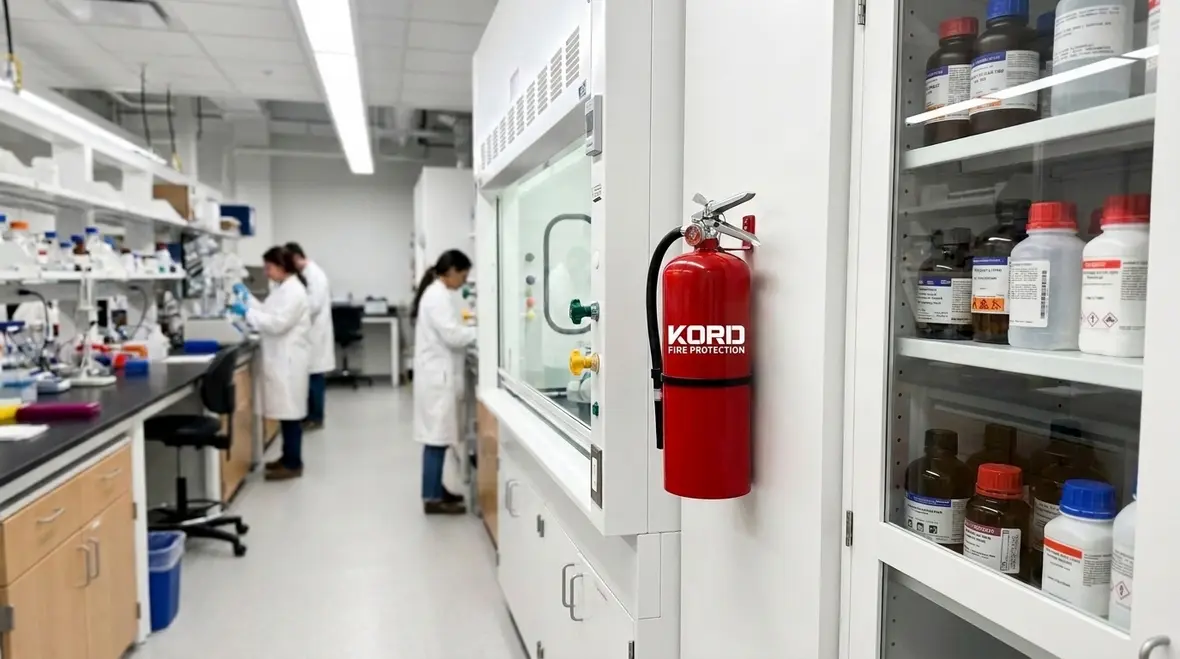
NFPA 45 Section 6.3: Portable Fire Extinguishers for Laboratories (Practical Compliance Guide)
Quick Answer: NFPA 45 Section 6.3 establishes requirements for portable fire extinguishers used in laboratory occupancies, including appropriate selection, placement, and inspection readiness. For facilities, compliance depends on using the correct extinguisher for expected hazards and maintaining documentation through ongoing inspection and servicing.
Near the top of any compliance workflow, it helps to connect laboratory extinguisher planning with broader fire extinguisher service and replacement support, especially when outdated units, damaged canisters, or missed service intervals are already part of the risk picture.
Why NFPA 45 Section 6.3 matters in laboratory environments
Laboratories combine ignition sources, flammable and combustible liquids, reactive chemicals, and frequent work process changes. NFPA 45 laboratory portable fire extinguishers cannot rely on a one size approach. NFPA 45 Section 6.3 drives facilities to match extinguishers to likely fire classes and to maintain them so they are available when conditions demand immediate intervention.
For commercial, industrial, and retail operations that support lab functions, including shared research spaces, contract labs, and pilot production areas, the compliance challenge usually comes from hazard drift. Equipment, chemicals, and workflows change faster than extinguisher lists, tag records, and placement diagrams unless a facility manages extinguisher readiness as a controlled program.
What Section 6.3 requires: selection, readiness, and coverage
NFPA 45 Section 6.3 addresses how portable fire extinguishers should be provided for laboratory occupancies. While details depend on the hazard evaluation for the space, the core expectation is consistent: extinguishers must be suitable for the anticipated type of fire and must be located and maintained so they can be quickly accessed and used.
1) Correct extinguisher for the expected hazard profile
Laboratories commonly present hazards such as:
- Flammable liquids and solvents
- Combustible liquids and oils
- Electrical equipment and energised controls
- Ordinary combustibles, such as wood, paper, and packaging
- Special hazards depending on the chemical inventory and processes
Commercial teams frequently misstep by selecting extinguishers based on cabinet availability rather than hazard needs. Section 6.3 expectations typically require that extinguishers align with the classifications and characteristics of the materials present. That alignment also drives operator training and extinguisher placement strategy.
2) Placement that supports fast access under real conditions
Laboratory egress routes can be obstructed by equipment staging, carts, or blocked access to benches during experiments. Effective coverage planning considers where staff naturally move during normal operations, how quickly they can reach an extinguisher, and whether access paths remain usable during an incident.
Facilities should validate extinguisher placement against actual workflow patterns. A common failure point is placing extinguishers near doors on paper while operational staff routinely keep those areas blocked for routine logistics.
3) Ongoing readiness, not just initial installation
NFPA 45 Section 6.3 compliance relies on the extinguisher remaining in serviceable condition. The practical outcome is a documented inspection and maintenance program that tracks operational readiness, tamper evidence, pressure indicators, and required servicing intervals.
In commercial settings, missing tags, expired service dates, or extinguishers installed but never incorporated into the inspection program can create a compliance gap quickly.
Operational inspection: what good looks like for laboratory extinguishers
Most failures do not happen at installation. They happen over time through poor inspection discipline, limited access to documentation, or inconsistent training for the teams tasked with routine checks.
Routine inspection signals that should trigger action
A strong program monitors indicators and physical condition that commonly reveal problems early:
- Pressure gauge readings outside the acceptable range
- Missing or broken tamper seals
- Physical damage, dents, corrosion, or damaged labels
- Obstructed access or extinguishers stored behind blocked pathways
- Missing inspection tags or unreadable documentation
Common lab-specific failure points
Laboratories generate conditions that can degrade extinguishers faster than typical office spaces:
- Corrosive atmospheres and chemical vapors that accelerate surface damage
- Frequent lab reconfiguration that moves hazards without moving extinguisher locations
- High traffic areas where carts and equipment bump cabinets or mounting brackets
- Uncoordinated maintenance scheduling between lab operations and facilities teams
Commercial facilities reduce these risks by linking extinguisher management to their change control process, ensuring that when work areas change, extinguisher coverage updates too.
Maintenance and service intervals: controlling compliance risk
NFPA 45 laboratory portable fire extinguishers must remain serviceable through documented inspection and servicing. The maintenance program should track responsibilities, service history, and certification requirements as part of a continuous lifecycle approach.
Document control and audit readiness
Even when extinguishers are functional, compliance can fail due to missing records. Facilities should ensure that:
- Service dates and test records match the equipment serial number and location
- Inspection tags are current and visible
- Monthly or periodic inspections are scheduled and consistently completed
- Corrections for deficiencies get documented closure
This is where Kord Fire Protection supports commercial sites by providing ongoing inspection discipline, service scheduling, and documentation that stands up to operational audits and insurance or AHJ review.
Verification after repairs, discharges, or modifications
When an extinguisher is discharged, damaged, relocated, or modified for any reason, it must be brought back to compliant service status before returning it to the hazard area. Facilities should avoid assumptions based on appearance alone. Indicators, internal components, and certification status drive readiness, not visual inspection only.
How Kord Fire Protection helps facilities meet NFPA 45 laboratory requirements
NFPA 45 Section 6.3 compliance is a system, not a one-time purchase. Kord Fire Protection helps commercial facility teams keep laboratory extinguisher coverage aligned with evolving hazards and maintains readiness through disciplined inspection, testing, and service documentation.
For organizations managing multiple suites, shared lab spaces, or tenant occupied areas, Kord Fire Protection can streamline processes that often break down in coordination. The goal is simple: ensure the right extinguisher is available, accessible, and verified, with records that support continued compliance.
To strengthen your overall fire protection documentation workflow, teams can also review Kord’s guidance on fire protection services and compliance support to align maintenance programs with facility operational needs.
What to ask during a laboratory extinguisher compliance review
To validate coverage and operational readiness, facilities should use a structured checklist. The most effective questions focus on real workflow conditions and documented maintenance performance.
- Do the NFPA 45 laboratory portable fire extinguishers match the fire hazards identified for each lab area?
- Are extinguisher locations consistent with current lab layouts, access routes, and equipment staging practices?
- Are monthly or periodic inspections completed and traceable to the correct equipment?
- Do pressure indicators, tamper seals, and physical conditions show no hidden deterioration?
- Are service intervals and certifications maintained without gaps, including after any discharge or damage event?
Commercial teams typically find the highest value by pairing this review with a facilities change walk. That method connects updated hazard conditions to updated extinguisher coverage and documentation.
Frequently Asked Questions
Conclusion and call to action
NFPA 45 Section 6.3 compliance for NFPA 45 laboratory portable fire extinguishers depends on correct selection, accessible placement, and verified readiness backed by consistent inspection and service records. Commercial lab operations benefit from a lifecycle approach that connects hazard changes to extinguisher coverage and documentation. Kord Fire Protection can help your team maintain dependable readiness and audit-ready records. Schedule a laboratory extinguisher compliance review with Kord to close gaps before they become enforcement or loss events.

Join Our Newsletter!
Get the latest fire safety tips delivered straight to your inbox From our Newsletter.



