
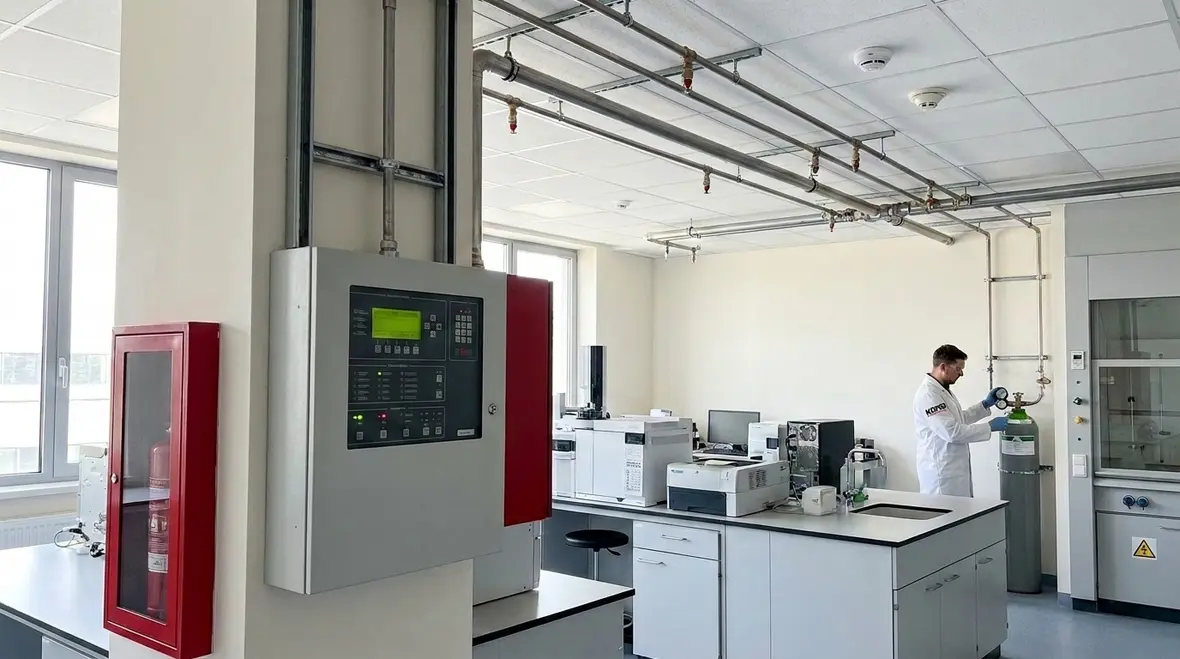
NFPA 45 Section 6.1: Automatic Fire Extinguishing Systems for Laboratories
Quick Answer: NFPA 45 Section 6.1 defines when and how automatic fire extinguishing systems must protect laboratories based on fire hazards, occupancy use, and design objectives. It also drives installation quality, inspection readiness, and ongoing maintenance to keep systems reliable when chemical risks escalate.
For facilities managing sensitive lab hazards, Kord Fire Protection also covers clean agent fire suppression for labs, which fits naturally into conversations about protecting equipment, limiting residue, and keeping operations from turning into a smoky budget meeting. ([kordfire.com](https://kordfire.com/clean-agent-fire-suppression-for-labs-by-kord-fire-protection/?utm_source=openai))
What NFPA 45 Section 6.1 Requires for Laboratory Protection
NFPA 45 laboratory automatic extinguishing systems are engineered to suppress or control fires quickly in environments where ignition sources, fuel loads, and hazardous materials can change from room to room. Section 6.1 centers on automatic fire extinguishing as a core protective measure for laboratories, tying system selection and design to the nature of the hazards involved. For facility owners and safety teams, the practical implication is straightforward: the system must match the laboratory’s credible worst case scenarios, not a generic fire risk.
Because laboratories often include combustible materials, flammable liquids or vapors, reactive chemicals, and dense electrical equipment, the compliance challenge is not only meeting an installed system requirement. It is maintaining performance through correct design assumptions, robust detection or actuation interfaces, and disciplined inspection and testing. Commercial facilities and industrial campuses typically succeed when they treat NFPA 45 compliance as an operating system, supported by documented procedures and service schedules.
How Systems Are Selected Under Section 6.1: Hazard Match and Design Objectives
NFPA 45 Section 6.1 expects facilities to select automatic extinguishing solutions that align with the fire hazard present. In practice, design teams must translate chemical and physical hazards into enforceable parameters that affect how the system is expected to control fire growth, protect egress routes, and limit damage to critical equipment.
Key selection drivers facility teams should verify
- Fuel and vapor behavior: Flammable liquid hazards may require suppression strategies that address vapor-air ignition and rapid fire spread.
- Compartment and enclosure effects: Doors, ventilation, and room boundaries influence how quickly a fire reaches the target area and how effectively agents distribute.
- Electrical risk: Systems must account for equipment likely to be energized at the time of actuation.
- Occupant and process impacts: Laboratories may need systems that limit residue, avoid unsafe agent effects, and support post event operability.
Operational procedure matters more than the device name
Many facilities specify a suppression technology but fail to fully implement the operational procedures that make that technology effective. Examples include allowing combustible storage to expand beyond design limits, changing ventilation patterns, or relocating experiments without evaluating whether hazard assumptions have changed. NFPA 45 compliance succeeds when the extinguishing strategy and the laboratory operating envelope remain aligned through change management.
Common System Configurations Used in Laboratories
Section 6.1 does not rely on a single technology for all laboratories. Commercial projects typically use one or more configurations based on the protected hazard area and how quickly a fire could develop.
Typical configurations to expect
- Total flooding systems: Often selected where enclosure control and agent distribution support suppression of fires without direct agent coverage of every item.
- Local application systems: Used when the fire risk concentrates around particular processes, equipment, or surfaces.
- Automatic detection and actuation coordination: Many laboratory systems integrate detection with actuation logic designed to reduce false discharge while still ensuring fast response.
Facility teams should confirm that their system design includes reliable interfaces, such as control panel supervision, alarm pathways, and safe emergency response triggers. During inspections, documentation quality often determines how easily a facility can demonstrate that performance assumptions match real world conditions.
Inspection, Testing, and Maintenance: The Compliance Lifeline
Automatic systems in laboratories are only as dependable as their maintenance and test program. NFPA 45 Section 6.1 drives a performance oriented approach: the system must remain ready to operate, including detection integrity, control logic function, agent availability, and appropriate emergency interfaces.
What facilities routinely get wrong
- Inconsistent inspection records: Missing logs or incomplete test documentation can slow approvals and increase audit exposure.
- Blocked or altered release paths: Storage, cabinetry modifications, or ceiling work can compromise discharge patterns.
- Control panel and detection drift: Sensors, wiring terminations, and supervisory circuits can degrade if change control is weak.
- Unmanaged tenant improvements: Industrial and commercial labs often operate under active renovation cycles, which can invalidate original hazard assumptions.
Maintenance that supports laboratory realities
Successful laboratory operators build maintenance plans around the realities of chemical processing. That typically includes scheduled system checks, supervised component verification, and responsiveness to changes such as new experiment benches, chemical storage reconfiguration, and HVAC adjustments. Kord Fire Protection supports commercial facilities with inspection readiness, corrective action tracking, and maintenance coordination designed to keep NFPA 45 laboratory automatic extinguishing systems in service condition.
For broader background on fire protection strategy in hazardous environments, facilities may also benefit from reviewing Kord Fire Protection’s overview of fire protection services, which highlights inspections, testing, preventive maintenance, and suppression system support for commercial properties. ([kordfire.com](https://kordfire.com/?trk=organization_guest_main-feed-card-text&utm_source=openai))
Commercial Compliance Challenges: Audits, Tenant Changes, and Documentation
Laboratories in commercial, industrial, and retail settings face a unique compliance pattern. Systems often serve multiple rooms, share building infrastructure, and interact with tenant improvements. Even when a system was originally installed correctly, compliance risk increases if the facility cannot demonstrate consistent oversight.
Areas auditors and insurers commonly scrutinize
- System documentation: Original submittals, as built drawings, hazard descriptions, and change records.
- Inspection frequency and scope: Evidence that required checks occur and results are addressed.
- Corrective action closure: Repairs should be documented with verification steps, not simply logged.
- Training and response readiness: Staff must understand alarms, evacuation triggers, and shutdown or securing processes where applicable.
Kord Fire Protection helps commercial teams address these practical challenges by aligning service work with facility operations, maintaining clear records, and supporting consistent compliance status across inspections.
Frequently Asked Questions
Call to Action
Laboratory fire protection succeeds when NFPA 45 requirements are translated into consistent field performance and maintained through disciplined service. If your facility needs an NFPA 45 Section 6.1 compliance review, inspection readiness, or ongoing maintenance support, contact Kord Fire Protection today to build a practical plan that keeps NFPA 45 laboratory automatic extinguishing systems reliable when conditions matter most.

Join Our Newsletter!
Get the latest fire safety tips delivered straight to your inbox From our Newsletter.



