
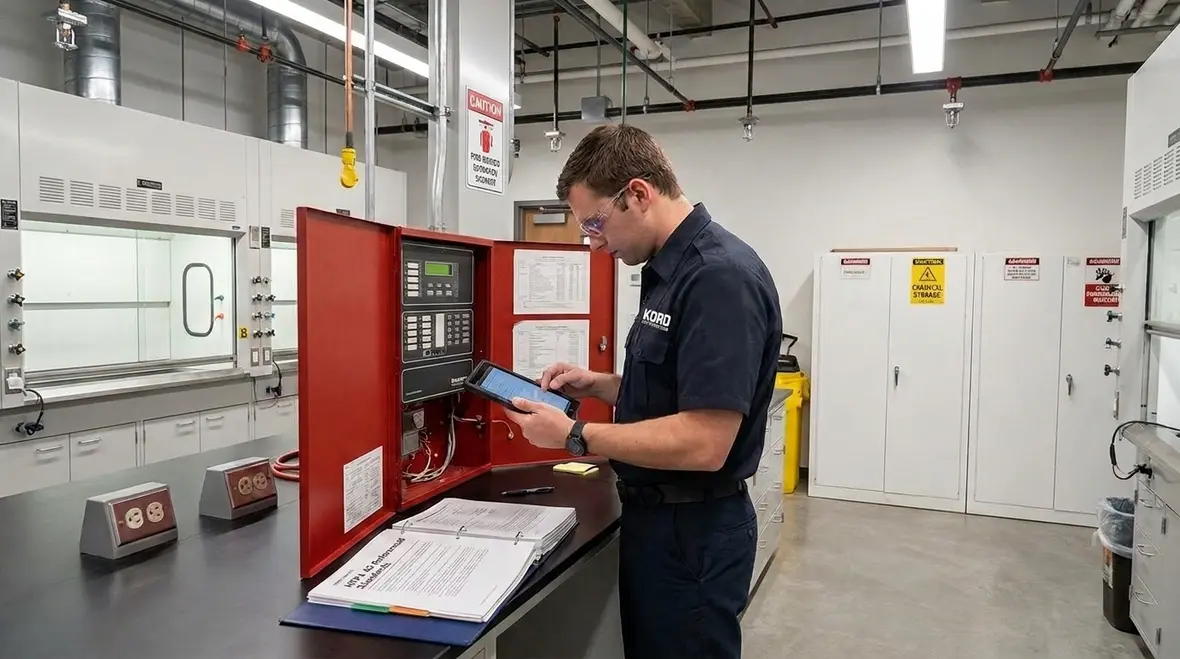
NFPA 45 Section 2.3: Non-NFPA Publications Referenced in the Code
Quick Answer: NFPA 45 Section 2.3 identifies non NFPA documents that the code references for technical requirements. For commercial, industrial, and retail facilities, these references create enforceable expectations for equipment, installation, testing, and maintenance. Compliance depends on using the correct edition and applying it to current operations.
If your team is also dealing with pump performance verification, fire pump acceptance testing requirements can help frame how referenced standards translate into actual field testing, signoff, and documentation.
Why NFPA 45 Section 2.3 matters in the field
NFPA 45 focuses on fire protection for laboratories and uses process-related controls that often overlap with standards maintained outside the NFPA ecosystem. Section 2.3, titled Non-NFPA Publications Referenced in the Code, tells facility owners and code teams that parts of NFPA 45 are supported by external documents. Inspectors and authorities having jurisdiction (AHJs) may treat those references as mandatory compliance references, not optional guidance.
In day-to-day compliance work, this drives three practical challenges. First, the facility must know which external publications are referenced and the edition that NFPA 45 requires. Second, the facility must ensure the referenced requirements are implemented in current installations, not just “in the drawings.” Third, maintenance teams must document ongoing inspection and testing aligned to the referenced standards. NFPA 45 non-NFPA other publications become the difference between passing an inspection and triggering corrective actions.
What Section 2.3 actually requires: editions, incorporation, and enforcement
NFPA codes commonly incorporate external material by reference. NFPA 45 Section 2.3 serves as the code’s control point for those incorporations. Practically, it means the referenced non NFPA documents become part of the compliance picture whenever NFPA 45 requires alignment with a technical topic covered by those external standards.
Edition control is a compliance requirement
External standards evolve through revisions. A common failure point occurs when teams use an older edition referenced in an internal procedure but the AHJ evaluates the current required edition based on NFPA 45’s reference list. To reduce this risk, facilities should maintain a reference register that includes:
- The NFPA 45 edition used for the compliance cycle
- The referenced non NFPA document titles
- The exact edition and publication year required by Section 2.3
- Where the referenced requirements show up in the facility’s engineering, installation, and test documentation
“Referenced” does not mean “optional”
When NFPA 45 references a non NFPA document under Section 2.3, the referenced requirements typically become part of the standard of care for the specific condition addressed. In operational terms, it impacts how facilities verify performance over time, including inspection intervals, acceptance criteria, commissioning checks, and test methods.
Common compliance areas impacted by non NFPA referenced standards
Although the exact external titles in NFPA 45’s reference list depend on the specific NFPA 45 edition and the referenced topics, the operational impact usually concentrates in these facility systems and practices.
Detection, notification, and testing performance
Commercial and industrial spaces often run mixed fire detection arrangements, including smoke and heat sensing, specialized detection in process areas, and notification strategies tailored to occupancy. Non NFPA other publications referenced through NFPA 45 frequently influence:
- How devices get tested to confirm correct sensitivity or functional performance
- How notification circuits get verified for signal integrity
- How documentation of tests gets retained for audit readiness
A frequent failure point involves “visual verification only.” Many device requirements require specific test steps that validate response under prescribed conditions. If a maintenance plan uses incomplete test protocols, records may not demonstrate compliance with the referenced standard.
Fire protection system acceptance and ongoing maintenance
NFPA 45 Section 2.3 can elevate the importance of aligning maintenance work orders, contractor test reports, and in house inspections to the referenced standard methods. For example, facilities may need to manage:
- Acceptance criteria after repairs or replacement
- Inspection and testing intervals
- Functional checks of control valves, supervisory devices, and panels, where applicable
In practice, corrective actions often stem from equipment that gets serviced but not tested to the required method. A maintenance log that lacks required test steps can lead to repeat findings during follow up inspections.
Process and ventilation interactions with fire safety controls
Laboratory and process areas introduce complex relationships between ventilation, storage practices, and fire protection effectiveness. NFPA 45’s external references may influence how facilities manage these interactions, especially where system performance depends on environmental conditions and controlled operating procedures.
Commercial facilities that treat fire protection and HVAC as separate maintenance programs commonly see problems. Maintenance silos can cause misalignment between how the ventilation system operates during normal operations and how it behaves during fire safety scenarios, including smoke control assumptions. This is where documented procedures and coordinated testing matter.
How facilities should operationalize Section 2.3 for inspections and audits
Most compliance failures do not come from bad intent. They come from missing traceability between the code reference list and facility maintenance execution. A practical approach reduces risk and improves inspection outcomes.
Build a “referenced standards” compliance matrix
A compliance matrix links code requirements to evidence. For each non NFPA other publication referenced under NFPA 45 Section 2.3, the matrix should capture:
- Which NFPA 45 section drives the referenced requirement
- Which system or component it applies to
- Required test and inspection activities
- Who performs the work, internal staff or qualified contractors
- What documentation proves compliance
Align PM schedules to test methods, not just service dates
Many preventive maintenance programs track “last serviced” dates but not the specific verification steps demanded by referenced standards. Facilities should ensure PM tasks include the correct functional checks, calibration or measurement steps when required, and post adjustment verification.
Commercial, industrial, and retail facilities often have high turnover in contractors and technicians. Standardizing PM templates around the referenced documents improves consistency and reduces handoff errors.
Maintain evidence that matches AHJ expectations
During inspections, AHJs typically look for records that demonstrate ongoing compliance, not only initial installation credentials. Evidence should include:
- Test reports with required pass fail results and observed conditions
- Component identification and locations
- Repair and replacement documentation tied to acceptance requirements
- Corrective action closure records with dates and outcomes
Where Kord Fire Protection fits: keeping referenced standards current
NFPA 45 non-NFPA other publications create a moving target for many facilities, especially those managing multiple buildings, frequent tenant changes, or third party maintenance contractors. Kord Fire Protection supports compliance by translating referenced standards into practical, testable maintenance work and inspection-ready documentation.
For facilities that need reliable evidence and reduced downtime, Kord can help coordinate commissioning support, routine inspections, and maintenance activities that match the required methods. That alignment matters when the AHJ asks which standard method got used and when it got performed.
For more resources related to inspection planning and documentation practices, visit this fire protection system documentation checklist or explore fire safety system documentation for compliance.
Frequently Asked Questions
Conclusion and next step
NFPA 45 Section 2.3 makes non NFPA referenced documents part of the practical compliance standard, especially for testing, maintenance, and evidence readiness. Facilities that track editions, map referenced requirements to PM tasks, and maintain inspection-ready records reduce corrective actions and downtime. Kord Fire Protection can help translate NFPA 45 non-NFPA other publications into reliable maintenance execution and documentation that supports AHJ review. Contact Kord Fire Protection to assess your current reference control and maintenance alignment.

Join Our Newsletter!
Get the latest fire safety tips delivered straight to your inbox From our Newsletter.



