
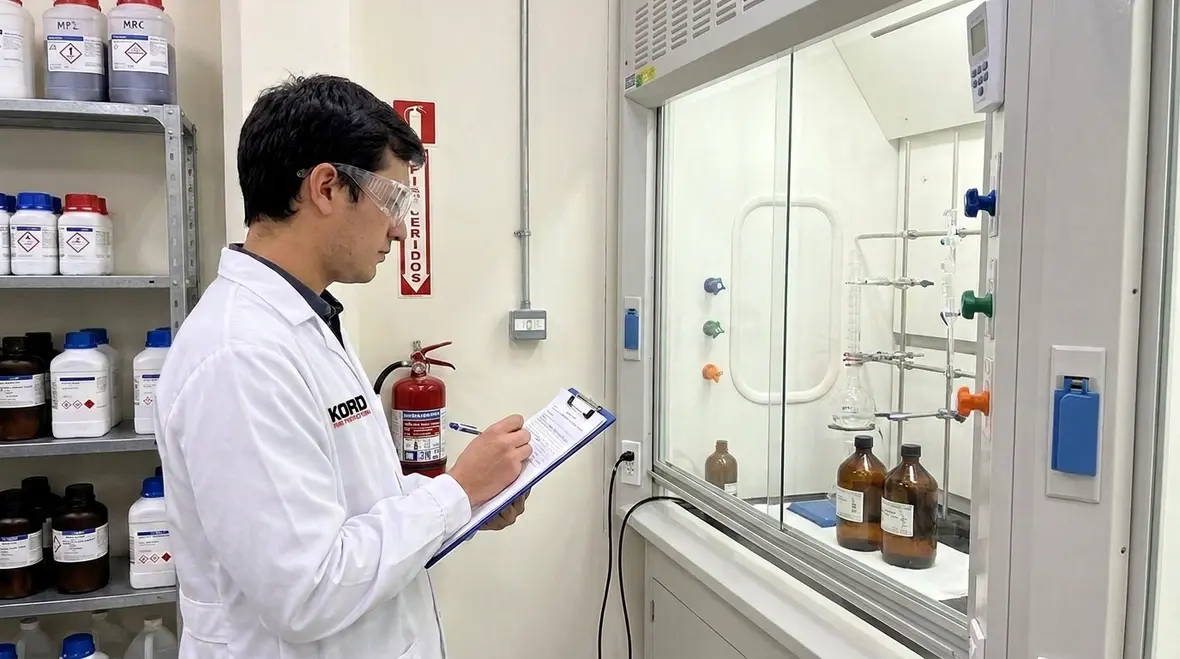
NFPA 45 Section 1.1 Scope: What Laboratories the Standard Covers
Quick Answer: NFPA 45 Section 1.1 defines which laboratories fall under the standard, primarily based on how laboratories use hazardous conditions, including chemicals. It targets facilities where fire and explosion risk can occur due to chemical processing, storage, and handling activities.
For related support with special hazard protection in lab environments, see clean agent fire suppression for labs.
What does “NFPA 45 scope laboratories using chemicals” really mean?
NFPA 45 scope laboratories using chemicals focuses on laboratories where chemical-related fire and explosion hazards are present, not just any space that contains minor quantities of supplies. The standard’s Section 1.1 scope language supports risk based coverage by addressing the types of laboratory activities and the conditions that create credible ignition and escalation scenarios.
For commercial facilities, this distinction matters during design, permitting, and recurring inspections. A laboratory that performs routine, low hazard tasks can face different compliance expectations than a lab that synthesizes, distills, transfers, or stores reactive or flammable chemical inventories.
NFPA 45 Section 1.1 scope coverage: how the standard determines applicability
NFPA 45 Section 1.1 establishes the boundaries for when the standard applies. In practice, safety teams apply the scope based on the presence of laboratory activities involving chemicals that can significantly increase fire or explosion potential. That includes scenarios where ignition sources, chemical vapors, flammable liquids, oxidizers, corrosives, or reactive mixtures could be involved in normal operations, cleaning, maintenance, or emergency response.
Operational indicators used during scope evaluations
Chemical use type: procedures involving transfer, heating, concentration, distillation, drying, or open handling that can generate flammable vapors or reactive byproducts.
Chemical hazard class: oxidizers, highly flammable substances, water reactive materials, or compounds that can release energy if improperly contained.
Process configuration: setups that rely on ventilation, closed systems, condensers, or exhaust controls that must remain functional to reduce hazard.
Storage and staging: inventories kept near work stations, in unapproved cabinets, or in quantities that exceed facility control thresholds.
Ignition potential: hot surfaces, electrical equipment, hot work activities, or instrumentation that can introduce ignition into chemical atmospheres.
Common scope misunderstandings in commercial labs
Many compliance gaps start with misreading what “covers” means. NFPA 45 does not treat laboratories as uniform rooms with the same hazard. Instead, the standard’s intent aligns with chemical activity risk. The following are common misinterpretations seen during commercial inspections and internal safety audits.
1) “We only store chemicals, so we are not in scope”
Storage alone can still create credible fire growth, particularly when incompatible chemicals are co located, when containers are unsealed, or when storage practices undermine secondary containment. If the stored chemicals present a significant ignition or release hazard during normal operations or foreseeable upset conditions, the laboratory typically falls within NFPA 45 scope expectations.
2) “Our lab is small, so the standard does not apply”
Coverage depends on chemical hazard and process conditions, not only square footage. Small laboratories can still contain highly hazardous materials or run processes that generate flammable atmospheres that require specific control measures.
3) “Our ventilation is in place, so active protection is optional”
Ventilation controls are vital but they do not replace fundamental fire protection and detection strategies. NFPA 45 scope requirements often intersect with how facilities maintain exhaust performance, interlocks, alarm visibility, and safe shutdown behavior for chemical hazards.
What facilities should do when they determine they are in scope
Once leadership confirms the laboratory falls under NFPA 45 Section 1.1 scope, the compliance focus shifts from “does the standard apply” to “can the facility demonstrate safety controls work as designed.” That includes equipment mechanisms, inspection records, and maintenance practices that keep chemical hazard controls effective.
Core compliance management actions
Document the hazard inventory and processes: maintain an up to date list of chemicals, their hazard categories, maximum quantities used, and where they are staged.
Verify engineering controls: confirm fume hood and local exhaust performance targets, duct integrity, and operational readiness, including how the system behaves during abnormal conditions.
Align storage and compatibility: implement segregation practices that address incompatible chemicals and control secondary containment to prevent spread and escalation.
Test detection and emergency response readiness: ensure alarms, operational notifications, and emergency procedures account for chemical scenarios and laboratory occupancy workflows.
Maintain records for inspection readiness: track inspections, testing, corrective actions, and staff training so compliance demonstrations remain current.
Where compliance often fails during inspections and maintenance
Commercial facilities frequently face recurring issues because laboratory operations change faster than documentation and maintenance cycles. Scope compliance succeeds when the facility actively manages aging equipment, modified processes, and contractor work.
Failure points seen in scope determined laboratories
Nonconforming chemical storage conditions: missing labels, incompatible groupings, or containers stored outside controlled areas.
Ventilation drift: exhaust systems that do not meet performance targets due to duct wear, blockages, improper maintenance, or changes to hood configurations.
Unverified operational procedures: gaps in safe startup, shutdown, and spill response that do not reflect actual workflows or chemical hazards.
Outdated inspection documentation: missing test reports, incomplete deficiency closure, or lack of evidence that corrective actions remained effective.
Contractor turnover risks: renovations and lab moves introduce new chemical processes without a reassessment of scope and fire safety controls.
For ongoing reliability, Kord Fire Protection supports commercial and industrial facilities with testing, inspection coordination, and maintenance planning aligned to laboratory hazard realities. This helps organizations reduce recurring noncompliance and maintain defensible records for audits and authority having jurisdiction reviews.
Recommended internal reference: For related commercial service planning, see Kord Fire Protection services.
How lab managers should approach scope documentation for audits
Audits typically focus on whether the facility can show a rational, documented scope decision and whether controls remain effective over time. Strong documentation ties chemical hazard evaluation to engineering and inspection practices.
Scope documentation package (practical and audit friendly)
| Document | What it should include | Why it matters |
|---|---|---|
Laboratory hazard assessment | Process description, chemical hazard categories, maximum quantities, and where chemicals are staged. | Demonstrates the facility used reasonable criteria for NFPA 45 scope laboratories using chemicals. |
Engineering control verification | Ventilation performance records, control setpoints, and maintenance history. | Supports that hazard mitigation remains functional, not theoretical. |
Inspection and testing logs | Dates, test results, deficiencies, and closure evidence. | Provides defensible compliance proof during recurring reviews. |
Emergency response alignment | Procedures for alarms, evacuation decisions, and incident communications tailored to chemical risks. | Shows coordinated operations for real incidents. |
When facilities lack consistent documentation, “scope” becomes subjective during reviews. Kord Fire Protection can help commercial teams build an evidence based inspection and maintenance rhythm that supports safer operations and reduces avoidable audit friction.
Frequently Asked Questions
Next step
Facilities that use chemicals should validate whether their laboratory activities fall under NFPA 45 Section 1.1 scope and then convert that decision into ongoing inspection and maintenance evidence. Engage Kord Fire Protection to help build a repeatable compliance program, strengthen documentation, and maintain reliable life safety and fire protection performance for commercial laboratory environments.
For broader planning across inspections, maintenance, and long-term system readiness, explore the full lifecycle of fire protection servicing.

Join Our Newsletter!
Get the latest fire safety tips delivered straight to your inbox From our Newsletter.



