
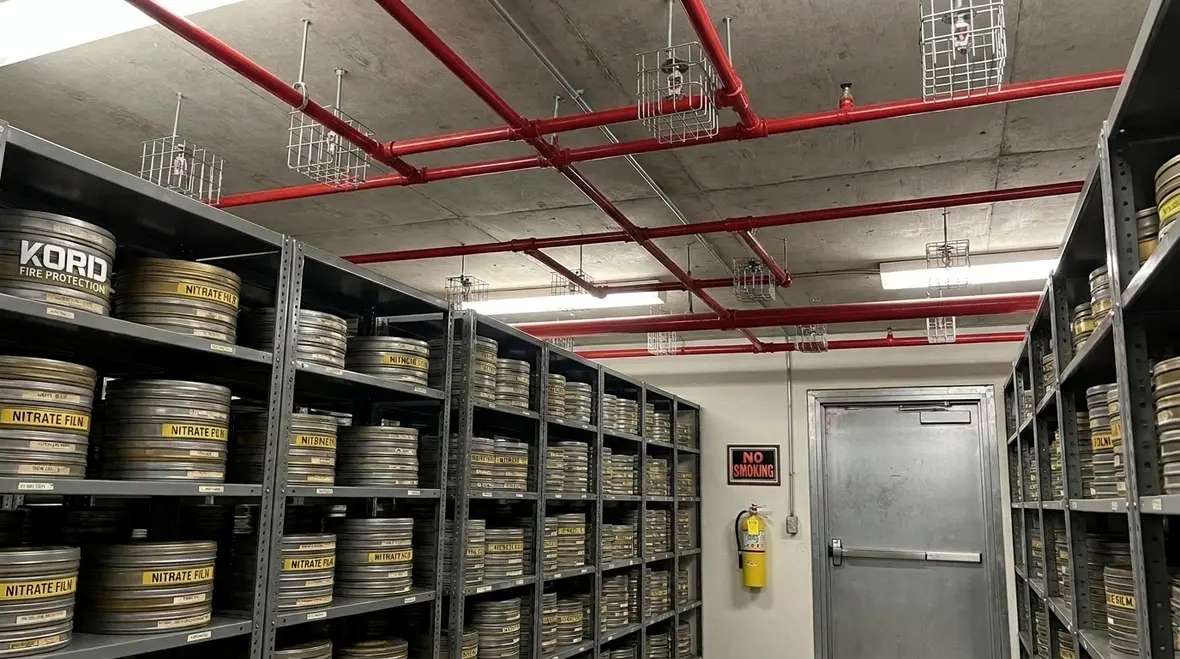
NFPA 40 Section 5.1: Automatic Sprinkler Protection for Nitrate Film Areas
Quick Answer
NFPA 40 Section 5.1 sets expectations for protecting nitrate film storage and film processing areas with automatic sprinkler systems. The rule focuses on hazard control, reliable water delivery, and maintaining protection features through proper installation, inspection, impairment management, and routine testing. Compliance requires disciplined maintenance and documentation.
If your facility is tightening up inspection routines and water supply verification, it helps to pair nitrate film compliance planning with broader fire protection services so sprinkler systems, pumps, alarms, and documentation stay on the same page.
What NFPA 40 Section 5.1 requires for nitrate film areas
Facilities that store or handle nitrate film must treat fire protection as a systems problem, not a single equipment item. The NFPA 40 automatic sprinkler requirements nitrate film are designed to provide fast fire control while reducing reliance on manual response. Section 5.1 ties protection to installation quality, dependable water supply, and ongoing readiness through inspection and impairment controls.
Why nitrate film areas are treated differently
Nitrate film presents elevated hazards due to its chemical instability and the intensity of fire behavior if ignition occurs. In real facilities, risk drivers include film packaging, storage density, ventilation and temperature conditions, the likelihood of concealed fire spread, and the operational reality that occupants may not detect a developing fire early.
Automatic sprinkler protection helps by applying water quickly to limit fire growth and reduce heat release. In many commercial and industrial environments, compliance hinges on ensuring the sprinkler system can perform as intended under the facility’s actual operating patterns, including after routine maintenance, construction activity, and seasonal shutdowns.
How NFPA 40 automatic sprinkler requirements nitrate film are applied in practice
NFPA 40 Section 5.1 establishes a framework for automatic sprinkler protection in nitrate film areas. While exact design details depend on how the authority having jurisdiction interprets and enforces the current adopted edition, the core compliance outcomes typically include:
System arrangement matched to the hazard area. Sprinklers must be provided where nitrate film hazards exist, considering layout, obstructions, storage arrangement, and access for water distribution.
Water delivery reliability. The system must maintain required pressures and flows at the hazard location. This includes proper sizing, adequate supply, and functioning supervisory systems.
Installation integrity. Correct pipe routing, sprinkler orientation, temperature ratings consistent with environmental conditions, and maintained clearance from storage impacts performance.
Inspection and impairment discipline. The facility must manage sprinkler impairments, document out of service conditions, and restore protection promptly.
Operational takeaway for commercial and industrial sites
Compliance fails most often where facility operations change after installation. Examples include storage relocations, added racks, ceiling soffits, HVAC modifications, and renovation that introduces obstructions. Even small changes can reduce water distribution effectiveness, triggering compliance issues during inspections or internal audits.
For a closely related code discussion, Kord Fire Protection also breaks down cellulose nitrate film special sprinkler requirements, which fits naturally alongside this section when teams are reviewing storage layouts and sprinkler expectations.
Where compliance breaks: installation, maintenance, and common failure points
1) Obstructions and storage changes
Sprinklers must discharge water effectively into the protected space. In nitrate film areas, warehouses, vaults, and processing rooms often experience rack additions and changes in packaging height. Obstructions can alter spray patterns and delay wetting of involved combustibles. The commercial facility standard is to verify clearance and distribution after any layout change.
2) Water supply performance and supervisory health
A system can be correctly piped yet fail the intent of automatic protection if water supply performance drops. Common issues include partially closed valves, impaired fire pump operation, pressure test drift, or supervisory switches that are not reporting correctly. These issues become apparent during system flow or alarm inspections.
3) Sprinkler condition and corrosion
Corrosion, paint contamination, physical damage, and aging components reduce reliability. Nitrate film rooms are often controlled for environmental conditions, which does not eliminate corrosion risk. Routine inspections should include verification that sprinklers remain unobstructed and free from impairment, with planned replacement schedules where required by the system type and manufacturer guidance.
4) Maintenance and impairment management lapses
Fire protection systems are frequently affected by routine work orders, ceiling access, and contractor activity. Impairment control is a core compliance requirement across most jurisdictions. Failures include leaving sections out of service beyond allowed windows, incomplete documentation, and missing restoration verification.
What a compliant inspection and maintenance program looks like
A strong program aligns day to day operations with inspection, testing, and impairment procedures. For nitrate film areas, the goal is to ensure the system remains capable of performing whenever film is present.
Recommended compliance workflow
Establish system baselines. Document risers, valve locations, supervisory device status, and water supply characteristics. Maintain as built drawings and updates after renovations.
Perform regular visual inspections. Confirm sprinklers are clean, intact, and unobstructed. Verify access and keep storage clearance consistent with the protected hazard design.
Execute scheduled testing. Follow the facility’s NFPA aligned maintenance calendar for alarms, water flow indicators, supervisory alarms, and any required hydraulic testing schedules based on the system design.
Manage impairments with documented controls. Use a permit and track restoration steps, including verification of valve positions, supervisory reporting, and pressure conditions after work is complete.
Conduct post renovation verification. After any change to layout, ceiling, or HVAC ducting, verify sprinkler coverage effectiveness and obstruction clearance.
For commercial, industrial, and retail operators, the most efficient path is to contract with experienced fire protection service providers that can standardize documentation, coordinate testing windows, and provide clear impairment workflows. Kord Fire Protection supports facilities with ongoing compliance service, proactive maintenance, and inspection readiness so nitrate film area protection stays audit ready.
To strengthen internal procedures, facilities can align impairment and testing coordination with practical fire protection planning guidance available through Kord Fire Protection’s resources, such as their service overview here: Kord Fire Protection.
Where water supply verification is part of the picture, a practical companion read is fire pump inspection and testing services, especially for teams trying to connect sprinkler readiness with real pump performance instead of optimistic guessing.
Frequently Asked Questions
Take action now to keep nitrate film area protection audit ready
NFPA 40 automatic sprinkler requirements nitrate film depend on more than the initial install. To avoid inspection findings, facilities should verify obstruction clearance, confirm water supply performance, enforce impairment discipline, and document testing outcomes. Contact Kord Fire Protection to review your nitrate film area protection status, validate readiness for upcoming inspections, and establish a maintenance plan that supports continuous compliance.

Join Our Newsletter!
Get the latest fire safety tips delivered straight to your inbox From our Newsletter.



