
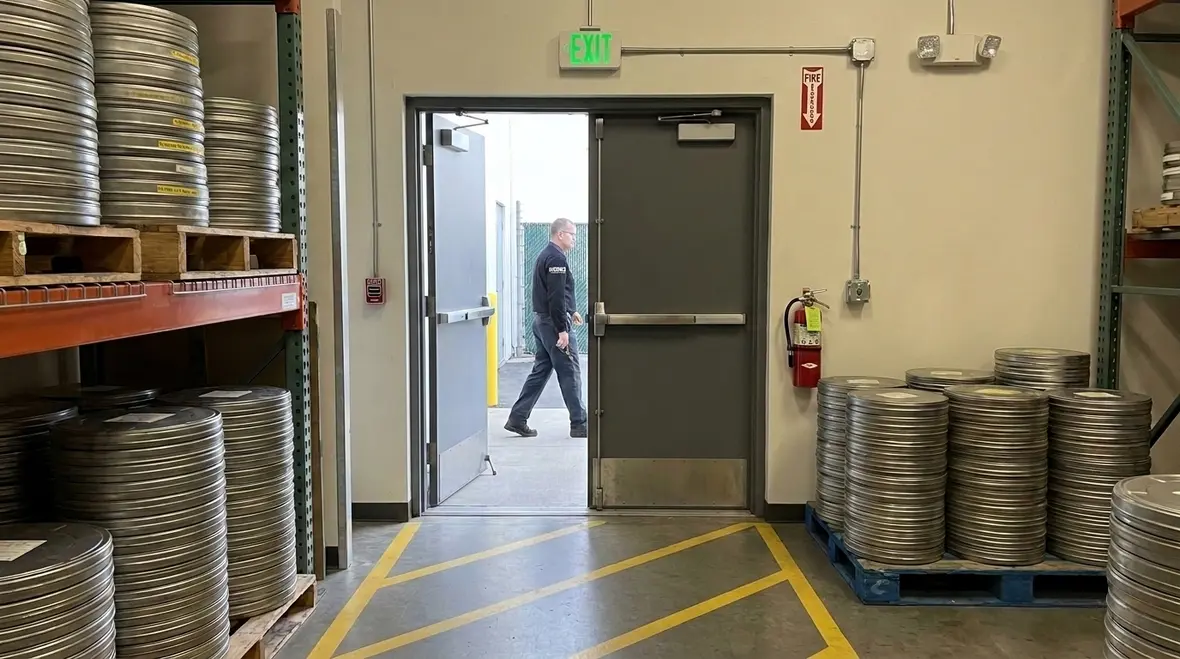
NFPA 40 Section 4.2: Exits and Egress for Nitrate Film Storage Buildings
Quick Answer: NFPA 40 Section 4.2 sets enforceable minimums for how occupants exit nitrate film storage buildings, emphasizing safe, direct travel to discharge and reliable exit access. It also drives practical inspection and maintenance of doors, hardware, egress paths, and capacity to sustain compliance over time.
Facilities managing broader life safety obligations can also benefit from reviewing Kord Fire Protection’s fire protection services guide, which connects inspections, maintenance, and compliance planning in a practical way for commercial properties.
Why NFPA 40 exits egress requirements nitrate film storage get scrutinized
Nitrate film storage buildings present a unique fire risk profile because thermal decomposition can lead to rapid fire growth, high heat release, and hazardous conditions. For that reason, NFPA 40 exits egress requirements nitrate film storage focuses not only on what exits exist on paper, but also on whether people can move to safety under stressful, real world conditions.
Commercial facilities often discover compliance gaps during pre season readiness, tenant turnover, or after renovations that alter storage layouts, aisle widths, or door hardware. Section 4.2 is frequently cited when exit access becomes blocked, door releases fail, or operational staff cannot demonstrate that emergency egress routes remain maintained and immediately usable.
What NFPA 40 Section 4.2 requires for exits and egress planning
NFPA 40 Section 4.2 establishes the structure for a complete egress system in nitrate film storage buildings. Although building owners sometimes treat “exit” and “egress” as interchangeable, the code approach is systematic: exit access must safely route occupants to exits, and exits must discharge occupants to a safe location.
From an operational standpoint, compliance typically demands:
- Defined exit pathways that remain clear and unobstructed during normal operations and credible emergency scenarios.
- Exit components that work as intended, including doors, latching, closers, signage, and emergency release hardware where required.
- Consistent capacity and travel characteristics aligned with the building’s occupancy arrangement and storage practices.
- Reliability under impairment conditions, such as where smoke, heat, and rapid fire development can reduce visibility and mobility.
Because Section 4.2 ties directly to safe movement of occupants, facilities often document egress route layouts, door swing clearances, and the locations of any hazards or obstructions that could compromise exit access.
Exit access routes: common failure points in storage buildings
Exit access is where many nitrate film storage facilities fail routine inspections, even when the number of exits initially looks adequate. In practice, operational realities introduce obstructions and changes that do not show up in the original plan set.
1) Storage arrangements that gradually narrow or block egress
Racking shifts, pallet patterns, temporary staging, and housekeeping gaps can encroach on required clearances. A route can be “technically present” yet practically unusable when a door opens into the travel path, when stored materials exceed allowances, or when personnel regularly leave carts in the route.
2) Doors and hardware that drift out of compliance
Section 4.2 drives reliability. Common problem areas include doors that are wedged open during high traffic periods, closers that fail to latch fully, or hardware that sticks due to corrosion, misalignment, or lack of lubrication. Facilities also encounter issues after maintenance activities when replacement hardware does not match the original listing.
3) Signage, path marking, and visibility under smoke conditions
Even when routes meet geometric requirements, signage and illumination can fail. Internal lighting outages, missing exit signs, or damaged photoluminescent path markers make occupants hesitate or travel incorrectly.
Commercial best practice uses recurring walkthroughs during operating hours, not only during scheduled life safety inspections. Kord Fire Protection supports this with practical, facility tailored testing and documentation to confirm that the egress system remains functional as storage operations evolve.
Exits and discharge: getting people from the building to safety
Exits must support safe egress movement from the exit access to a point of safety. For nitrate film storage buildings, this requirement is operationally important because early fire conditions can create immediate impairment of interior routes.
Facilities typically ensure:
- Exit doors open as required without obstruction from stored film canisters, racks, or equipment.
- Travel to discharge remains straightforward and avoids confusing routing that can delay evacuation.
- Discharge areas stay usable, including curbs, landscaping elements, snow load considerations, and vehicle access lanes that can block outward movement.
- Emergency lighting and exit illumination maintain visibility to support occupants who move under reduced visibility.
In many audits, discharge problems appear when exterior doors open into restricted loading zones or when contractors place barriers during deliveries. Kord Fire Protection helps facilities establish inspection triggers for these high risk operational intervals.
Inspection, testing, and maintenance: sustaining NFPA 40 egress compliance
Compliance with NFPA 40 exits egress requirements nitrate film storage does not end at plan approval. Section 4.2 expectations must persist through inspections, testing, and maintenance programs that align with how the building runs day to day.
Door and hardware verification
Facilities should implement documented checks for door operation, closure performance, latching, and release behavior. This includes confirming that door closers maintain adequate closing force and latch engagement. Where emergency release features apply, staff should validate functional operation according to the door listing and the facility’s maintenance plan.
Operational controls and housekeeping discipline
Where doors require controlled behavior, staff must avoid “temporary” practices that become permanent. Examples include propping doors open, storing items in corridor ends, and leaving maintenance barricades in routes after work hours.
Maintenance records that prove reliability
Auditors look for evidence that egress related components remain serviceable. Kord Fire Protection supports documentation practices and coordinated life safety testing so that inspections reflect real compliance readiness, not only corrective actions after failures.
For adjacent guidance on commercial sprinkler and life safety integration, facilities often also reference Kord Fire Protection resources. See related information on commercial fire protection services to align egress readiness with the broader fire protection system your building relies on.
Implementation checklist: what inspectors and auditors typically verify
The following checklist aligns with how commercial, industrial, and retail facilities prove egress compliance in practice for nitrate film storage buildings.
| Focus Area | What to Verify | Why It Matters |
|---|---|---|
| Exit access route | Clear width, unobstructed pathway, corridor and aisle conditions | Prevents delays and route trapping during credible emergencies |
| Exit doors | Door swing clearance, closure and latching performance, release function | Ensures occupants can use exits under stress |
| Exit signage and illumination | Operational exit signs, adequate visibility, emergency lighting performance | Reduces disorientation during smoke and power disruptions |
| Discharge area | Barriers, vehicles, landscaping, snow and ice conditions | Keeps the “last step” safe and predictable |
| Maintenance and records | Documented inspections, corrective actions, and component service history | Demonstrates continued compliance, not one time readiness |
Frequently Asked Questions
Conclusion and call to action
NFPA 40 Section 4.2 requires more than meeting exit counts. It demands functional egress pathways, dependable door and hardware performance, and discharge areas that remain safe under operating conditions. Kord Fire Protection can support your nitrate film storage facility with inspection coordination, testing, and maintenance documentation so your NFPA 40 exits egress requirements nitrate film storage program holds up during audits and real emergencies. Contact Kord Fire Protection today to schedule an egress readiness review.

Join Our Newsletter!
Get the latest fire safety tips delivered straight to your inbox From our Newsletter.



