
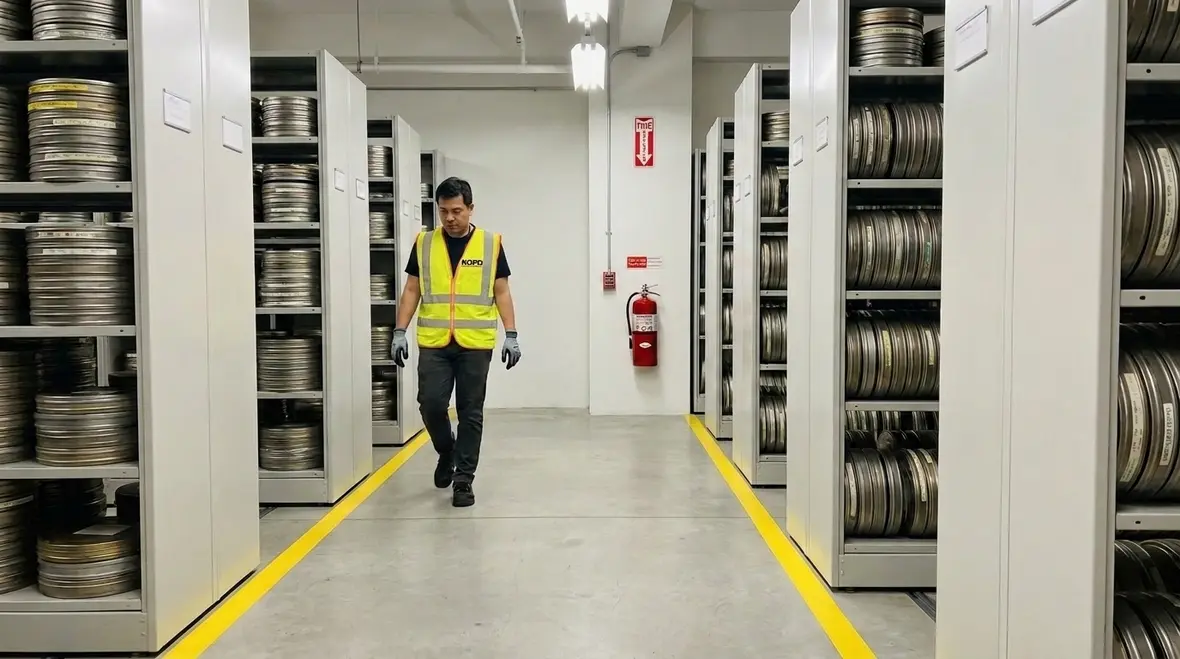
NFPA 40 Section 4.4: Safe Working Space in Nitrate Film Areas
Quick Answer
NFPA 40 Section 4.4 requires safe working space in nitrate film areas to support safe access, emergency response, and equipment operation. The standard focuses on maintaining clear, unobstructed paths and workable separation from storage and protective systems to reduce ignition and propagation risk.
For teams reviewing adjacent fire protection obligations, it can also help to understand every NFPA code cited by the nitrate film standard so layout, inspection, and maintenance decisions stay aligned across related requirements.
Why NFPA 40 safe work space matters in nitrate film storage
Nitrate film areas present unique hazards due to the potential for rapid fire growth and difficult-to-control burning characteristics. NFPA 40 Section 4.4 addresses those risks by requiring safe working space where personnel operate, inspect, store, and manage nitrate film. In practical terms, NFPA 40 worker space requirements nitrate film areas focus on preventing blocked egress, restricting unsafe proximity to storage, and ensuring that suppression, detection, and emergency actions can be carried out without delays.
Commercial facilities often struggle with this requirement when tenants, contractors, or maintenance teams add temporary shelving, cable trays, or containers “just for now.” Those changes can unintentionally reduce the working clearances needed for safe handling and for fire department access.
What Section 4.4 is trying to prevent
Section 4.4 aims to preserve conditions that allow trained personnel to move safely and operate equipment effectively. The compliance goal is to maintain workable space so that routine tasks and emergency actions can occur without unsafe reaching, awkward movement, or blocked access routes.
- Obstructed access during inspections and operations, especially around film storage areas, handling stations, and protective system components.
- Inadequate space for emergency response, including interior approach routes needed for alarms, firefighting entry, and ventilation or shutoff actions.
- Unsafe proximity to ignition sources, where electrical equipment, heat-producing devices, or maintenance activity encroaches on required clearances.
- Accumulated storage and debris that reduces available working space and compromises housekeeping and maintenance routines.
In Kord Fire Protection inspections, the highest-risk “failure mode” is usually not a missing sign or outdated device. It is a physical layout drift over time: new racks, relocated bins, or poorly managed staging areas that steadily shrink workable space.
NFPA 40 worker space requirements nitrate film areas: how facilities typically apply them
While Section 4.4 is often referenced as a “clearances” requirement, implementation typically includes several coordinated practices. Facilities usually apply the safe working space concept to keep paths for personnel, space for safe handling, and space for system operation free of obstruction.
1) Keep access paths usable, not just “technically open”
Safe working space is not satisfied by an open doorway while aisles are partially blocked by carts, ladders, or pallets. Facilities should maintain consistent access routes to storage areas and to any points where operational access is required. This includes avoiding parked equipment that sits in travel corridors “overnight” or between tasks.
2) Protect the working envelope around storage and control interfaces
Personnel need to reach handling points and access control interfaces without reaching across heat risk areas or climbing over stored film containers. The compliance approach generally requires keeping the working envelope around nitrate film storage and critical operational components unobstructed.
3) Coordinate maintenance staging with fire safety requirements
Commercial and industrial environments frequently schedule maintenance in parallel with operations. Maintenance staging should follow a defined plan that does not permanently reduce safe working space. Temporary materials should be controlled, logged, and removed immediately after tasks complete.
For ongoing compliance support, Kord Fire Protection helps facilities confirm that inspection routes, protective system access, and operational clearances remain aligned with NFPA 40 expectations. This includes reviewing how maintenance workflows affect protected working zones.
If your organization is also managing other fire protection documentation, Kord Fire Protection can assist with the related NFPA-aligned maintenance and inspection practices. For an overview of how Kord supports commercial fire safety programs, see Kord Fire Protection.
Common compliance gaps seen during inspections
Field experience shows that Section 4.4 problems often originate from operational pressures rather than ignorance of the code. The most common gaps include:
- Temporary storage that becomes semi permanent: tape marks, “borrowed” carts, and contractor staging that gradually accumulate.
- Racks and shelving installed without space verification: layout changes made for capacity or workflow that reduce access and working clearance.
- Blocked or hard to reach protective system components: obstructed access to panels, valves, pull stations, sprinkler inlets or outlets, or detection devices.
- Inadequate housekeeping: dust, film scraps, and debris that create trip hazards and reduce usable space.
- Uncontrolled cable and equipment placement: extension cords, portable equipment, or unmanaged cabling that encroach into working envelopes.
- Inconsistent procedures: staff follow safe practices during audits but not during peak operations when workload is high.
These gaps become especially visible when a third party or authority having jurisdiction evaluates the facility layout during operational conditions. Kord Fire Protection typically recommends a “maintain clear space” checklist tied to daily operations and weekly housekeeping, with documented verification for high-risk areas.
Operational controls that keep safe working space intact
Facilities that sustain compliance treat safe working space as an operational system, not a one-time construction requirement. Effective programs include the following controls:
Establish layout boundaries and labeling
Use clear visual boundaries for access routes and working zones. Labels, floor markings, and physical standoff controls reduce the chance that carts, bins, or equipment will drift into protected space. The goal is to make “doing it right” the easiest option.
Use a change control process for layout modifications
Any modification that affects aisles, rack positions, storage density, or maintenance staging should trigger a review. This includes changes by contractors and internal teams. A documented review prevents capacity upgrades from silently eroding required safe working space.
Define procedures for inspections, handling, and emergency readiness
Written procedures should include how staff approach storage areas, how they position carts and tools, and how they maintain unobstructed access. Emergency procedures should consider that personnel may need to move quickly with limited visibility and under stress. Safe working space supports those actions by maintaining predictable pathways.
Schedule compliance verification as part of maintenance
Section 4.4 compliance depends on ongoing conditions. Kord Fire Protection supports facilities through recurring inspection and maintenance coordination to help ensure safe working space remains available when needed, not only when the room is “audit ready.”
How to document compliance for ongoing audits
Commercial facilities typically succeed with documentation that is practical, repeatable, and tied to real-world operations. A strong compliance file for NFPA 40 nitrate film areas often includes:
- Current facility layout drawings showing working zones, access routes, and protected interfaces in nitrate film areas.
- Change logs for any rack moves, shelving additions, maintenance staging updates, or contractor modifications.
- Housekeeping and access verification records that confirm safe working space is maintained on an ongoing basis.
- Training records for personnel handling nitrate film and for maintenance staff who may stage equipment in the area.
- Inspection notes and corrective action documentation identifying and resolving physical encroachments.
For facilities managing multiple fire protection obligations, consolidating documentation reduces errors during surveys and helps teams respond quickly to questions from regulators or insurers. Kord Fire Protection can help align documentation practices with an ongoing fire protection management program. Start with Kord Fire Protection.
Frequently Asked Questions
Call to action
Review your current nitrate film area layout against NFPA 40 Section 4.4 safe working space expectations and confirm access is maintained under real operating conditions. Then implement a change control and verification routine so staging, housekeeping, and contractor work do not erode working envelopes. Contact Kord Fire Protection to schedule a targeted compliance assessment, document corrective actions, and support ongoing inspection and maintenance planning to keep your facility audit ready.

Join Our Newsletter!
Get the latest fire safety tips delivered straight to your inbox From our Newsletter.



