
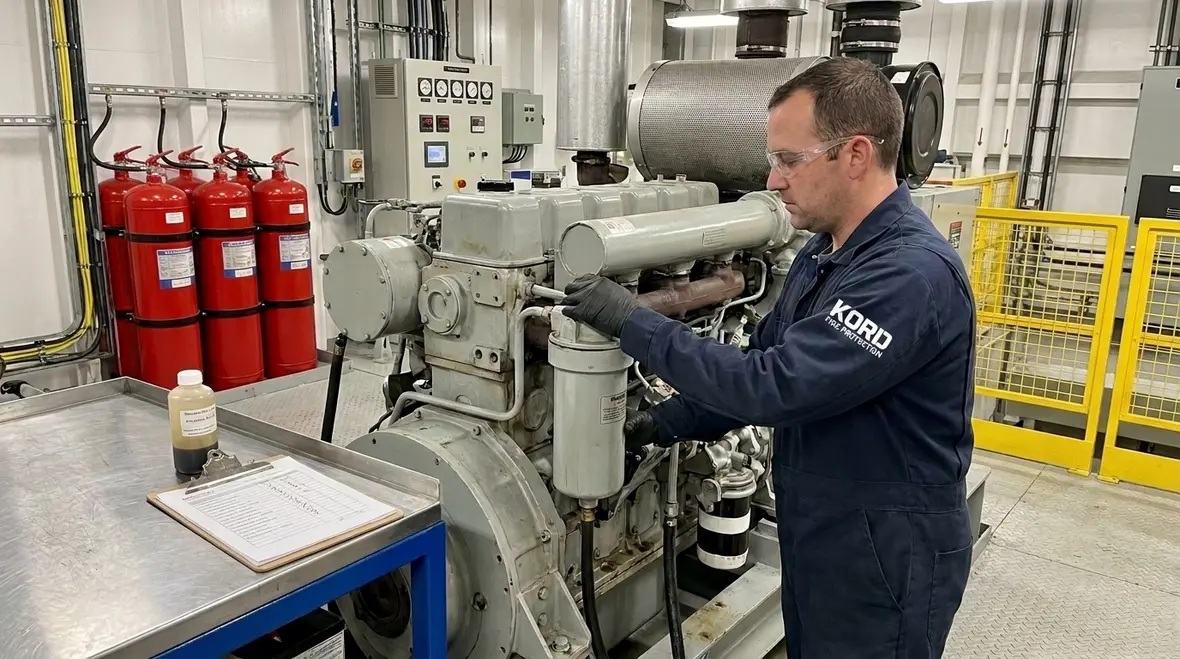
NFPA 37 Section 7.4: Lubricating Systems for Reciprocating Engines
Quick Answer
NFPA 37 Section 7.4 sets minimum safety and operational requirements for lubricating systems on reciprocating engines, addressing equipment arrangement, lubrication delivery, filtration, temperature control, and maintenance practices. Facilities that follow these controls reduce seizure, overheating, and fire risk from lubricant degradation.
Facilities that want a broader compliance partner can explore fire protection services in Southern California through Kord Fire Protection, especially when inspection support, repairs, and documentation all need to line up without turning the process into a scavenger hunt.
Why NFPA 37 Section 7.4 matters for engine-driven fire safety
Reciprocating engines rely on lubricating systems to manage friction, heat, and wear across bearings, cylinder walls, and moving components. When lubrication fails or degrades, heat rises rapidly, metal-to-metal contact accelerates, and oil properties can break down into higher risk conditions. In commercial and industrial settings, these hazards compound with accessibility challenges, staff turnover, and variable maintenance schedules.
NFPA 37 reciprocating engine lubricating system requirements focus on keeping lubrication reliable and controlling conditions that elevate ignition potential. For facilities operating engine rooms, mechanical yards, and retail backup power spaces, compliance also supports consistent inspections, documented maintenance, and predictable system performance.
What Section 7.4 typically covers in real operating terms
NFPA 37 Section 7.4 is aimed at preventing unsafe lubrication conditions through functional requirements. While facilities should confirm the exact language as adopted for their jurisdiction, the practical intent is consistent: maintain adequate lubrication flow, prevent contamination buildup, manage temperature, and ensure components remain in safe service condition.
Key functional areas facilities must verify
- Proper lubrication delivery: Ensuring oil reaches critical engine surfaces as designed under expected operating loads.
- Filtration and cleanliness: Reducing particulate contamination that causes abrasive wear, overheating, and accelerated oil breakdown.
- System temperature control: Preventing overheating that compromises viscosity and increases flash and smoke risks.
- Secure piping, fittings, and supports: Preventing leaks, loosening, and mechanical damage that can lead to oil accumulation or spray.
- Maintenance and inspection discipline: Confirming filters, strainers, reservoirs, and related components receive scheduled service.
Commercial facilities often treat lubrication as a “routine mechanical” task. Section 7.4 shifts the compliance posture toward safety-driven verification that aligns with how fires actually start: loss of containment, overheating, and degraded oils.
Common compliance challenges during inspections
Field inspections frequently reveal the same operational gaps, even at well-run sites. These gaps can turn a lubrication deficiency into a fire safety event through oil leaks, smoking oil, or rapid engine failure that increases combustible aerosol and heat release.
1) Filter and strainer neglect
Filters and strainers capture debris from wear and contamination. If maintenance lags, restriction rises, oil flow drops, and oil temperatures increase. Elevated oil temperature reduces viscosity, worsening boundary lubrication and accelerating component wear.
Typical findings: overdue filter replacements, undocumented pressure drop checks, missing change-out criteria, and lack of records linking filter condition to service intervals.
2) Inadequate temperature monitoring and response
Lubricating systems typically must operate within temperature bands that preserve oil viscosity and prevent harmful degradation. Facilities that rely only on engine alarms without verifying lubrication temperatures often miss early warning signs.
Typical findings: sensors installed but not calibrated, alarms bypassed during troubleshooting, and no documented corrective action when temperatures drift.
3) Leak-prone piping runs and loose connections
Vibration and thermal cycling can loosen fittings or stress flexible sections. Small leaks can become serious when oil collects on hot surfaces, insulation, or cable trays.
Typical findings: seepage around fittings, degraded hoses, missing drip control, and poor housekeeping around engine skids.
4) Records that do not demonstrate compliance
Many maintenance programs track engine hours but do not track lubrication system specific inspections, filter changes, oil analysis results, and verification of safe operating parameters. NFPA 37 compliance needs evidence of consistent management, not just good intentions.
Typical findings: service logs that do not reference lubricating system components, missing evidence of inspections, and absent corrective action closure.
Operational procedures that support NFPA 37 lubricating system compliance
Facilities strengthen compliance by standardizing how staff verify lubrication performance and by making corrective actions fast and documented. The goal is to prevent “discovering the problem after failure.”
Build a lubrication verification routine
- Pre-start checks: Confirm oil reservoir level, visible containment condition, and system readiness indicators.
- During operation: Verify temperature readings, alarm set points, and oil flow indicators if provided.
- Post-run observation: Inspect for seepage, abnormal noise, and oil odor or smoke indicators around the lubricating system and engine areas.
Establish a maintenance cadence tied to system conditions
Seasonal load changes, fuel quality differences, ambient temperature, and engine operating modes impact oil performance. A best practice is to link filter service and oil change intervals to operating conditions, not only calendar time.
Practical example: When filters begin showing higher restriction or when oil analysis detects contamination trends, the facility accelerates service before lubrication failure conditions emerge.
Train staff on “early failure signals”
Oil degradation often begins with subtle symptoms. Training should include recognition of abnormal temperatures, recurring alarms, unusual vibration patterns, and signs of contamination.
For commercial facilities that need dependable execution, Kord Fire Protection supports ongoing compliance through documentation-focused inspections, maintenance guidance alignment, and safety verification that integrates with facility operational standards.
For teams also focused on readiness across related equipment, Kord Fire Protection’s guide to proactive maintenance for fire pump system reliability fits naturally into the bigger conversation.
For more information on fire protection compliance support, visit Kord Fire Protection.
Equipment mechanisms and failure points to focus on
Section 7.4 compliance becomes more achievable when facilities understand what tends to fail in lubricating systems. The objective is to reduce the likelihood that a mechanical issue becomes a fire safety incident.
Lubricant degradation and its ignition-related consequences
As oil breaks down, it can produce smoke and deposits, increase volatility, and contribute to sticky residues that trap heat and debris. These conditions raise the chance that a localized overheating event escalates.
Contamination-driven wear and restricted flow
Particulate contamination drives abrasion and increases internal clearances or wear patterns. Wear products also accelerate filter plugging. Reduced flow lowers heat transfer capacity, which then raises operating temperatures further.
Seals, gaskets, and hoses as leak initiators
Leak pathways commonly originate at seals, hose connections, and gasket interfaces. Even minor leaks become unacceptable when the environment includes ignition sources, hot surfaces, or combustible accumulation.
Documentation, inspection, and maintenance evidence that auditors expect
NFPA 37 compliance hinges on repeatable processes and verifiable records. Facilities performing work without traceable documentation often struggle during audit and follow-up inspections.
Evidence package to maintain onsite
| Record Type | What It Should Show | Why It Matters |
|---|---|---|
| Lubrication inspection logs | System checks, readings, and condition notes | Demonstrates control before failure |
| Filter and strainer service records | Date, component replaced, and reason for change | Supports flow and cleanliness control |
| Oil change and oil quality evidence | Oil type, intervals, and test results if used | Supports temperature and degradation control |
| Corrective action documentation | Deficiency, root cause, repair, and re verification | Proves closure and reduces repeat findings |
Kord Fire Protection helps facilities translate NFPA requirements into practical inspection and maintenance workflows, reducing ambiguity and improving audit readiness.
Frequently Asked Questions
Conclusion
NFPA 37 Section 7.4 protects facilities by requiring lubrication systems on reciprocating engines to remain reliable, clean, and within safe operating conditions. To meet the NFPA 37 reciprocating engine lubricating system requirements in day to day operations, facilities should standardize inspections, document filter and temperature controls, and close deficiencies quickly.
Request a compliance review from Kord Fire Protection to validate your lubrication system practices, inspection records, and ongoing maintenance readiness.

Join Our Newsletter!
Get the latest fire safety tips delivered straight to your inbox From our Newsletter.



