
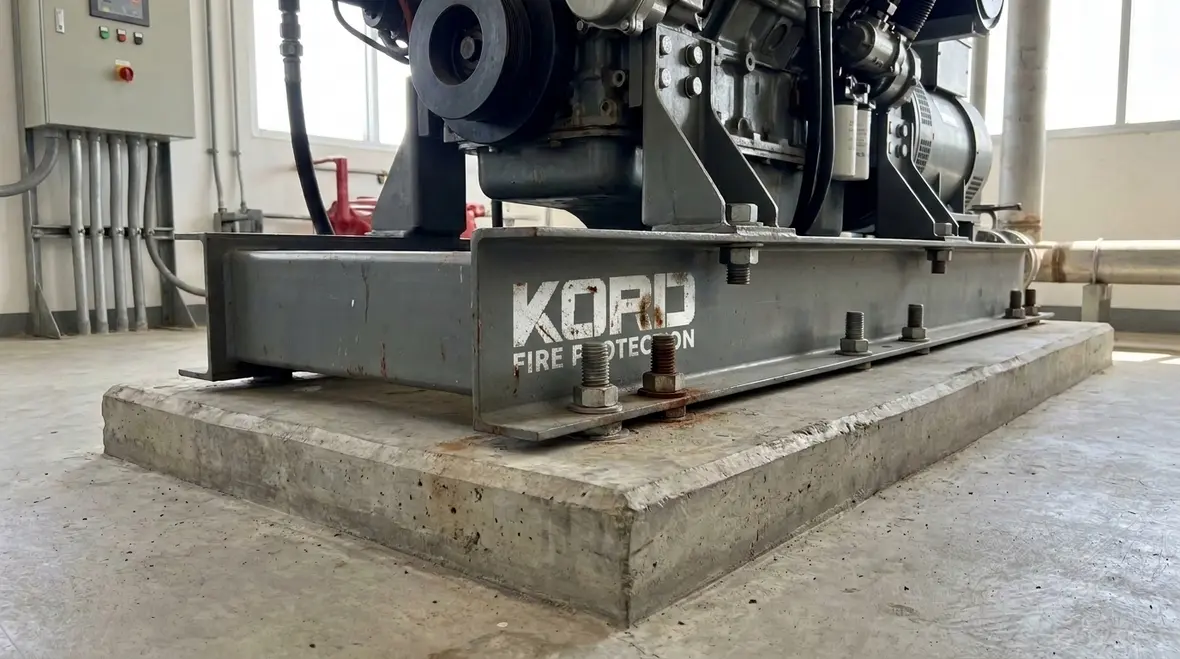
NFPA 37 Section 4.2: Structural Support and Anchoring of Engines
Quick Answer: NFPA 37 Section 4.2 governs how fire extinguishing equipment engines must be structurally supported and anchored to resist operational loads. It focuses on preventing movement, loss of alignment, and unsafe displacement during startup, service, and emergency operation. Proper installation and ongoing inspection are critical.
If this topic is landing on your desk because your facility is already juggling inspections, testing, and pump readiness, it helps to connect anchoring concerns with broader fire protection services in Southern California so support, documentation, and corrective work stay on the same page.
What NFPA 37 engine support anchoring requirements mean in real facilities
In commercial, industrial, and retail occupancies, engine driven systems often sit in equipment rooms, exterior engine pads, or protected recesses. The goal of NFPA 37 engine support anchoring requirements under Section 4.2 is straightforward: the engine and its supporting structure must remain stable when the system operates. That stability protects piping connections, flexible couplings, fuel supply integrity, electrical disconnects, and the ability of the engine to deliver performance reliably under emergency conditions.
Practical compliance problems typically emerge after construction changes, retrofit vibration, water intrusion, or deferred maintenance. The anchoring details may have been correct at acceptance, but years of service can degrade concrete, loosen fasteners, or shift the mounting surface. Facilities that treat anchoring as a one time installation task usually pay for it later during testing, service, or inspections.
Where Section 4.2 applies and what “structural support” includes
NFPA 37 Section 4.2 addresses the structural support and anchoring of the engine components used for fire protection operation. “Structural support” includes the concrete pad, steel frame, baseplate, embedded elements, and any engineered platform that transmits loads to the building structure. “Anchoring” includes the mechanical fastening method that couples the engine base to its support so the assembly resists forces generated during operation.
Common installation configurations seen in commercial properties
Exterior or semi exterior engine pads: concrete or structural steel bases subject to freeze thaw cycles, water pooling, and salt exposure.
Interior equipment rooms: slab mounted systems where vibration transfer can loosen fasteners over time.
Retrofits on existing structures: new bases added to older concrete where embedment depth, grout condition, or baseplate alignment becomes the weak link.
Loads that drive the anchoring requirement
Engines create dynamic forces during startup, acceleration, and steady operation. Those forces can cause micro movement if support is inadequate, leading to progressive failures such as cracked grout, compromised sealing interfaces, misalignment of drives, and stress on connected piping. Section 4.2 is written to prevent unsafe displacement that could undermine the system’s ability to function as intended.
How anchoring systems typically need to perform during operation
Even when the engine is installed to the manufacturer’s instructions, real world compliance depends on anchoring system integrity and the ability of the support structure to handle both static and dynamic loads.
Performance expectations during startup and testing
Resistance to lateral movement: prevents shifting that can stress exhaust, fuel lines, and flexible couplings.
Resistance to uplift and rocking: reduces the chance of loss of seal integrity and mounting hardware fatigue.
Maintenance of alignment: supports proper operation of couplings and prevents unintended wear.
Failure points seen during inspections
Loose or corroded fasteners: vibration plus moisture creates loss of clamping force.
Cracked or degraded concrete: anchors lose embedment reliability when the base deteriorates.
Improper grouting or baseplate contact: voids can concentrate stress and allow rocking.
Unauthorized modifications: field changes that bypass the original anchoring design can introduce unacceptable risk.
These are not theoretical issues. They show up in commercial settings where contractors change equipment layouts, housekeeping crews clean with high pressure near edges, or building maintenance alters adjacent curb drains and floor waterproofing.
Inspection and maintenance approach that supports compliance
NFPA 37 Section 4.2 sets the performance expectations, but day to day compliance requires an inspection and maintenance program that verifies anchoring condition over time. A strong program does not just look for damage. It verifies that the engine remains securely supported in the as installed state.
Operational checks facility teams can schedule
Visual verification: look for baseplate lifting indicators, cracked grout, staining around anchor points, and signs of movement.
Corrosion assessment: identify coating loss, rust expansion, and moisture migration pathways.
Monitoring of connected components: check fuel line fittings, electrical conduit strain relief, and piping support interaction for stress symptoms.
Maintenance actions that protect anchoring integrity
Replace compromised anchors and repair concrete: do not rely on patching over cracked zones without evaluating anchor support.
Restore baseplate contact: address grout voids and ensure correct fill and curing.
Document changes: capture any modifications with photos, measurements, and updated installation records.
Kord Fire Protection supports facility teams by aligning inspection practices with commercial maintenance realities such as access constraints, equipment room turnover, and limited downtime windows. Kord can also help document the condition of engine supports and anchoring as part of an ongoing compliance plan, which improves audit readiness and reduces last minute repair pressure.
For facilities already coordinating water-based system work, Kord’s NFPA 25C Chapter 8 fire pump inspection, testing, and maintenance guide gives useful adjacent context on how documented checks and service intervals support readiness.
Documentation and compliance readiness for audits and service cycles
Section 4.2 compliance is easier to defend when the facility maintains evidence. Auditors and AHJs often look for consistent inspection records and clear demonstration that the engine system remains secure and operationally reliable.
What strong records typically include
Installation baseline information: mounting configuration, baseplate and anchor details, and commissioning notes.
Maintenance logs: repair history, anchor replacements, and any concrete repairs.
Condition findings: photos of baseplates, anchor areas, and any corrective actions taken.
If the facility uses Kord Fire Protection for ongoing services, the documentation thread becomes easier to maintain across service intervals. That continuity matters because anchoring issues often develop gradually and can be missed during infrequent inspections.
For additional technical context and related commercial fire life safety guidance, facilities can also review Kord Fire Protection resources to support broader compliance planning, maintenance scheduling, and readiness documentation.
Frequently Asked Questions
Keep engine support secure. Plan inspections before problems escalate.
Facilities should treat NFPA 37 engine support anchoring requirements as an ongoing integrity requirement, not a one time installation task. Schedule anchoring focused inspections, verify baseplate stability, and document corrective actions so compliance remains defensible. Kord Fire Protection helps commercial properties manage engine system maintenance, verify anchoring condition, and maintain audit ready records across service cycles. Contact Kord Fire Protection to build a practical compliance plan for your equipment rooms and engine pads.

Join Our Newsletter!
Get the latest fire safety tips delivered straight to your inbox From our Newsletter.



