
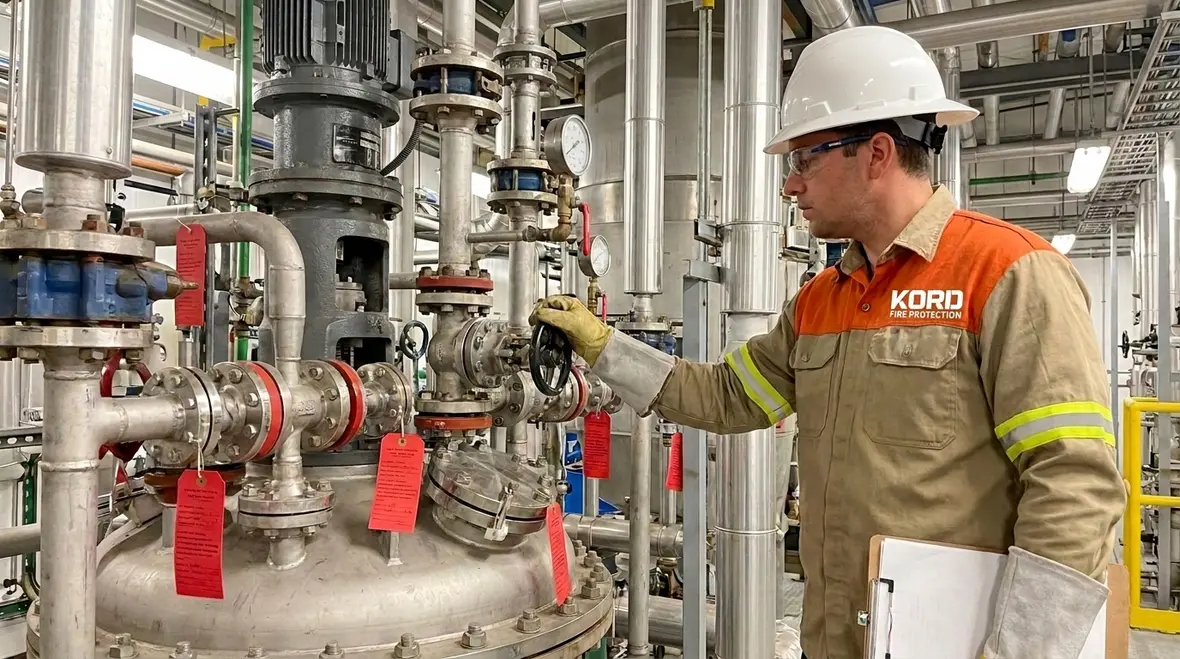
NFPA 36 Section 1.2 Purpose: Fire and Explosion Prevention in Solvent Extraction
Quick Answer
NFPA 36 Section 1.2 establishes the intent to prevent fire and explosions during solvent extraction operations. It frames safety goals around controlling ignition sources, managing flammable solvent hazards, and maintaining effective protection features. Facilities use this purpose statement to guide risk reduction and compliance planning.
If your team is tightening up inspection routines and maintenance records, it helps to review ITM fire protection inspection, testing, and maintenance early in the process so the prevention intent in NFPA 36 does not stay trapped in policy language alone.
Why the NFPA 36 purpose matters in real solvent extraction operations
The NFPA 36 purpose fire explosion prevention extraction statement in Section 1.2 does not function as a single checklist item. Instead, it sets the governing safety intent that informs how facilities apply design, construction, operation, and maintenance requirements. In commercial and industrial solvent extraction environments, that intent translates into practical controls for flammable vapor, ignition control, safe handling of pressure and temperature, and consistent performance of detection, ventilation, suppression, and electrical safety measures.
Because solvent extraction plants vary widely in solvent type, extraction method, and process temperature, the compliance challenge often sits in day to day execution. Many organizations discover that maintaining the effectiveness of hazard controls and documenting inspections are more difficult than meeting initial installation standards. NFPA 36 Section 1.2 gives facilities a clear basis to evaluate whether controls remain adequate as equipment ages, process conditions change, and staffing rotates.
What NFPA 36 Section 1.2 requires in principle: prevention over reaction
NFPA 36 Section 1.2 purpose emphasizes prevention of fire and explosion through disciplined hazard management rather than reliance on emergency response alone. For solvent extraction systems, that prevention strategy typically includes these core themes:
- Control flammable atmospheres by limiting vapor release, maintaining proper ventilation, and ensuring enclosures remain intact.
- Prevent ignition sources by using approved electrical methods, controlling static electricity risk, and managing hot surfaces.
- Manage process conditions through safe operating limits, proper relief protection, and procedures that reduce upset conditions.
- Maintain protective systems so they perform as designed when abnormal conditions occur.
Facilities frequently interpret “prevention” as a training and policy topic only. NFPA 36’s intent requires that prevention show up in engineering controls and verified performance. Examples include maintaining rated ventilation capacity, verifying that explosion protection features remain functional, and ensuring that inspection findings trigger corrective action before they become ignition or vapor containment failures.
How to translate the NFPA 36 purpose into hazard controls
Using Section 1.2 as the foundation, solvent extraction sites typically implement layered controls across the process lifecycle. The goal is to reduce the likelihood of a flammable vapor cloud forming and, if it forms, to reduce the chance of ignition and propagation.
1) Control solvent vapor release and accumulation
Common prevention gaps arise when vapor management systems drift from their intended operating point. Typical failure modes include blocked or partially closed ventilation paths, deteriorated ducting or seals, and process leaks that do not trigger alarm thresholds early enough. Facilities should verify that ventilation systems provide the required air movement, that exhaust is routed to safe locations, and that dampers and interlocks function as designed.
2) Keep ignition sources out of the hazard area
Ignition controls extend beyond choosing “the right” equipment at installation. Over time, ignition risk can increase due to:
- Incorrect replacement parts or unauthorized modifications to electrical components.
- Loose connections, corrosion, or insulation degradation in motors and controls.
- Unverified hot work controls and inconsistent permit-to-work enforcement.
- Static electricity accumulation caused by poor grounding or bonding practices.
Section 1.2 intent pushes facilities to treat ignition control as a continuous program, not a one-time selection of equipment ratings.
3) Manage pressure, temperature, and upset conditions
Solvent extraction operations depend on stable process control. When alarms are ignored, setpoints are adjusted without engineering review, or relief devices are not maintained, the probability of abnormal releases increases. Prevention requires that relief systems remain operable, that vent routing stays unobstructed, and that operating procedures clearly define safe responses to deviations.
4) Ensure protective systems stay reliable through maintenance
NFPA 36 purpose ties prevention to ongoing readiness. That includes scheduled testing and inspection for detection, alarm notification, and suppression or mitigation systems where installed. Many commercial and industrial sites underinvest in preventive maintenance because operations personnel view inspections as downtime. The compliance risk increases when systems are overdue for testing or when maintenance records do not demonstrate operational acceptance.
Common compliance and inspection challenges in commercial solvent extraction facilities
Even when a site was originally designed to meet code requirements, Section 1.2 intent can be compromised by practical operational realities. The most common challenges include:
- Documentation gaps: inspection reports exist, but corrective actions are not tracked to completion with verified closure.
- Uncontrolled changes: process adjustments and equipment replacements occur without updating the hazard analysis or confirming compatibility with the existing protective design.
- Interlock and alarm drift: setpoints or thresholds change due to production pressures, and safety interlocks lose effectiveness.
- Housekeeping variability: solvent residues, dust, or debris can affect ignition likelihood and may obstruct detection or ventilation performance.
- Electrical classification maintenance: misuse of temporary power, incorrect extension cords, and informal repairs can increase ignition risk.
To manage these challenges, facilities should align work orders, inspection routines, and training with the prevention intent stated in NFPA 36 Section 1.2. That alignment becomes especially critical for multi-shift operations and for locations with vendor equipment in hazardous areas.
Maintenance, testing, and verification: where safety intent becomes evidence
NFPA 36 purpose fire explosion prevention extraction planning should produce measurable evidence that hazard controls remain effective. A strong verification program typically includes:
Inspection standards and recordkeeping
Facilities should maintain inspection records that show what was checked, acceptance criteria, deficiencies found, and dates corrective actions completed. For solvent extraction sites, this includes records tied to ventilation performance, detector or alarm readiness, electrical component condition, and inspection of confinement features such as enclosures and ductwork integrity.
Preventive maintenance to prevent functional degradation
Preventive maintenance should cover wear items that affect performance, including seals, gaskets, bearings, fan components, and control valves. Technicians should verify that maintenance activities do not introduce nonconforming parts or bypass safety features.
Operational verification during normal runs
Many issues appear under real process conditions. Verification should include observing system behavior during normal solvent extraction steps, checking alarm response and interlock function, and confirming that ventilation and suppression or mitigation systems perform as intended when production transitions occur.
For organizations that need dependable, repeatable compliance support, Kord Fire Protection can help with inspection, testing, documentation, and ongoing maintenance alignment. Partnering with a specialist reduces the risk that small corrective items become major compliance findings. For additional guidance, review related resources on full fire protection services and develop a maintenance plan that supports the NFPA 36 purpose intent over time.
FAQ: NFPA 36 Section 1.2 purpose for solvent extraction
Conclusion and call to action
NFPA 36 Section 1.2 purpose sets a prevention mindset for solvent extraction operations: control flammable vapor, eliminate ignition pathways, and prove protective systems stay reliable. Facilities improve compliance outcomes by building verification into daily operations, maintaining hazard control performance, and closing deficiencies with documented evidence. Kord Fire Protection can support your inspection, testing, and maintenance program so your operation continues to meet both code requirements and the underlying NFPA 36 prevention intent. Contact Kord Fire Protection to review your current program today.

Join Our Newsletter!
Get the latest fire safety tips delivered straight to your inbox From our Newsletter.



