
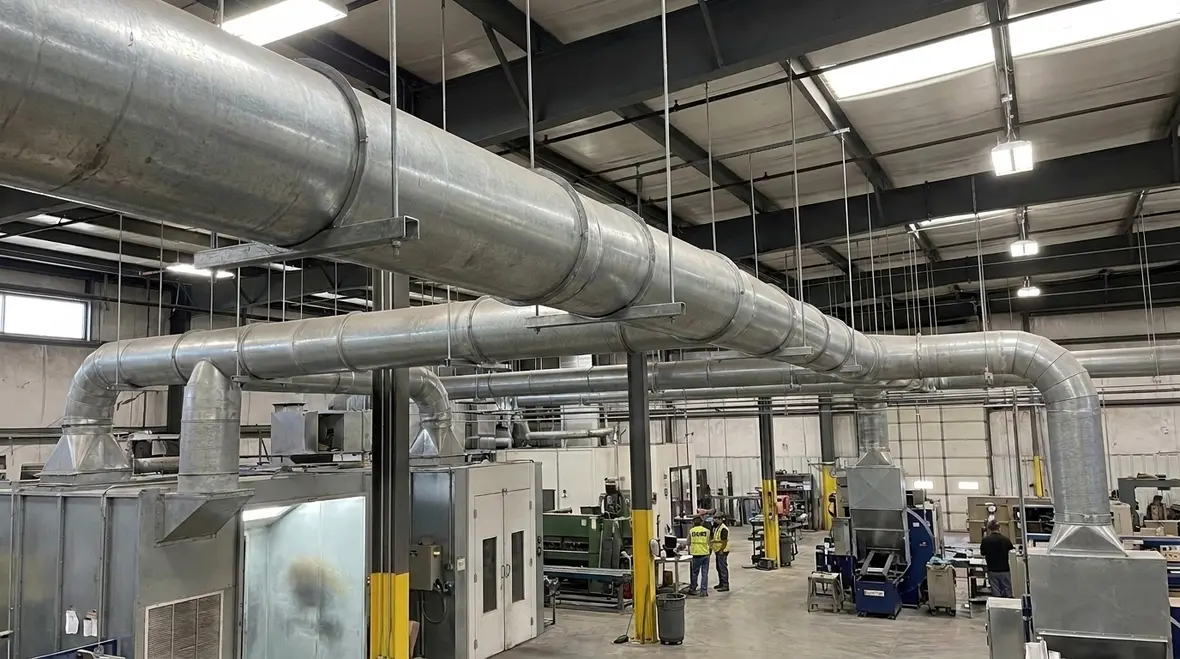
NFPA 33 Section 7.9: Supporting Exhaust Ducts in Spray Operations
Quick Answer: NFPA 33 Section 7.9 requires that exhaust ducts serving spray operations be supported and installed to maintain structural integrity and safe operation. Proper duct support limits sagging, vibration, and separation that can compromise containment, drainage, and fire safety performance.
Facilities managing broader inspection readiness can also review Kord Fire Protection’s fire safety inspections and preventive maintenance services to support documentation, recurring service, and code-focused corrective action planning.
Why NFPA 33 exhaust duct support requirements matter in spray areas
Spray operations generate overspray, solvent laden vapors, and condensed residues that can load ductwork over time. That is why NFPA 33 exhaust duct support requirements spray operations focus on preventing duct movement, stress on joints, and deterioration that can lead to leaks or impaired exhaust performance. In commercial facilities, these failures often appear after routine process changes, equipment upgrades, or deferred maintenance.
From a compliance and risk standpoint, duct supports influence more than mechanical stability. They affect how well the system maintains designed airflow, how easily residues drain away, and whether hatches, cleanouts, and connections remain aligned. When duct sections shift, gaskets and couplings can lose sealing, and the system may stop behaving as intended during normal operation and emergency conditions.
What Section 7.9 expects: mechanical stability, alignment, and safe joint performance
NFPA 33 Section 7.9 addresses supporting exhaust ducts in spray operations to ensure ducts remain secured, properly aligned, and not subject to hazardous movement. The core intent is straightforward: a duct system that sags, vibrates, or separates can create pathways for flammable vapors and combustible residues. It can also interfere with fire and life safety features integrated with or adjacent to the exhaust system.
Key functional expectations
-
Structural support: Duct sections remain positioned as installed, limiting deflection under airflow loads, thermal effects, and residue accumulation.
-
Joint integrity: Supports maintain alignment so flanged joints, threaded couplings, slip joints, and seams do not open over time.
-
Control of movement: The system accounts for vibration from fans, vibration transmitted from spray booths, and dynamic forces during start up and shutdown.
-
Durable installation: Support hardware remains serviceable despite exposure to moisture, chemical vapors, and cleaning practices used in spray areas.
In practice, inspectors typically look for visible signs of sagging, misaligned sections, loose hangers, missing fasteners, deteriorated anchors, and damaged hangers that cannot maintain load. Where ductwork crosses building structures, they also verify that penetrations and attachments remain intact and do not introduce unsafe movement.
Common duct support failure points in commercial spray installations
Even well designed systems can fail mechanically. The most frequent issues in retail, industrial, and commercial facilities involve gradual changes that become obvious only after a shutdown, maintenance cycle, or process modification.
1) Sagging and deflection from under spacing or inadequate support
When supports are spaced too far apart or improperly sized, duct sections can bow. That creates new stress at seams and joints. Over time, residues increase duct weight and worsen deflection.
2) Loose or missing hardware at hangers and attachment points
Hangers and fasteners may loosen due to vibration, thermal cycling, or improper installation. Loose hardware can also defeat alignment and cause leak paths at connections.
3) Corrosion and chemical degradation of support components
Solvent vapors, cleaning agents, and condensed moisture can attack fasteners, clamps, and coatings. Corroded supports often fail without obvious warning until a joint begins to shift.
4) Duct movement where flexible sections connect to rigid duct
Many facilities use flexible connectors to reduce vibration. If the transition is not properly supported, movement concentrates at the interface and increases the likelihood of separation or airflow bypass.
5) Misalignment after maintenance or duct rework
Operations teams sometimes remove and reinstall duct sections during upgrades, filter changes, or booth service. If the duct is returned out of alignment, support forces and seal compression change, which can lead to leaks.
Operationally, these failures can be hard to detect during normal production because airflow and noise can mask early mechanical instability. Scheduled inspection is what makes these problems visible before they become compliance defects.
How facilities should inspect and maintain duct support systems
Effective inspection goes beyond a quick visual check. NFPA 33 compliance depends on verifying that supports maintain intended duct geometry and that attachments remain secure under real operating conditions.
Inspection checklist for spray exhaust duct support
-
Hanger and support condition: confirm presence, secure attachment, and integrity of hangers, rods, clamps, and braces.
-
Alignment verification: look for sag, twist, uneven spacing, and joint misalignment at flanges and couplings.
-
Joint and seal condition: check gaskets, sealant, and fasteners for compression loss, cracking, and separation.
-
Corrosion assessment: identify rust, pitting, coating breakdown, and deterioration at supports and anchors.
-
Anchor integrity: verify that building attachments remain sound and do not allow movement or pull out.
-
Residue and drainage impacts: inspect for buildup that increases duct loading and affects support forces.
Maintenance practices that reduce risk
Maintenance should include cleaning that prevents residue buildup from increasing duct mass. It should also include replacement of degraded hardware using materials suitable for the chemical and moisture exposure of spray areas.
Where the system includes dampers, access doors, or cleanouts, maintenance teams should confirm that support adjustments do not interfere with proper opening, closure, and sealing. This is especially important during filter service and booth cleaning cycles.
Commercial compliance realities: documentation, testing, and repair controls
In commercial and industrial facilities, duct support compliance becomes a recurring management task. The facility must demonstrate that ductwork remains maintained and safe between service intervals.
What compliance typically looks like during surveys and audits
-
Maintenance records tied to inspection findings, including repair actions taken on supports, fasteners, and joints.
-
Visible condition of hangers, anchors, clamps, and duct seams, with no evidence of uncontrolled movement.
-
Controlled reinstallation when ducts are removed for booth service, upgrades, or equipment replacement.
Repair and rework controls that prevent recurring defects
Repairs should maintain original duct routing, alignment, and support strategy. Any changes to support spacing, hanger type, or connection method can alter load distribution. Facilities should also ensure that contractors document what was changed so future inspections can compare “as maintained” versus “as installed.”
For ongoing compliance, Kord Fire Protection supports commercial facilities with practical fire and life safety services aligned to industry expectations. Their field experience helps teams close common inspection gaps around duct integrity, maintenance documentation, and system readiness for spray operations. For related guidance on documentation readiness, see fire safety system documentation for compliance.
Frequently Asked Questions
Conclusion and next steps
Facilities should treat exhaust duct support as a safety critical system component, not a minor mechanical detail. A documented inspection program helps prevent sagging, joint separation, corrosion, and airflow performance problems that commonly surface during audits. Contact Kord Fire Protection to support ongoing compliance through practical inspection, verification, and maintenance planning for spray exhaust duct systems, including corrective actions that keep NFPA 33 spray operations ready.

Join Our Newsletter!
Get the latest fire safety tips delivered straight to your inbox From our Newsletter.



