
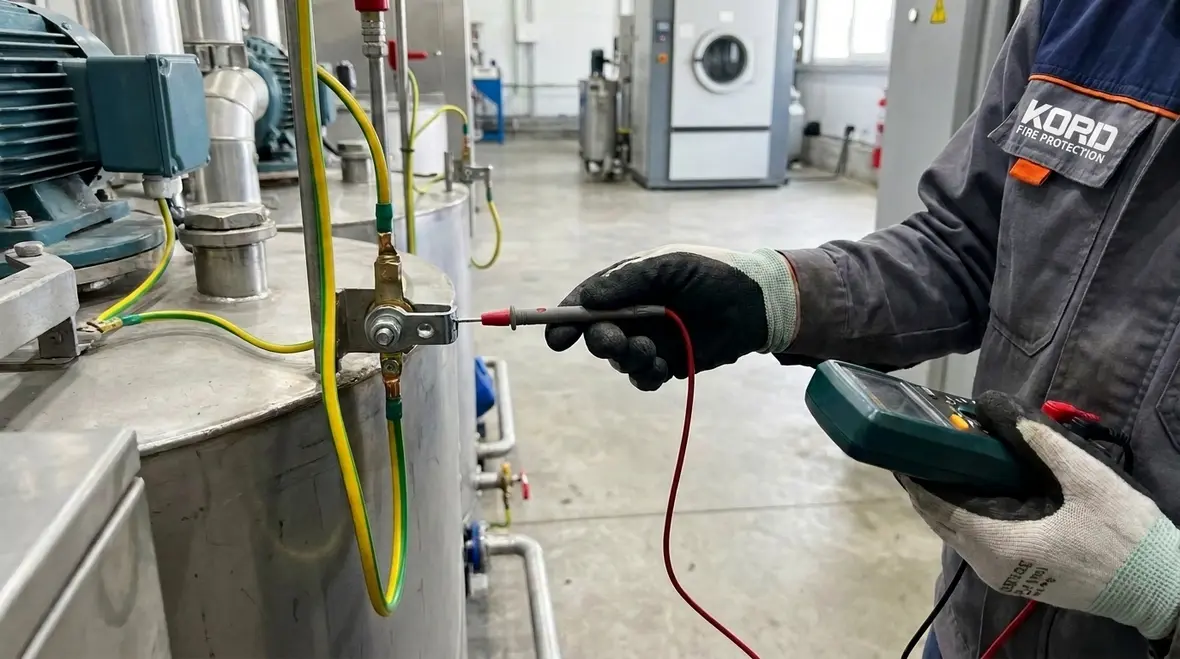
NFPA 32 Section 7.8 Static Electricity Controls for Type II Facilities
Quick Answer: NFPA 32 Section 7.8 requires engineered and procedural static electricity controls for Type II drycleaning facilities to prevent ignition during fuel transfer, solvent handling, and dispensing. Compliance relies on correct bonding and grounding, proper humidity and grounding integrity, and documented inspections with maintenance follow up.
For a broader look at how inspections, maintenance, and documentation work together over time, see Full Lifecycle of Fire Protection Servicing. It fits naturally here because static control compliance is not a one and done installation issue. It is an ongoing performance issue that has to survive real world maintenance, repairs, and field changes.
Why NFPA 32 Section 7.8 Matters for Type II Drycleaning
Type II facilities present higher risk exposure because process operations can generate ignitable atmospheres and ignition-capable electrostatic discharge. NFPA 32 static electricity drycleaning controls focus on stopping ignition sources that can form when solvent vapors are present and static charges accumulate on insulated surfaces or during fluid movement.
In practical terms, compliance does not end at installation. It extends into operational discipline, routine verification, and fast correction of bonding or grounding defects that develop over time. For commercial, industrial, and retail properties running drycleaning operations, static control failures often track back to overlooked field changes, worn cables, corrosion at connections, or unverified bonding continuity after service.
What “Static Electricity Controls” Covers Under Section 7.8
NFPA 32 Section 7.8 establishes performance expectations that typically include these control categories for Type II facilities:
- Bonding and grounding of conductive parts involved in solvent transfer and container handling to limit charge accumulation and provide an ignition energy reduction pathway.
- Static charge control during transfer operations, including recognizing conditions that increase charge generation such as low conductivity solvents, fast filling, and turbulent flow.
- Verification of grounding integrity using inspection methods appropriate to the installation design and required documentation practices.
- Procedural controls that govern how operators dispense, connect, disconnect, and manage solvent containers to avoid unsafe ignition conditions.
How NFPA 32 Static Electricity Drycleaning Controls Work in the Real World
1) Bonding and grounding: the mechanism that keeps charge from building up
Static control depends on maintaining a conductive path between relevant metal parts, solvent containers, transfer hoses or couplings where applicable, and the facility grounding system. When bonding continuity degrades, the system can allow charge to build on isolated conductors, then discharge to a nearby grounded or semi grounded surface.
Common failure points in commercial installations include:
- Loose or corroded lug connections at tanks, piping, and distribution panels.
- Damaged bonding jumpers from handling, vibration, or previous service work.
- Inappropriate replacement parts that are not conductive, not rated for hazardous location service, or do not connect as designed.
- Paint, coatings, or residue that interrupt intended electrical contact points.
2) Transfer operation controls: controlling the conditions that create charge
Static generation increases with factors like flow rate, turbulence, and solvent characteristics. Even with bonding in place, facility operations must align with safe transfer practices to reduce charge creation and prevent unsafe discharge events. Section 7.8 controls generally expect facilities to manage:
- Dispensing speed and transfer method.
- Hose handling and connection sequence so conductors bond before flow begins when required by the system design.
- Avoiding procedures that promote rapid separation of conductive elements while vapors are present.
3) Verification and documentation: the compliance that survives inspections
Fire and safety reviewers often look for evidence that the static control system is both installed and maintained. That includes inspection records, corrective actions, and the ability to demonstrate the bonding and grounding strategy remains effective after routine service, filter changes, or equipment replacement.
Kord Fire Protection supports ongoing compliance through inspection support, testing assistance, and maintenance coordination tailored to commercial operations where downtime costs matter. This reduces the risk of finding deficiencies during authority having jurisdiction follow up.
Inspection, Testing, and Maintenance: What Facilities Commonly Miss
Static electricity controls can drift out of compliance due to normal commercial maintenance and housekeeping patterns. For Type II drycleaning operations, the following program elements prevent common setbacks:
Operational checks tied to equipment behavior
- Confirm bonding connections remain secure after any maintenance that involves tanks, piping segments, dispensers, or flexible connections.
- Verify grounding continuity after replacement of couplings, hoses, or adapters.
- Check for coating breakdown or residue build up at connection interfaces.
Routine inspection frequency and evidence
NFPA 32 static electricity drycleaning controls typically rely on a documented process that matches the facility’s risk profile and the system design. In practice, facilities should implement a schedule that at minimum includes recurring verification, plus additional checks after any change that can affect conductivity.
Corrective action speed
When a bonding issue is found, it should trigger an immediate corrective action workflow. Continued solvent handling before verification can create unsafe conditions. Commercial facilities benefit from a pre planned response procedure that defines who isolates equipment, who secures the area, and who restores compliance.
Design and Installation Considerations for Type II Facilities
Section 7.8 controls must work together with the broader fire protection and hazardous process layout. Installations that work on day one can fail later if the facility changes hose routing, adds aftermarket parts, relocates equipment, or changes solvent supply connections. A strong compliance posture includes:
- Preventing unauthorized modifications to bonding and grounding components.
- Using conductive components and couplings designed for the intended service and connection scheme.
- Ensuring the grounding system remains continuous through structural transitions, enclosures, and maintenance access points.
- Training staff on safe connection and disconnection behaviors that maintain electrical continuity.
For organizations managing multiple commercial sites, standardized maintenance procedures help keep static control performance consistent across locations.
How Kord Fire Protection Helps Maintain NFPA 32 Compliance
Commercial compliance teams need more than periodic paperwork. They need a program that anticipates field issues and keeps systems functional. Kord Fire Protection works with facilities to support inspection readiness, verify critical elements tied to NFPA 32 requirements, and coordinate practical maintenance actions that keep drycleaning operations safe and compliant.
If your program includes updates, equipment changes, or refurbishment, Kord Fire Protection can help ensure static control components remain correctly bonded and grounded after work is complete. This supports lower operational disruption and fewer inspection follow up findings.
If you need a service partner for inspections and preventive maintenance, Kord Fire Protection’s fire safety inspections and preventive maintenance services are a natural fit for facilities that need compliance support without turning every maintenance visit into a scavenger hunt.
Frequently Asked Questions
Next Step: Build a Static Control Verification Plan
Review your Type II process for bonding and grounding integrity, confirm your operational connection and transfer sequence matches NFPA 32 static electricity drycleaning controls, and verify inspection evidence is current after any service work. Contact Kord Fire Protection to align testing, maintenance, and documentation with practical commercial operations so you reduce downtime and avoid recurring inspection issues.

Join Our Newsletter!
Get the latest fire safety tips delivered straight to your inbox From our Newsletter.



