
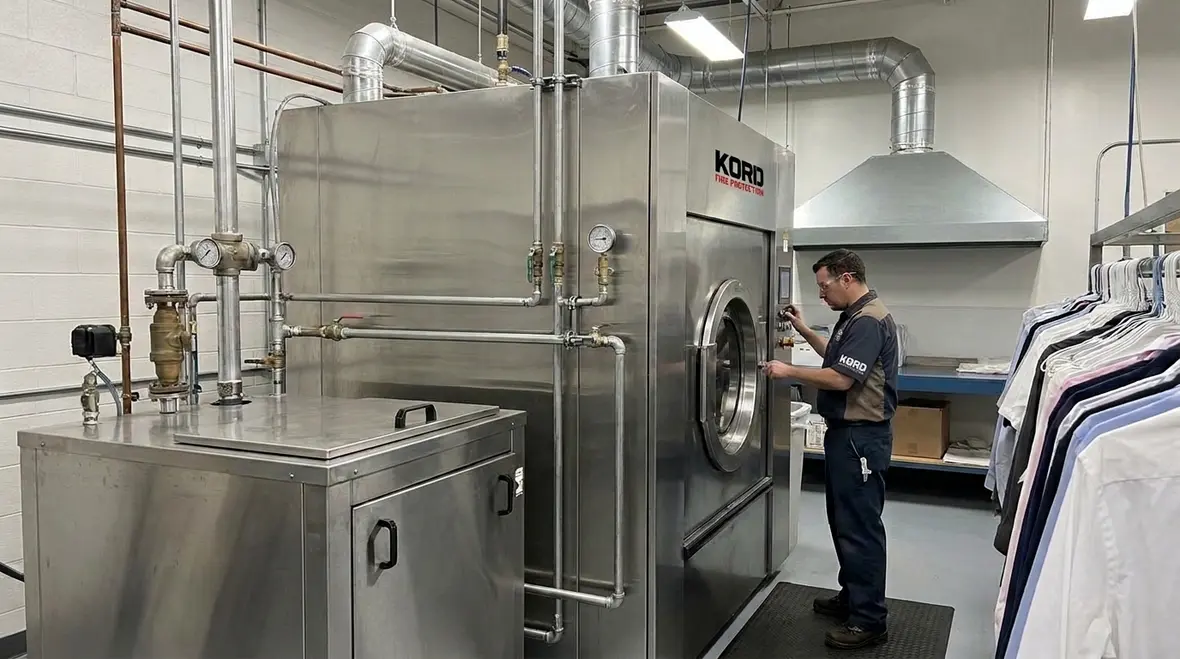
NFPA 32 Section 6.4 Solvents: Permitted Drycleaning Solvents Explained
Quick Answer: NFPA 32 Section 6.4 defines which drycleaning solvents facilities can use and under what conditions. Compliance centers on correct solvent selection, proper containment and ventilation, equipment compatibility, and documented inspections and maintenance to reduce ignition and exposure hazards.
If your team is reviewing broader inspection readiness at the same time, it helps to start with fire protection services in Southern California so solvent compliance, deficiency correction, and scheduling all live under one practical plan.
What NFPA 32 Section 6.4 Requires for Drycleaning Solvents
NFPA 32 Section 6.4 focuses on solvent safety in drycleaning operations. The intent is to control fire hazards and ignition sources by limiting solvent selection to those permitted under the code and by requiring that facilities manage those solvents through engineered controls, safe operating procedures, and ongoing equipment condition. For commercial owners and facility managers, the practical impact is straightforward: the facility must use NFPA 32 permitted drycleaning solvents only when the system design, installation, and ongoing maintenance support compliance.
Solvent compliance is not only a “paper” requirement. Inspectors typically verify whether the drycleaning system matches the approved solvent use assumptions, including solvent handling, transfer practices, machine controls, and ventilation performance. When facilities mix practices across equipment generations, use legacy transfer methods, or delay maintenance, compliance gaps appear quickly.
Which Solvents Are Treated as Permitted Under Section 6.4?
Section 6.4 controls solvent permission based on the product type and safety characteristics recognized by NFPA 32. In practice, permitted solvents must be used within the constraints of the drycleaning system design and the hazard controls the code expects for that solvent class. The facility must confirm the machine’s listings or suitability for the solvent and confirm that all related components remain compatible and intact.
Facility teams commonly stumble on two issues:
- Solvent substitution: switching solvent brands or formulations without confirming they remain within the permitted classification and the machine’s intended use.
- Compatibility drift: replacing hoses, gaskets, or seals with components not matched to the solvent, which can degrade seals, increase vapor leakage, and reduce system integrity.
Operationally, the facility should maintain a current solvent register that ties together solvent identity, machine model and configuration, and the maintenance history for solvent train components.
How Compliance Works in Real Operations: Equipment, Ventilation, and Controls
NFPA 32 solvent compliance depends on more than having a permitted product. The drycleaning machine and its support systems must prevent unacceptable vapor release, limit ignition opportunities, and remain functional over time.
1) Machine solvent train integrity and vapor containment
Drycleaning machines create and recover solvent vapors during normal operation. Section 6.4 compliance is tied to ensuring that vapor containment and recovery systems work as intended, including seals, lid interlocks, and dryer or still components where vapors condense and return to the process.
Common failure points include:
- Worn door and lid seals that allow vapor escape during loading and unloading.
- Degraded hoses and solvent lines that develop microleaks.
- Malfunctioning interlocks that permit operation in unsafe states.
- Refrigeration or condensation impairment that reduces recovery efficiency.
2) Ventilation and make up air performance
Solvent vapors must be managed using the facility ventilation arrangement the system depends on. If exhaust systems underperform, the facility may experience elevated vapor levels, pushing conditions toward ignition and exposure risks.
Commercial and retail installations often face real constraints that trigger recurring issues:
- Blocked ductwork due to renovation dust or pest intrusion.
- Incorrect fan rotation, belt slip, or damaged louvers after tenant fit outs.
- Make up air not balanced after HVAC seasonal changes.
- Exhaust system modifications made without re verification.
3) Electrical classification and ignition source control
Solvent vapor management must align with ignition control strategies. That includes ensuring electrical devices and wiring remain appropriate for the installation and that maintenance does not create new ignition pathways.
On inspections, investigators commonly look for:
- Damaged wiring insulation or loose junctions in solvent vapor areas.
- Improperly installed switches or temporary wiring changes.
- Inoperative emergency stop functions that prevent safe shutdown.
- Improper grounding or bonding that can affect safety and monitoring.
What to Document for Audits and Inspections (and Why It Matters)
In day to day commercial compliance, documentation acts like a second line of defense. NFPA 32 solvent compliance and Section 6.4 expectations typically require evidence that the permitted solvents remain in use and that the equipment continues to operate within safe parameters.
Maintenance records that support Section 6.4
- Proof of scheduled machine maintenance and component replacements (filters, seals, gaskets, solvent lines where applicable).
- Ventilation performance checks and filter change logs, including any modifications after renovations.
- Records of interlock and control functionality checks.
- Solvent change logs showing when solvent was swapped and who approved it.
Operational procedures for loading, transfer, and spill response
Solvent vapor risk increases during loading, transfer, and cleaning tasks. Facilities should maintain written procedures that match the equipment’s design, including:
- Authorized transfer methods only, with appropriate bonding and grounding practices where required.
- Controlled opening practices and time limits for exposure of vapor containing components.
- Spill control measures that include compatible absorbents and a defined notification workflow.
Well written procedures reduce variability between shift technicians, which improves compliance stability. Well trained staff reduce the likelihood that a permitted solvent becomes a noncompliant condition due to handling drift.
Commercial Compliance Challenges That Commonly Trigger Nonconformance
Even when a facility selects permitted solvents, compliance can still fail due to execution issues. Kord Fire Protection routinely sees patterns in industrial, commercial, and retail occupancies that affect NFPA 32 solvent compliance outcomes.
Tenant turnover and fit outs
Drycleaning equipment often changes hands during relocations and retail tenant turnovers. HVAC balancing, exhaust routing, and electrical arrangements can unintentionally drift from the original safe installation. A permitted solvent does not offset a ventilation shortfall or electrical mismatch.
Deferred maintenance on recovery and refrigeration performance
When solvent recovery efficiency drops, vapor control weakens. Facilities may continue operations longer than safe without recognizing early performance decline. Refrigeration impairment, clogged condensers, and sensor drift are common causes.
Substitution without re verification
Brand changes happen frequently due to supply chain and purchasing decisions. If purchasing switches to an alternative product without verifying compatibility and classification under NFPA 32, the facility can unintentionally use a solvent that does not meet the permitted basis for its system.
How Kord Fire Protection Supports Ongoing NFPA 32 Solvent Compliance
NFPA compliance requires continuous verification, not one time installation acceptance. Kord Fire Protection provides ongoing support that helps commercial facility teams maintain safe conditions for drycleaning operations, including practical inspection support and documentation readiness.
If your facility needs help aligning solvent use, machine condition, ventilation control, and inspection readiness, review Kord Fire Protection’s full service support or explore fire protection maintenance for LA property managers for a practical example of how ongoing compliance planning can reduce surprises during inspections.
Frequently Asked Questions
Call to Action
Confirm your facility’s solvent program aligns with NFPA 32 Section 6.4 by verifying permitted solvent classification, equipment compatibility, ventilation performance, and maintenance documentation. Then establish a routine inspection and test cadence that catches vapor control and recovery issues before they become nonconformance. For practical compliance support, contact Kord Fire Protection to build an inspection ready program tailored to your commercial drycleaning equipment and operating conditions.

Join Our Newsletter!
Get the latest fire safety tips delivered straight to your inbox From our Newsletter.



