NFPA 31 Section 7.9: Outside Aboveground Tank Installation Rules
Quick Answer: NFPA 31 Section 7.9 sets enforceable requirements for installing outside aboveground fuel tanks, focusing on fire protection, stability, separation, venting, piping, and inspection readiness. Facilities must align tank placement and appurtenances with code intent to reduce ignition risk and ensure safe emergency response.
For facilities reviewing broader liquid hazard strategy, Kord Fire Protection also offers practical guidance on layered fire protection for flammable liquids, which fits naturally with outside tank risk planning.
Why Section 7.9 matters for commercial fuel tank safety
Outside aboveground tanks create exposure pathways that indoor installations often avoid. Fuel vapor release, piping leaks, transfer pump heat, vehicle impacts, and weather driven corrosion can all degrade safety barriers over time. NFPA 31 outside aboveground tank installation requirements address these realities by prescribing installation fundamentals and by ensuring the system can be inspected, maintained, and operated safely throughout its service life.
In day to day commercial operations, the most common compliance failures are not dramatic violations. They are documentation gaps, missing or incorrectly installed appurtenances, altered piping routes, and neglected maintenance that quietly moves the installation out of compliance.
What Section 7.9 typically covers in an outside tank scope
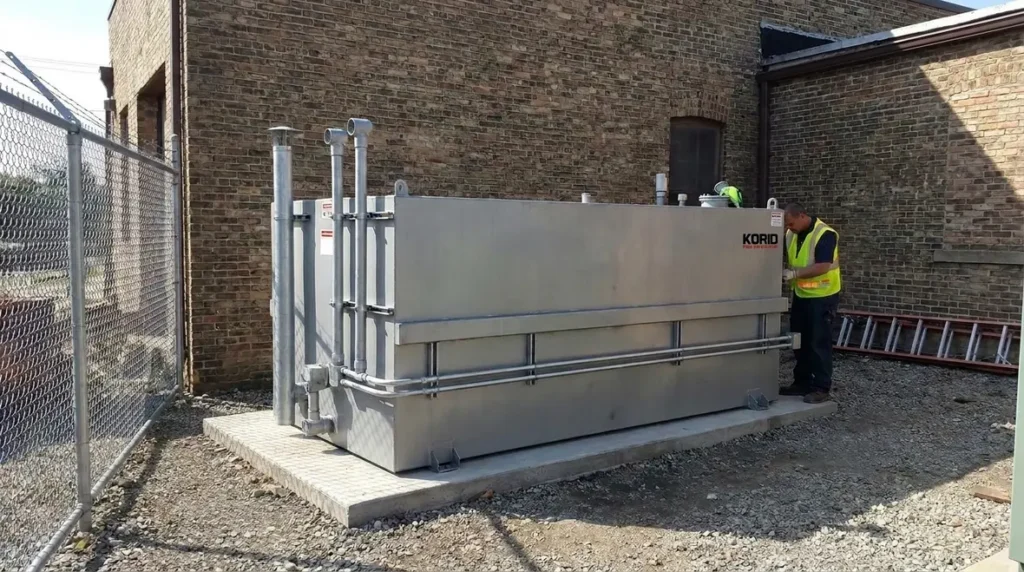
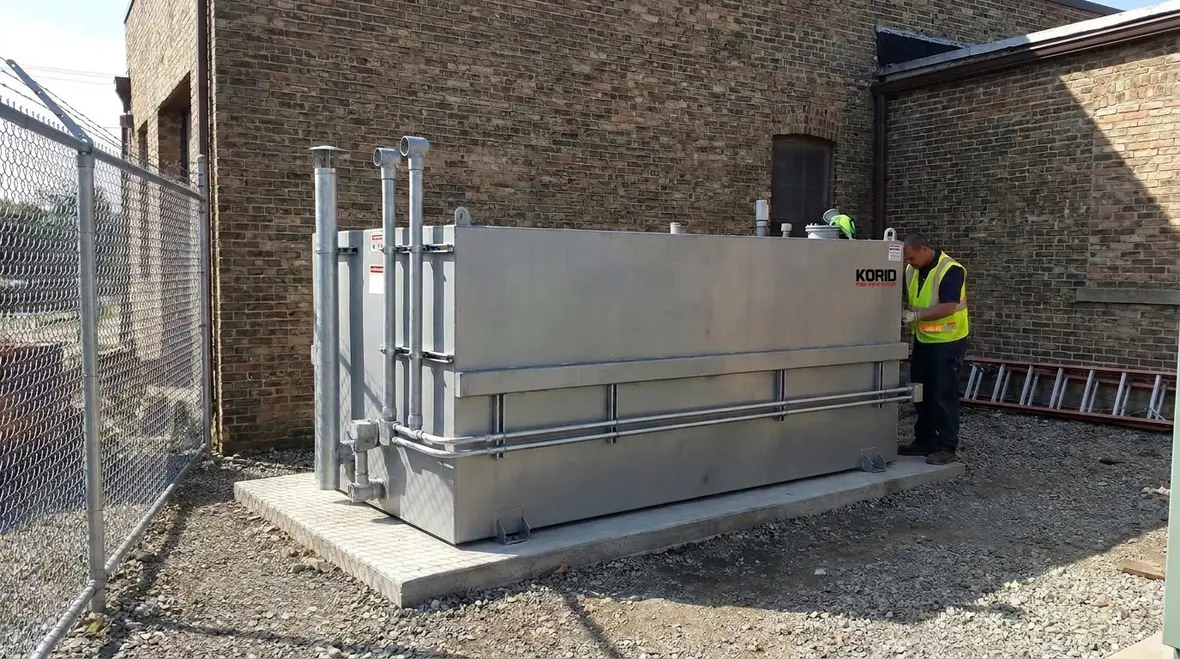
Section 7.9 governs how outside aboveground tanks get placed and interconnected so fire hazards remain controlled during normal operation and credible upset conditions. While exact subclauses vary by fuel type and configuration, the compliance focus usually includes these core areas:
- Tank location and siting: placement that supports safe access, limits exposure to hazards, and preserves required separation to ignition sources and adjacent property features.
- Foundation, support, and stability: installation that resists settlement and wind or soil movement, maintaining proper alignment for piping and venting.
- Protective systems and response readiness: arrangements that reduce spill spread and support fire control strategy used on the site.
- Venting and flame control: vent components that manage pressure and vapor release while preventing flame passage where required.
- Piping and fittings: routing, protection, and connection details that reduce leak likelihood and maintain integrity during service and maintenance.
- Inspection and maintenance access: provisions that keep critical components reachable for inspection, sampling, and functional checks.
These categories create the operational checklist your installer and your ongoing maintenance team must share. When one party assumes another party handled it, the installation often drifts out of compliance.
Installation controls that prevent common failure points
NFPA 31 outside aboveground tank installation success depends on whether the system performs under real operational stress. In commercial, industrial, and retail facilities, the frequent failure points look predictable when you break them down by mechanism.
1) Siting, separation, and exposure management
Tank siting governs how quickly a small leak or vapor release becomes a fire. Compliance failures often show up as “temporary” changes that become permanent. Examples include rerouted hoses, moved vehicles, or new equipment placed near the tank pad without rechecking clearances.
Commercial sites should maintain a location baseline that includes:
- maps that show the tank, fill point, vents, and piping runs
- documented access paths for emergency response and safe service
- a change control process for site alterations that can affect separation
2) Spill containment and leak management
Outside tanks experience rain driven runoff, thaw and freeze cycling, and wind assisted spread. If containment systems are absent, undersized, or bypassed by piping modifications, leaks can migrate toward ignition sources.
Strong compliance posture includes confirming that containment materials and drainage arrangements do not defeat containment intent. It also includes verifying that any drainage valves or sumps are managed so they do not create an unmonitored pathway during normal operation.
3) Venting, flame arresting, and pressure control
Venting is one of the most misunderstood areas. Vent piping that is blocked, incorrectly routed, or damaged by impact can increase pressure or allow uncontrolled vapor discharge. Conversely, improper flame control devices can allow flame passage in upset scenarios.
Practical controls include:
- confirming vent termination location and routing integrity
- verifying flame arrestor type and serviceability
- maintaining clearances around vent outlets so snow, landscaping, or equipment does not obstruct flow
Maintenance teams should treat vent inspection as a functional task, not a visual check only.
4) Piping routing, supports, and protected connections
Aboveground piping often fails at stress points: bends, valve bodies, connection joints, and flexible sections near vibration or transfer pump movement. In the field, improper supports can cause chronic rubbing, fatigue cracking, or misalignment that leads to gasket failure.
Code oriented installation practices typically require that piping supports maintain designed slope and prevent strain at connections. They also expect that piping and appurtenances remain protected from physical damage during routine operations.
5) Corrosion protection and weather resilience
Outside tank systems face layered corrosion mechanisms: coating breakdown, galvanic corrosion at dissimilar metals, and corrosion accelerated by contaminated runoff. Over time, corrosion can reduce wall thickness and compromise fittings.
Facilities should implement a corrosion inspection plan tied to tank material type and operating conditions. The inspection should include coating condition, joint integrity, and signs of moisture intrusion around appurtenances.
Inspection, testing, and maintenance: how compliance stays real
NFPA 31 rules are not a one time installation event. Outside environments change equipment behavior. Inspections confirm that components still perform as installed and that alterations have not undermined safety functions.
A practical compliance program for NFPA 31 outside aboveground tank installation usually integrates:
- pre service checks: verification of venting, fill and draw connections, emergency shutoff arrangements where applicable, and piping integrity
- scheduled functional checks: ensuring vents and flame control devices are unobstructed and operating within expected conditions
- integrity assessments: leak detection, corrosion monitoring, and documentation review
- equipment change review: reinspection when piping routes, pumps, controls, or site hazards change
Many commercial facilities can pass an initial acceptance inspection and still lose compliance within a season if the maintenance scope excludes critical items like vent outlets, flame control devices, and protected piping runs.
How Kord Fire Protection supports ongoing NFPA 31 readiness
Operational compliance depends on disciplined testing, clear records, and practical service coverage. Kord Fire Protection helps commercial facilities maintain defensible compliance by verifying the outside aboveground tank installation safety functions that auditors and insurers expect to see supported by evidence.
For installation best practices and how fire safety engineering translates to real field outcomes, review Kord Fire Protection’s practical guidance on related oil burning equipment installation principles: NFPA 31: A Practical Guide to Oil Burning Equipment Installation.
Working with a specialist partner also reduces downtime because inspections can be planned around service windows, documentation can be prepared ahead of audits, and corrective actions can be prioritized by risk.
Frequently Asked Questions
Take action now
Schedule a compliance focused inspection for your outside aboveground tank system and verify that venting, piping, containment intent, and access provisions still match the installed configuration. Kord Fire Protection can help you document findings, prioritize corrective actions, and build an ongoing maintenance plan that keeps NFPA 31 requirements practical, measurable, and audit ready. Contact Kord Fire Protection today to start with a targeted assessment.

Join Our Newsletter!
Get the latest fire safety tips delivered straight to your inbox From our Newsletter.