NFPA 31 Section 7.8: Auxiliary Fuel Tank Requirements
Quick Answer: NFPA 31 Section 7.8 sets enforceable minimums for auxiliary fuel tanks used with oil burning equipment. It addresses location, construction, protection, venting, filling, piping interfaces, and operational safeguards to reduce leak, spill, fire, and overpressure risks. Compliance also depends on inspection and maintenance.
If your facility is reviewing auxiliary tank safety alongside broader system readiness, fire protection services in Southern California can help connect inspection, repair, and documentation support before small issues turn into recurring deficiencies.
What NFPA 31 Section 7.8 actually covers
NFPA 31 Section 7.8 establishes auxiliary tank rules that apply when commercial burners rely on more than just the primary fuel supply. In practice, facilities use auxiliary tanks to maintain stable fuel delivery, reduce downtime during maintenance, or support demand variability across multiple pieces of equipment. The NFPA 31 auxiliary tank requirements focus on preventing uncontrolled release of fuel and limiting ignition sources and escalation pathways.
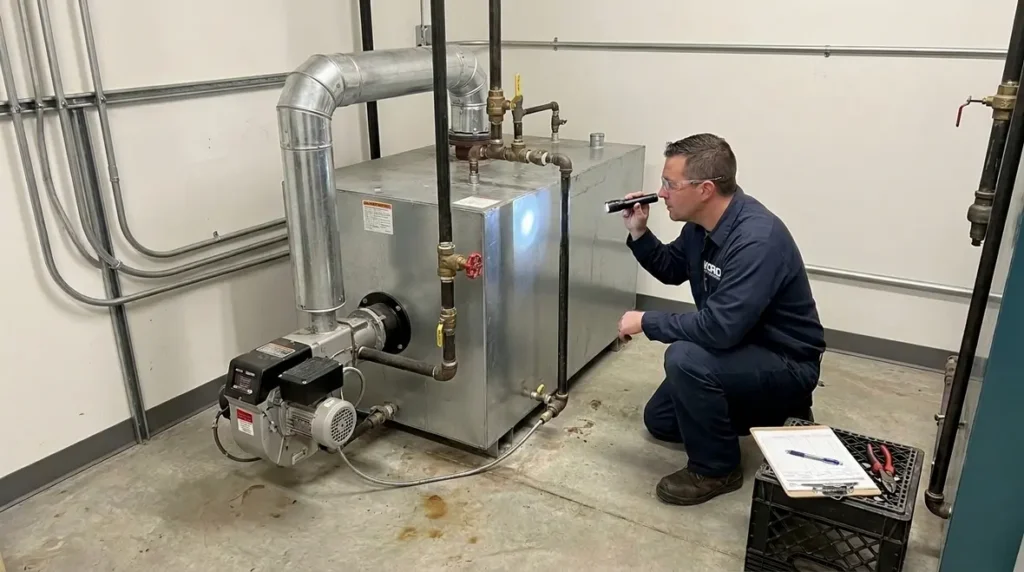
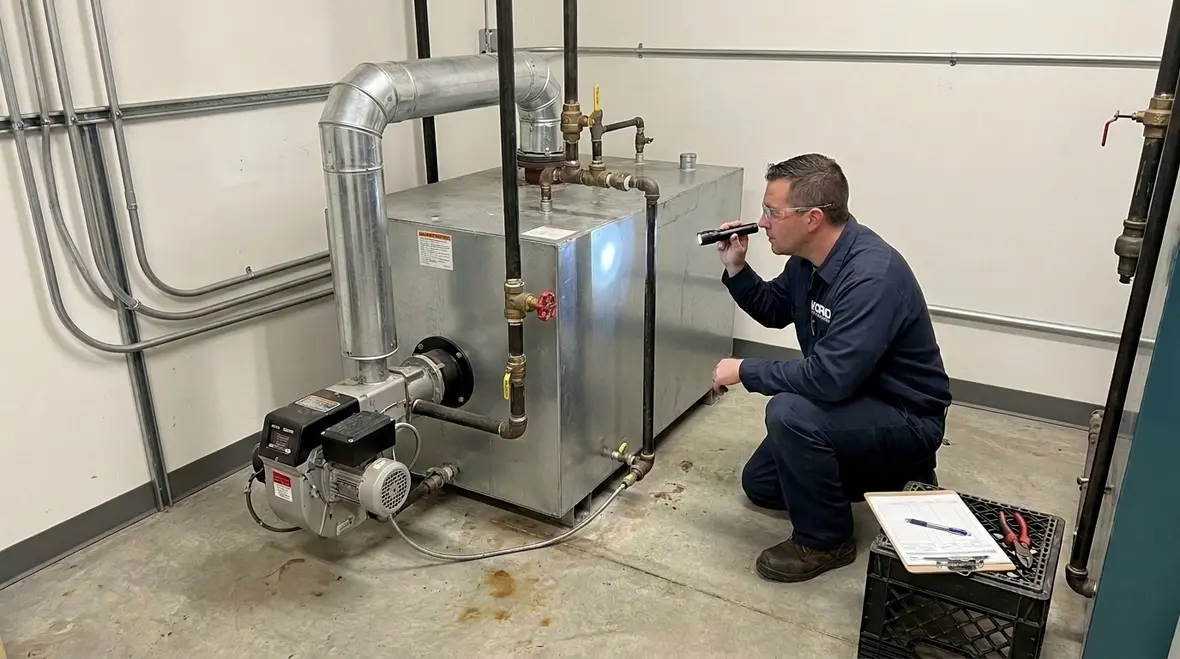
Commercial installations typically include auxiliary tanks in boiler rooms, mechanical areas, and retail or industrial back-of-house spaces. Fire safety professionals treat auxiliary fuel systems as a combined hazard of fuel containment, venting behavior, delivery piping, and emergency shutdown capability. A compliant design becomes ineffective if tanks, valves, and piping degrade, venting is blocked, or overfill protection is missing or fails.
Auxiliary tank placement and protection: where tanks belong
Section 7.8 requirements for tank location and protection reduce the likelihood that a tank becomes damaged by physical impact, thermal exposure, or unauthorized access. Typical compliance expectations include the use of sound mounting and secure placement, adequate clearance for inspection and service, and avoidance of locations that expose tanks to extreme heat sources or hazards that can accelerate fuel leakage.
For commercial facilities, placement decisions often trigger real world problems:
Mechanical room congestion: Auxiliary tanks placed too close to burners, controls, or service paths make inspections difficult and increase the chance that valves and fittings are left unverified.
Impact exposure: Forklift routes, maintenance access points, and storage racks can create impact hazards that damage tank skirts, piping, or fittings.
Thermal management: Installers sometimes route hot lines near tank surfaces. Heat can affect gaskets, seals, and tank coatings and can increase vapor generation under certain conditions.
Kord Fire Protection commonly supports commercial sites by reviewing installation maps, identifying access and protection gaps, and aligning on inspection routes so technicians can verify the tank and appurtenances each scheduled cycle.
Construction, spill control, and leak behavior: compliance begins at containment
Auxiliary tanks must maintain containment integrity through their service life. Section 7.8 requirements push facilities toward robust tank construction and installation details that limit leakage and make leaks easier to detect and mitigate.
In day to day inspections, the most common failure points include:
Corroded fittings and unions: Small corrosion at threaded joints can become a persistent seep that worsens under vibration and temperature cycling.
Compromised hoses or flexible connectors: Flexible segments that exceed their rated service conditions can crack, weep, or loosen.
Undetected drips at valves: Needle valves, shutoff valves, and manual drains can accumulate residue that hides active leakage.
Operationally, the tank system must control spills and direct any release away from ignition capable surfaces. Facilities that rely on housekeeping alone tend to underperform because residue, absorbed fuel, and staining often mask early leak indicators.
For practical installation considerations that affect long term leak risk, see: NFPA 31 a practical guide to oil burning equipment installation. This resource connects common equipment installation decisions to safer system outcomes.
Venting, overfill protection, and delivery piping interfaces
Fuel tanks do not just hold product. They also manage pressure and vapor movement. Auxiliary tank requirements under NFPA 31 address venting function to prevent abnormal pressure conditions that can drive leaks or reduce safe operating behavior. They also require dependable interfaces between tanks, delivery piping, and burners so fuel transfers predictably without unintended siphoning or backflow.
Venting that stays functional
A compliant vent arrangement helps keep the tank in a safe pressure regime during normal fueling and burner operation. In commercial environments, vent problems often come from blocking or restriction:
Insects, debris, or dust accumulation
Improper cap installation or damaged vent lines
Paint, sealant, or modifications performed after commissioning
Overfill protection and filling controls
Overfill events create spill and fire hazards. Section 7.8 requirements establish safeguards to limit the chance of overfilling during deliveries and to control the consequences if something goes wrong. Facilities often underestimate how filling practices affect compliance. For example, filling procedures can vary between contractors and internal operators, and automatic shutoff equipment can drift out of calibration or become obstructed.
Kord Fire Protection typically supports facilities by verifying that filling controls and venting remain accessible, documented, and aligned with current operating practices, not just the original install intent.
Shutoff, emergency response readiness, and inspection realities
Even when auxiliary tanks meet design requirements, safety depends on controllability and response readiness. Section 7.8 integrates with broader NFPA 31 system expectations for shutdown and safe operation. Commercial facilities must ensure that emergency and routine controls actually work under real conditions.
Key inspection realities include:
Valve function verification: Valves can seize from residue or infrequent movement. A system can pass a visual review but fail operational shutoff performance.
Alarm and monitoring integration: Where monitoring exists, it can be disconnected, bypassed, or rendered ineffective due to maintenance changes.
Signage and access: Technicians need unblocked access to shutoff points and clear identification to respond correctly during an abnormal event.
In many industrial and retail settings, operations teams focus on uptime and treat fuel system checks as secondary. Kord Fire Protection helps close the gap by providing structured inspection and maintenance support that aligns with commercial safety management expectations.
How to build a defensible compliance program around Section 7.8
NFPA 31 compliance is not a one time acceptance task. A defensible program documents installation compliance and then verifies ongoing performance. For auxiliary tanks, the program should cover tank condition, fittings integrity, venting freedom, filling control behavior, and system controllability.
A practical program for commercial facilities includes:
Commissioning checklist: Capture as built tank details, vent configuration, filling method, valve map, and access clearances.
Scheduled inspections: Include vent inspection, leak checks at unions and valve glands, and verification that the system behaves as intended during normal operation.
Contractor filling controls: Standardize delivery procedures and confirm that shutoffs and overfill safeguards operate as expected.
Maintenance documentation: Track repairs and modifications so changes do not silently undermine original safety intent.
When facilities struggle with inspection findings, Kord Fire Protection typically helps identify root causes such as inaccessible components, recurring vent blockage patterns, or repeated valve seepage tied to operating conditions.
Frequently Asked Questions
Conclusion and next step
Facilities that treat auxiliary tanks as a set-and-forget asset risk uncontrolled leakage, venting failures, and overfill events that create preventable fire hazards. Kord Fire Protection helps commercial, industrial, and retail owners build a practical compliance program around NFPA 31 Section 7.8 by validating installation details, inspecting operational performance, and supporting maintenance documentation. Arrange a site review to confirm your tank system meets the current requirements and remains safe between service cycles.

Join Our Newsletter!
Get the latest fire safety tips delivered straight to your inbox From our Newsletter.