
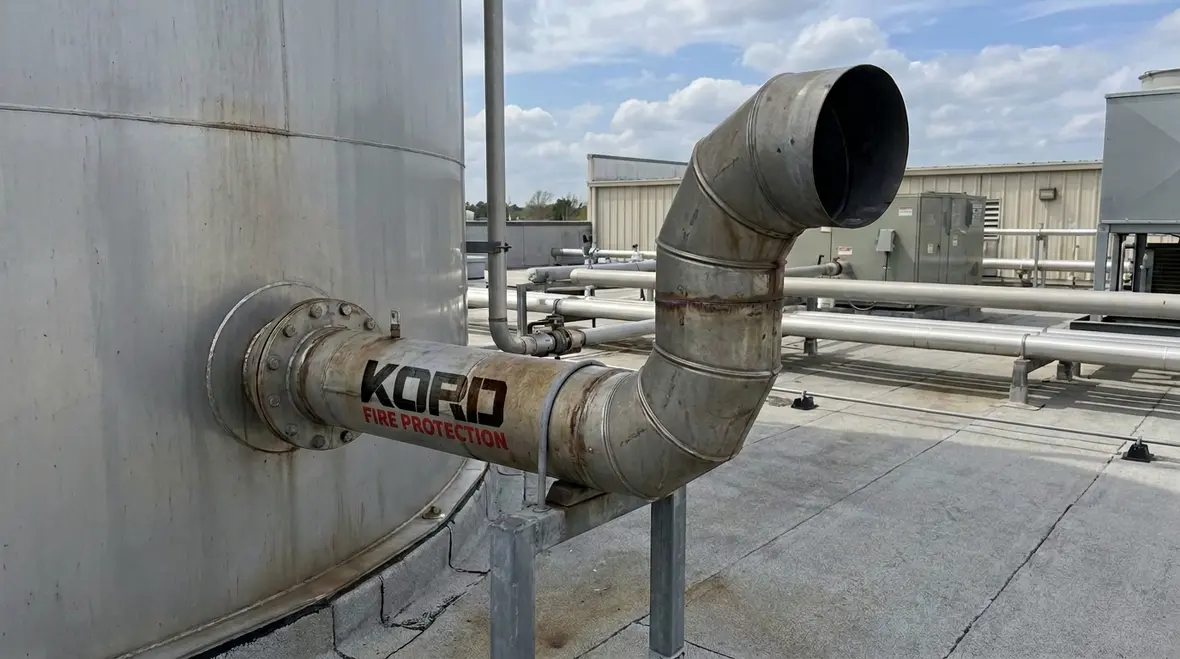
NFPA 30 Section 27.8: Vent Piping Requirements for Liquid Systems
Quick Answer: NFPA 30 Section 27.8 sets how vent piping must be routed, supported, sized, and protected so flammable liquid vapors discharge safely without creating ignition hazards, backpressure, or unsafe leaks. Proper vent design, installation, and maintenance directly reduce risk in commercial liquid handling systems.
What NFPA 30 Section 27.8 vent piping requirements are trying to prevent
NFPA 30 Section 27.8 vent piping requirements focus on controlling vapor movement from liquid handling equipment so that normal operation, abnormal conditions, and maintenance activities do not create ignition sources or unsafe pressure and leakage scenarios. For commercial facilities, these hazards show up during filling, draining, transfer, tank breathing, and pressure relief events. The code approach centers on safe vent discharge, minimizing condensation and blockage, and preventing vent systems from becoming a pathway for flame or vapor migration.
To understand how the standard’s safety intent connects to operational controls, see how NFPA 30 regulates flammable liquids.
For facilities that also need broader inspection coordination, Kord Fire Protection’s complete fire pump inspection, testing, and maintenance guide shows how structured documentation and service planning support ongoing compliance across connected protection systems.
Where Section 27.8 applies in real liquid systems
Vent piping in NFPA 30 is not a standalone component. It is part of a complete liquid system that may include tanks, pumping skids, piping networks, vapor control devices, and any connected pressure relieving or venting pathways. Section 27.8 vent piping is typically evaluated at points where equipment can generate vapor, including:
- Tanks and vessels that “breathe” during temperature changes or liquid level variation
- Closed transfer systems where vapor must be displaced to avoid pressure buildup
- Relief and emergency vent conditions where vapors are routed to a safe discharge location
- Secondary containment or remote enclosures where venting must avoid collecting vapors near ignition sources
Commercial facilities often combine multiple liquid processes in shared utility corridors. This increases the importance of vent segregation, routing discipline, and verified discharge location because a vent that seems “minor” can become a high consequence pathway when vapors condense, icing occurs, or supports fail.
Key compliance concepts in NFPA 30 vent piping design
Although each installation differs, inspectors and fire safety professionals generally look for consistent fundamentals aligned with NFPA 30 Section 27.8 vent piping requirements. The core themes include routing, discharge safety, venting capacity, and physical integrity.
1) Routing that maintains safety and avoids vapor entrapment
Vent piping must route vapors to a safe location so that discharged vapor does not accumulate where it can ignite. Poor routing can place discharge outlets too close to doors, roof intakes, air handling systems, or electrical fixtures. In retail and light industrial environments, rooftop discharge is common, but it still requires clearance management, weather resistance, and verification that airflow does not drive vapors into occupied spaces.
Practical challenge: vents that run through or near service rooms tend to collect condensation. Condensate can partially block vent lines, causing venting to become ineffective during real operating events.
2) Support, alignment, and mechanical protection
Vent lines experience thermal cycling, vibration from adjacent equipment, and occasional mechanical impact from maintenance activity. Section 27.8 expectations include stable supports and installation practices that prevent sagging, strain on nozzles, and misalignment that leads to leaks at threaded joints or flanged connections.
Common failure points include loose hangers, corroded supports, and incorrectly installed flexible connections. Over time, these issues change how the system responds during venting, which can result in unsafe discharge patterns or reduced vent performance.
3) Capacity and system response during normal and upset conditions
A compliant vent system must be able to handle the expected vapor displacement and any relief scenarios without creating harmful backpressure. Inspectors typically evaluate whether the vent arrangement can move vapor without choking due to undersized components, excessive elbows, or restrictive fittings.
Operational reality: when facilities expand or modify equipment, vent piping often remains unchanged even though vapor generation rates change. This is a frequent compliance gap in upgrades where tanks, pumps, or transfer hoses are replaced with different duty cycles.
4) Condensation control and prevention of blockage
Vent piping must avoid conditions that cause liquid carryover or condensation accumulation. Condensate can create “wetted” sections where vapors no longer vent as intended. This can increase pressure in the connected equipment and shift venting behavior from safe discharge to undesirable leakage or relief device cycling.
Facilities in colder climates often see additional risk from ice formation at the discharge end. Verification must include weather exposure, termination design, and the ability to drain or manage condensate where required by the code intent.
5) Leak tightness at joints and penetrations
Even small leaks at vent pipe joints can release flammable vapor into areas with ignition sources such as motors, switches, hot surfaces, or static discharge. Tightness is not only a construction issue. It is also a maintenance issue after valve changes, gasket replacements, or vibration related loosening.
Commercial inspections should include attention to threaded connections, flange gasket condition, and penetration seals where vent piping passes through walls, curbs, or roof structures.
How inspectors evaluate NFPA 30 Section 27.8 vent piping requirements on site
Audits and inspections usually focus on observable installation and evidence of ongoing readiness. The following workflow reflects what commercial fire and safety teams commonly document when assessing NFPA 30 Section 27.8 vent piping requirements:
- System mapping: confirm vent piping routes from each connected vessel or relief pathway to its termination location, including any associated vapor devices and piping branches.
- Discharge safety review: verify clearance from openings, ignition sources, and HVAC intakes, and confirm the discharge direction supports safe dispersion.
- Physical integrity checks: assess supports, hangers, anchors, corrosion condition, and evidence of sagging or impact damage.
- Joint and seal verification: check flange bolts, gasket integrity, and signs of vapor leakage staining, residue, or odor complaints.
- Condition after operational cycles: confirm venting occurs during expected events and that no blockage patterns develop over time.
- Maintenance and records: confirm documented inspections, corrective actions, and any replacement parts meet the installation basis.
In practice, compliance fails more often due to degradation and “scope drift” than due to original design mistakes. The most effective programs detect issues early through targeted inspection frequencies aligned with operating season and duty cycle.
Maintenance, testing, and common failure modes
Vent piping is rarely a “set and forget” asset. Commercial systems change with seasonal loading, equipment replacements, and building modifications. Maintenance needs to protect vent performance and prevent leaks and blockage.
Maintenance actions that prevent real-world incidents
- Routine visual inspections: confirm the vent line remains unobstructed, properly supported, and free of corrosion or damage.
- Discharge termination checks: verify the outlet remains clear and weather protected, and that no debris accumulation forms.
- Joint integrity checks: reassess flanges and threaded joints after any related work order, tank service, or piping modification.
- Condensation awareness: look for evidence of liquid carryover or recurring blockage symptoms and address root causes, not only symptoms.
Common failure modes seen in commercial facilities
- Condensate and blockage: partial restrictions lead to reduced vent effectiveness and increased pressure risk.
- Support failure: corrosion, missing anchors, or wrong hanger spacing introduces misalignment and leaks.
- Incorrect routing during renovations: building changes place discharge outlets near new openings or introduce new obstructions.
- Uncoordinated upgrades: new pumps or tanks increase vapor generation, but vent piping remains unchanged.
- Improper maintenance replacements: replacement fittings or components that do not match the original installation basis can reduce capacity or increase restriction.
Partnering for ongoing compliance: where Kord Fire Protection fits
Commercial owners and facility managers need vent systems to remain code compliant during both scheduled operation and unplanned changes. Kord Fire Protection supports ongoing readiness through practical inspections, documentation support, and maintenance coordination that helps ensure vent performance does not degrade between service cycles.
For teams managing multiple assets across industrial and retail environments, Kord Fire Protection can help standardize inspection checklists, identify recurring failure patterns such as corrosion and blockage, and ensure corrective actions align with the installation basis. This reduces compliance surprises and supports smoother regulator and insurer interactions.
Frequently Asked Questions
Call to action
Verify your vent piping readiness now. A targeted inspection against NFPA 30 Section 27.8 vent piping requirements can identify blockage risk, discharge hazards, and mechanical degradation before it turns into an incident or a compliance finding. Engage Kord Fire Protection to assess your liquid system vents, document corrective actions, and support a sustainable maintenance plan that keeps commercial operations protected.

Join Our Newsletter!
Get the latest fire safety tips delivered straight to your inbox From our Newsletter.



