
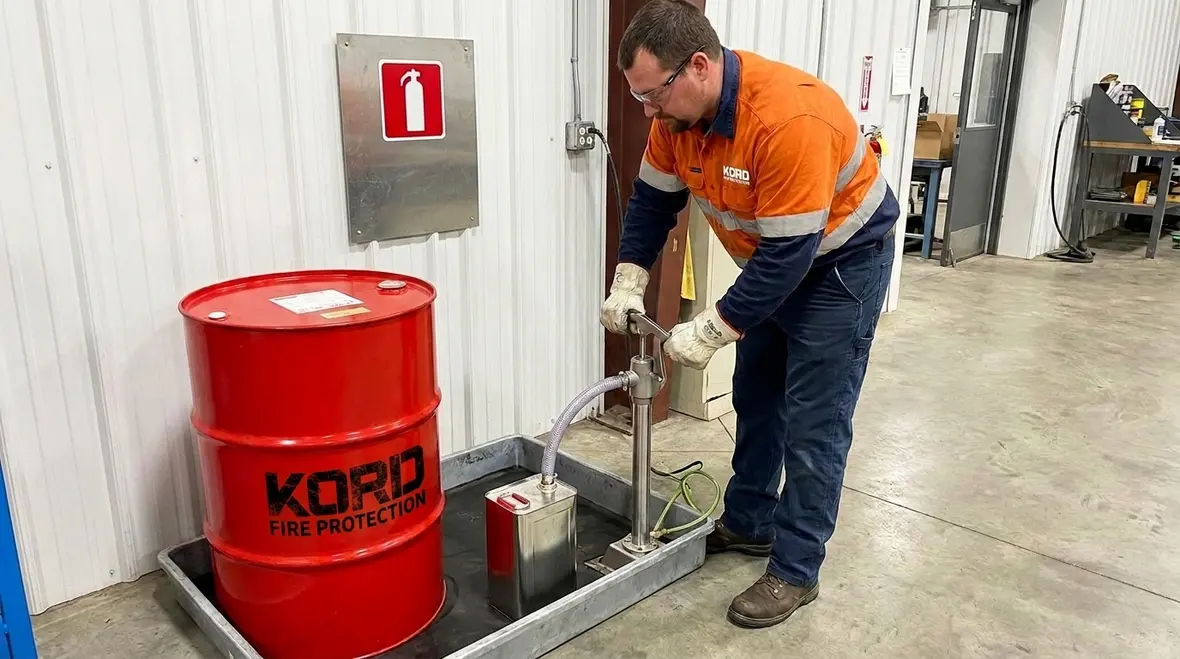
NFPA 30 Section 18.1 Scope: Dispensing, Handling, Transfer, and Use
Quick Answer
NFPA 30 Section 18.1 scope dispensing handling establishes the rules for flammable liquid operations that move product within a facility. It covers how liquids are dispensed, transferred, and used, with requirements that reduce ignition sources, limit leaks, and maintain compatible equipment and safe operating practices.
For facilities looking at broader flammable liquid compliance, it helps to start with how NFPA 30 regulates flammable liquids, then connect those requirements to practical inspection and maintenance support through fire suppression system services.
What NFPA 30 Section 18.1 scope dispensing handling actually covers
NFPA 30 Section 18.1 focuses on the operational portion of flammable liquid risk. Rather than addressing storage alone, it applies to the lifecycle of product as it is brought into working areas, routed through systems, and applied to end uses. This includes dispensing operations at pumps and containers, transfers between tanks, drums, totes, and piping, and use activities where flammable vapors can be generated or released.
For commercial, industrial, and retail facilities, the compliance challenge typically involves managing conditions during daily operations. Many incidents occur during routine work, not during unusual events. Section 18.1 scope dispensing handling supports controls that help prevent ignition and reduce the consequences of spills, vapor release, and system failures.
When Section 18.1 applies: common facility scenarios
Section 18.1 is often triggered by the presence of flammable liquids where employees actively move, measure, pump, or apply product. Typical examples include:
- Dispensing flammable liquids into containers for maintenance, cleaning, automotive, or process use
- Transfer operations between tanks, bulk storage and day tanks, or between containers and equipment
- Pumping flammable liquids through piping to production equipment, washers, or coating lines
- Use of flammable liquids in procedures that can create mist, spray, atomization, or vapor accumulation
- Operations involving fixed or portable transfer equipment, hoses, and manifolds
Facilities also need to consider how operations interact with adjacent hazards. A dispensing station inside or near a process area can create vapor accumulation pathways. If ventilation, work practices, or electrical classification are not aligned with the risk, the dispensing and transfer controls in Section 18.1 become critical.
Core compliance requirements for dispensing, handling, transfer, and use
Section 18.1 scope dispensing handling is built around practical risk reduction. Inspectors usually look for evidence that the facility controls ignition sources, prevents or limits leaks, and maintains equipment in reliable condition. While exact requirements vary by operation and product characteristics, several themes show up repeatedly in compliance reviews.
1) Control of ignition sources and safe electrical practices
Dispensing and transfer areas must manage ignition sources through appropriate equipment selection and safe operating controls. Common failure points include aging components, improper replacement parts, and changes in equipment configuration without a risk review. Electrical devices, motors, and instrumentation that may operate in vapor generating zones must be compatible with the hazardous environment requirements that apply to flammable liquid use areas.
Commercial facilities frequently retrofit pumps, hose reels, lighting, and monitoring systems. Each change can alter the ignition risk. A documented review process helps ensure new devices do not undermine the intent of NFPA 30 Section 18.1 scope dispensing handling.
2) Leak prevention, spill control, and release response
Dispensing and transfer systems create multiple leak paths: fittings, hose couplings, valves, gaskets, and connection points. Compliance focuses on designing and maintaining these components so that leaks are detected early and contained before vapors migrate. Practical measures include:
- Using compatible hoses, seals, and couplings that resist chemical attack and wear
- Maintaining clamps, quick connects, and couplings to prevent loosening under vibration
- Implementing spill control practices, including secondary containment or surface management where required
- Ensuring emergency controls and cleanup procedures match the flammable liquid hazards
Repeated non compliance findings often involve hoses that are reused beyond service life, fittings replaced with incompatible material, and failure to clean or inspect connections after use.
3) System integrity for transfer piping, valves, and connections
Transfer systems rely on mechanical integrity. Inspectors typically verify that:
- Piping is supported and protected against mechanical damage
- Valves, manifolds, and shutoff arrangements function correctly and are accessible
- Connections are installed and maintained so that they do not loosen or leak during normal duty cycles
- Equipment labels and operating controls are accurate for the specific flammable liquids in service
In real operations, transfer systems can be stressed by frequent coupling and uncoupling. The most common weakness shows up at the points where personnel interact with equipment. A maintenance program that includes connection inspection and documented re qualification after component replacement becomes a key part of ongoing compliance.
4) Operating procedures that match the hazard during real work
Section 18.1 scope dispensing handling requires controls that work under actual job conditions. Training, procedures, and supervision matter. Facilities should use standard work instructions that specify:
- Pre use checks for hoses, fittings, pumps, and nozzle conditions
- Safe connection and disconnection practices
- Leak response steps, including when to stop operations and isolate the area
- Requirements for grounding or bonding where applicable to prevent static related ignition risks
Many failures come from shortcuts during high workload periods, particularly during container change outs and end of day shutdowns. Clear procedures, verification steps, and accountability reduce that risk.
How inspectors evaluate ongoing compliance in dispensing and transfer areas
Compliance reviews for flammable liquid dispensing and handling often combine paperwork verification with field observation. The most effective compliance programs prepare for both.
Field observations commonly include
- Evidence of intact hoses, correct fittings, and secure couplings at dispensing points
- Appropriate equipment condition, including signs of corrosion, damage, or deterioration
- Control of access to ignition sources near transfer zones
- Housekeeping around dispensing islands and transfer routes to reduce vapor accumulation and slip hazard
- Working condition of valves, shutoffs, and emergency controls
Documentation commonly includes
- Maintenance records for transfer pumps, hoses, couplings, and valves
- Inspection logs for critical equipment and connections
- Training records for employees performing dispensing, transfers, and use
- Change management documentation for equipment modifications
Because operations can change quickly, a facility should implement a recurring inspection cycle aligned to equipment duty and observed wear patterns. This reduces the chance that small deterioration becomes an operational failure. For background on how NFPA 30 regulates flammable liquids across the lifecycle of risk, see how NFPA 30 regulates flammable liquids.
Common failure points that trigger risk and non compliance
Most problems in NFPA 30 Section 18.1 scope dispensing handling are not caused by a lack of intent. They arise from operational wear, incomplete change control, or inconsistent implementation of procedures. The following issues frequently appear during audits and incident investigations:
- Hose and coupling degradation from chemical exposure, abrasion, or improper storage leading to leaks
- Incompatible components installed after maintenance, resulting in swelling, loss of sealing integrity, or material breakdown
- Uncontrolled vapor release due to missing caps, improper venting practices, or incorrect transfer timing
- Grounding and bonding gaps during dispensing or container changes where static ignition risk exists
- Modified equipment without re assessment such as replacing pumps or adding lighting or monitoring that alters ignition risk
- Housekeeping lapses that leave residues and spill residue available to generate vapors
Kord Fire Protection supports commercial owners with ongoing maintenance and compliance services that focus on keeping dispensing and transfer operations safe between inspections. A proactive program reduces downtime and helps preserve the intended level of protection over time.
Bring it into practice: maintenance and inspection program design
A strong compliance program under NFPA 30 Section 18.1 scope dispensing handling combines prevention, verification, and documented corrective action. The goal is to keep equipment and procedures aligned with the real hazard each day.
Recommended operational maintenance elements
- Routine equipment inspection focused on hoses, couplings, valves, nozzle integrity, and visible wear patterns
- Leak trend tracking to identify recurring weak points, such as specific connection types or transfer stations
- Compatibility control so only approved replacement parts and materials are used for specific chemicals
- Ventilation and area readiness checks where vapors can accumulate, especially in enclosed dispensing rooms
- Training refresh and procedure verification after process changes, equipment swaps, or observed deviations
Where Kord Fire Protection fits
Commercial facilities benefit when inspections include an operational perspective, not just a static checklist. Kord Fire Protection, supported by local service capability at https://kordfire.com.au/, helps facilities maintain the practical controls that keep dispensing, transfer, and use operations compliant. This includes supporting inspection readiness, maintenance coordination, and documentation that reflects how the site operates today.
If a facility already has deficiencies, Kord Fire Protection can help prioritize corrective actions so owners address the highest risk items first while maintaining safe operations.
Frequently Asked Questions
Conclusion and next step
NFPA 30 Section 18.1 scope dispensing handling sets the expectation that flammable liquid risk is managed during real work, when leaks, ignition sources, and vapor release can happen quickly. To keep compliance current and practical, facilities should validate equipment condition, procedures, and change control on a recurring schedule. Contact Kord Fire Protection through https://kordfire.com.au/ to schedule an assessment of your dispensing, transfer, and use operations and build a maintenance and documentation plan that stands up to audits.

Join Our Newsletter!
Get the latest fire safety tips delivered straight to your inbox From our Newsletter.



