
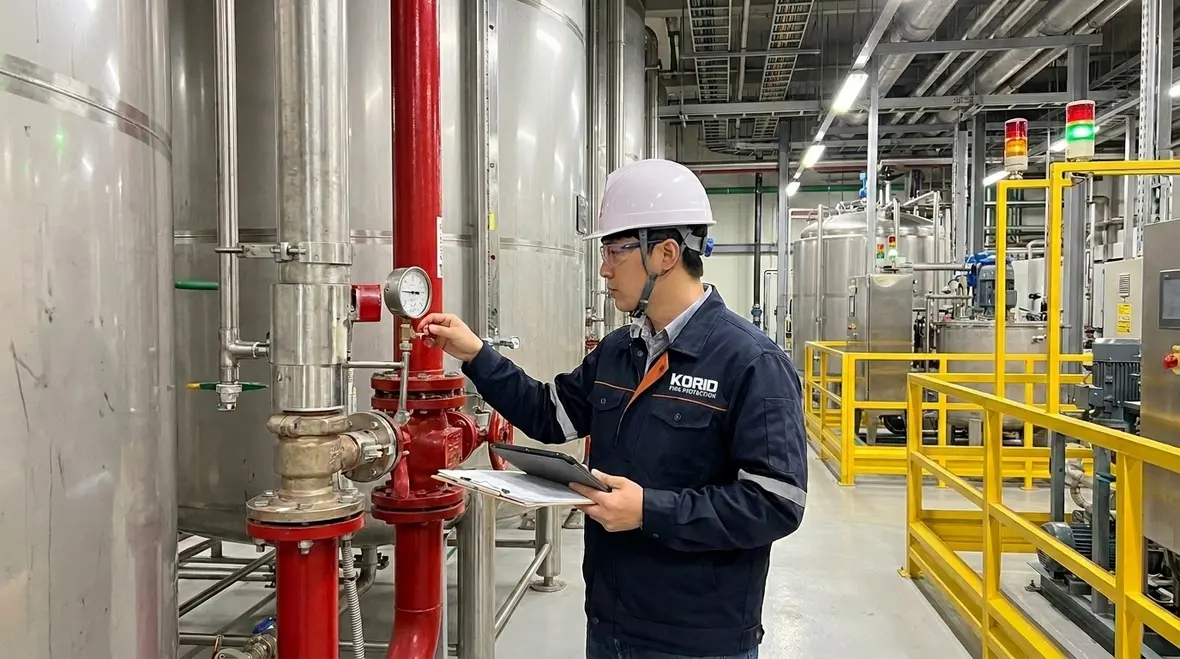
NFPA 30 Section 17.9: Fire Protection for Liquid Processing Facilities
Quick Answer
NFPA 30 Section 17.9 fire protection processing defines how liquid processing facilities protect people, equipment, and buildings from the hazards of flammable and combustible liquids. It focuses on engineered protection, safe operation, and reliable maintenance to keep systems functional when risk conditions exist.
For facilities tightening their inspection and maintenance workflow, it also helps to align this section with broader fire protection services in Southern California, especially when processing risks, shutdown windows, and system readiness all need to play nicely together.
What NFPA 30 Section 17.9 fire protection processing is really asking for
NFPA 30 is a foundational code for handling flammable and combustible liquids, and Section 17.9 addresses the fire protection expectations specific to liquid processing facilities. For operators, the intent is not only to install fire protection systems, but to ensure those systems remain suitable, accessible, and operational under normal processing conditions and credible abnormal events.
In practical terms, NFPA 30 Section 17.9 fire protection processing pushes facilities to treat fire protection as a managed lifecycle. That means hazard-aligned design, correct installation, verified performance, disciplined inspection and testing, and rapid corrective action when deficiencies appear.
Where Section 17.9 fits in the safety case for liquid processing
Liquid processing environments commonly include transfer, storage, blending, heating, filtration, packaging, and cleaning activities. Each process step can change fire load, release potential, ignition frequency, and the time available to detect and control a developing fire.
Section 17.9 fire protection processing supports the facility fire safety case by coordinating protection features with how liquid is actually handled. That coordination typically impacts:
Ignition source control and prevention methods that reduce the chance of an upset turning into ignition.
Detection, alerting, and emergency response readiness aligned to process areas and release scenarios.
Suppression and protection systems selected to handle flammable liquid hazards without creating secondary risks.
Maintenance and impairment management practices that keep equipment in service.
Core compliance expectations: design, installation, and system readiness
Facilities often misinterpret Section 17.9 as a purely “equipment checklist” requirement. Compliance is deeper: the systems must be suitable for the hazard, properly installed, and kept ready for demand.
1) Fire protection equipment must match the processing hazard profile
Liquid processing hazards vary widely. Vapour space, flammable liquid temperature, ventilation patterns, and transfer configuration influence expected fire behavior. NFPA 30 Section 17.9 fire protection processing expects fire protection to be aligned with those hazard realities, not generic assumptions.
For example, protection strategies for an enclosed unit operation are different from protection for open transfers or loading areas. When design assumptions fail to reflect field conditions, commissioning gaps and performance shortfalls tend to appear during testing.
2) Protection systems require verified performance, not paper compliance
Authoritative inspections focus on evidence: recordable test results, operational checks, and corrective actions. Common failure points include improperly set detection thresholds, blocked nozzles or fittings, corroded components, and valves left in the wrong position after routine maintenance or shutdown.
When a system depends on actuator states, interlocks, power supplies, or access pathways, operational readiness becomes a central compliance benchmark. NFPA 30 Section 17.9 fire protection processing therefore emphasizes that systems must be maintained to deliver the intended response when conditions call for it.
3) Impairment control prevents “known downtime” from becoming unmanaged risk
Liquid processing facilities frequently execute maintenance during production windows. That creates recurring impairment events for detectors, suppression components, alarms, or supporting utilities. Effective impairment management includes:
Documented impairment authorization with defined risk controls.
Temporary safeguards that maintain reasonable protection while equipment is out of service.
Time-bound completion targets and reinstatement verification.
Communication to operations, supervisors, and emergency response roles.
These controls are where many compliance programs either strengthen or fail. A well managed impairment process helps avoid the common scenario where equipment is “technically offline” yet operators assume protection still exists.
Inspection, testing, and maintenance: the operational lifeline
NFPA 30 Section 17.9 fire protection processing is only as strong as the maintenance program supporting it. Strong programs do more than schedule tests. They ensure tests validate the real-world function of each component and that maintenance closes identified defects before systems drift out of compliance.
What good maintenance looks like in processing environments
Pre shift and routine checks: verifies access, signage, and quick visual indicators that equipment remains serviceable.
Periodic scheduled testing: confirms detection, alarm initiation, and suppression readiness in accordance with facility requirements.
Valve and control verification: confirms correct alignment of control valves and interlocks after maintenance, isolation, or operational changes.
Cleaning and prevention of blockage: removes contaminants that can reduce flow or interfere with actuation.
Documentation discipline: records results, stores findings, tracks trends, and manages corrective actions to closure.
Common failure points that audits uncover
In commercial and industrial facilities, audits and insurers often identify recurring mechanical and procedural vulnerabilities:
Corrosion and degradation: suppression and detection components degrade faster in chemical atmospheres, especially around vents and process heat.
Blocked or misrouted systems: maintenance activities can leave hoses, fittings, or obstructions in place.
Drifted set points: sensors can shift due to environmental exposure, resulting in delayed response.
Inadequate post maintenance verification: reinstatement checks often fail when procedures are rushed.
Training gaps: emergency response assumes alarms and suppression signals will behave a certain way, but procedures are not updated after process changes.
How Kord Fire Protection supports ongoing compliance for liquid processing
Meeting NFPA expectations in liquid processing facilities requires consistent execution: testing that verifies function, maintenance that restores capability, and documentation that proves readiness. Kord Fire Protection positions fire safety as an ongoing commercial operational requirement rather than a one time compliance event.
Facility teams typically need support in areas such as:
Building compliance test plans aligned to process area risk and operational change frequency.
Scheduling coordination that respects production and shutdown windows.
Defect identification with root cause oriented corrective actions, not just component replacement.
Management of inspection records and trending to reduce repeat findings.
For broader context on how NFPA 30 regulates flammable liquids and what facilities should expect from code-driven controls, review: how NFPA 30 regulates flammable liquids. This helps teams connect processing realities to regulatory intent, making Section 17.9 requirements easier to implement consistently.
Frequently Asked Questions
Conclusion: take action now to protect processing operations
NFPA 30 Section 17.9 fire protection processing requires more than “having systems.” It demands verified readiness, disciplined maintenance, and controlled impairment management that matches how liquids are actually processed. Kord Fire Protection can help commercial, industrial, and retail facilities build a defensible compliance program with consistent testing, corrective action tracking, and documentation you can rely on during inspections. Contact Kord Fire Protection to review your processing areas and strengthen your fire protection performance.

Join Our Newsletter!
Get the latest fire safety tips delivered straight to your inbox From our Newsletter.



