
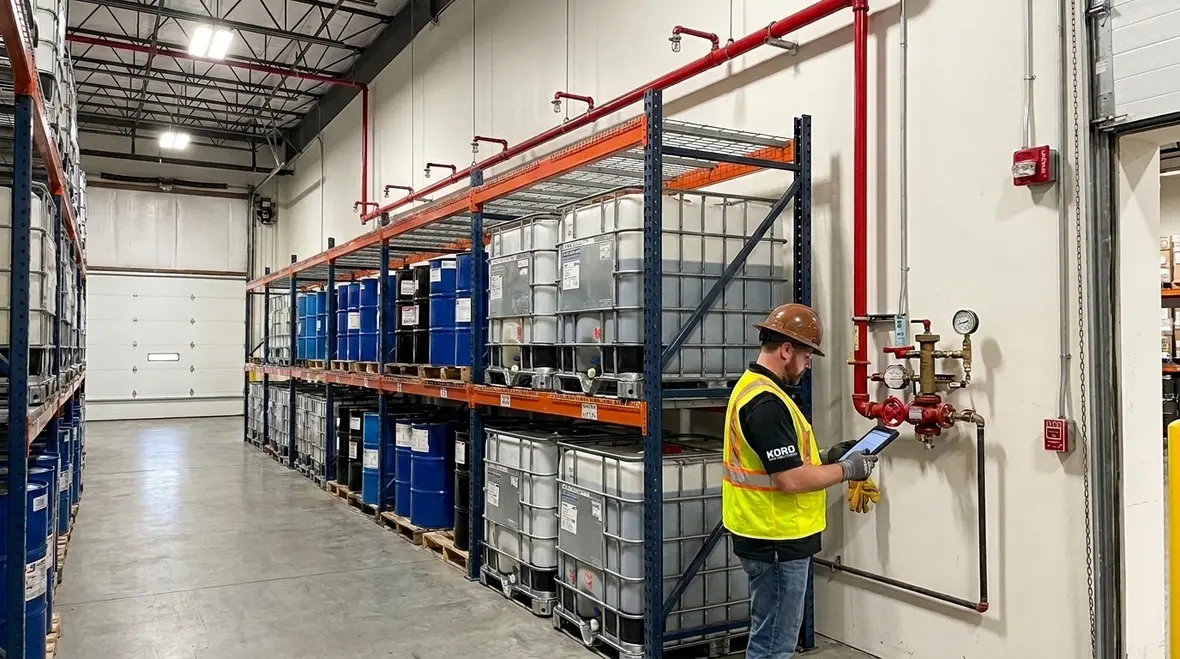
NFPA 30 Section 16.3: General Requirements for Storage Protection Systems
Quick Answer: NFPA 30 Section 16.3 general protection requirements define how facilities must safeguard storage against fire exposure and control system failures. The section focuses on protection for containers, storage areas, detection and suppression system reliability, and ongoing inspection and maintenance to sustain performance.
What NFPA 30 Section 16.3 general protection requirements actually demand
NFPA 30 Section 16.3 addresses the baseline expectations for storage protection systems used to reduce the likelihood that a fire originating in or near flammable liquid storage escalates into a major incident. In commercial and industrial settings, compliance failures usually come from practical gaps: inadequate system reliability, incomplete protection coverage, poor documentation during inspections, and maintenance that does not verify the system can still perform as designed.
For facilities that store flammable liquids, these requirements align with broader NFPA intent: protect exposure areas, control the storage environment, and ensure that detection, alarm, and suppression hardware remains capable. Many operators need a clear operating plan that connects the technical installation to daily work, test schedules, and management of change.
Where Section 16.3 applies in real-world storage operations
Section 16.3 general protection requirements typically apply to how a storage protection system is selected, installed, and maintained to protect the storage arrangement. Common triggers include:
- Storage configurations that create exposure risk to adjacent combustibles, egress, or critical equipment.
- Layouts where heat impingement, radiant exposure, or fire involvement can rapidly spread.
- Environments where manual fire response may be delayed or ineffective without engineered protection.
- Systems supporting flammable liquid storage protection that require periodic verification of readiness.
For commercial, retail, and industrial facilities, the compliance challenge rarely starts with the design intent. It starts after handover. Walkthroughs often reveal deferred maintenance, mismatched spare parts, capped or obstructed components, or testing that checks the wrong function. A compliant system depends on ongoing operational discipline.
Core protection expectations: reliability, coverage, and system readiness
NFPA 30 Section 16.3 general protection requirements emphasize system readiness and the ability to perform as required when a fire scenario occurs. That means the system must be more than installed. It must remain dependable, properly configured, and maintained to prevent performance degradation.
1) Protection must match the hazard and storage arrangement
Coverage issues commonly appear when the storage footprint changes. Facility expansions, pallet rack modifications, new product lines, or revised hose and transfer routes can create new fire exposure pathways. If protection coverage does not account for the updated hazard geometry, inspectors may consider the system not meeting the intended protective function.
For facilities planning a broader compliance program, fire protection services in Southern California can help tie inspections, testing, repairs, and documentation into one coordinated service path.
2) Components must be maintained to preserve design performance
In practice, the most frequent failure points involve valves, detection devices, nozzles, piping integrity, and control hardware. Corrosion, physical damage, misalignment, obstructed discharge paths, and undocumented isolation valves can lead to “it looks okay” findings that still fail functional testing.
3) Readiness includes supervision, documentation, and test evidence
Section 16.3 general protection requirements generally drive the expectation that the facility can prove the system is in service and has been tested appropriately. That proof typically comes from inspection and maintenance records, alarm and supervisory status checks, and documented functional tests performed on a defined schedule.
Commercial facilities often struggle when maintenance is handled by multiple vendors or when test results are not consolidated into a single compliance file. Kord Fire Protection supports ongoing documentation control and testing discipline so the site can demonstrate continued protection, not just initial compliance.
How to implement compliance: inspection, testing, and maintenance workflow
To meet NFPA 30 Section 16.3 general protection requirements, many organizations adopt a simple operational model: verify the system, verify the hazard, and verify the records. The goal is to prevent drift between what the drawings assume and what the facility actually does day to day.
Inspection routines that reduce downtime and nonconformance
A robust inspection plan typically includes:
- Visual inspection of storage protection system hardware for damage, corrosion, tampering, and obstructions.
- Verification that control panels and supervisory devices indicate correct status.
- Confirmation that access pathways and signage remain usable for emergency response.
- Assessment of housekeeping around storage protection components to prevent physical interference.
Testing that verifies function, not just indicators
Operationally, “functional testing” must confirm the system can perform. That means verification that detection and control sequences respond correctly, and that suppression discharge performance meets the design intent. Facilities should treat partial testing as a risk, especially when system components are added, relocated, or subject to seasonal shutdown.
Maintenance controls and management of change
Compliance failures often follow equipment changes. A pump replacement, a nozzle swap, a valve repair, or a wiring modification without updated documentation can create hidden inconsistencies. Kord Fire Protection typically supports a management of change approach by:
- Documenting component updates and as-built alignment.
- Ensuring spares and replacement parts match the original performance intent.
- Coordinating retesting when the system configuration changes.
Common commercial failure points and how to prevent them
Even well-run facilities can fall short of NFPA 30 Section 16.3 general protection requirements because the system is often spread across multiple trades, vendors, and maintenance schedules. The following issues repeatedly appear during commercial inspections:
Obstructed or altered discharge paths
Storage racks, staging, and temporary materials can block discharge paths or interfere with heat and detection performance. Preventive controls include maintaining clearances, enforcing storage limits, and auditing the area after peak operational periods.
Valve mismanagement and undocumented isolations
Facilities sometimes isolate system sections for routine repairs and forget to restore normal supervisory conditions. Strong valve control includes lockout procedures, restoration verification, and a clear sign-off trail.
Documentation gaps during audits
Inspectors often focus on whether the facility can demonstrate system readiness through organized records. Missing test dates, incomplete reports, or inconsistent terminology can create unnecessary nonconformance findings. Kord Fire Protection can help standardize compliance reporting to reduce audit friction.
Storage hazard changes without system review
Changing product classes, increasing container quantities, or altering transfer practices can change fire exposure characteristics. For additional context on how NFPA 30 regulates the broader flammable liquids program, reference: how NFPA 30 regulates flammable liquids.
SEO FAQ: NFPA 30 Section 16.3 general protection requirements
Call to action
Protecting flammable liquid storage requires more than installation. To sustain NFPA 30 Section 16.3 general protection requirements, schedule documented inspections, functional testing, and maintenance that verifies performance. Kord Fire Protection can support your compliance program with reliable service, clear reporting, and change management so your storage protection system stays audit ready. Contact Kord Fire Protection today to review your current program and testing intervals.

Join Our Newsletter!
Get the latest fire safety tips delivered straight to your inbox From our Newsletter.



