
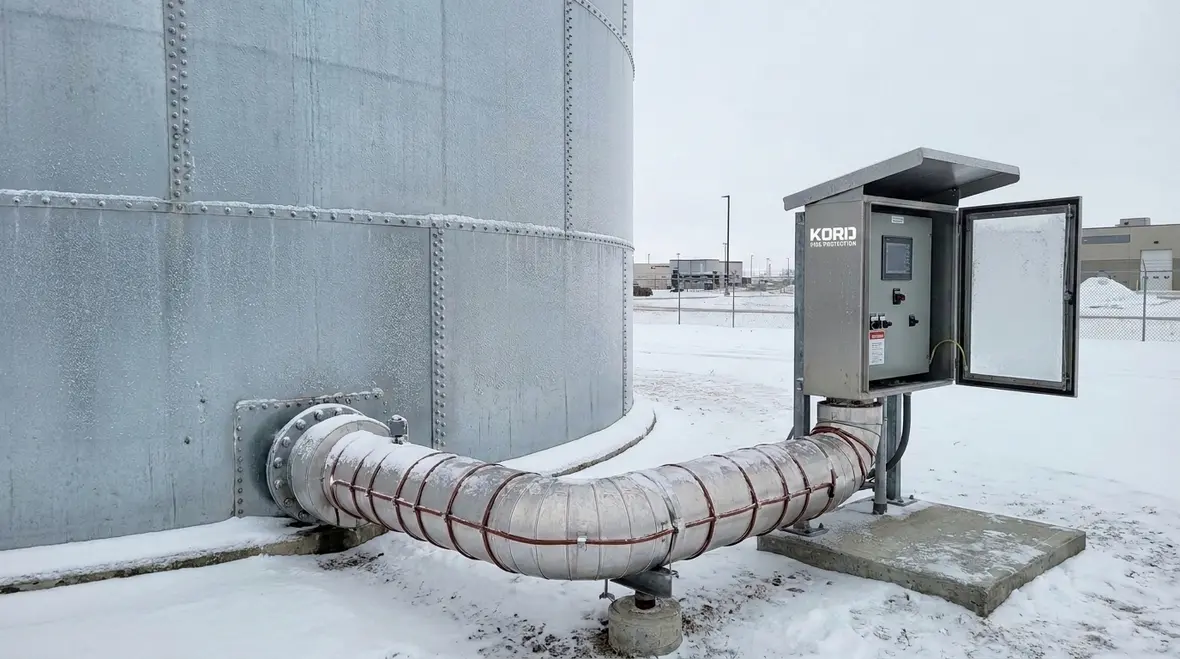
NFPA 22 Section 5.3: Preventing Ice Damage to Water Tanks
Quick Answer: NFPA 22 Section 5.3 requires water tanks to be protected from freezing conditions that can impair water supply, valves, and piping. Facilities typically comply through thermal protection, controlled heat tracing, insulation, and documented inspection and maintenance routines.
Facilities managing broader inspection and maintenance demands can also explore fire protection services in Southern California to support inspections, repairs, and compliance scheduling naturally tied to water-based systems.
What NFPA 22 Section 5.3 requires, in plain terms
NFPA 22 Section 5.3 focuses on one practical risk: when water freezes in tank components, the system can fail when it matters most. For facilities performing preventing ice damage water tanks NFPA 22 compliance, the goal is not only to keep bulk water unfrozen, but also to prevent freezing in connected appurtenances such as suction piping, valves, drains, and control components.
In commercial, industrial, and retail environments, ice-related failures often show up as delayed system discharge, inability to open valves, blocked water flow through restricted piping, or damaged components from expansion forces. NFPA 22 addresses these failure modes through requirements for protection measures and ongoing maintenance so the tank system remains functional during freezing weather.
Why ice damage happens in real tank systems
Ice formation is rarely limited to the main tank body. In most installations, temperature gradients develop where water stays stagnant, where heat loss is high, or where components protrude from the insulated envelope. Common operational conditions that drive failures include:
Subfreezing ambient exposure: Tanks located in yards, roof spaces, unheated equipment rooms, or areas with strong wind exposure.
Heat loss at interfaces: Pipe penetrations, valve bodies, strainers, and fittings cool faster than the tank shell.
Low water turnover: Tanks that rarely circulate water or that sit idle for extended periods.
Drain and purge cycles: Improper draining schedules or trapped water in dead legs can freeze even when the main tank remains warm.
Interrupted heat sources: Failed control power, tripped circuits, malfunctioning thermostats, or damaged heat tracing leads to localized freezing.
Because these failures occur at specific points, inspection must be targeted. A compliance program that only checks “tank temperature” without assessing valve and piping freeze points often misses the real vulnerabilities.
Compliance approaches: what protection looks like on the job
Section 5.3 compliance is achieved through engineered protection methods that keep freezing from taking hold. Typical measures include thermal insulation, controlled heating, and provisions that maintain water at safe temperatures and prevent ice accumulation on critical components.
1) Insulation and protected tank configurations
Insulation reduces heat loss from the tank structure. However, the effectiveness depends on correct installation and integrity over time. Facilities should address:
Continuity of insulation at joints, seams, and penetrations.
Protection of appurtenance areas, including flanges and valve clusters.
Weatherproofing where insulation is exposed to moisture and wind-driven heat loss.
Insulation that becomes wet, compresses, or separates from the tank surface can lose performance while still appearing intact during a casual walk-through.
2) Heat tracing and temperature control
Where heating is used, NFPA 22 compliant implementation typically requires a reliable method to maintain temperature and prevent freezing. Best practice commercial execution includes:
Heat tracing coverage determined by component heat loss and freeze point analysis.
Thermostatic or control-based operation with setpoints aligned to the system’s freezing risk.
Electrical circuit integrity checks, including proper labeling and panel identification for maintenance staff.
Verification that trace routing prevents cold spots at elbows, drains, and valve bodies.
Operationally, heat tracing programs succeed when they include proof of function. That means documenting that circuits energize, controls respond correctly, and heaters have not degraded.
3) Maintaining functional water supply and preventing blocked flow
Protection must extend beyond “not freezing in the tank.” The system must remain operable. That includes ensuring that:
Valves and actuators are not impacted by ice formation or trapped water.
Drains and bypass lines do not create dead legs that freeze.
Strainers and intake sections do not develop ice restrictions that reduce usable flow during a fire event.
For facilities seeking a broader compliance overview, Kord Fire Protection outlines how NFPA 22 regulates fire protection water tanks and related system considerations here: how NFPA 22 regulates fire protection water tanks.
Inspection and maintenance: the real compliance differentiator
Section 5.3 expectations depend heavily on ongoing inspection and maintenance. In commercial facilities, the most common compliance failure is not the original design. It is the drift that occurs after installation when equipment changes, insulation is disturbed, or controls are bypassed during unrelated electrical work.
What inspectors should verify during scheduled checks
Condition of insulation: Look for gaps, damp insulation, missing jacketing, and damaged covers at penetrations.
Heat tracing condition (if installed): Confirm physical integrity, secure mounting, and proper wiring identification.
Control operation: Validate thermostat or control logic settings and ensure no nuisance trips or failed sensors.
Valve and piping exposure: Assess areas most likely to freeze, including drains, low points, elbows, and valve bodies.
Evidence of ice or water ingress: Check for signs of prior freeze events, such as cracking, leakage at joints, or water staining.
Common failure points Kord Fire Protection targets
Commercial owners and facility managers often inherit systems with incomplete documentation. Kord Fire Protection supports compliance by validating system details that maintenance staff need to manage year-round. Focus areas typically include:
Unverified heat tracing coverage where drawings do not match installed field routing.
Trapped water created by maintenance practices or improper drain configurations.
Insulation that was patched after a repair without restoring weatherproofing.
Control panel labeling gaps that slow emergency troubleshooting during cold snaps.
For facilities operating under tight business hours, Kord Fire Protection also coordinates maintenance activities to minimize disruption while maintaining defensible inspection records for ongoing NFPA 22 compliance.
Operational considerations during cold weather
Even well designed systems can fail if operational procedures do not support freeze prevention. Strong commercial practice includes a cold weather readiness routine before the first hard freeze and quick verification during extreme events.
Pre freeze checklist for facility teams
Confirm heating controls are active, correct, and not overridden by other facility workflows.
Review last maintenance records for insulation repairs, heat tracing checks, and valve exposure issues.
Coordinate access to tank and associated piping for close inspection, especially in equipment yards and roof locations.
Verify that any drain procedures do not leave frozen sections in dead legs or low points.
During extreme cold: what to do and what not to do
When ambient temperatures drop quickly, facilities should avoid assumptions and prioritize confirmation. A practical approach includes verifying that the tank and freeze-prone components remain protected, and that controls respond appropriately.
Emergency work that involves bypassing circuits, removing insulation to “inspect later,” or changing control settings without coordination can create cold spots that freeze before permanent repairs are completed. A disciplined compliance workflow prevents these shortcuts.
Featured compliance question: how to document “preventing ice damage” effectively
Defensible documentation matters for inspections and audits. Facilities should maintain records that show what protection method is installed, how it operates, and what maintenance confirms reliability. Strong documentation typically includes:
System drawings or as built notes showing tank, piping, valves, insulation, and heater routing.
Maintenance and inspection logs for insulation integrity and heating system function.
Control settings, alarm or monitoring information, and evidence of periodic checks.
Any remediation actions taken after cold weather events, including component replacement if damage occurred.
Kord Fire Protection helps commercial property teams keep this documentation current, so the facility can demonstrate active compliance rather than relying on past design intent alone.
Frequently Asked Questions
Conclusion and call to action
Preventing ice damage water tanks NFPA 22 is a year-round responsibility, not a seasonal assumption. Facilities should confirm insulation integrity, verify heat tracing and controls operate correctly, and document inspections that address freeze-prone valves, piping, and drain configurations. Kord Fire Protection can support compliance through targeted inspection, maintenance verification, and defensible records that help commercial facilities stay prepared for cold weather. Schedule a tank and freeze protection assessment before the next cold snap.

Join Our Newsletter!
Get the latest fire safety tips delivered straight to your inbox From our Newsletter.



