
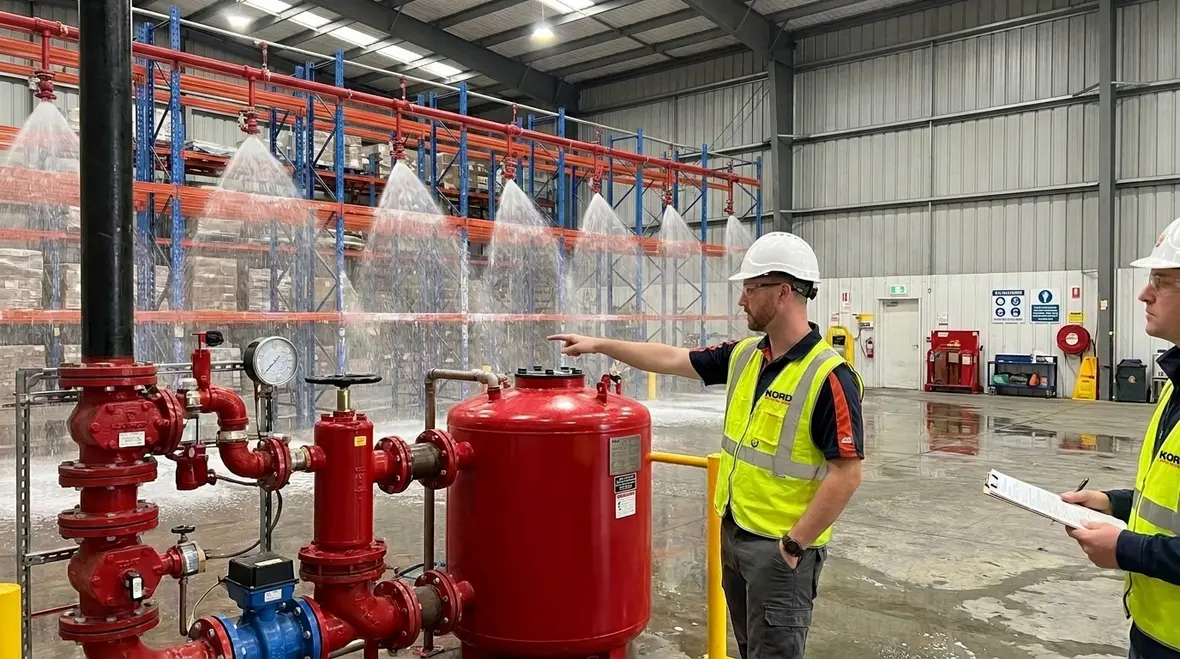
NFPA 16 Section 4.2: Types of Foam-Water Systems – Sprinkler, Deluge, and Spray
Quick Answer: NFPA 16 Section 4.2 categorizes foam water systems by delivery method: sprinkler systems apply foam through sprinkler heads, deluge systems use open nozzles with simultaneous flow, and spray systems discharge foam water in a controlled spray pattern. Selection depends on hazard type, fire size, and operational reliability requirements.
If your facility is reviewing ongoing foam fire suppression system maintenance and testing, that work fits naturally with understanding which NFPA 16 system type you actually have and whether it still matches the hazard you are protecting.
Why Section 4.2 matters in real facilities
Commercial, industrial, and retail properties rarely fail because foam is “the wrong material.” Failures usually trace to system concept and installation details that do not match the intended fire scenario. NFPA 16 requires correct foam water system configuration, reliable valve operation, and inspection and testing that verify performance at the right flow and discharge pattern.
Facilities selecting types of foam-water systems NFPA 16 must also account for day to day operational constraints: equipment access for maintenance, water supply stability, foam concentrate storage and expiration management, and preventing partial system actuation. Kord Fire Protection supports ongoing compliance with inspection, testing, and documentation aligned to NFPA expectations and common AHJ practices.
What NFPA 16 Section 4.2 classifies
Section 4.2 organizes foam water systems by how foam water is delivered to the hazard. Although the foam concentrate chemistry, proportioning approach, and piping design often drive performance, the discharge method determines activation logic, distribution behavior, and the likelihood of unwanted flow or failure to flow.
In practice, most design decisions for these types of foam-water systems NFPA 16 come down to three questions:
- Does the hazard require localized detection and head actuation, or is full area coverage expected upon activation?
- What is the acceptable time between detection and foam water discharge?
- How will maintenance teams verify water flow, foam proportioning, and nozzle or head condition over time?
Sprinkler foam water systems: localized activation and targeted discharge
How sprinkler systems operate
In a foam water sprinkler configuration, foam water is delivered through sprinkler sprinklers designed for foam water service. Activation generally occurs when a single sprinkler head is exposed to fire conditions and melts or otherwise releases the operating mechanism. The system aims to limit discharge to the immediate area of involvement, while still providing foam expansion and cooling effects.
Operational procedures teams must understand
- Valve and supervisory status: Sprinkler foam systems still rely on control valves, supervision, and alarms to confirm the system is in the required ready condition.
- Hydraulic performance: Designers must ensure adequate flow at the effective discharge density and duration, considering that only the activated heads discharge initially.
- Foam proportioning stability: The proportioning unit must maintain foam concentrate output as system flow changes during activation.
Common failure points
Sprinkler foam systems frequently experience issues that do not show up until inspections or flow verification:
- Head condition degradation: Corrosion, paint contamination, and partial obstructions can reduce discharge quality and pattern.
- Proportioning drift: Concentrate age, storage temperature changes, or proportioner maintenance delays can lead to incorrect foam concentration.
- Impaired supervision: Supervisory alarms may fail to transmit or may be miscategorized in building management workflows, delaying response.
For compliance context and broad requirement structure, facilities often reference the NFPA 16 framework through resources such as NFPA 16 Standard guidance from Kord Fire Protection.
Deluge foam water systems: full discharge for hazards that demand immediate coverage
How deluge systems operate
Deluge foam water systems use open nozzles or deluge valves arranged for the hazard area. Upon actuation by an approved initiating device, often detection and control logic, the deluge valve opens and foam water discharges simultaneously or in programmed zones. This concept supports rapid suppression of larger or rapidly developing hazards where waiting for individual head operation is not acceptable.
Installation and operational considerations
- Valve release integrity: Deluge valves must reliably open when commanded and remain in the required position for the expected duration of discharge.
- Control system logic: Actuation pathways, interlocks, and supervisory indications must align with facility procedures and testing schedules.
- Hydraulic and foam duration matching: Deluge systems require confirmation that the supply can sustain flow while the proportioner maintains the correct foam concentration.
Common failure points
Deluge systems can fail in ways that inspection teams can detect early if the right tests occur:
- Water supply instability: A drop in pressure or flow can reduce foam quality, especially at peak demand.
- Air or obstruction issues: Entrained air, blocked piping sections, or valve seating problems can delay discharge.
- Maintenance deferrals: If deluge valves are not exercised or maintained per plan, the valve may open slowly or incompletely during tests.
Spray foam-water systems: engineered discharge pattern for controlled suppression
How spray systems operate
Spray foam-water systems apply foam water using spray nozzles rather than sprinkler heads, targeting a designed discharge pattern and distribution. Depending on design, spray systems may be arranged to cover a specific volume or to manage foam application over a particular hazard geometry.
What to verify during compliance inspections
- Nozzle condition and alignment: Nozzle performance depends on internal cleanliness and correct installation orientation.
- Distribution coverage: Field obstructions, changes in rack layouts, and new storage arrangements can undermine the originally intended coverage.
- Proportioning accuracy under actual flow: Spray nozzles can create flow variations that require proportioning output to remain within specification during test conditions.
Common failure points
- Physical damage: Nozzles can be hit during routine material handling, leading to altered spray pattern.
- Contamination: Dust, corrosion byproducts, and residue can clog nozzle orifices.
- Mismatch after facility changes: Renovations can change ceiling heights, obstructions, or storage density, affecting the effectiveness of spray application.
How facilities choose the right type of foam-water system
Selection of types of foam-water systems NFPA 16 involves more than hazard classification. Commercial facilities frequently face operational constraints that determine what can be reliably maintained and tested over years of service.
Key selection factors in commercial, industrial, and retail settings
- Activation strategy: Sprinkler systems emphasize localized detection and head operation. Deluge systems emphasize immediate area discharge. Spray systems emphasize engineered distribution patterns.
- Water supply capability: Deluge and spray designs often place higher instantaneous flow demands on supply systems.
- Maintenance access: Foam systems require access for proportioner inspection, concentrate management, nozzle or head condition verification, and valve functional testing.
- Change management: Retail and industrial process areas evolve. Systems must remain effective after rack changes, ceiling modifications, and process equipment relocation.
- Documentation and training: Maintenance teams and operations personnel need clear procedures for impairment, restoration, and post test return to service.
Maintenance reality: where compliance often breaks
Even well-designed foam water systems can drift out of compliance when maintenance is inconsistent. High impact issues include expired foam concentrate, incorrect concentrate mixing or storage conditions, neglected proportioner calibration, delayed repairs after minor leaks, and incomplete verification of discharge pattern and flow.
Kord Fire Protection helps reduce compliance risk by pairing NFPA focused technical requirements with facility practicalities: scheduled inspections, functional valve testing, proportioner verification, and reporting that supports audits and AHJ discussions.
Resource: For additional NFPA 16 background and planning considerations, consult NFPA 16 Standard overview.
Frequently Asked Questions
Next step: confirm your system concept matches your hazard and your maintenance plan
NFPA 16 Section 4.2 defines how foam water is delivered, but real compliance depends on dependable activation, correct proportioning, and discharge that remains effective after building changes. Kord Fire Protection can support your facility with inspection, testing, and maintenance planning for sprinkler, deluge, and spray foam water systems. Contact Kord Fire Protection to review your current setup, identify high risk failure points, and build an evidence driven compliance schedule.

Join Our Newsletter!
Get the latest fire safety tips delivered straight to your inbox From our Newsletter.



