NFPA 16 Section 7.1 Foam Water System Design and Installation
Quick Answer
NFPA 16 Section 7.1 sets the ground rules for foam water systems, guiding layout, discharge, equipment choice, and safe installation. For industrial, retail, and commercial sites across Australia, these standards help teams control high risk fires faster. Kord Fire Protection can support planning, installation, and compliance, making the whole job smoother and far less dramatic than a fire scene.
When projects need a practical path from code language to site reality, Kord Fire Protection’s fire suppression services fit naturally into the conversation. Their service scope covers design, installation, inspection, testing, repair, and maintenance for suppression systems, including foam applications for higher risk environments.
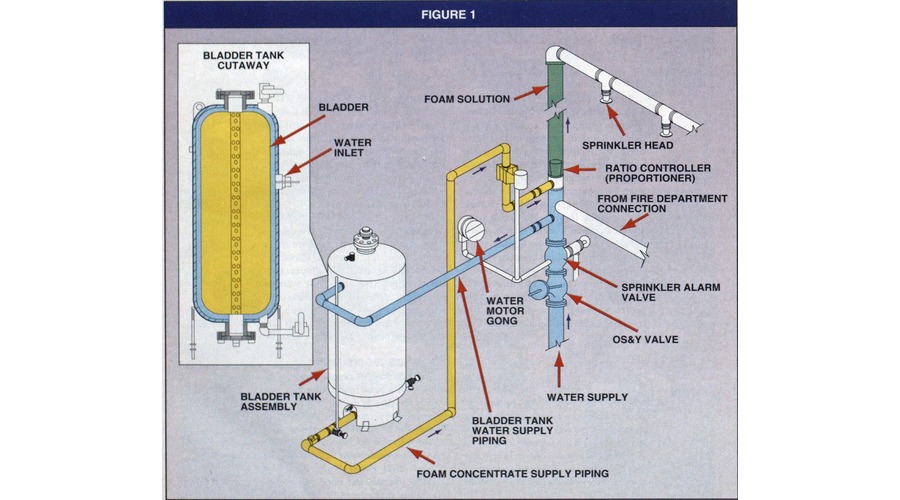
NFPA 16 design requirements matter because foam water systems do more than spray water and hope for the best. They mix foam concentrate with water to help smother flammable liquid fires and stop vapors from feeding the flames. In short, the fire suppression installation code gives owners, builders, and facility teams a clear path for safe, reliable protection. That matters in warehouses, fuel areas, processing plants, loading docks, and other busy sites where a small mistake can grow fast. And yes, fire safety is one place where “winging it” is not a strategy.
How NFPA 16 Section 7.1 shapes a foam water system design
Section 7.1 focuses on the general design and installation requirements that make a system work when it is needed most. It calls for the right hazard review, correct system layout, proper equipment selection, and sound installation practices. As a result, the foam water system design must match the actual fire risk, not just the floor plan. A good design also considers drainage, system access, discharge coverage, and the type of foam needed for the hazard. In practice, this means the system must fit the site’s operation, storage patterns, and fire load.
That is where many projects either gain confidence or collect headaches. A foam system cannot be treated like a decorative extra that gets figured out after the walls go up and the schedule starts panicking. The design phase should identify where fuel can pool, where ignition risk is highest, how far a fire could spread, and how the discharge pattern will perform in the real environment. If the system is supposed to protect a loading area with moving vehicles, changing stock, and regular washdown, that context matters. Foam system performance lives in those details.
Design has to follow the hazard, not just the drawing
A clean set of plans can look impressive, but Section 7.1 is really about whether the system suits the hazard it is meant to control. Flammable liquid storage, chemical handling, drum filling, fuel transfer, and process equipment all create different conditions. Some hazards demand broad discharge over open surfaces, while others need focused application over equipment or containment zones. The difference between those approaches is not minor. It affects nozzle selection, piping arrangement, water supply planning, proportioning equipment, and the practical ability of the system to do its job under pressure.
For readers who want broader context around foam systems in the field, Kord Fire Protection’s article on foam fire suppression for flammable liquid hazards is a natural companion. It helps connect the code language with the kinds of risks facilities actually deal with every day.
What a facility team should check before installation
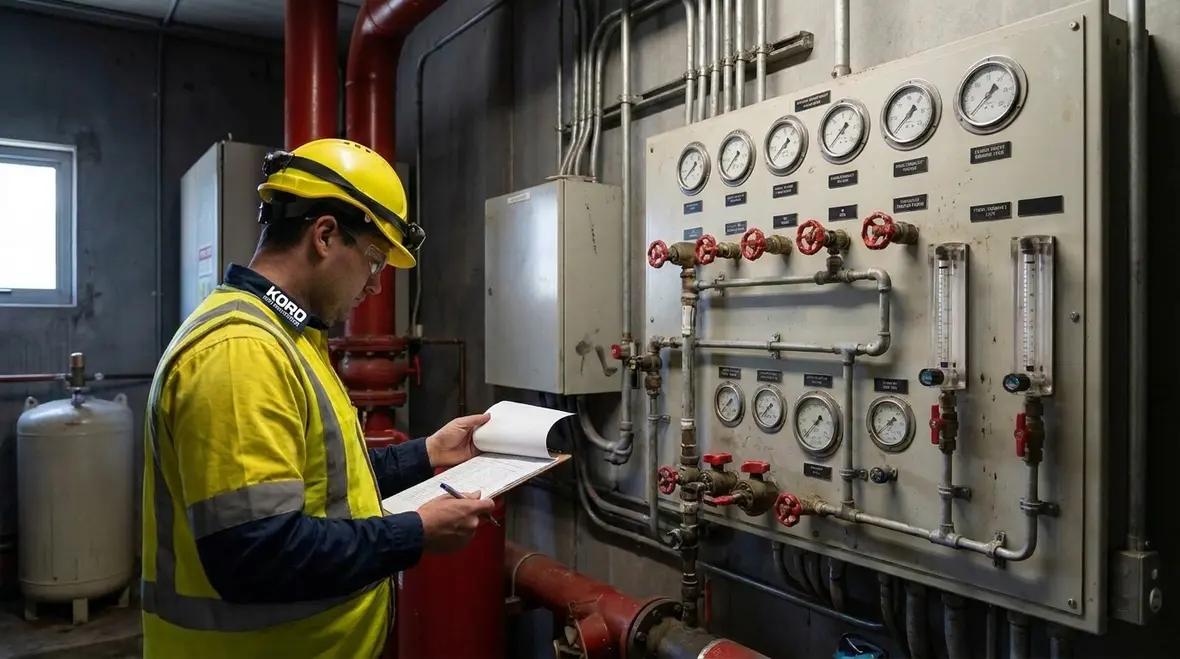
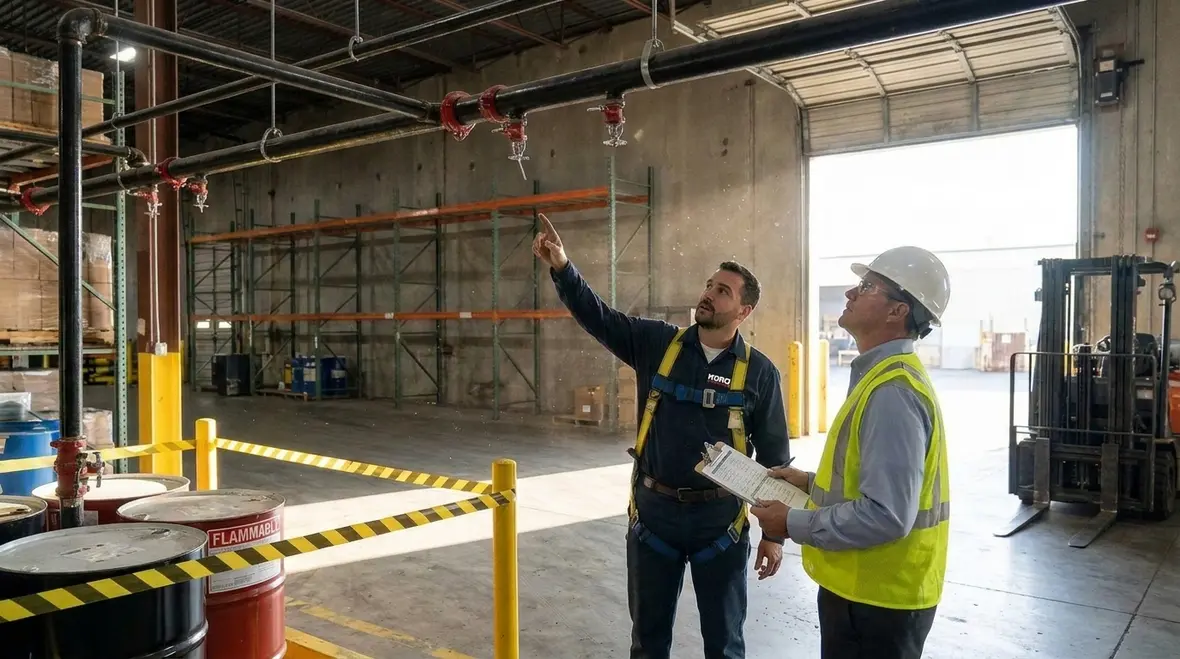
Before any pipe is fixed in place, the site needs a proper review. The team should confirm the hazard type, the area size, the fuel source, and the fire exposure. Then, the system should match the storage height, sprinkler or deluge needs, and the expected discharge density. In addition, the design should support easy maintenance and testing. If a system hides its weak points behind walls, ceilings, or bad access, then it becomes a problem later. That is the fire protection version of leaving your keys in the fridge.
| Design area focus | Why it matters |
| Hazard type | Matches foam performance to the fuel source |
| System coverage | Helps protect the full risk area without gaps |
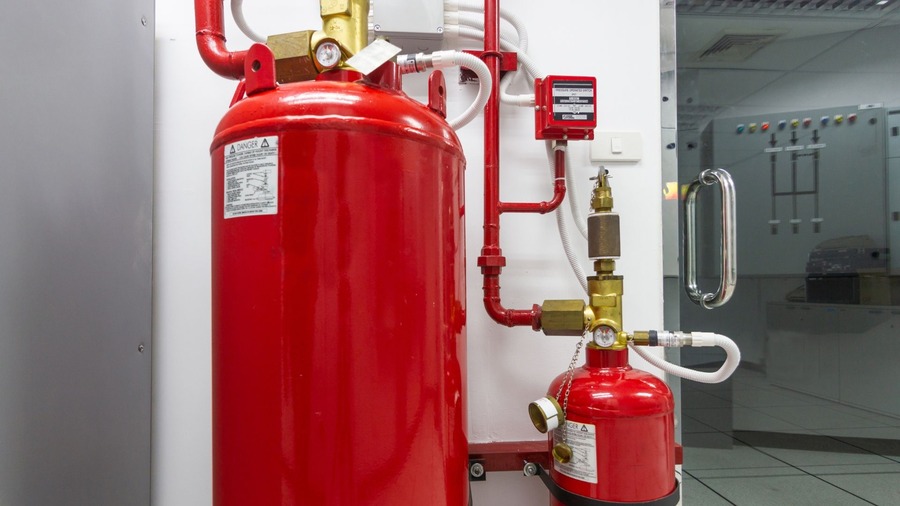
| Equipment selection | Supports dependable foam delivery and mixing |
| Maintenance access | Makes testing, inspection, and repair easier |
| Drainage planning | Reduces slip risks and limits water damage |
Those checkpoints are not paperwork filler. They help prevent the all-too-common problem of installing a technically complete system that is practically awkward, hard to test, or poorly aligned with the hazard. Site teams should also review water supply reliability, equipment compatibility, room or area obstructions, and how foam discharge will interact with day to day operations. If discharge will run into drains, containment areas, or traffic paths, that should be understood up front. Surprises are fun at birthday parties, less so during commissioning.
Access, testing, and serviceability matter more than people think
A system that looks neat on install day can become frustrating if valves are difficult to reach, test connections are badly placed, or concentrate equipment sits in a location that turns routine service into a workout. Section 7.1 thinking should push teams to consider what happens after handover. Inspections, testing, flushing, repairs, and verification all need space, safety, and common sense access. If the design team forgets that, the maintenance crew will remember it for years.
Why installation quality changes the result
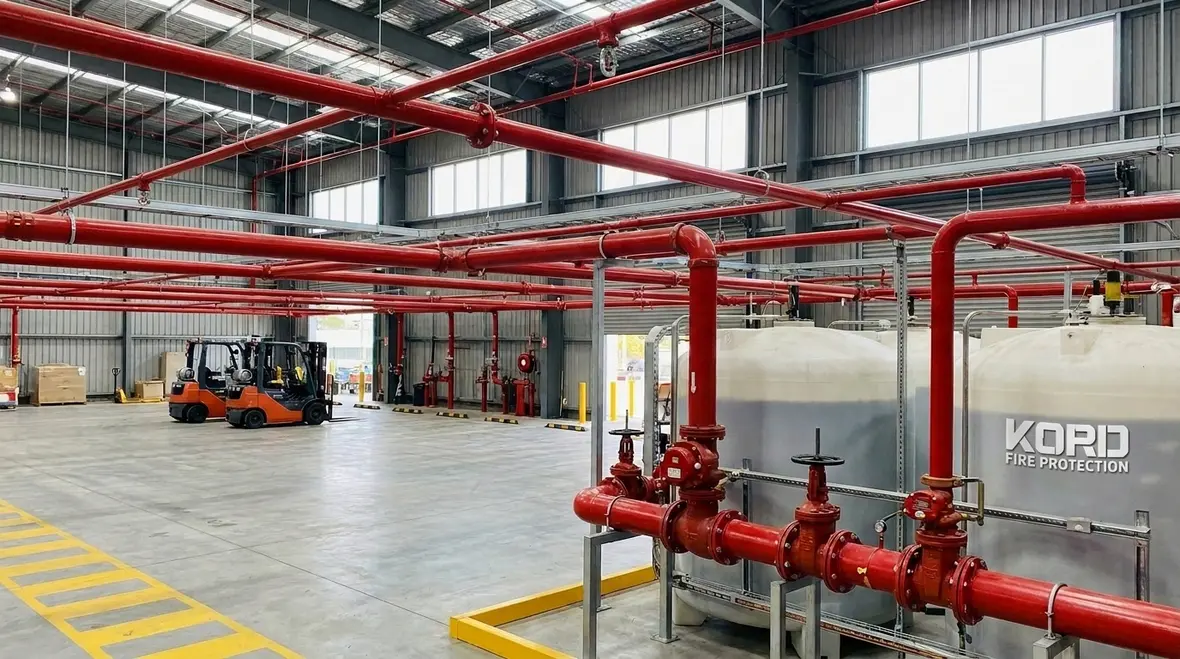
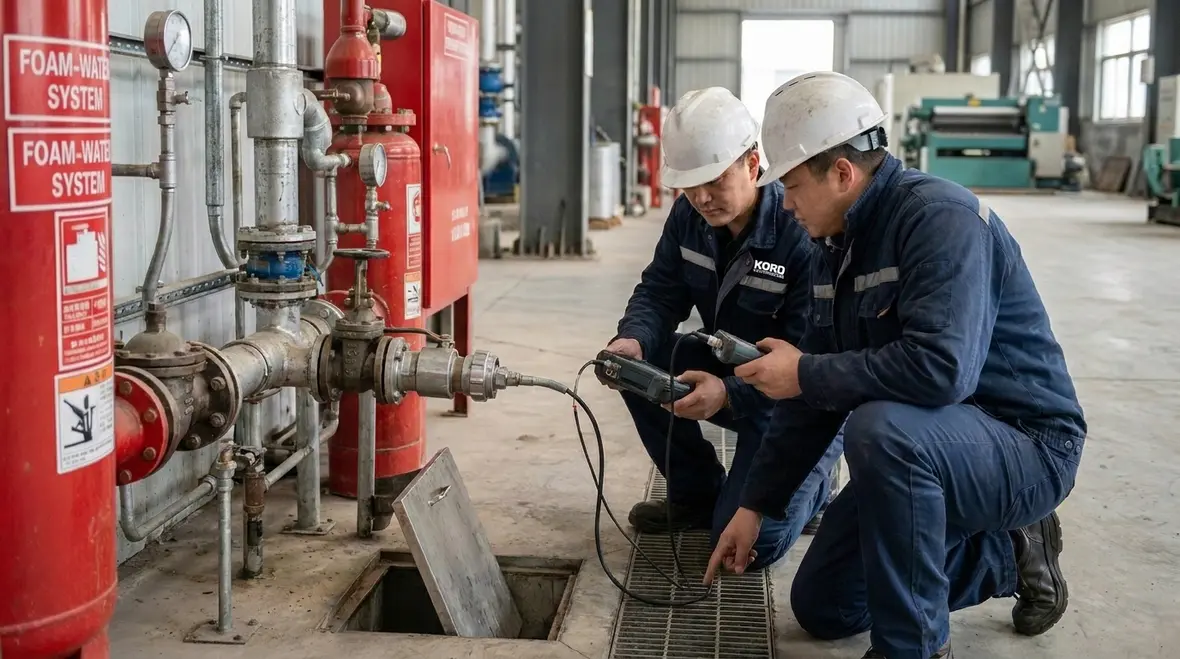
A foam water system can only perform as well as the installation behind it. Therefore, pipe runs must stay clear, valves must be placed correctly, and nozzles must be positioned for full coverage. Even a strong design can fail if the installation team misses alignment, pressure balance, or component compatibility. The fire suppression installation code also expects solid workmanship, since poor installation can weaken discharge performance and delay response. In a real fire, those delays matter. They matter a lot.
Installation quality is where theoretical protection becomes real world reliability. A slightly misplaced nozzle, an overlooked obstruction, or an incompatible fitting may not look dramatic during the build, but those small issues can change flow characteristics or leave vulnerable areas short on coverage. Foam systems rely on consistent proportioning and proper delivery. If one part of the chain is off, the whole result can suffer. This is why qualified installers, strong supervision, and coordinated commissioning are not luxuries. They are part of the system.
Coordination with other building services is part of good installation
Foam water systems do not exist in splendid isolation. They share space with structural elements, electrical systems, mechanical plant, process equipment, drainage, and often a hundred site realities no drawing fully captures. Good installation depends on coordination with those trades so the foam system is not boxed in, blocked, or compromised by late changes. A beautiful pipe route is not especially helpful if someone places ductwork directly where discharge needs to go.
For readers comparing general foam guidance with a broader standard overview, Kord Fire Protection also has a related resource here: NFPA 16 Standard. It works well as an interlink for anyone who wants the bigger compliance picture around foam-water sprinkler and spray systems.
How Kord Fire Protection can support the job
Kord Fire Protection can become a vital partner by helping industrial and commercial clients move from code language to real world action. The team can support design review, installation planning, compliance checks, and system coordination with other building services. That support matters because foam water systems often sit at the crossroads of fire protection, operations, and asset safety. When a project needs clear guidance, Kord Fire Protection helps reduce confusion, avoid rework, and keep the schedule moving. More importantly, it helps ensure the system is built for performance, not just paperwork.
That practical support is especially useful when stakeholders all view the project from different angles. Owners think about continuity, consultants think about compliance, contractors think about sequencing, and operations teams think about how not to shut everything down for longer than necessary. A partner who understands foam systems can help translate between those priorities and keep the project grounded in what the hazard actually requires. That is often the difference between a smooth delivery and a long email thread nobody wants to open.
Kord Fire Protection’s broader full fire protection services offering also makes sense as a contextual link for facilities that need more than one system coordinated under a single compliance strategy. When sprinkler, alarm, suppression, and testing requirements overlap, joined up planning saves time and reduces rework.
How the code supports safer operations across Australia
For Australian industrial, retail, and commercial sites, the value of NFPA 16 design requirements goes beyond technical detail. It gives decision makers a benchmark for safer fire protection where foam systems are needed. While local rules and project conditions still matter, a strong foam water system design helps teams build with confidence. It also helps reduce shutdown risk, protect stock and equipment, and support smoother audits. In facilities work, confidence is not a luxury. It is part of the cost of doing business, and a cheaper one than a major fire.
This matters even more in facilities where continuity is tightly tied to revenue, contractual obligations, or public service. A poor fit between hazard and suppression strategy can lead to extended downtime, damaged assets, difficult insurer conversations, and a lot of avoidable stress. By contrast, a foam water system designed with Section 7.1 in mind supports safer operations because it starts with the actual risk and builds outward from there. Sensible, specific, and much better than guessing.
When foam water systems make the most sense
These systems suit places with flammable liquid hazards, fuel storage, chemical handling, and large industrial process zones. They also help in some transport and loading areas where fire can spread quickly across surfaces. Because foam works by separating fuel from oxygen and cooling the fire zone, it can offer faster control than water alone in the right setting. However, the system must be designed for the exact hazard. One size fits all sounds nice in a sales brochure, but fire does not care about brochures.
Foam water systems are especially useful where spill fires, surface fire spread, or vapor suppression are major concerns. That does not mean every industrial risk automatically needs foam, and it certainly does not mean a standard layout can be copied from one building to the next. The right question is always hazard specific: what is burning, how can it spread, what will fuel it, and what suppression approach gives the best chance of control? When the answer points to foam, Section 7.1 helps shape how that protection should be designed and installed.
FAQ
Conclusion
NFPA 16 Section 7.1 gives facilities a practical path for safer foam water systems, from design to installation. For sites across Australia, the right partner can make that path far easier to follow. Kord Fire Protection can help turn code needs into a working system that supports safety, compliance, and long term value.
For any project that needs foam system expertise, the next smart move is clear: speak with Kord Fire Protection and build it right the first time. Better planning, better installation, and better protection tend to beat crossed fingers every single time.

Join Our Newsletter!
Get the latest fire safety tips delivered straight to your inbox From our Newsletter.