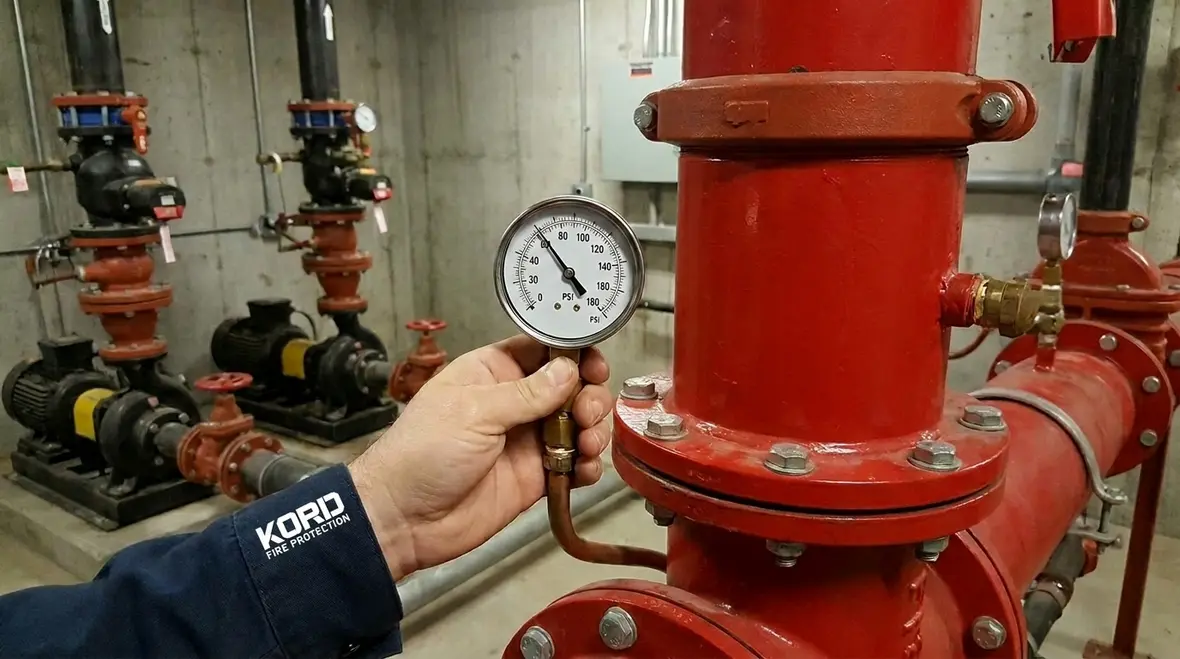
Commercial Sprinkler System Water Pressure Management
Quick answer: Keeping the right commercial sprinkler system water pressure prevents weak spray, bad coverage, and nuisance issues. It also helps sprinklers perform as designed during a fire. Facilities teams should monitor supply pressure, pipe condition, and pump performance, then adjust through testing and upgrades. Kord Fire Protection can partner on inspections and solutions.
In any commercial or industrial facility, commercial sprinkler system water pressure is not just a nice to have. It directly affects how sprinklers discharge, how quickly water reaches each head, and whether the system behaves the way the design intends. When pressure drifts, performance can drift too. Near the start of that process, it helps to work with a team that already handles fire sprinkler system service so inspections, repairs, and testing stay connected instead of becoming separate little adventures with separate little invoices.
Yet pressure management is rarely a one time task. In reality, systems face changing demand, tenant improvements, pipe wear, seasonal conditions, and equipment upgrades. So the facility owner needs a steady, methodical approach that keeps fire protection reliable. Kord Fire Protection can become a vital partner by turning pressure checks into a clear maintenance and compliance program, not a guessing game. Because guessing during a fire is usually a bad business strategy, and also a terrible improv act.
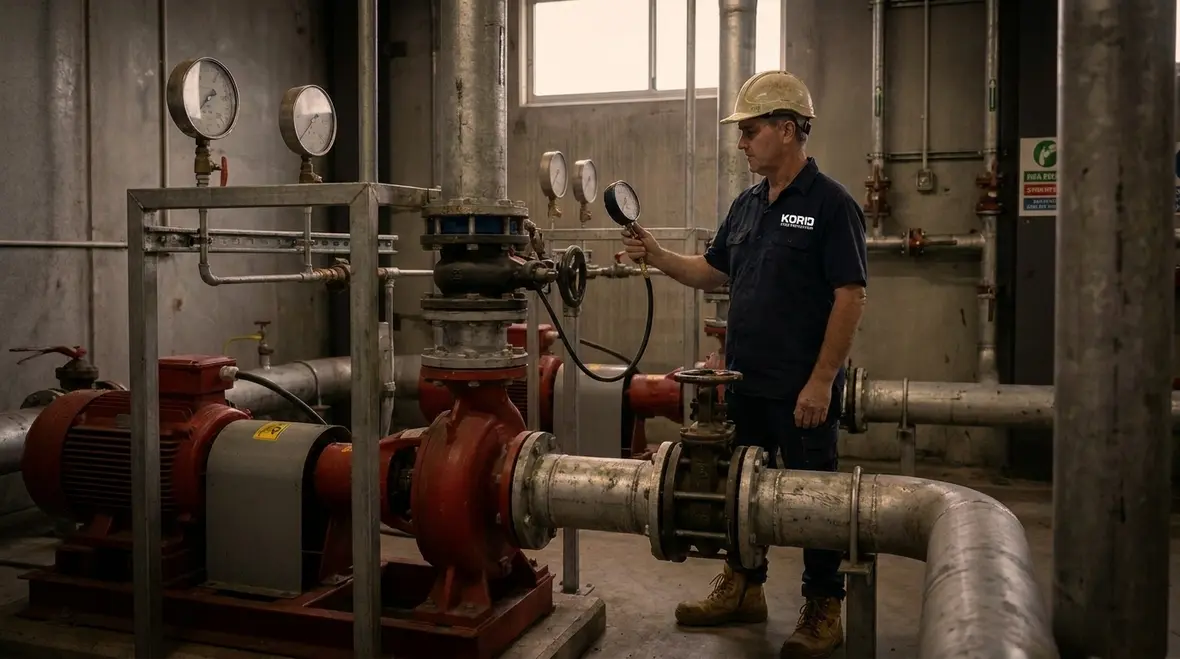
Why commercial sprinkler water pressure fails in real buildings
Many facilities expect pressure problems to show up like a smoke alarm. Unfortunately, pressure loss often starts quietly. Over time, several factors can reduce system pressure or change how water flows through the network.
- Supply pressure fluctuations: Town or municipal water pressure varies. Even small changes can matter.
- Undersized pipe sections or added loads: Expansions, new storage layouts, or extra equipment can alter flow paths.
- Corrosion, scale, or debris: Inside pipes, build up increases friction losses.
- Valve and fitting restrictions: Partially closed valves, old unions, or misaligned components add resistance.
- Hydraulic design mismatches: The system may not match current site realities after modifications.
- Pump performance changes: Pump wear, control drift, and pressure switch behavior can shift discharge characteristics.
As these issues build, the outcome looks simple but is not. A system might still have water, but not with the correct pressure at the right point. Therefore, effective pressure management focuses on both the numbers and the flow behavior across the full network. If a building has also tied alarm supervision and signal reporting into the broader life safety setup, pressure related events can affect what teams see, document, and respond to. That is one reason many facilities also review how pressure reporting fits alongside fire alarm monitoring systems and sitewide notification practices.
Common warning signs before pressure turns into a bigger problem
The tricky part is that pressure trouble does not always announce itself with dramatic flair. Facilities may notice slower refill behavior after testing, inconsistent gauge readings, valve issues that seem minor at first, or recurring questions during inspection reports. A remote area of the building may also show weaker hydraulic performance than expected. None of these signs should be shrugged off as one of those weird building things. Buildings do plenty of weird things already. Fire protection should not join the cast.
How to measure and verify pressure correctly
Measuring pressure the wrong way can waste time, cost money, and still leave the facility uncertain. So facilities teams should verify pressure using a structured approach that connects readings to actual system performance.
First, they should confirm where pressure is measured and what it represents. Pressure at the fire pump discharge tells one story, but pressure at remote zones tells another. Then they should interpret readings alongside the system layout, occupancy changes, and the original hydraulic expectations for the most demanding areas.
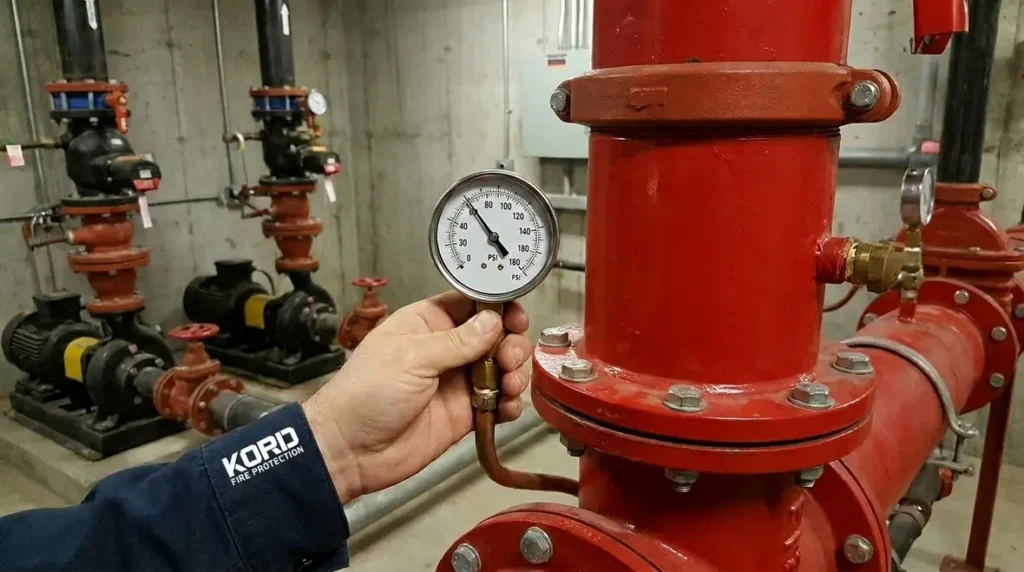
- Check gauges and test points: Ensure gauges are accurate and connected at the right locations.
- Record static and residual pressure: Static pressure shows supply at rest. Residual pressure shows behavior during flow.
- Run controlled flow tests: Use designed test procedures to reveal hydraulic performance.
- Compare readings to hydraulic calculations: If results drift, friction losses or control settings likely changed.
- Document trends over time: Pressure decline often appears gradually, not dramatically.
Next, Kord Fire Protection can help facilities translate test results into action. Instead of treating every reading as an isolated event, they can match findings to system components, then recommend adjustments that align with design intent and ongoing compliance needs. That matters because one odd gauge reading can mean very different things depending on whether the issue comes from supply fluctuation, internal obstruction, a controller setting, or pump wear.
Why static pressure alone never tells the full story
A static reading can look perfectly respectable while the system still struggles under flow. That is why residual pressure and controlled testing matter so much. The system has to perform when water is moving through it, not just when everyone is standing around admiring a gauge. Real verification means seeing how pressure behaves under conditions that resemble actual demand, especially in remote or elevated sections where losses add up fast.
Hydraulic principles that keep systems consistent
To manage pressure well, teams should understand how water moves through a sprinkler system. Pressure does not simply exist. It transforms as water travels across pipes, fittings, valves, and elevation changes.
Commercial sprinkler systems rely on hydraulic balance. When one part changes, the friction loss changes too. This matters because pressure at the most demanding area can become the deciding factor. If that area sees lower pressure than expected, spray quality and water delivery can degrade. That can leave owners with a system that technically looks intact while behaving less effectively where it matters most.
- Friction losses from pipe length and roughness: Older pipe systems can lose more pressure.
- Minor losses from fittings and valves: Elbows, tees, and check valves create resistance.
- Flow rate effects: As flow increases, friction loss rises, which can stress the system.
- Elevation changes: Higher elevations require more effective pressure to deliver flow.
- Interference from active controls: Pressure regulating valves or pump controls can shift discharge behavior.
And so, pressure management becomes less about chasing one gauge reading and more about keeping hydraulic performance steady. That is where experienced fire protection partners make a difference, because they can spot which component change drives the pressure curve. A small restriction in the wrong location can have an outsized effect, especially in larger commercial layouts where remote zones already operate with less margin.
Pressure boosters, pumps, and controllers: what facilities should watch
Many sites rely on pumps, pressure boosters, or control systems to maintain stable performance. That means pressure problems can originate from the pump room as easily as from the pipe network.
Facilities should monitor performance details that affect commercial sprinkler system water pressure stability during operation. For instance, pump curves and control settings can change after wear or adjustments. Meanwhile, automatic controls can respond in ways that feel fine until a high demand flow event happens. That is exactly when a hidden performance issue stops being hidden and starts becoming everyone’s problem.
- Pump setpoints and pressure control: Verify settings match design objectives.
- Pressure switches and sensors: Faulty signals can cause delayed or incorrect responses.
- Valve positions: Confirm valves open and close as designed for the system mode.
- Priming and suction conditions: Air or suction issues can reduce effective discharge pressure.
- Energy and motor health: Worn components can reduce output over time.
Here is the part that sounds boring until it becomes expensive. If pump performance slips, the system can start acting like it is under designed load, even when demand has not changed. Therefore, pressure management should include pump health and control review, not only pipe inspection. A solid maintenance plan keeps teams from discovering those issues at the absolute worst moment, which is a scheduling strategy no one recommends.
Maintenance strategies that prevent pressure drift
Preventing pressure drift requires a maintenance mindset that blends inspection, testing, and targeted corrections. Instead of waiting for complaints, facilities can run a disciplined program that reduces surprises.
They can start with a clear schedule, then align it to how the building operates. A retail property may experience different usage patterns than a warehouse or manufacturing site. Even though the fire safety goal stays the same, the system aging pattern can differ. That is why the best service plans do not rely on autopilot. They respond to how the site actually functions, not how it looked on the first day of operation.
| Maintenance action | What it protects against |
|---|---|
| Inspect and exercise control valves | Added restrictions, sticking, and inconsistent flow responses |
| Review gauge calibration and test point condition | Misleading readings that mask true pressure performance |
| Monitor pump performance during routine tests | Output degradation and control drift over time |
| Assess pipe condition for corrosion and deposits | Higher friction loss and reduced delivery to remote areas |
| Check hydraulic balance after building changes | Pressure reduction caused by new layouts or additional loads |
Then, Kord Fire Protection can turn these actions into a coordinated service plan. They can help facilities document results, prioritize repairs, and verify that the system performs within acceptable limits when it truly matters. Good documentation also makes later reviews easier, especially when facilities expand, swap tenants, or compare present conditions to earlier pressure tests.
Make documentation part of pressure management, not an afterthought
A pressure check that never gets compared, trended, or tied to corrective action is only half useful. Facilities should keep records that show where readings were taken, what conditions existed during the test, and what changed afterward. That way, when performance starts drifting, teams can identify the pattern before it becomes a larger operational and compliance headache. Less mystery, more clarity, fewer meetings where everyone stares at a spreadsheet like it insulted them personally.
Working with Kord Fire Protection as a vital partner
Facilities often treat sprinkler service as a checklist. Pressure testing becomes the thing we do, and recommendations become the things we think about later. In contrast, Kord Fire Protection helps facilities treat pressure management as a performance system. That means they connect measurements to the real hydraulics of the site, then move from data to corrective action.
For industrial, retail, and commercial environments, this partnership matters because sites change. New fit outs, tenant modifications, and upgrades to mechanical or process equipment can indirectly affect water flow. Over time, those changes can shift system performance unless someone checks the hydraulic assumptions. A partner that understands inspections, monitoring coordination, and field conditions can help keep the whole picture aligned instead of focusing on one isolated symptom.
- Routine testing aligned to system design and operational risk
- Pressure verification across key points, not only at one location
- Clear documentation that supports compliance and asset planning
- Practical recommendations that reduce downtime and uncertainty
And honestly, that is the goal. No one wants fire protection that works mostly. They want performance that stays dependable, even when the building decides to evolve like it is in a blockbuster franchise sequel.
FAQ: Commercial sprinkler pressure questions, answered
Final call to action
When a facility manages commercial sprinkler system water pressure like a living performance requirement, it reduces risk and protects operations. Kord Fire Protection can help teams test, document, and improve pressure performance with practical, system based recommendations.
If pressure readings look inconsistent or the site has changed, now is the time to act. Contact Kord Fire Protection to build a reliable sprinkler pressure plan for your facility and keep the system ready for the moments when ready is the whole point.

Join Our Newsletter!
Get the latest fire safety tips delivered straight to your inbox From our Newsletter.