Recharge or Replace an Expired Fire Extinguisher
Should You Recharge or Replace an Expired Fire Extinguisher?
Should You Recharge or Replace an Expired Fire Extinguisher?
Every so often, a quiet red canister on the wall raises a loud question. When the tag shows an old date, people pause and wonder whether to recharge or replace a fire extinguisher. It feels simple, yet the answer carries weight, because safety always does. Early on, Kord Fire Protection technicians often explain that this choice is less about age alone and more about condition, type, and intent. Therefore, within the first few moments of thought, the real issue becomes clarity. The rest of this guide walks through that clarity step by steady step, with calm authority and a wink or two, because even serious topics deserve a breath.
After all, nobody wants their extinguisher to pull a disappearing act when things heat up. Think of it like trusting an old superhero cape. It might still look heroic, but does it still fly.
Understanding What an Expired Fire Extinguisher Really Means
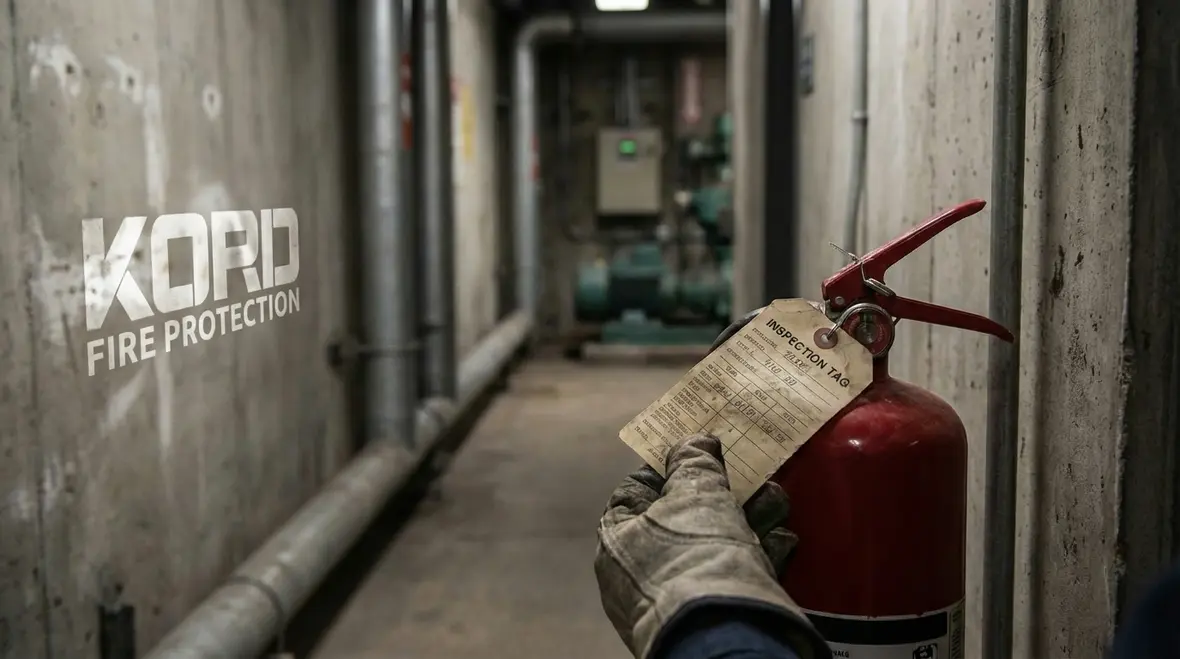
An expired fire extinguisher does not mean it suddenly turned into a decorative prop. Instead, expiration marks the end of a tested reliability window. Manufacturers set these dates based on pressure loss, chemical stability, and wear on internal seals. Consequently, once that date passes, the extinguisher may still discharge, yet it may not perform as intended.
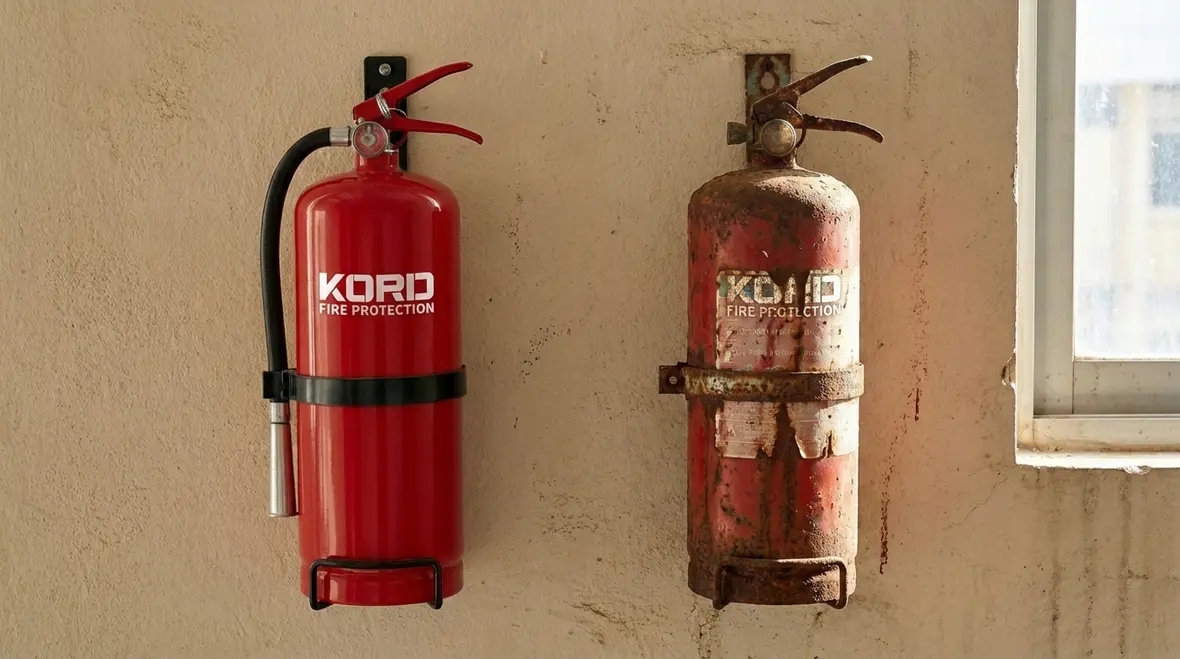
Kord Fire Protection technicians often remind clients that expiration dates differ by type. Dry chemical units typically last longer than water based models, while carbon dioxide units have their own inspection rules. Therefore, reading the label matters. Moreover, regular inspections often reveal clues long before the date arrives. A sagging gauge, corrosion on the cylinder, or a cracked hose often speaks louder than a calendar.
In other words, expiration is a signal, not a verdict. It tells the owner to stop and evaluate. Ignoring it is like ignoring a check engine light. It might be fine today, but tomorrow has opinions.
If you want a deeper dive into what those dates and tags really mean, Kord Fire also breaks it down in detail in My Fire Extinguisher Is Expired?
Why expiration dates matter more than they look
That tiny stamped date or faded tag determines whether the extinguisher is treated as trusted equipment or a question mark. Codes, insurers, and inspectors all rely on it. When it passes, you do not automatically throw the extinguisher away, but you do stop assuming it is ready to save the day without a professional weighing in.
When Recharging Makes Sense According to the Pros
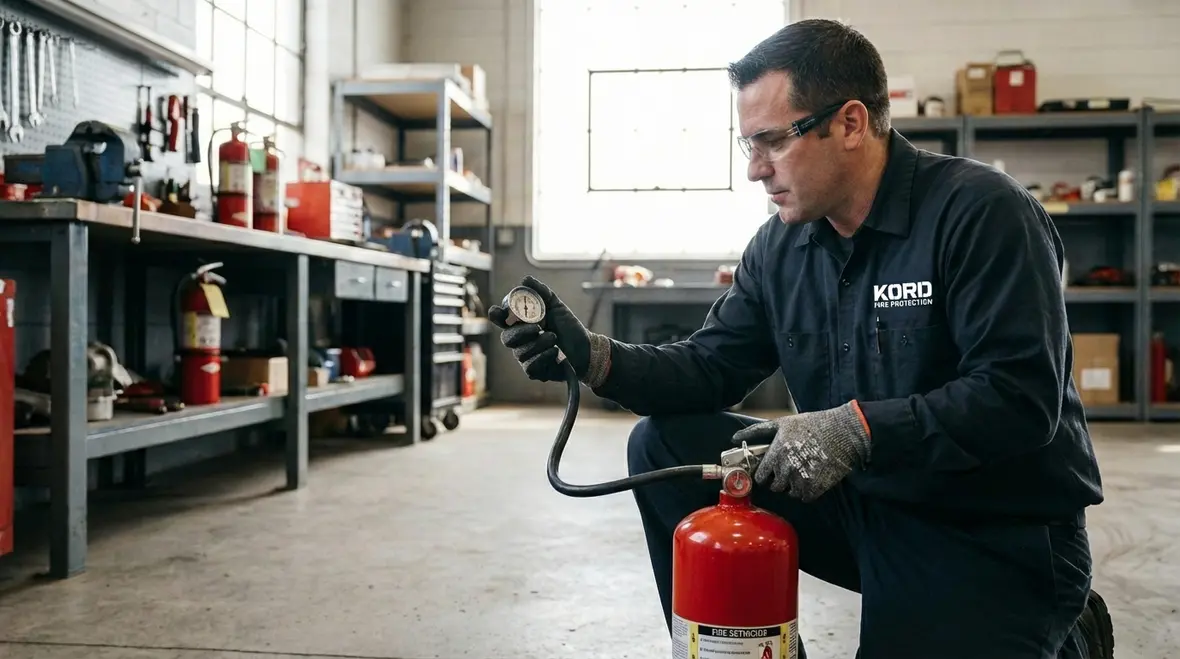
Recharging an extinguisher means refilling the agent and restoring pressure after use or inspection. This option shines when the unit remains structurally sound. If the cylinder shows no rust, dents, or damage, recharging often restores full service life. Therefore, businesses often choose this route to control costs without cutting corners.
Kord Fire Protection technicians explain that recharging works best for extinguishers that discharged partially during training or minor incidents. Additionally, routine maintenance sometimes requires recharging after internal checks. In these cases, recharging keeps the unit compliant and reliable.
However, recharging is not a magic reset button. If the extinguisher failed a hydrostatic test or shows metal fatigue, refilling it would be like putting new tires on a car with a cracked frame. Consequently, professionals evaluate before acting. That evaluation protects people, property, and reputations.
And yes, recharging feels a bit like giving the extinguisher a spa day. Fresh agent, proper pressure, and a shiny tag. Everyone leaves relaxed.
Recharging, testing, and pressure checks go together
Behind the scenes, technicians combine recharging with pressure checks and sometimes hydrostatic testing. These steps confirm that the cylinder can safely hold pressure and that the extinguisher is not just full, but dependable. If you are curious how that process works, Kord Fire details it in their Fire Extinguisher Recharging and Pressure Check Guide.
Clear Signs Replacement Is the Smarter Move
Sometimes replacement stands as the only responsible choice. When corrosion eats into the cylinder or the valve threads weaken, safety drops fast. Moreover, older models may no longer meet current codes. In those cases, replacing avoids future issues and ensures compliance.
Kord Fire Protection technicians often point to repeated recharges as a warning sign. If an extinguisher needs frequent service due to leaks or pressure loss, replacement saves money long term. Additionally, obsolete agents pose environmental concerns. Modern extinguishers use safer, more effective compounds.
Think of replacement like upgrading a flip phone. The old one technically works, but the new one does more, faster, and safer. Therefore, replacement often feels less like an expense and more like an investment.
When expiration means it is time to let go
If an extinguisher is long past due, has never seen proper maintenance, or fails basic checks, it is often safer to retire it. For guidance on what to do when an extinguisher is clearly past its prime, Kord Fire walks through disposal and next steps in their Expired Fire Extinguisher Disposal and Safety Guide.
Recharge or Replace a Fire Extinguisher in Commercial Settings
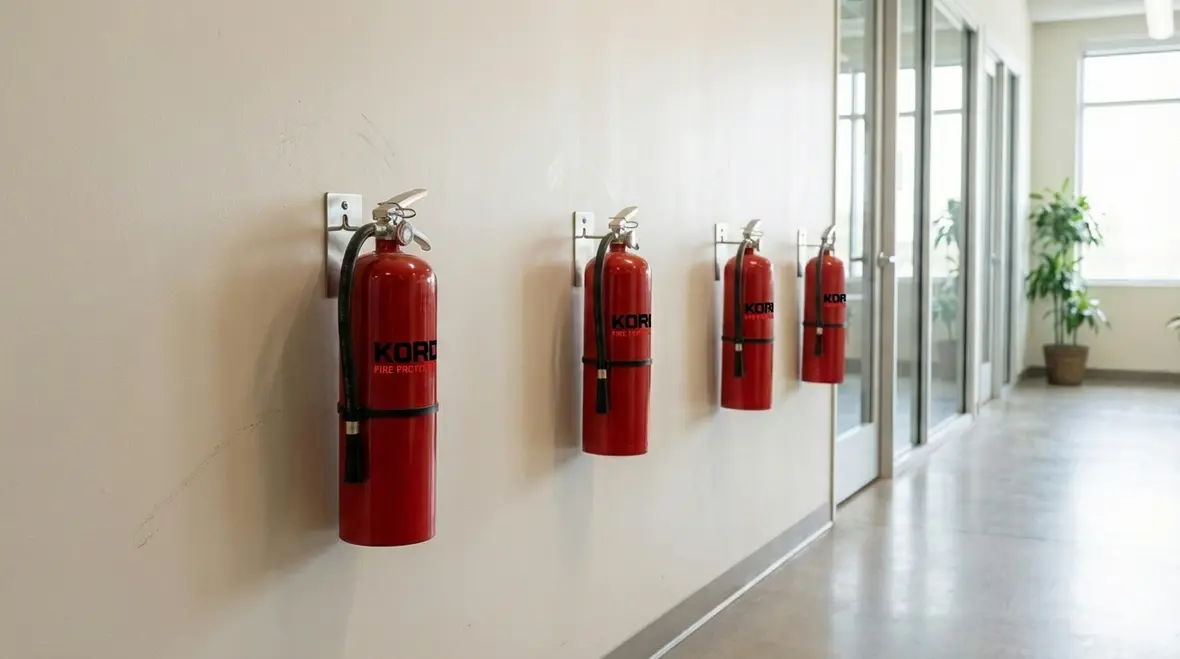
In commercial buildings, the decision carries legal and ethical weight. Regulations often require specific extinguisher types, capacities, and maintenance schedules. Therefore, managers must balance cost control with compliance.
Kord Fire Protection technicians regularly guide facilities through this decision. They review inspection logs, assess usage history, and confirm code requirements. Consequently, they recommend recharging when the unit remains compliant and replacing when codes or conditions demand it.
Moreover, consistency matters in commercial spaces. Mixing old and new units can confuse staff during emergencies. Therefore, many businesses choose to replace units in groups for clarity and uniform performance. It may cost more upfront, yet it reduces risk and training confusion later.
Even Hollywood understands this. Imagine a heist movie where the hero grabs an extinguisher and nothing happens. That scene gets laughs. Real life does not.
A Side by Side Look at the Two Options
| Recharging an Extinguisher | Replacing an Extinguisher |
| Lower upfront cost when the unit is sound | Higher initial cost but longer service life |
| Maintains familiar equipment | Upgrades to current safety standards |
| Best for lightly used or recently serviced units | Best for damaged, outdated, or failed units |
| Requires professional inspection | Reduces future maintenance needs |
This comparison often helps decision makers pause and reflect. Therefore, instead of guessing, they choose based on evidence.
Linking your decision to actual service options
Whether recharging, replacing, or scheduling hydrostatic testing, you do not have to figure out the schedule alone. Kord Fire offers dedicated services like Six Year Break Down/Tear Down, hydrostatic testing, and fire extinguisher replacement that keep extinguishers on the right side of both safety and code.
How Technicians Evaluate the Right Choice
Professional evaluation blends science and experience. Technicians inspect the cylinder, valve, hose, and gauge. They also review the service record. Consequently, they see patterns that untrained eyes miss.
Kord Fire Protection technicians emphasize hydrostatic testing. This test checks the cylinder’s ability to hold pressure safely. If the unit fails, replacement follows without debate. Additionally, technicians verify that the extinguisher still meets local codes. Regulations change, and equipment must keep pace.
Moreover, technicians consider the environment. Extinguishers in coastal or industrial areas face harsher conditions. Therefore, even younger units may require replacement sooner. This careful evaluation ensures that recommendations rest on facts, not guesswork.
From tag check to final call: recharge or replace
The process often starts with a quick visual check and ends with a documented recommendation. In between, technicians may discharge the unit, open it, test its pressure, or compare it against current standards. That is how a quiet red canister stops being a question mark and becomes either a fully trusted extinguisher or a responsibly retired one.
Costs, Safety, and Peace of Mind
Cost often drives the initial question, yet safety decides the final answer. Recharging costs less in the short term, while replacement often costs less over time. Therefore, owners should consider total value, not just the invoice.
Peace of mind also carries value. Knowing the extinguisher will perform under stress changes how people feel in a space. Kord Fire Protection technicians often note that confidence improves response during emergencies. People act faster when they trust their tools.
Furthermore, insurers and inspectors favor proactive decisions. Well maintained or newly replaced extinguishers reduce liability. Consequently, safety investments often return dividends through smoother inspections and lower risk.
Common Myths That Cloud the Decision
One myth claims that all expired extinguishers must be replaced. That simply is not true. Another myth insists recharging always solves the problem. Again, not true. Reality lives between these extremes.
Kord Fire Protection technicians spend time clearing these misconceptions. They explain that each extinguisher tells its own story through wear, history, and design. Therefore, blanket rules rarely work.
Pop culture does not help. Movies show extinguishers working decades later without service. That fantasy belongs next to time traveling cars and invincible heroes. Real life prefers maintenance.
FAQ
Conclusion and Call to Action
Choosing to recharge or replace never needs to feel heavy. With clear guidance, the answer reveals itself. Kord Fire Protection technicians stand ready to inspect, explain, and recommend the safest path forward. Therefore, when that quiet red canister raises its question, let experience answer.
Schedule a professional evaluation today, protect what matters, and enjoy the calm confidence that comes from knowing safety is handled. If your extinguishers are expired, damaged, or just overdue for attention, reach out to Kord Fire's fire extinguisher services team through your nearest regional page — for example, their Riverside County Fire Protection service hub lists fire extinguisher replacement, hydrostatic testing, and annual service options to get you fully compliant and ready.
Know Your Weapon Before You Fight the Flame
Kord Fire Protection is your go-to when it comes to all things fire protection. For over 20 years, we’ve been serving Southern California with the quality service and equipment to keep your home or business safe at all times. Our competitive prices reflect our unwavering commitment to protecting what matters most in the event of a fire emergency. Give us a call, send an email, or use that form!

Join Our Newsletter!
Get the latest fire safety tips delivered straight to your inbox From our Newsletter.