
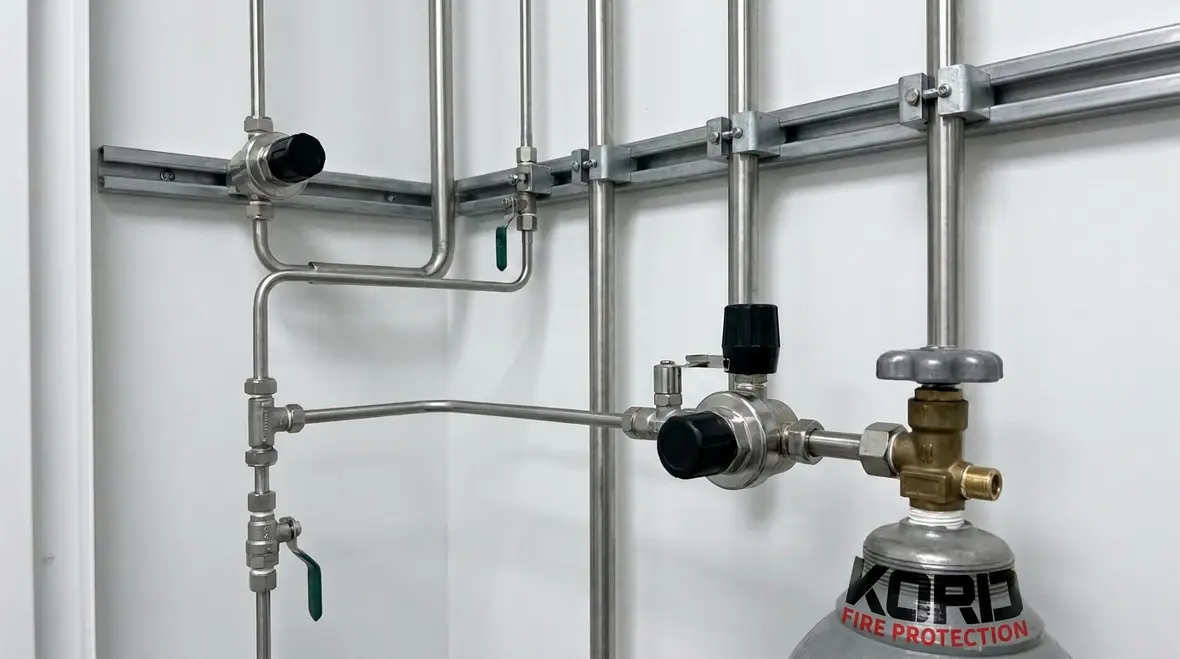
NFPA 45 Section 10.2: Storage and Piping Systems for Lab Gases
Quick Answer
NFPA 45 Section 10.2 sets design, installation, and maintenance expectations for storage and piping systems that carry laboratory gases. It addresses system integrity, routing, protection, and readiness for inspection and service in commercial facilities where uptime and safety both matter.
For a broader compliance-minded service partner, facilities can also review Kord Fire Protection’s fire safety inspections and preventive maintenance services, which fit naturally alongside inspection readiness planning for complex commercial environments.
What does NFPA 45 Section 10.2 require for laboratory gas piping?
NFPA 45 laboratory gas storage piping systems must be built and maintained to support safe handling of medical, toxic, and flammable or inert gases used in laboratories. Section 10.2 focuses on how the storage is connected to the piping system and how the system performs over time, not only at initial commissioning. For commercial operators, the practical goal is simple: maintain containment, limit ignition and leak risk, and keep the system accessible for inspection and corrective maintenance.
Because many facilities operate across multiple tenants, building floors, or vendor-managed lab suites, compliance is often challenged by undocumented changes, inconsistent maintenance practices, and piping modifications that occur between scheduled safety reviews. Kord Fire Protection supports ongoing compliance by helping organizations establish inspection readiness, document verification, and corrective follow up that aligns with NFPA expectations.
How Section 10.2 frames storage and piping system integrity
Section 10.2 emphasizes that laboratory gas storage and its connecting piping must function as a complete system. That means the storage equipment, regulators, valves, tubing or piping, supports, and protective measures work together. Inspectors and AHJs typically look for evidence that the system was installed for the gas service, can withstand expected operating conditions, and remains leak tight and properly labeled throughout its service life.
Operational integrity is usually proven through a combination of design controls and field verification:
-
Correct materials and system compatibility for the gas type and operating pressure.
-
Proper system routing to avoid unnecessary exposure, physical damage, and hard to reach zones where maintenance cannot occur safely.
-
Mechanical support and alignment to reduce stress at fittings and connections.
-
Control components and interfaces installed as intended, including regulators and isolation valves where applicable.
Installation and routing: where commercial facilities commonly fall short
In real-world commercial, industrial, and retail environments, the failure points are rarely “the concept.” They are usually the execution details. For NFPA 45 laboratory gas storage piping systems, common issues include:
-
Inaccessible piping runs behind lab equipment, ceilings without access panels, or obstructed chaseways that prevent inspection.
-
Uncontrolled modifications from tenant build outs, reagent upgrades, or new equipment that requires additional gas outlets and shortcuts the documented change process.
-
Improper supports that allow vibration or thermal movement to stress joints and seals.
-
Lack of clear labeling and signage for gas identification, directionality, and isolation locations.
-
Protection gaps where piping is exposed to impact, pinch points, or maintenance activity.
These issues increase risk for chronic leakage and create obstacles for verification. For example, a piping segment that cannot be visually traced and leak tested becomes a liability during periodic safety walks and emergency readiness drills.
To support ongoing compliance, commercial operators should pair building standards with documented responsibilities that define who owns changes to piping, who approves the work, and how updates are reflected in system diagrams and records. Kord Fire Protection helps teams tighten that loop through inspection planning support and documentation guidance that aligns with typical AHJ expectations.
What inspection and maintenance should focus on
Section 10.2 expectations translate into a maintenance program that verifies containment, function, and readiness. In practice, the inspection plan should cover both the storage interface and the piping distribution system. Key focus areas include:
1) Leak integrity and connection condition
Connections are where most field problems show up: loosened fittings, aging seals, corrosion where the environment is harsh, or damage from vibration. Maintenance should emphasize:
-
Close inspection of joints, fittings, and transitions where materials meet or where changes in diameter occur.
-
Verification of isolation performance so operators can control gas sections during troubleshooting or emergencies.
-
Condition checks after tenant moves or equipment changes, because these activities frequently disturb piping.
2) Regulator and control component verification
Storage and distribution often rely on regulators and valves to manage pressure and flow. When these devices drift out of specification, systems may not operate as intended. A robust program includes checks for:
-
Correct setpoints and identification of regulator components.
-
Signs of regulator malfunction such as abnormal performance, repeated maintenance callouts, or inconsistent pressure readings.
-
Operational readiness so staff can isolate gas safely without delay.
3) Physical protection, labeling, and accessibility
Compliance is not only about preventing leaks. It is also about ensuring the system can be inspected and serviced safely. Inspectors typically expect:
-
Gas identification and flow direction labeling where required.
-
Access panels or maintenance clearance that allow safe inspection.
-
Mechanical protection where piping is exposed to impact or mechanical stress.
When building schedules and tenant turnover are frequent, maintenance teams should verify accessibility after construction trades complete work. Kord Fire Protection supports commercial operators with inspection readiness planning so teams do not discover access problems on inspection day.
Common failure points in lab gas systems and how to prevent them
NFPA 45 laboratory gas storage piping systems tend to experience predictable categories of issues. Prevention depends on aligning work practices with the system’s real operating environment.
-
Seal deterioration and micro leaks: Scheduled checks should include visual assessment of fittings and follow up with leak detection practices suitable for the gas in use.
-
Physical damage from floor activity: High traffic areas require protective measures and maintenance coordination to prevent accidental impact during cleaning, moving equipment, or rack installation.
-
Documentation drift: Piping diagrams and isolation maps can become outdated after tenant modifications. Facilities should require record updates before work closes out.
-
Improper routing around equipment: When piping is rerouted for lab layout changes, it must maintain safe clearance, support, and accessibility.
-
Inadequate staff familiarity: Personnel must know where to isolate gas quickly. Training and drill schedules should be part of maintenance culture, not an afterthought.
For organizations managing multiple lab spaces, consistent enforcement matters. Kord Fire Protection can function as a continuity partner for ongoing field verification, corrective action tracking, and maintenance alignment across sites.
Internal and external references to support compliance planning
Facilities typically need both code context and practical service documentation. Operators can improve internal coordination by linking safety and facilities teams to service standards and inspection expectations.
-
Kord Fire Protection (anchor: Kord Fire Protection): Use as a partner reference for commercial fire and life safety compliance services.
Frequently Asked Questions
Next step
Review your current lab gas storage and piping system records against Section 10.2 expectations, then confirm inspection access, labeling, and control component readiness. If you want a practical compliance support partner, contact Kord Fire Protection to plan maintenance and verification activities that reduce inspection day surprises and strengthen ongoing safety performance.

Join Our Newsletter!
Get the latest fire safety tips delivered straight to your inbox From our Newsletter.



