
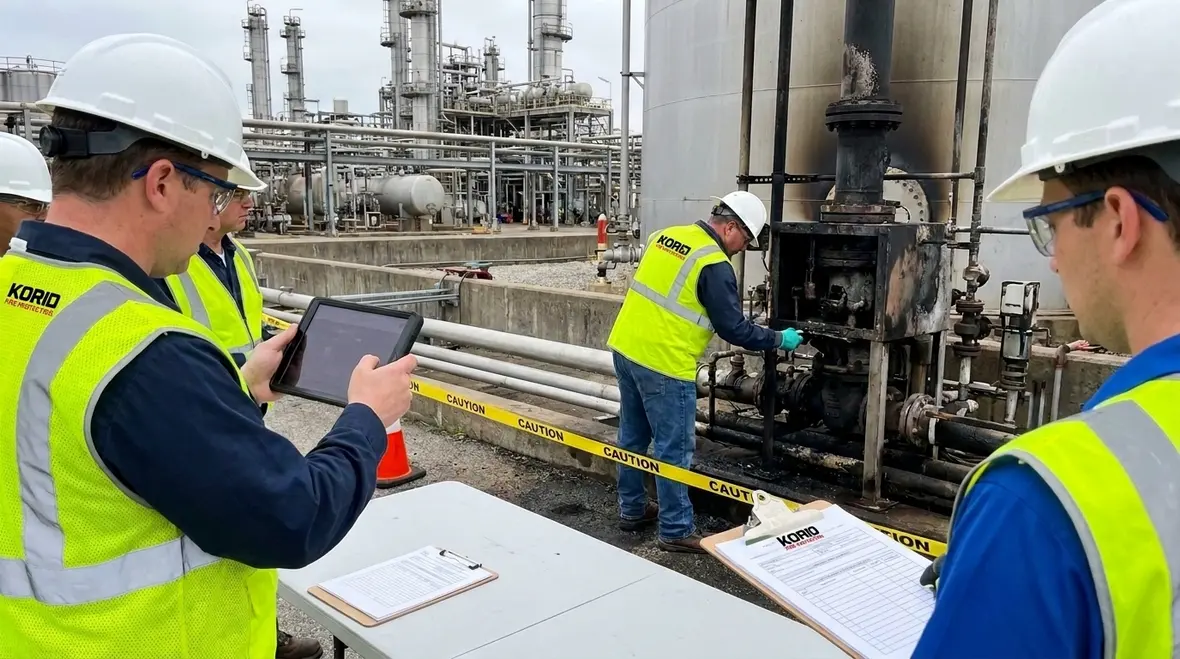
NFPA 35 Section 10.6: Fire Investigation
Quick Answer: NFPA 35 Section 10.6 requires facilities handling hazardous materials to investigate fires promptly, document findings, and take corrective actions to prevent recurrence. For an NFPA 35 fire investigation requirements plant, compliance hinges on staff training, evidence handling, and maintenance follow through.
Facilities that need stronger documentation discipline can also benefit from a full lifecycle approach to fire protection servicing, especially when investigation findings need to connect cleanly to inspections, repairs, maintenance history, and system readiness. ([kordfire.com](https://kordfire.com/full-lifecycle-of-fire-protection-servicing/?utm_source=openai))
Why NFPA 35 Fire Investigation Requirements Matter in a Chemical or Industrial Plant
NFPA 35 governs the storage, handling, and processing of flammable and combustible liquids, oxidizers, and related hazardous materials. When a fire or explosion occurs, the investigation is not a paperwork exercise. It is a structured process that supports operational safety, helps identify ignition sources, and verifies that control systems performed as intended.
Commercial and industrial facilities often assume that if the fire “went out,” the event is complete. NFPA 35 Section 10.6 pushes the organization toward a disciplined response: preserve facts, determine causal factors, document conclusions, and implement corrective actions. For facilities that rely on process equipment, fire protection systems, hot work controls, and hazardous material handling procedures, the investigation output drives what gets improved next.
What NFPA 35 Section 10.6 Expects After a Fire or Explosion
Section 10.6 focuses on ensuring the facility responds systematically following a fire. While exact wording should always be verified against the latest adopted edition, the compliance intent remains consistent across jurisdictions: the facility should investigate to understand ignition sources, propagation pathways, system performance, and human and procedural contributions.
Core elements commonly required during compliance-oriented investigations
- Prompt investigation and site control: Establish who leads the investigation, secure the area when safe, and define what can be disturbed and what must remain preserved.
- Evidence collection: Record conditions before cleanup, gather photos and measurements, document fire protection system status, and collect witness statements.
- Cause determination: Identify ignition source mechanisms and contributing factors, such as equipment failure, electrical issues, static discharge, operator actions, or control gaps.
- Corrective actions: Implement and track actions that reduce recurrence risk, including maintenance improvements, process changes, or training updates.
- Documentation: Maintain a complete investigation record for audit readiness and internal learning.
In practice, the facility’s ability to prove that it followed a consistent process matters as much as the final cause. Auditors frequently evaluate whether the investigation addressed ignition, fuel, oxygen, and propagation contributors as applicable to the incident.
How Plants Should Structure the Fire Investigation Process
A robust investigation program in an NFPA 35 fire investigation requirements plant requires clear roles, a repeatable workflow, and tools that support evidence preservation. The best programs also align with incident command principles while maintaining hazardous materials expertise.
Step-by-step workflow used in strong commercial compliance programs
- Initiate the response and stabilize safely: Coordinate with emergency responders, confirm utilities are secured where required, and confirm personnel safety before evidence collection.
- Preserve key details: Capture system indicators, valve positions, alarm logs, operator logs, and any automatic control states. Photograph damage patterns before repair work starts.
- Collect fire protection and detection data: Obtain sprinkler system impairment status if relevant, fire alarm panel event history, monitoring system logs, and any detector testing or maintenance history associated with the location.
- Evaluate housekeeping and fire loading: Confirm whether combustible storage practices contributed to escalation, including residue, rags, packaging, and spill management.
- Assess process conditions and controls: Review chemical transfer records, hot work permits, ventilation performance, interlocks, maintenance records, and any deviations from operating procedures.
- Identify direct and contributing causes: Document the most likely ignition source, the path of flame spread, and why controls did or did not prevent propagation.
- Develop corrective action plans: Assign ownership, due dates, verification methods, and risk reduction logic for each corrective action.
- Conduct closure and trending: Verify corrective actions were implemented and assess recurrence trends across similar assets and areas.
This structure supports NFPA 35 intent by ensuring that the facility investigates beyond the surface level. It also strengthens compliance because the investigation output connects directly to inspections, maintenance records, and documented process controls.
Common Compliance Gaps in NFPA 35 Fire Investigations at Facilities
Even well run plants often miss the NFPA 35 investigation expectations due to gaps in readiness, equipment traceability, or documentation discipline. These are the issues that typically trigger scrutiny during internal audits and third party reviews.
Frequent failure points
- Evidence loss during immediate repair: Cleanup starts before photos, panel history, and system indicator states are recorded. This reduces the ability to determine causal factors.
- Weak integration of fire protection performance: Investigations document “what happened” but do not evaluate whether sprinklers, alarms, barriers, ventilation controls, and detection devices functioned as required.
- Incomplete witness and operator records: Statements are informal or not time-stamped, and critical operational details are not captured.
- Corrective actions without verification: Action plans focus on general statements such as “retrain employees,” with no measurable completion criteria.
- Underemphasis on maintenance and reliability: Investigations overlook whether equipment was due for inspection, whether deficiencies were reported, or whether impairments were controlled.
To close these gaps, commercial facilities benefit from a service partner that can help maintain inspection and testing discipline before and after incidents, not only after damage occurs.
Investigation Readiness: Training, Equipment, and Maintenance That Support Compliance
NFPA 35 fire investigation requirements plant compliance improves when incident response teams and fire protection maintenance practices work together. The facility should treat fire investigation readiness as part of its overall fire prevention program, including recurring training and documentation controls.
What to have in place before an incident
- Written procedures and role assignments: Identify who leads investigations, who documents evidence, and how to interface with emergency responders.
- Device traceability: Maintain asset lists for detectors, alarms, suppression components, and process equipment linked to hazardous material areas.
- Maintenance and testing records: Store inspection and test histories so the investigation team can quickly determine whether systems were operational.
- Hot work and process control records: Ensure permits, gas detection logs, transfer checklists, and ventilation performance documentation can be retrieved quickly.
- Corrective action tracking: Use a system that links investigation findings to work orders and verification steps.
Service expertise matters here. Kord Fire Protection supports commercial facilities with ongoing compliance actions that reduce investigative uncertainty by ensuring detection and suppression systems remain properly maintained. For facilities seeking structured support, Kord Fire Protection can help align fire protection maintenance, testing, and documentation workflows with operational risk. Kord Fire emphasizes scheduled inspections, routine testing, preventive maintenance, and coordinated fire protection service programs, while its commercial fire alarm service page highlights inspections, testing, maintenance, repairs, monitoring, upgrades, and installations for code-compliant support. ([kordfire.com](https://kordfire.com/?utm_source=openai))
For facilities where suppression reliability is a major factor in post-incident review, it also helps to strengthen your fire sprinkler inspection and maintenance program so investigation teams can quickly verify system history, deficiencies, and service records. ([kordfire.com](https://kordfire.com/fire-sprinkler-service/?utm_source=openai))
Frequently Asked Questions
Conclusion and Call to Action
NFPA 35 Section 10.6 fire investigations protect operations by turning incident facts into verified corrective actions. A compliant NFPA 35 fire investigation requirements plant program depends on rapid evidence preservation, documented system performance review, and disciplined maintenance follow through. Engage Kord Fire Protection to strengthen testing, inspection documentation, and post incident readiness so your facility can investigate effectively and reduce recurrence risk.

Join Our Newsletter!
Get the latest fire safety tips delivered straight to your inbox From our Newsletter.



