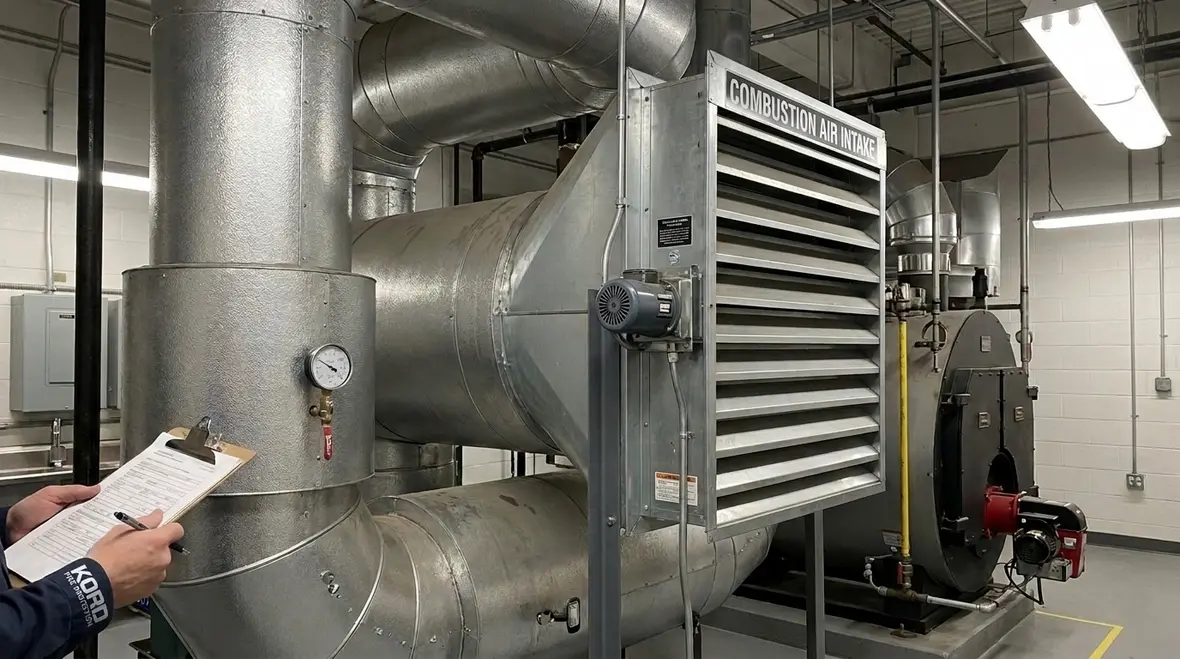
NFPA 31 Section 5.7: Specially Engineered Combustion Air Installations
Quick Answer: NFPA 31 Section 5.7 addresses combustion air systems that require tailored design beyond standard prescriptive approaches. It focuses on how combustion air is engineered, maintained, and inspected to support safe oil burner operation, stable combustion, and compliant draft and venting conditions.
For a broader installation and maintenance perspective, see NFPA 31: A Practical Guide to Oil-Burning Equipment Installation. If you are planning a wider compliance review, Kord Fire’s fire protection services in Southern California can help fit that work into a practical site plan.
What does NFPA 31 Section 5.7 require for combustion air?
NFPA 31 Section 5.7 covers specially engineered combustion air installations when the facility conditions, equipment layout, or combustion requirements make “typical” air provisions insufficient. Facilities cannot treat combustion air as a one time project. They must provide engineered air supply pathways that support safe, reliable burner operation through start up, steady state, and shutdown, while resisting operational changes caused by building pressures, ventilation systems, or enclosure modifications.
In practice, NFPA 31 specially engineered combustion air installations become a compliance and safety issue when commercial and industrial sites add exhaust hoods, roof ventilation, makeup air systems, process ventilation, or tight envelope upgrades. The result can be pressure imbalance, poor mixing, oxygen starvation, or burner instability unless the combustion air design accounts for those realities and supports ongoing verification.
When does a site need “specially engineered” combustion air?
NFPA 31 identifies conditions that push the design from prescriptive combustion air provisions to an engineered solution. The goal stays consistent: supply adequate air and maintain predictable performance.
Common facility drivers in commercial, industrial, and retail buildings
- Tight building envelopes such as retrofit insulation, vestibules, sealed doors, and energy efficient upgrades that reduce natural infiltration.
- Mechanical ventilation and exhaust that can depressurize boiler or heater rooms, including restroom exhaust, kitchen hood systems, warehouse ventilation, and process exhaust.
- Negative or fluctuating pressures created by HVAC zoning, demand controlled ventilation, and stack effect during seasonal transitions.
- Enclosures and indirect air pathways where combustion air must be distributed through ducted systems, dedicated plenums, or engineered supply routes.
- Multiple appliances and shared rooms where burner sequencing changes air demand and affects local oxygen availability.
Why “it used to work” is not enough
Combustion air performance can degrade after tenant improvements, exhaust fan upgrades, damper modifications, or after construction dust and sealing materials change leakage pathways. Engineered systems must remain functional under the facility’s operating modes, not only during initial commissioning.
How engineered combustion air systems work in the field
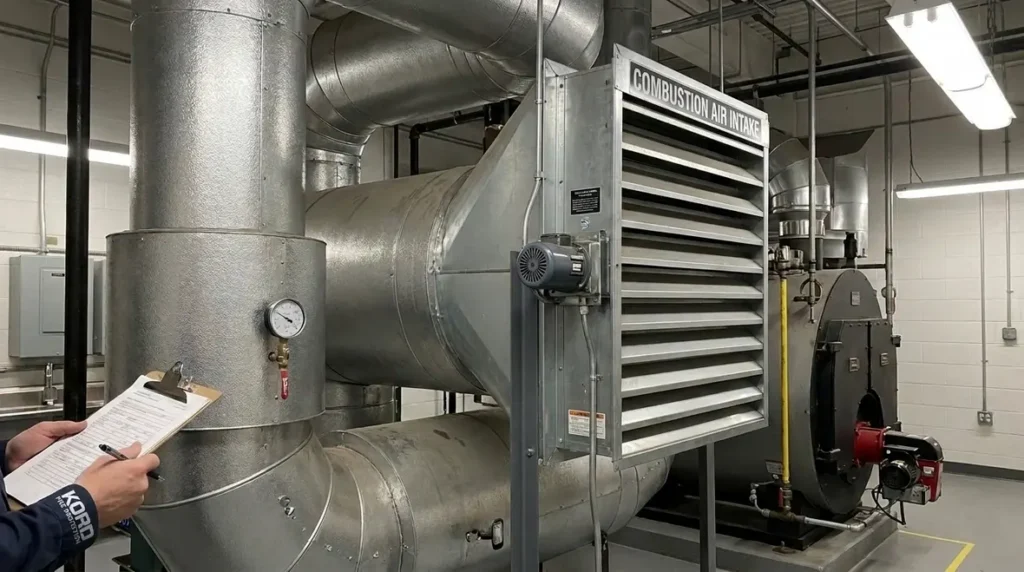
A compliant specially engineered system relies on air supply routing, control of building pressure interaction, and reliable delivery to the burner air inlet or the combustion air connection point. Although the exact approach varies by appliance type and installation configuration, successful systems share the same operational elements.
Core mechanism: stable air, predictable oxygen, and consistent draft interaction
- Adequate volume and distribution so the burner receives the required oxygen without overcarrying air that can dilute combustion.
- Controlled airflow paths that prevent combustion air starvation during exhaust system operation or door traffic.
- Coordination with venting and draft so changes in pressure do not drive backdrafting, improper draft, or unstable ignition.
- Protection from blockage through grilles, screens, duct design, and installation details that resist debris and construction intrusion.
Design intent that inspectors look for
During inspections, authorities having jurisdiction typically expect evidence that the combustion air system remains effective. That evidence often includes documented design basis, clear connection points, and assurance that the installation will not be easily defeated by routine operational changes. A practical indicator is whether burner combustion measurements remain stable across the facility’s typical ventilation scenarios.
Compliance challenges that commonly fail in maintenance and operations
Engineered combustion air systems fail for identifiable reasons. The failures do not always originate in the original design. They often appear after routine maintenance, cleaning, seasonal HVAC tuning, or tenant changes.
Most frequent failure points
- Blocked or partially blocked intakes caused by stored materials, landscaping debris, snow, or accumulated dust on grilles and screens.
- Incorrect damper behavior where dampers stick, are mispositioned during service, or lose calibration after repairs.
- Undocumented changes to HVAC where exhaust or makeup air setpoints shift without reassessing combustion air balance.
- Improper duct modifications including crushed duct sections, disconnected flexible connectors, or unapproved offsets that reduce airflow.
- Air inlet obstructions near burner rooms where housekeeping or construction places temporary partitions too close to air openings.
Operational testing that ties directly to safety outcomes
For commercial sites, the most defensible verification approach aligns combustion air performance to real operating states. That typically includes confirming stable burner ignition, checking combustion readings during worst case ventilation, and verifying that venting and draft behavior do not change into unsafe ranges when exhaust systems run.
For a practical installation overview of oil burning equipment and associated safeguards, see NFPA 31: a Practical Guide to Oil Burning Equipment Installation.
Inspection, documentation, and ongoing maintenance expectations
NFPA 31 compliance for specially engineered combustion air installations depends on continued performance, not just installation. The system must stay aligned with its intended airflow pathways and pressure interaction. That drives the need for disciplined inspection routines and clear documentation.
Inspection items that should be handled systematically
- Physical verification of all combustion air openings, ducts, grilles, and louvers for damage, blockage, and correct alignment.
- Operational verification that dampers and controls move as designed and return to correct positions.
- Combustion performance checks using appropriate test instruments to confirm safe combustion and avoid oxygen deficiency or unstable operation.
- Vent and draft coordination checks to ensure that combustion air supply changes do not create unsafe draft conditions.
- Evidence control such as service reports, combustion test results, and updated records after any modification.
Why documentation matters for audits and repeatable compliance
Facilities often change maintenance contractors, update HVAC schedules, or add new roof exhaust equipment. A complete record makes it possible to prove that the combustion air system was evaluated and remained effective after those changes. It also accelerates troubleshooting when a burner starts acting differently.
How Kord Fire Protection supports NFPA 31 compliance
Specially engineered combustion air systems require a service partner that treats the installation as part of a living building system. Kord Fire Protection helps commercial sites manage compliance through structured inspections, practical combustion verification, and maintenance support that anticipates common operational changes.
In day to day operations, Kord Fire Protection focuses on reducing risk by identifying blockage points, validating damper and duct integrity, correlating combustion results with ventilation operating modes, and maintaining documentation that supports ongoing audits. This approach helps facilities preserve safe burner performance while minimizing downtime triggered by combustion air related issues.
If you need support aligning your oil burning equipment installation with NFPA 31 expectations, Kord Fire Protection can guide the inspection and maintenance workflow to match how your facility actually operates.
Frequently Asked Questions
Conclusion and call to action
Do not treat NFPA 31 specially engineered combustion air installations as a one time compliance item. Validate performance under the facility’s real ventilation modes, inspect and document air pathways, and address blockage or damper issues before they drive combustion instability. Contact Kord Fire Protection to schedule an NFPA 31 focused assessment, supported testing, and an inspection plan that matches how your building operates today.

Join Our Newsletter!
Get the latest fire safety tips delivered straight to your inbox From our Newsletter.