
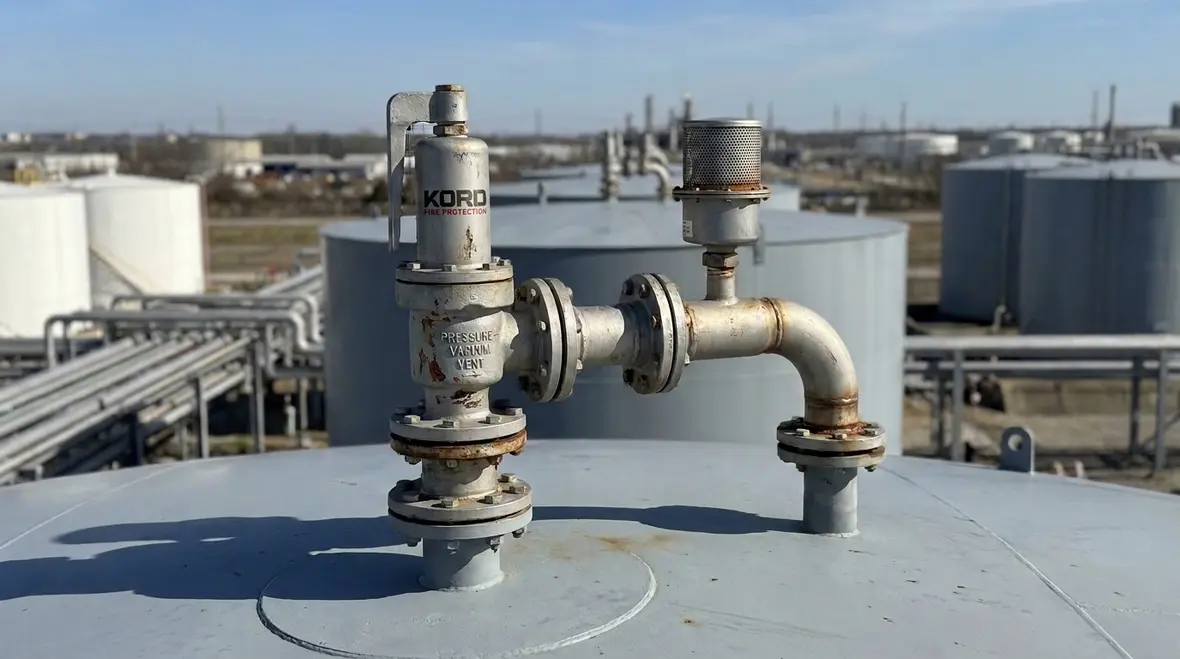
NFPA 30 Section 22.6: Vent Piping for Aboveground Tanks
Quick Answer
NFPA 30 Section 22.6 sets performance focused requirements for vent piping on aboveground tanks handling flammable liquids. It governs routing, sizing intent, fittings, flame control, and installation details that prevent pressure, vacuum, and fire transmission. Compliance requires documented inspections and maintenance.
For broader inspection readiness and maintenance support across life safety systems, Kord Fire Protection also provides fire sprinkler system service for commercial properties.
What does NFPA 30 Section 22.6 vent piping aboveground tanks require?
For facilities managing flammable liquids, NFPA 30 Section 22.6 vent piping aboveground tanks addresses how tank vents operate as a safety system. The goal is to manage vapour flow while limiting two major risks: tank pressure or vacuum that can deform tanks and loss of vapour control that can allow ignition to propagate through vent lines. Section 22.6 does not treat venting as a cosmetic piping detail. It treats vent piping as a critical barrier in the liquid storage fire protection strategy.
Compliance typically intersects with daily operations, commissioning practices, and ongoing maintenance. Commercial and industrial sites must also align venting with facility procedures for hot work, tank cleaning, line purging, and emergency response. Vent piping failures often show up first in inspection records as corrosion thinning, blocked vent outlets, damaged flame arresters, or improper discharge routing.
How tank venting protects aboveground tanks in real operations
1) Pressure and vacuum control
Aboveground tanks exchange vapours with the atmosphere through vent components. During filling, temperature rise, wind exposure, or pump changes, vapour pressure can increase. During cooling, product withdrawal, or barometric changes, tank pressure can drop. Vent piping and vent devices must relieve these conditions without creating unsafe structural loads.
Operational takeaway: maintenance programs must confirm that vent systems respond as intended. A vent line that is partially restricted can turn a normal relief condition into an overpressure or vacuum event. That risk escalates during peak fill seasons when facilities experience higher ambient temperatures and higher fill rates.
2) Fire transmission limitation through vent lines
The vent path can become a route for flame if an ignition source occurs near the vent termination or if vapours ignite in the discharge area. NFPA 30 Section 22.6 objectives drive design features that help prevent flame propagation into the tank vapour space. Common controls include flame arresting devices and installation practices that reduce vent fire scenarios.
Commercial site reality: the vent termination area is often exposed to debris, insects, construction dust, and snow or ice accumulation. These factors can alter airflow and can also interfere with vent discharge characteristics. That makes routine inspections and clean out tasks a practical necessity rather than an optional housekeeping item.
Installation and routing requirements that drive compliance outcomes
In practice, regulators and insurers look closely at how vent piping is installed because small deviations can change performance. NFPA 30 Section 22.6 vent piping aboveground tanks focuses on how vent lines are arranged, supported, and protected against damage and thermal effects. Key compliance themes typically include:
- Routing integrity: vent lines must avoid creating unsafe accumulation points and must maintain designed vapour flow characteristics.
- Proper termination location: discharge must be arranged so vapours do not enter building openings and so flame control functions as intended.
- Weather protection and corrosion control: vent piping must resist degradation that would lead to blockage or reduced capacity.
- Mechanical protection: supports and guard measures must prevent impact damage from vehicles, maintenance activities, or equipment movement.
Facilities often discover nonconformities during shutdown turnarounds. Examples include improvised modifications, replaced sections of vent piping using mismatched materials, or reworked discharge routing that was never documented. These gaps can lead to repeated inspections findings and expensive rework.
Flame control and vent device maintenance readiness
Vent systems typically rely on flame control devices, depending on tank design and risk assessment. Even when a flame arrester or similar component exists, compliance depends on condition and correct fitment. A compromised device can fail in two ways: it may not arrest flame, or it may create an unintended restriction.
Operational maintenance should include documented checks for:
- Correct seating and installation condition of flame control assemblies
- Signs of overheating, distortion, or impact damage
- Corrosion evidence around connections and mounting interfaces
- Evidence of soot, residue, or debris that could obstruct vapour passage
When maintenance teams treat vents as “set and forget” equipment, the system drifts away from design assumptions. That drift becomes visible during fire risk audits, insurance inspections, and compliance reviews.
Common failure points on aboveground vent piping
Experienced fire safety and asset integrity teams commonly see recurring issues. These are the failure points most likely to create inspection citations or operational risk:
- Corrosion and thinning: vent piping often faces condensation and vapour exposure, accelerating corrosion at bends, supports, and termination sections.
- Blockage: bird nesting, dust accumulation, paint overspray after minor works, and ice formation can restrict discharge.
- Incorrect component replacements: mismatched flame arrester ratings, incorrect gaskets, or substitute fittings can change venting performance.
- Improper support and vibration: loose supports can crack pipe joints or fatigue hangers, especially on large tanks with thermal cycling.
- Uncontrolled modifications: bolt on accessories, rerouting, and temporary covers that are not part of the approved design.
- Damaged termination arrangements: termination caps, screens, or protective covers that are installed incorrectly or removed during maintenance.
Practical lesson for commercial and retail facilities: if site works include roof penetrations, HVAC tie ins, or external scaffolding, vent terminations should remain in the work control plan. Many problems start as benign maintenance activities that accidentally alter vent discharge behavior.
Inspection, testing, and documentation for ongoing compliance
NFPA 30 Section 22.6 compliance does not end at installation. Commercial owners must maintain venting systems so they continue to meet intent. A strong program typically includes visual inspections, functional checks where applicable, and component verification supported by records.
What inspection teams should look for
- Vent line condition: corrosion, pitting, coating breakdown, and joint integrity
- Flame control devices: presence, physical condition, and evidence of obstruction
- Support system: secure hangers, clamps, and correct alignment
- Discharge area: cleanliness, clearance from openings, and absence of temporary coverings
- Vent continuity: no kinks, deformed sections, or unauthorized reducers
Documentation that stands up to audits
Facilities benefit from maintaining a compliance file that includes drawings, as built changes, device specifications, and inspection reports. When teams can show traceability from approved vent design through maintenance history, compliance discussions become faster and more defensible.
Kord Fire Protection supports commercial clients with inspection readiness and maintenance coordination so vent piping systems remain aligned with NFPA 30 objectives and facility fire risk requirements. This includes review of venting arrangements, component condition assessments, and actionable recommendations that reduce the chance of repeat findings.
For broader context on how NFPA 30 regulates flammable liquid systems, see how NFPA 30 regulates flammable liquids.
How to plan upgrades and avoid common compliance surprises
Upgrades and repairs involving vent piping require careful planning because they can affect both relief performance and flame control effectiveness. Facilities often schedule these works during shutdown windows, but procurement lead times can tempt teams to use interim parts. That is where compliance risk grows.
A practical upgrade approach includes:
- Confirming the vent design basis and any flame control device requirements
- Verifying replacement materials match the approved specification
- Ensuring installation and torque practices preserve joint integrity
- Updating drawings to reflect any change, with a clear revision trail
- Scheduling post work verification before returning to normal operations
For multi site commercial operators, aligning contractors to a single installation and documentation standard reduces variance. Kord Fire Protection can help commercial facility teams standardize expectations and close gaps that typically appear after subcontractor work.
Frequently Asked Questions
Conclusion and call to action
Vent piping on aboveground tanks functions as a life safety and fire mitigation system, not a minor infrastructure detail. NFPA 30 Section 22.6 vent piping aboveground tanks requirements demand correct installation, protection against blockage and corrosion, and disciplined maintenance with strong documentation. Kord Fire Protection can support your facility with inspection readiness, technical review, and ongoing maintenance planning. Contact Kord Fire Protection to schedule a venting compliance assessment before the next audit or shutdown window.

Join Our Newsletter!
Get the latest fire safety tips delivered straight to your inbox From our Newsletter.



