Fire Extinguisher Classes A B C D K Guide
Fire Extinguisher Classes Explained: A B C D K With a 1 Minute Chart
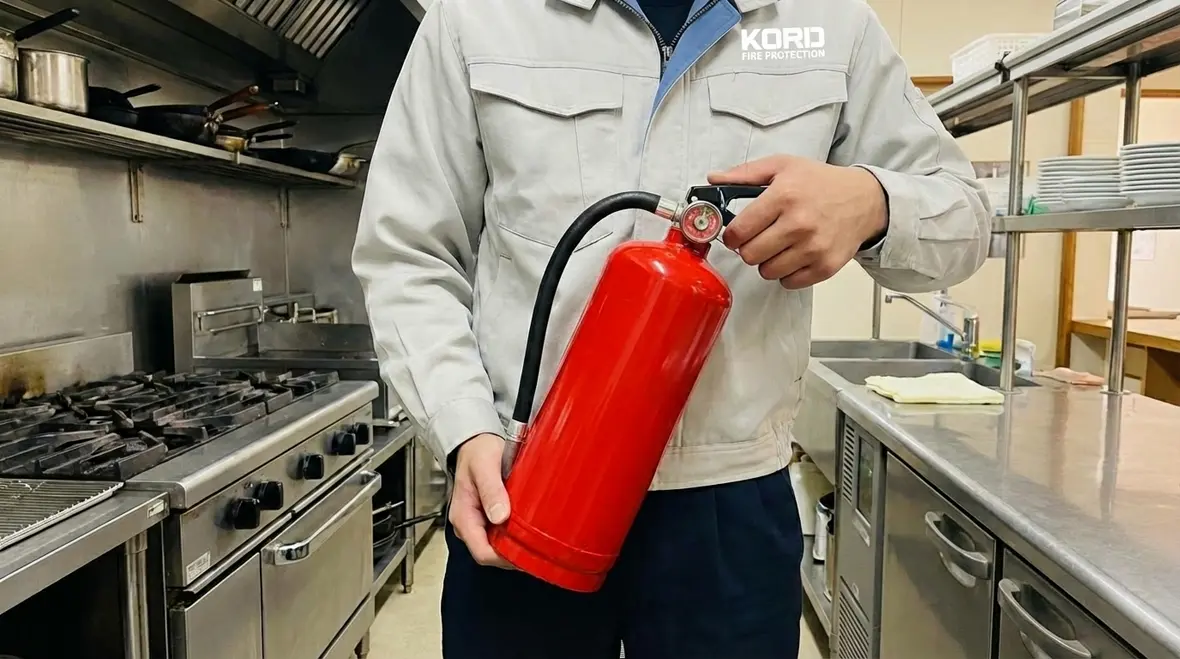
In the quiet moment before action, someone often asks, what is a fire extinguisher class? It sounds simple. Yet the answer can mean the difference between control and chaos. A fire extinguisher class tells a person what type of fire that extinguisher can safely put out. Not all fires behave the same, and not all extinguishers fight them the same way. Some tame burning paper. Others confront raging grease. A few handle metal that burns hotter than a summer blockbuster explosion scene.
Kord Fire Protection technicians often explain it this way. Choosing the wrong extinguisher is like bringing a water balloon to a fireworks show. It looks hopeful. It ends badly. Therefore, understanding these classes matters. What follows is a clear, steady guide to each one, along with a simple chart that makes sense in under a minute.
The Purpose Behind Fire Extinguisher Classes
Fire does not play fair. It feeds on whatever fuel it finds. Because of that, safety experts created categories to define fire types and match them with the right suppression method. So when someone asks, what is a fire extinguisher class, the deeper answer is this. It is a standardized system that identifies fuel sources and the correct agent to stop combustion safely.
For example, water works well on paper and wood. However, it turns a grease fire into a dramatic kitchen disaster. Likewise, using the wrong chemical on electrical equipment can create shock hazards. Therefore, the classification system protects both property and people.
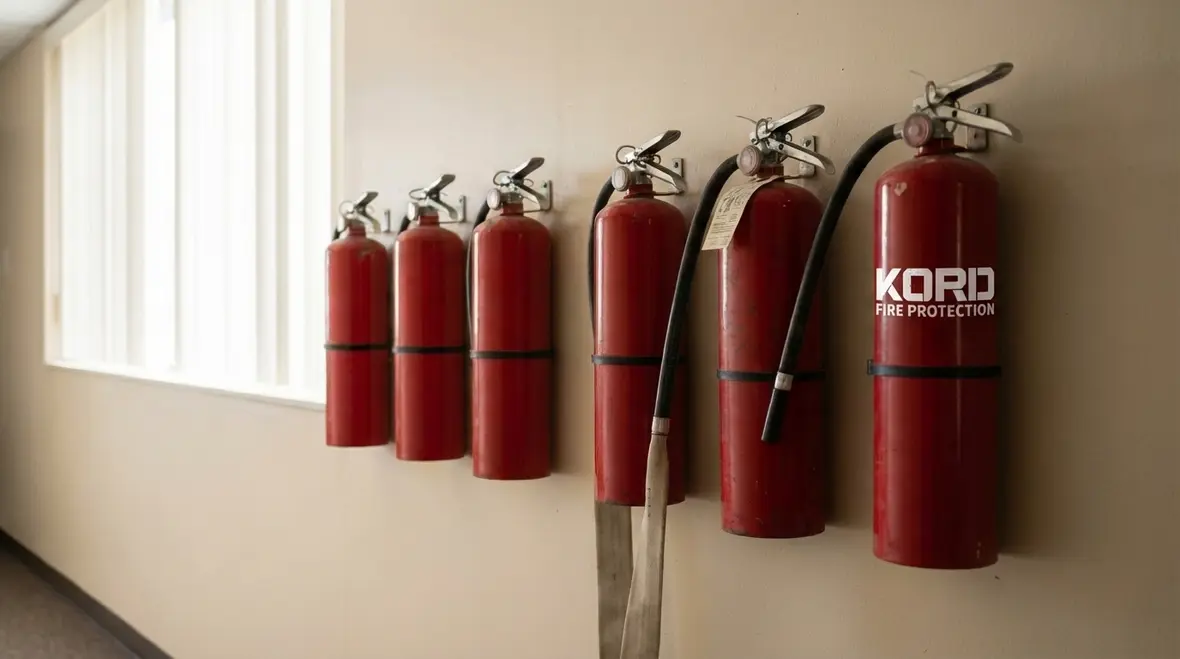
Kord Fire Protection technicians regularly remind business owners that the label on the extinguisher is not decoration. It is instruction. Moreover, it is backed by testing, national codes, and decades of fire science. In other words, those letters A B C D K carry more weight than they seem to.
Class A Fires and Everyday Materials
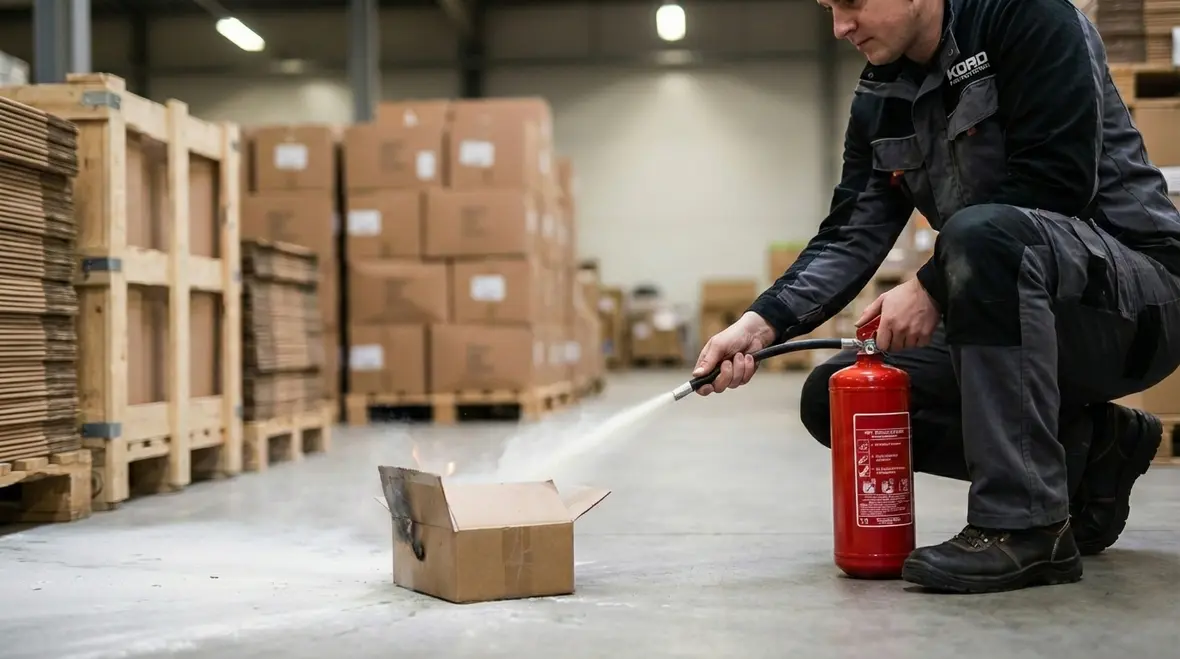
Class A fires involve ordinary combustibles. Think wood, paper, cloth, trash, and many plastics. In short, these are the materials found in homes, offices, and classrooms. If a wastebasket catches fire or a stack of cardboard boxes ignites, that is a Class A event.
Extinguishers rated for Class A typically use water or a dry chemical agent. Water cools the material below its ignition point. Dry chemicals interrupt the chemical reaction. Both approaches remove heat or break the fire triangle.
Because these materials are common, Class A extinguishers appear in many buildings. However, Kord Fire Protection technicians often stress proper placement. For instance, a warehouse with heavy storage needs units spaced correctly. Otherwise, employees might travel too far during an emergency. And let us be honest. No one wants cardio during a crisis.
Additionally, training matters. Even though Class A fires seem simple, a person must aim at the base of the flames and sweep side to side. The PASS method remains the gold standard. Pull the pin. Aim low. Squeeze the handle. Sweep. Calm, controlled action beats panic every time.
Class B and C Fires in Commercial Settings
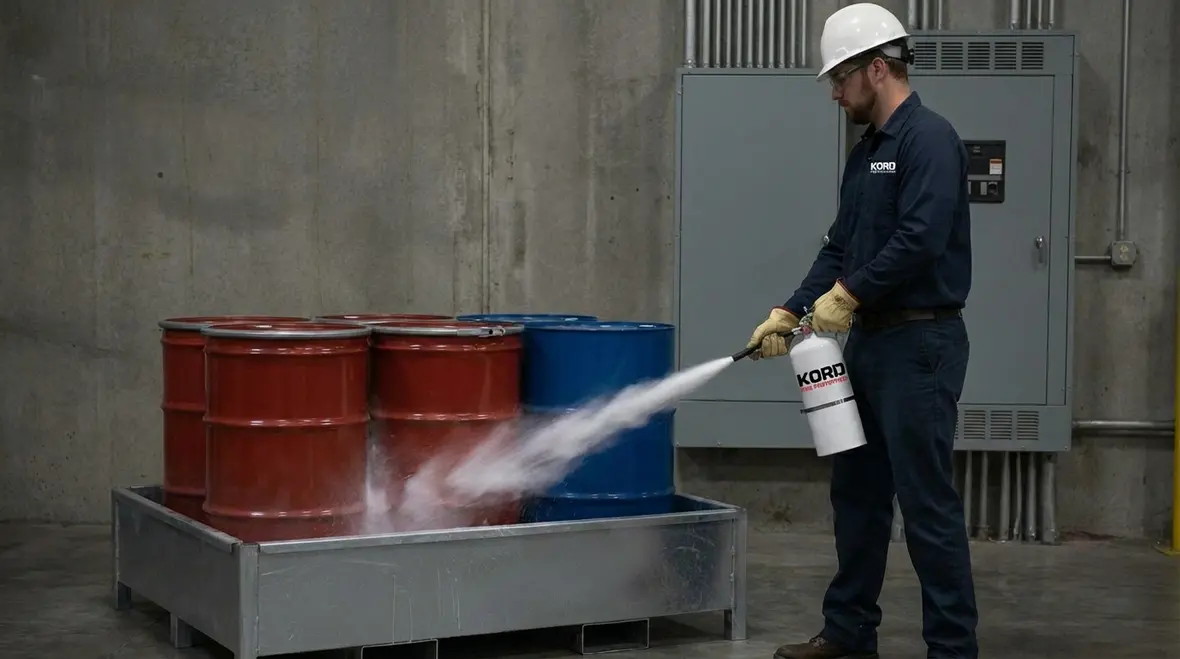
Class B fires involve flammable liquids and gases. This includes gasoline, oil, paint, propane, and solvents. These fires burn fast and spread quickly because vapors ignite with ease. Therefore, they demand a different response.
Water should never be used on a Class B fire. Instead, foam, carbon dioxide, or dry chemical agents work best. These extinguishers smother flames by cutting off oxygen or interrupting the chemical reaction. Consequently, they prevent re ignition when used correctly.
Class C fires, on the other hand, involve energized electrical equipment. Think breaker panels, servers, wiring, and machinery. Here is where caution takes center stage. Using water on live electricity can cause severe shock. So Class C extinguishers rely on non conductive agents like carbon dioxide or dry chemicals.
Interestingly, once the electrical source is de energized, the fire often reverts to another class, usually A or B. Kord Fire Protection technicians frequently explain this nuance during inspections. They emphasize that understanding the fuel source at each stage changes the response strategy.
In offices and retail spaces, multipurpose ABC extinguishers are common. They handle ordinary combustibles, flammable liquids, and electrical equipment. Therefore, they offer flexible protection. Still, technicians caution against assuming one size fits all in every environment. Specialized risks require specialized tools.
Class D and K Fires in Specialized Environments
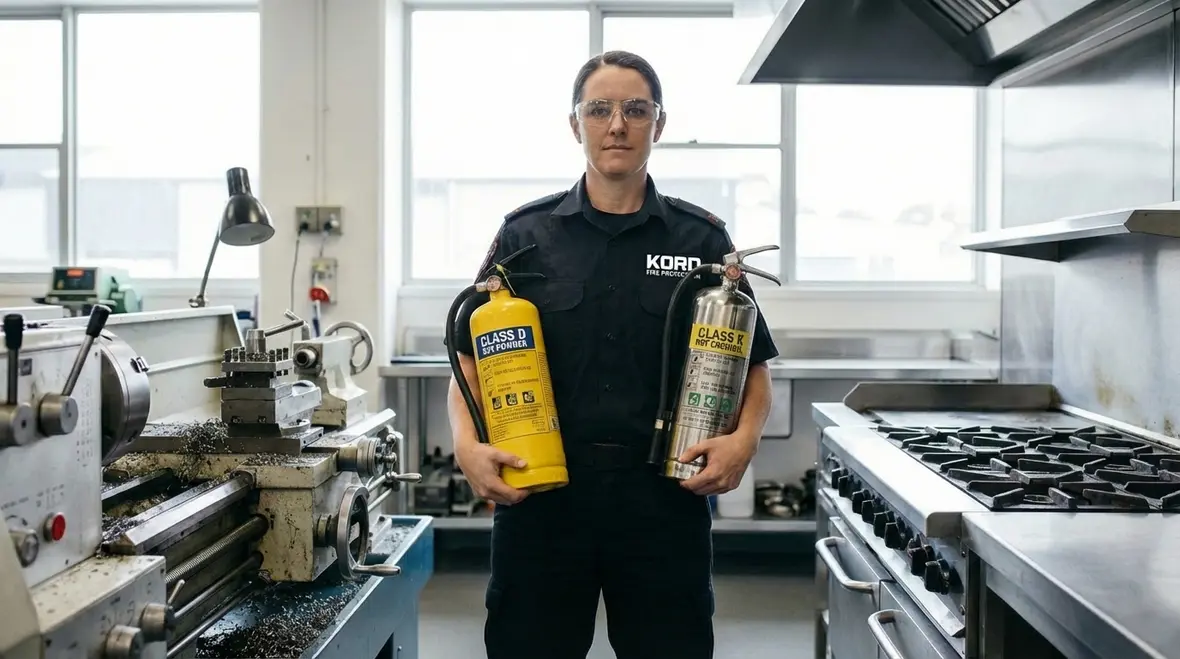
Now the conversation turns serious. Class D fires involve combustible metals such as magnesium, titanium, sodium, and potassium. These materials burn at extremely high temperatures. Moreover, they can react violently with water.
Because of this, Class D extinguishers contain specific dry powders designed to absorb heat and smother the fire without causing a reaction. These units appear in laboratories, metal fabrication shops, and certain manufacturing facilities.
Kord Fire Protection technicians often pause when discussing Class D. They remind facility managers that these fires require precise extinguishing agents matched to the exact metal involved. Using the wrong agent can intensify the blaze. In other words, guessing is not a strategy.
Then there is Class K. If Class D belongs in industrial settings, Class K lives in commercial kitchens. These fires involve cooking oils and fats. High temperature grease fires burn fiercely and can reignite if not handled properly.
Class K extinguishers use a wet chemical agent that reacts with hot oils to create a soapy foam layer. This process, known as saponification, seals the surface and cools the fuel. As a result, it prevents flare ups. Anyone who has seen a pan fire leap toward the ceiling understands why this matters.
Restaurants rely heavily on proper Class K placement. In fact, many jurisdictions require them near deep fryers and cooking lines. Kord Fire Protection technicians ensure these units are accessible and compliant. Because when dinner service heats up, no one wants the special of the day to be unintended fireworks.
Fire Extinguisher Classes Explained With a 1 Minute Chart
For those who prefer a quick visual guide, the chart below delivers clarity at a glance. It pairs each class with its fuel source and common locations. In less than a minute, the essentials become clear.
| Fire Class and Fuel Source | Common Locations and Typical Agent |
| Class A Wood, paper, cloth, trash, plastics |
Offices, schools, homes Water or dry chemical |
| Class B Flammable liquids and gases |
Gas stations, workshops, storage rooms Foam, CO2, dry chemical |
| Class C Energized electrical equipment |
Server rooms, electrical panels, offices CO2, dry chemical |
| Class D Combustible metals |
Labs, metal plants, manufacturing Specialized dry powder |
| Class K Cooking oils and fats |
Commercial kitchens, restaurants Wet chemical |
Although the chart simplifies the system, the decision behind proper selection often requires professional evaluation. Therefore, businesses benefit from expert guidance rather than guesswork. For example, Kord’s overview of fire extinguisher requirements for Los Angeles businesses connects classes, codes, and placement into one practical framework.
How to Choose the Right Class for a Building
Selecting the correct extinguisher begins with a hazard assessment. First, identify the materials present. Next, evaluate processes that could introduce ignition sources. Finally, match extinguisher types to those risks.
For example, an office may need ABC extinguishers on each floor. Meanwhile, a machine shop with magnesium shavings requires Class D units in specific zones. Similarly, a restaurant must install Class K extinguishers near cooking equipment.
Kord Fire Protection technicians approach this step methodically. They walk the site, review operations, and check code requirements. Moreover, they verify travel distances and mounting heights. This ensures compliance and quick access during emergencies.
They also educate staff. Because even the best equipment fails if no one understands its use. Training sessions often include live demonstrations. Participants practice the PASS method. As a result, confidence replaces hesitation.
Importantly, extinguishers require regular inspection. Monthly visual checks and annual maintenance keep units ready. Pressure gauges must read correctly. Seals must remain intact. After all, an extinguisher should not surprise anyone at the worst possible moment. It should perform like a reliable co star who never forgets their lines.
If your facility needs a full system approach, Kord’s comprehensive fire protection and safety inspection services coordinate extinguishers with sprinklers, alarms, and suppression systems for a cohesive plan.
Common Missteps and How Professionals Prevent Them
Several mistakes appear again and again. One common error involves placing the wrong class in a high risk area. Another involves blocking access with storage or equipment. Additionally, expired inspections create compliance issues and real danger.
Some facilities rely solely on multipurpose units without considering specialized hazards. While ABC extinguishers handle many scenarios, they cannot address every risk. For instance, they are not suitable for combustible metal fires.
Kord Fire Protection technicians reduce these risks through detailed audits. They document each extinguisher’s type, rating, and condition. Furthermore, they check signage and visibility. In busy workplaces, clear identification saves seconds. And in fire response, seconds feel like chapters in a suspense novel.
They also remind clients that extinguishers serve as first response tools. If a fire grows beyond the incipient stage, evacuation becomes the priority. Safety always outranks property. That principle guides every recommendation.
FAQ About Fire Extinguisher Classes
Conclusion and Professional Guidance
Fire extinguisher classes bring order to a dangerous situation. They match fuel to agent with precision and purpose. From ordinary combustibles to high heat cooking oils, each class serves a defined role. Therefore, proper selection, placement, and maintenance matter deeply.
Kord Fire Protection technicians stand ready to assess facilities, train teams, and ensure compliance. When safety calls for clarity and calm expertise, their guidance turns confusion into confidence and preparation into protection. To align extinguishers with your broader life safety plan, explore Kord’s full range of fire extinguisher services or request a coordinated assessment with their fire protection team.
Know Your Weapon Before You Fight the Flame
Kord Fire Protection is your go-to when it comes to all things fire protection. For over 20 years, we’ve been serving Southern California with the quality service and equipment to keep your home or business safe at all times. Our competitive prices reflect our unwavering commitment to protecting what matters most in the event of a fire emergency. Give us a call, send an email, or use that form!

Join Our Newsletter!
Get the latest fire safety tips delivered straight to your inbox From our Newsletter.