Can a Door Slam Damage a Fire Sprinkler System? Location Rules Explained
Can a Door Slam Damage a Fire Sprinkler? Location Rules Explained
Every building that relies on fire sprinklers follows clear sprinkler head location requirements. These rules dictate how far a sprinkler must sit from walls, ceilings, doors, light fixtures, and storage. They are not random measurements pulled from a dusty codebook. They are precise guidelines designed to keep water flowing exactly where it needs to go when heat rises and danger grows. Yet one practical question keeps surfacing in offices, apartment hallways, and commercial buildings alike. Can a simple door slam damage a fire sprinkler? Kord Fire Protection technicians often hear this concern during inspections, and the answer is more nuanced than most expect.
Let us take a calm, steady walk through the facts.
The Physics Behind a Slamming Door and a Sprinkler Head
A door, when closed gently, behaves like a polite houseguest. However, when slammed, it becomes a small wrecking ball with hinges. The force travels through the door frame, into the wall studs, and sometimes into the ceiling structure above. In older buildings or in spaces with poor framing, that vibration can travel farther than one might assume.
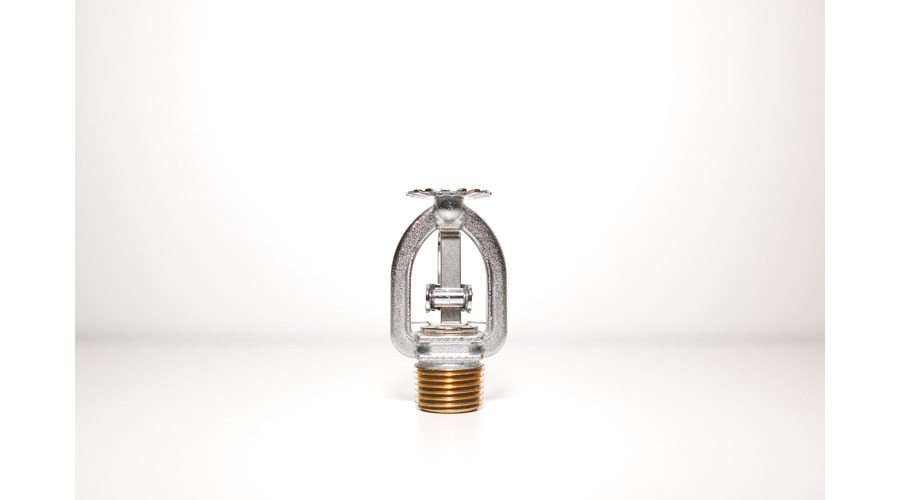
Now consider the sprinkler head. It contains a heat sensitive element, typically a glass bulb or fusible link. This component reacts to temperature, not impact. Therefore, a door slam will not usually trigger activation. Hollywood might suggest otherwise, but real life does not follow action movie logic.
However, vibration can cause problems over time. If a sprinkler sits too close to a door frame or within a tight ceiling pocket, repeated force may loosen fittings or strain pipe joints. Kord Fire Protection technicians explain that while one dramatic slam rarely causes failure, repeated stress in poorly planned layouts can lead to leaks or alignment issues. So while the sprinkler may not explode into a rainstorm at the first bang, the long term effects deserve attention.
When building movement becomes a sprinkler problem
Over years of use, doors do more than just open and close—they help flex the wall assembly. In structures with long corridors, stair towers, or lightweight framing, that constant motion can subtly transmit through the supports holding your sprinkler pipe. If those supports are too far apart, loose, or corroded, minor movement from door slams, HVAC vibration, or foot traffic can slowly fatigue joints and threaded connections.
How Sprinkler Head Location Requirements Protect Against Impact
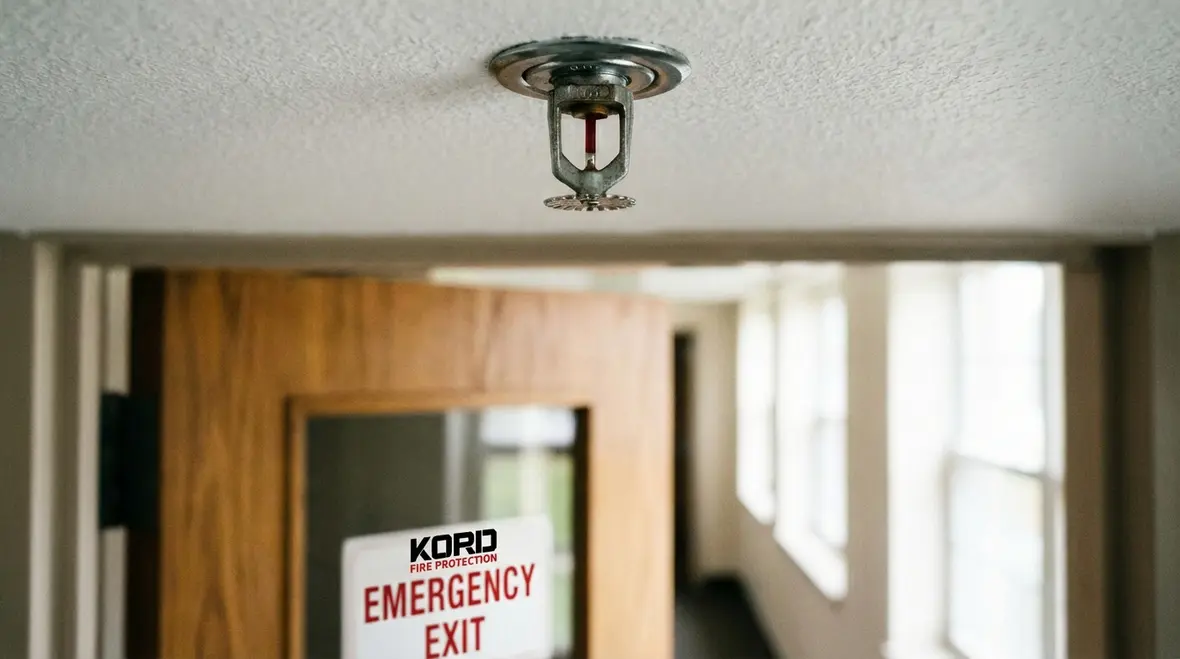
Sprinkler head location requirements exist to prevent interference from structural elements, airflow, and physical contact. These rules address spacing from walls, placement beneath ceilings, and clearance from obstructions such as beams or soffits. They also consider proximity to doors.
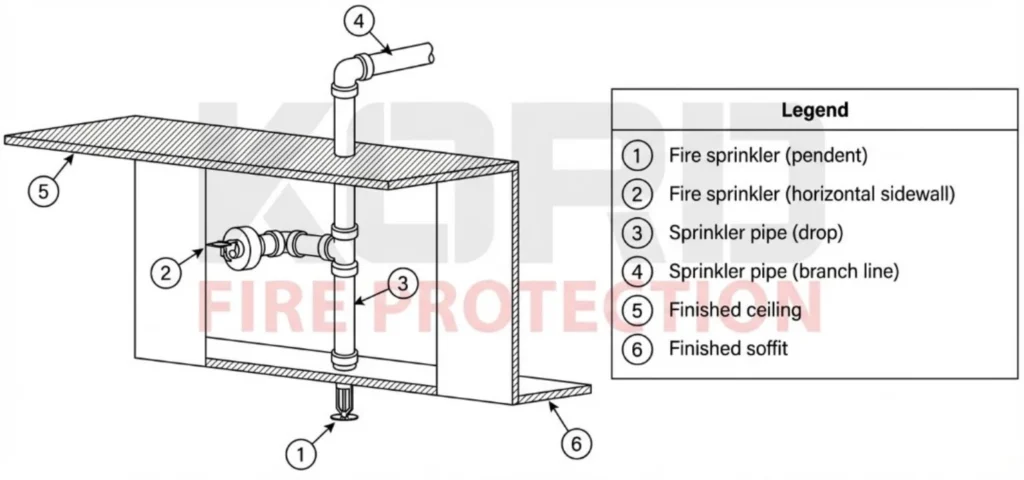
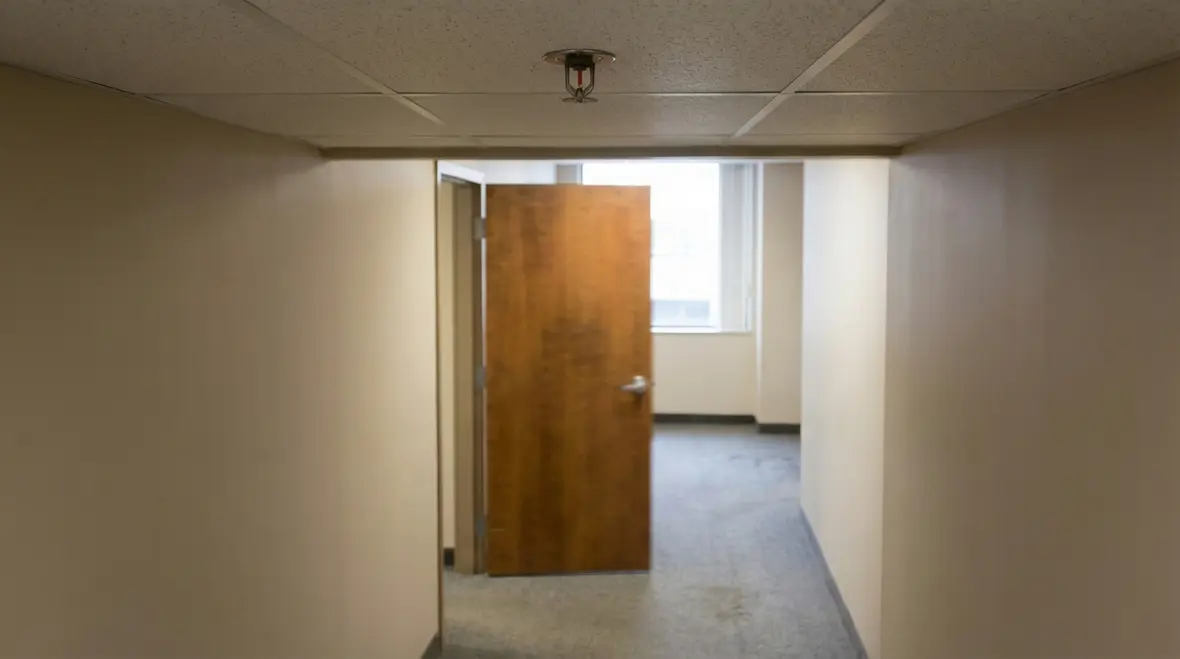
When installers follow these standards, they position sprinkler heads far enough from swinging doors to avoid direct contact. In addition, they avoid placing heads where door hardware or aggressive use could strike them. Because codes anticipate real world use, they assume people will occasionally slam doors, prop them open, or push carts through hallways like they are racing in a grocery store derby.
According to NFPA 13 for commercial systems and NFPA 13D for residential systems, proper spacing and clearance help ensure both activation performance and physical protection. Consequently, when systems meet code, the likelihood of door related damage drops dramatically.
Real-world examples of good and bad placement
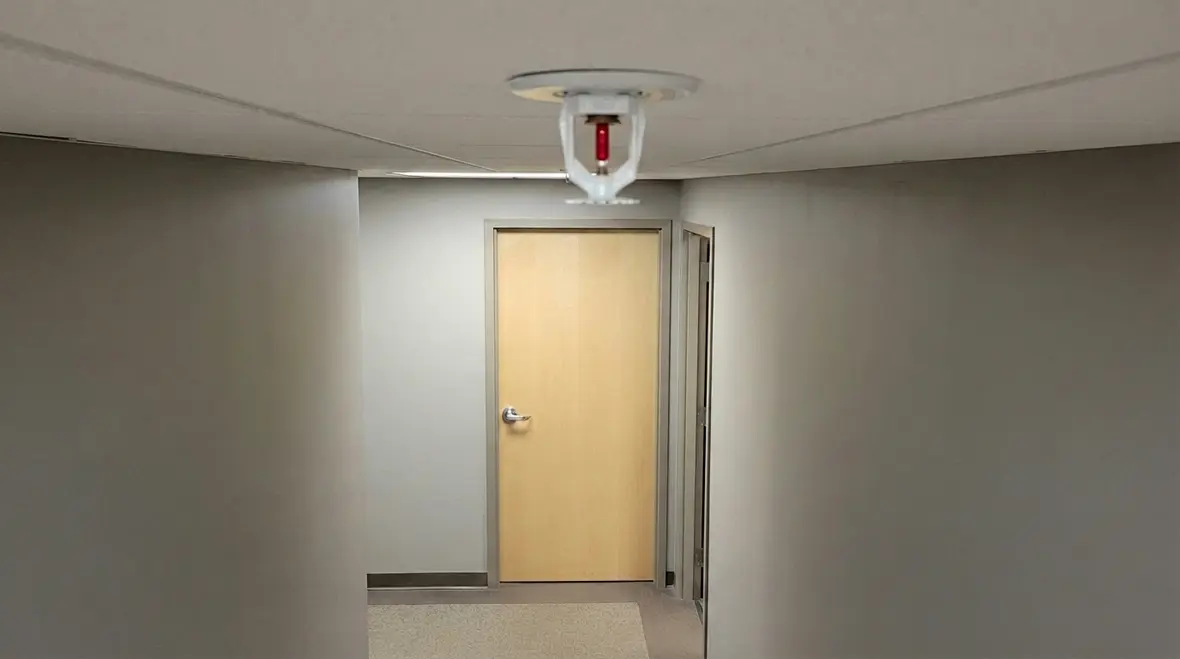
Walk any code-compliant office corridor, and you will usually see sprinklers aligned in the ceiling away from door frames and exit hardware. In contrast, problem layouts might tuck a recessed head directly above a door that swings extra high in a stairwell or mechanical room. Those marginal inches make the difference between safe clearance and constant impact risk every time someone shoulders that door open.
This is also why good design includes thoughtful coordination with other life safety elements. Fire doors, exit signs, lighting, and sprinklers all need to coexist without colliding—literally or figuratively.

What NFPA 13 and 13D Say About Placement
Although the codes are detailed, their intent remains straightforward. They define where sprinklers must sit in relation to ceilings, walls, and obstructions so water can distribute evenly across a fire area. They also address protection against physical damage in areas where mechanical injury is possible.
Below is a simplified comparison to clarify how commercial and residential standards approach layout.
NFPA 13 Commercial
- Applies to offices, warehouses, retail, and large buildings
- Requires specific distance from walls and ceiling slopes
- Addresses obstruction rules in detail
- Mandates protection where sprinklers face potential mechanical damage
- Often requires guards in high traffic or industrial areas
NFPA 13D Residential
- Applies to one and two family dwellings
- Focuses on life safety rather than property protection
- Provides flexibility in small rooms
- Recognizes lower ceiling heights and residential layouts
- Still requires avoidance of physical interference
While NFPA 13 tends to be more detailed due to complex building uses, both standards emphasize proper clearance. In other words, neither expects a sprinkler head to share personal space with a swinging door.
Can a Door Slam Damage a Fire Sprinkler?
Here is the direct answer. Yes, but rarely, and usually only under specific conditions.
If a door physically strikes a sprinkler head due to improper placement, impact can break the glass bulb or deform the frame. That would release water immediately. However, this scenario typically indicates that sprinkler head location requirements were not followed during installation.
More commonly, repeated vibration may loosen fittings over time, especially in older threaded systems. In addition, if ceiling tiles shift from constant shock, a recessed sprinkler escutcheon can pull away slightly. While that might not cause discharge, it can compromise alignment and coverage.
Kord Fire Protection technicians often reassure property managers that modern systems, when installed correctly, withstand normal building activity. After all, if a sprinkler system could not survive a slammed office door, it would struggle in a warehouse filled with forklifts. Codes account for everyday chaos.
When to take a door-related concern seriously
If you notice a door that consistently rattles the ceiling grid, has to be “shoulder checked” to close, or clearly grazes a sprinkler or escutcheon, that is no longer a theoretical concern. That is a service call waiting to happen. A qualified fire protection contractor can evaluate whether the sprinkler needs to be relocated, the door hardware adjusted, or both.
How Close Can a Sprinkler Be to a Door?
The short answer is that sprinklers must maintain proper clearance from walls and obstructions to ensure full spray patterns. Although NFPA 13 does not assign a special category labeled door slam zone, it does require spacing that prevents obstruction and physical interference.
Generally, standard spray sprinklers must sit a minimum distance from walls, often four inches from the ceiling for pendent heads and specific measurements from sidewalls depending on the type. Moreover, installers must ensure that door swings do not obstruct discharge patterns.
Therefore, during design, professionals evaluate door arcs. If a door swings upward near the ceiling in tight mechanical rooms or stairwells, designers adjust head placement. This proactive approach eliminates conflict before drywall ever goes up.
Here at Kord, we frequently review these arcs during inspections. They look for clearance issues, ceiling shifts, or signs of mechanical stress. Because prevention costs far less than water damage, these reviews matter.
A quick note on other clearance troublemakers
Doors are just one member of the obstruction family. Ceiling fans, light fixtures, high shelving, signage, and decorative elements can all interfere with sprinkler spray patterns if placed too close. The same mindset that keeps heads away from aggressive door swings should also keep them clear of anything else that blocks water from reaching the floor.
Mechanical Damage and When Guards Are Required
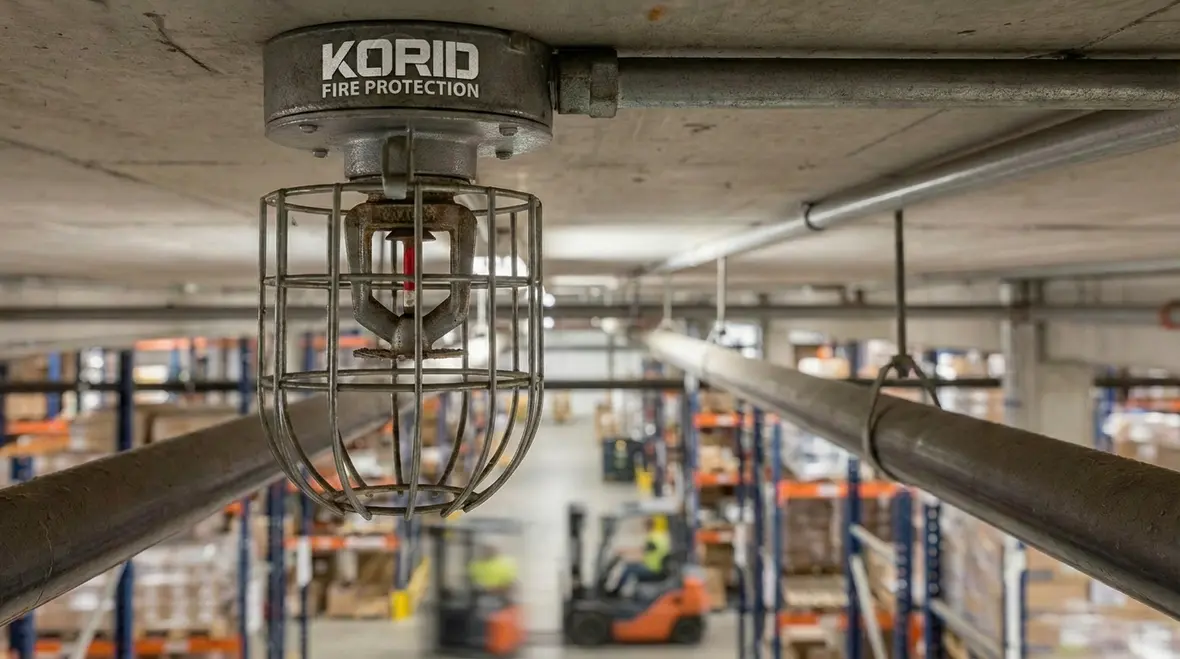
In commercial environments, NFPA 13 requires protection where sprinklers face mechanical injury. That might include gymnasiums, loading docks, or industrial spaces. While an office corridor may not seem hazardous, high traffic areas sometimes justify protective cages.
However, guards are not a universal fix. They protect against direct impact but do not compensate for poor sprinkler head location requirements. If a head sits too close to a door frame, a guard may still allow vibration transfer into the pipe.
Consequently, good design always comes first. Guards serve as backup, not as permission to ignore placement rules. Think of them like a helmet. Helpful, yes. A substitute for common sense, no.
Where guards shine (and where they don’t)
Protective cages make excellent sense in spaces where balls fly, forklifts operate, or tall inventory constantly moves near the ceiling. They are less helpful in a quiet office where the true issue is that a sprinkler was installed directly in the path of a misaligned door closer. In that scenario, relocation beats armor every time.
Long Term Effects of Repeated Vibration
Buildings move. They expand, contract, and occasionally shudder when someone decides that closing a door quietly is optional. Over time, repeated vibration can stress threaded joints or hangers if installation lacked proper support.
Additionally, older systems using rigid pipe without flexible drops may transmit force more directly to fittings. Modern designs often include flexible connections that absorb minor movement. As a result, newer installations typically resist vibration better than decades old systems.
Kord Fire Protection technicians often check for signs such as:
- Slight water staining near fittings
- Loose escutcheon plates
- Pipe movement near hangers
- Ceiling tile cracking around heads
Although none of these signs automatically indicate failure, they signal a need for evaluation. Addressing them early prevents larger issues later.
Residential Settings and Everyday Realities
Under NFPA 13D, residential systems prioritize life safety. Sprinklers activate quickly to control fire growth, giving occupants time to escape. Because homes and apartments have different traffic patterns than warehouses, physical damage risks differ as well.
For example, a bedroom door rarely slams with industrial force unless a teenager just discovered that Wi Fi privileges were revoked. Even then, proper placement keeps the sprinkler out of direct reach. Installers position heads to avoid ceiling fans, light fixtures, and door swings.
Moreover, residential ceilings are often lower, which makes accurate placement even more important. A misaligned head could interfere with spray coverage. Therefore, sprinkler head location requirements in homes balance safety, aesthetics, and function.
How this ties into other home fire protection habits
Sprinkler layout is one piece of a larger home safety puzzle. Keeping fire extinguishers current and not expired, maintaining smoke alarms, and keeping exit paths clear all support the same goal: buy time, control fire growth, and give everyone a safe way out.
Inspection and Maintenance Best Practices
Even with perfect installation, regular inspection ensures long term performance. NFPA standards require periodic visual inspections to confirm that sprinklers remain unobstructed and undamaged.
Kord Fire Protection technicians recommend that property owners:
- Check that doors do not strike sprinkler components
- Verify ceiling tiles remain secure around heads
- Report leaks or corrosion immediately
- Avoid hanging decorations from sprinkler frames
That last point deserves emphasis. Sprinklers are not coat hooks, holiday ornament supports, or creative art installations. They are precision safety devices. Treat them with respect, and they will return the favor.
Pairing sprinkler checks with extinguisher maintenance
Many building owners find it efficient to review sprinkler clearances at the same time they walk the property to check extinguisher tags, pressure, and dates. If you are already confirming that extinguishers are in service and not expired, it is a natural moment to look up and verify that sprinklers are unobstructed and free from door conflicts.
Design Matters More Than Drama
In truth, the image of a sprinkler erupting because someone slammed a door makes for entertaining television. Yet reality operates on engineering, not theatrics. When professionals follow sprinkler head location requirements and adhere to NFPA 13 or 13D, systems handle normal building use with ease.
Therefore, if a door sits close enough to strike a sprinkler, the issue likely traces back to layout oversight. Fortunately, trained technicians can correct such problems by relocating heads, adding protection, or adjusting door hardware.
As Kord Fire Protection technicians often say, fire protection succeeds quietly. When it works correctly, no one notices. And that, quite frankly, is the goal.
Common Questions:
Doors will slam. Buildings will move. Life will continue in all its noisy glory. Yet properly installed sprinklers, placed according to code and inspected by professionals like Kord Fire Protection technicians, remain steady guardians overhead. If concerns arise about placement or possible vibration damage, now is the time to act. Schedule a professional inspection, confirm compliance, and ensure every sprinkler stands ready. Because when safety is quiet and reliable, everyone sleeps better.
Quiet Sprinklers, Loud Peace of Mind
Need help with sprinkler inspections, relocation, or code compliance? Reach out to Kord Fire Protection through their service pages to schedule a visit and keep your system aligned with NFPA standards and local requirements.

Join Our Newsletter!
Get the latest fire safety tips delivered straight to your inbox From our Newsletter.