
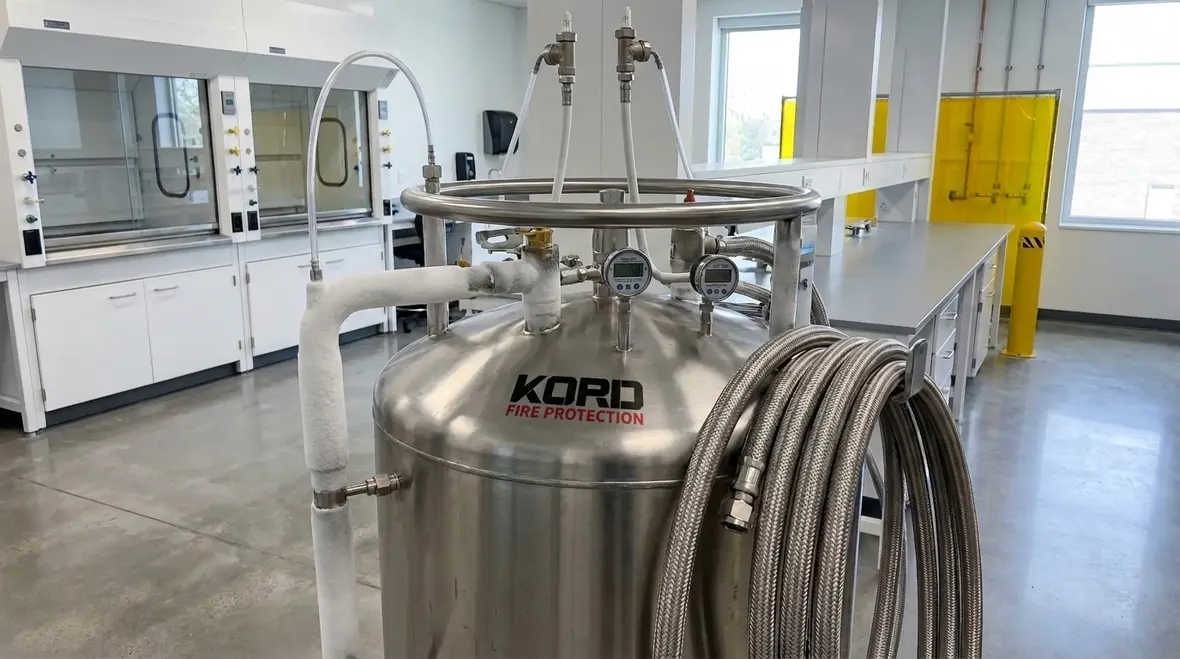
NFPA 45 Section 10.4: Cryogenic Fluid Requirements for Laboratories
Quick Answer: NFPA 45 Section 10.4 sets detailed expectations for handling, storing, and protecting cryogenic fluids in laboratory and similar settings. These requirements focus on container integrity, venting and relief design, hazard controls, and inspection and maintenance to prevent oxygen enrichment, overpressure, and exposure risks.
For a broader view of how inspection programs stay organized in the real world, see the full lifecycle of fire protection servicing.
Why NFPA 45 laboratory cryogenic fluid requirements matter in real facilities
Commercial laboratories and R and D environments manage more than chemicals. They also manage stored gases, refrigerated liquids, and transfer lines that can rapidly create severe hazards when containment, ventilation, or relief protection fails. NFPA 45 laboratory cryogenic fluid requirements are written to reduce three recurring risk patterns: oxygen displacement or enrichment, overpressure from blocked or improperly designed vent paths, and unsafe exposure from rapid vaporization.
In practice, facilities frequently struggle with maintaining the exact configuration assumed by the original cryogenic vendor drawings and relief calculations. Changes in pipe routing, flexible hose reuse, retrofit regulators, and aging insulation systems can all create noncompliant conditions over time. Kord Fire Protection supports ongoing compliance with inspections, documentation support, and maintenance coordination designed for commercial service realities.
What Section 10.4 covers: the operational compliance scope
NFPA 45 Section 10.4 establishes requirements for cryogenic fluids used in laboratory operations. While the exact subsections and text depend on the edition adopted by the authority having jurisdiction, compliance programs built around Section 10.4 typically address the following functional areas:
- Container and system integrity: cryogenic vessels, portable containers, and connected components designed for low temperature service.
- Pressure protection and venting: safe management of relief discharge and avoidance of blocked vents or discharge into occupied areas.
- Transfer and handling controls: safe procedures for filling, transferring, and connecting equipment to reduce spill and exposure risks.
- Protection against environmental and mechanical damage: securing lines and containers, protecting insulation and tubing, and addressing damage from equipment traffic.
- Inspection and maintenance: periodic checks of valves, gauges, relief devices, supports, and condition of piping and insulation.
Compliance becomes a lifecycle activity rather than a one time install. That is why many organizations pair Section 10.4 controls with their broader fire and life safety management program, including management of impairments and documented maintenance schedules.
Key engineering and inspection themes that drive compliance
1) Pressure relief and vent discharge positioning
Cryogenic systems depend on reliable pressure relief. The failure mode most often encountered in operations is not a total system rupture. It is an overpressure event created by a relief path that does not operate as intended due to blockage, misrouting, or discharge that creates secondary hazards.
Commercial facilities typically need to verify:
- Relief discharge locations prevent impingement on personnel, walkways, or ignition sources (where applicable).
- Discharge routing remains clear after maintenance activities, renovations, or changes to nearby equipment.
- Vent terminations are protected from intrusion by materials, stored items, or temporary barriers.
Kord Fire Protection helps facility teams maintain a traceable inspection record that supports the operational intent of Section 10.4 and supports defensible decision making during audits.
2) Oxygen enrichment and deficient ventilation risks
When cryogenic fluids release, the local environment can shift quickly. Liquid gases displace or alter oxygen concentration, and certain releases can create oxygen enrichment depending on the material. The compliance challenge is that a room can pass general ventilation checks while still failing for release scenarios or localized low point accumulation.
Practical controls commonly include:
- Mapping potential release points and evaluating accumulation areas such as pits, basements, and low lying areas.
- Ensuring ventilation stays operational and that alarms, if present, remain functional.
- Maintaining access controls that limit exposure during transfers and vessel maintenance.
3) Transfer equipment condition, supports, and damage control
Transfer lines and flexible hoses experience wear from repeated coupling, temperature cycling, and mechanical strain. Insulation breakdown can conceal damage to tubing and fittings, while corrosion or embrittlement can develop in low temperature service components.
Facility inspection should verify:
- Hoses, couplings, and connectors show no cracking, brittleness, or degraded seals.
- Supports and restraints maintain proper alignment and avoid strain at fittings.
- Insulation is intact where needed to prevent condensation-driven corrosion or uncontrolled heat transfer.
These checks often fail when change control is weak. A replacement hose may differ from the original in length, pressure rating, or end fitting type, which can introduce a new hazard without immediate detection.
Common failure points during commercial inspections
Even competent labs can encounter recurring issues tied to operational drift. These are the top problem areas that typically create compliance findings related to cryogenic systems under NFPA 45 Section 10.4.
- Uncontrolled modifications: Line reroutes or relocation of discharge outlets without updating the hazard analysis or the relief discharge plan.
- Blocked or restricted vent paths: Storage items, ice formation, or temporary caps left in place after service.
- Inadequate documentation: Missing relief device maintenance records, lack of as built drawings, or unclear ownership of vendor service intervals.
- Deferred maintenance of insulation: Small insulation failures that later expose tubing and increase the likelihood of uncontrolled release.
- Weak impairment controls: Repairs performed without ensuring the system returns to a safe configuration before return to service.
For commercial and retail environments that host laboratory activities, the inspection challenge grows because multiple service providers may work on the same cryogenic infrastructure. Kord Fire Protection works with operations and facilities teams to align service activities with ongoing compliance, using documented inspection and maintenance support.
How to build an NFPA 45 compliance program around Section 10.4
Facilities achieve durable compliance when they treat cryogenic safety as an integrated asset management process. A strong program typically includes the following elements.
Document the system as installed
Maintain current as built drawings for cryogenic vessels, piping, relief and vent pathways, regulators, and transfer components. Include discharge locations and identification of any barriers or protective guards. Update records after any modification, even if the change appears minor.
Define inspection intervals tied to the hazard
Create an inspection schedule that includes visual checks, functional verification, and condition checks for insulation and supports. Ensure relief devices and associated components are serviced per manufacturer requirements and the facility’s risk based schedule.
Lock down change control and maintenance return to service
Require a formal return to service step after maintenance. This step should confirm vent paths are clear, supports and restraints are restored, and connectors and seals are verified before the system resumes normal operations.
Coordinate with fire protection and life safety service responsibilities
Cryogenic hazards intersect with life safety management because they can trigger emergency conditions, reduce occupant safety, and complicate incident response. For support, reference Kord Fire Protection resources and service approach through the internal link below:
Fire Protection Inspections and Maintenance
Frequently Asked Questions
Conclusion: take action now
NFPA 45 Section 10.4 compliance for cryogenic systems depends on more than initial installation. It requires documented venting strategy, maintained pressure protection, disciplined change control, and inspection routines that catch damage and drift early. Kord Fire Protection helps commercial facilities build defensible maintenance and inspection records and coordinate ongoing support for critical life safety components. Schedule a compliance review to verify your cryogenic system configuration and maintenance program against operational expectations.

Join Our Newsletter!
Get the latest fire safety tips delivered straight to your inbox From our Newsletter.



