
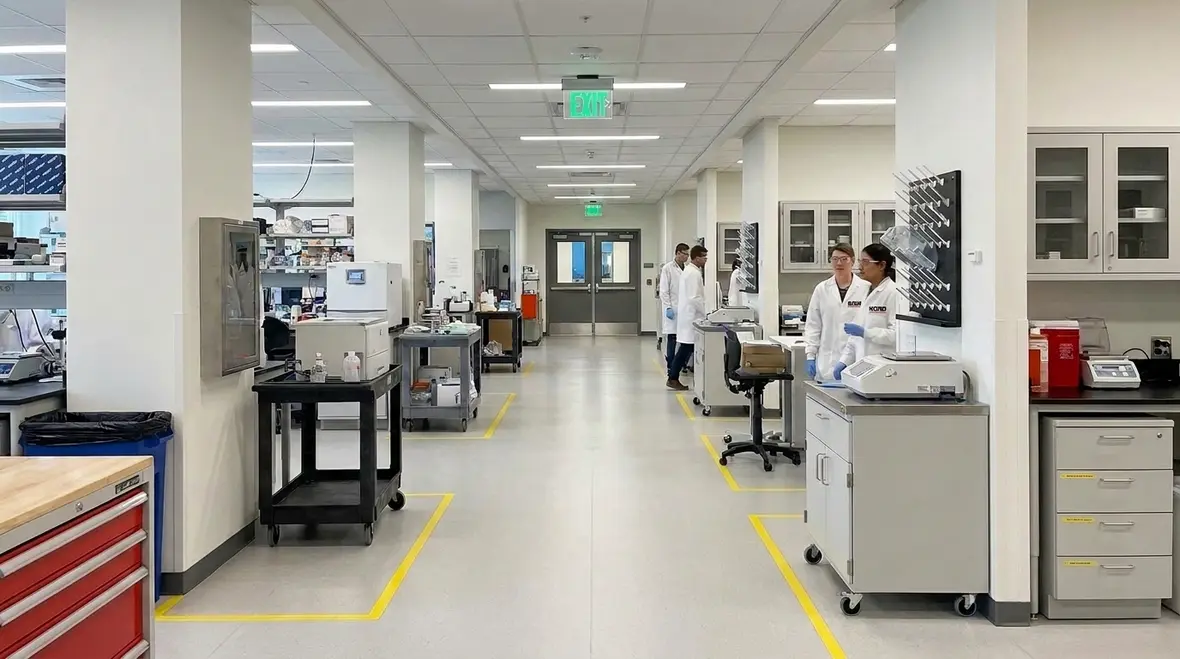
NFPA 45 Section 5.3: Keeping Means of Access to an Exit Clear
Quick Answer: NFPA 45 Section 5.3 requires maintaining a clear, unobstructed path to exits within laboratory and related areas. Facilities must control storage, equipment placement, and housekeeping so access routes remain usable at all times, including during normal operations and emergencies.
For broader inspection and compliance support, Kord Fire Protection offers fire protection services in Southern California that help facilities stay inspection-ready with practical scheduling, documentation support, and code-compliant service planning.
What NFPA 45 Section 5.3 actually requires
NFPA 45 Section 5.3 focuses on one practical outcome: the means of access to an exit must stay clear. For commercial sites running scientific, industrial, or research-like laboratory operations, this becomes a daily compliance discipline rather than a one-time inspection checklist item. The requirement supports safe egress by preventing blocked routes, restricted turning space, and delayed evacuation due to misplaced materials.
In practice, NFPA 45 laboratory access to exit requirements translate into consistent control over where personnel can walk and where items can be stored. That includes corridors, passageways, door access, and any connecting path that functionally serves as the approach to the exit discharge.
Where access clearance issues usually show up in real laboratories
NFPA 45 Section 5.3 problems frequently stem from normal workflow. Laboratory spaces typically involve staging equipment, temporary storage, and frequent movement of supplies. Without strong controls, these activities create recurring obstructions.
Common obstruction sources
- Frequent staging of carts, instrument trolleys, or dolly routes across corridor segments
- Improper storage of containers, empty cylinders, packaging, or scrap materials in egress-adjacent areas
- Blocked or partially obstructed exit stair approaches due to cleaning tools, bins, or signage
- Door hardware interference, such as equipment placed too close to doors or propped doors that reduce safe approach clearance
- Accumulation near emergency exits that becomes “temporary” and then permanently accepted
Why this becomes a “maintenance and inspection” problem
Even when a facility starts out compliant, clearance can degrade over time. Cabinets get moved, carts change, projects accumulate materials, and housekeeping coverage varies by shift. A compliance program must treat access clearance as a managed condition with routine verification, corrective actions, and documented accountability.
Operational controls that keep means of access clear
NFPA 45 Section 5.3 compliance depends on controlling movement and storage near egress paths. Strong facilities implement clear rules, physical cues, and response procedures that reflect how laboratories actually run.
1) Define and label egress-adjacent “no storage” zones
Facilities should establish specific zones along corridors and exit approaches where storage is prohibited. These zones must account for access to doors, turning space, and safe approach paths. Signage alone rarely works if staging habits continue. The facility should pair labeling with enforcement and space planning that offers alternatives for supplies.
2) Standardize staging and material flow
Laboratory carts and supply deliveries should have designated staging points away from access routes. Where workflow requires brief movement near hallways, procedures should set timing limits and require immediate return to compliance. Supervisors should verify compliance at the start of shifts, after major deliveries, and during peak project work.
3) Integrate corridor clearance checks into housekeeping and supervision
Housekeeping teams should conduct corridor and door approach checks as part of daily rounds, including under elevated work areas and near benches that people use for short-term set down. The goal is to prevent repeated blockages rather than react after a deficiency is found.
4) Control construction and renovation conditions
During remodels, temporary partitions and material piles commonly intrude into access paths. NFPA 45 Section 5.3 should be addressed in project staging plans, including defined routes, temporary barricades that do not create new obstructions, and a schedule for daily cleanup verification.
Inspection readiness: what auditors typically look for
For commercial and industrial facilities, the inspection emphasis usually targets repeat conditions, not isolated issues. A strong readiness program treats clearance as observable behavior. Inspectors expect evidence that the facility prevents obstruction, corrects findings quickly, and sustains compliance.
Inspection patterns
- Walkthrough of laboratory corridors and passageways leading to each exit, including cross aisles and approach areas
- Focus on “high traffic” zones where carts frequently pass or where staff store items temporarily
- Verification that emergency exit access remains clear when rooms are in active use
- Assessment of door approach conditions and whether posted equipment or supplies reduce usable access
- Review of housekeeping and corrective action practices when obstructions occur
Common failure points
- No accountable owner for corridor clearance, leading to inconsistent enforcement across shifts
- Insufficient storage capacity, pushing teams to use egress-adjacent space
- Uncontrolled “temporary” staging that persists through multi-week projects
- Lack of coordination between operations and maintenance so that carts and tools return to designated locations
How Kord Fire Protection supports NFPA 45 access compliance
NFPA 45 laboratory access to exit requirements require sustained site discipline, but professional service support improves the odds of passing inspections and reducing rework. Kord Fire Protection helps commercial facilities develop practical clearance verification routines, align documentation with inspection expectations, and maintain an ongoing readiness posture across laboratory and related spaces.
To strengthen your overall fire and life safety compliance program, Kord Fire Protection can coordinate site-focused support aligned with the areas that most often trigger deficiencies, including access routes and day-to-day conditions. For related guidance on compliance documentation and program support, see Kord Fire Protection.
Frequently Asked Questions
Conclusion: take clearance from policy to daily control
NFPA 45 Section 5.3 clearance is won in day-to-day operations. Facilities should map egress approach paths, eliminate egress-adjacent staging, and embed corridor checks into housekeeping and supervisory rounds. If your laboratory workflow involves frequent carts, deliveries, or project staging, act now to prevent “temporary” obstructions from becoming repeat findings. Contact Kord Fire Protection to strengthen your inspection readiness and maintain compliant access conditions across your site.

Join Our Newsletter!
Get the latest fire safety tips delivered straight to your inbox From our Newsletter.



