
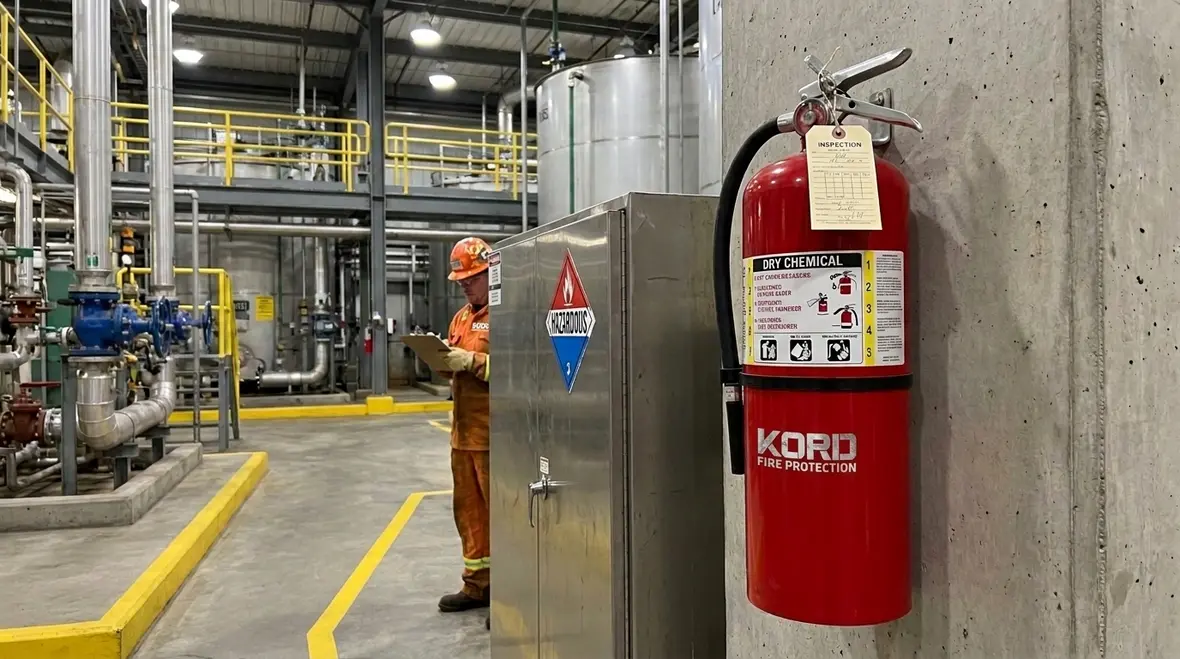
NFPA 35 Section 11.5: Portable Fire Extinguishers
Quick Answer
NFPA 35 Section 11.5 sets performance, placement, and maintenance expectations for portable fire extinguishers in facilities handling chemical materials. Plant compliance depends on selecting the right extinguisher type, installing it where hazards are controlled, and maintaining it through documented inspections, servicing, and hydrostatic testing.
For related service support, fire extinguisher service appointments can help teams tighten inspection records, servicing workflow, and readiness across active facilities.
What NFPA 35 Section 11.5 focuses on for portable fire extingishers
NFPA 35 addresses fire protection for processing and handling hazardous chemical materials. Section 11.5 concentrates on portable fire extinguishers as a first response tool, emphasizing that extinguishers must be suitable for the specific hazards present, readily accessible to trained personnel, and kept in reliable operating condition. For sites evaluating NFPA 35 portable fire extinguisher requirements plant compliance, the main operational takeaway is that “having extinguishers” is not the standard. The plant must match extinguisher selection, location, and maintenance to the process hazards and operating conditions.
How plants determine the correct extinguisher for process hazards
Portable extinguisher selection under NFPA 35 and related referenced provisions depends on the fire class and the materials involved in the process. Commercial, industrial, and retail facilities supporting chemical handling, storage, or dispensing operations typically face recurring compliance gaps: mismatched extinguisher ratings, incomplete hazard mapping, and extinguishers placed based on convenience rather than hazard control.
Key selection factors that drive compliance
- Fuel and fire class: Extinguishers must address the dominant combustibles and the specific chemical hazards. Plants often document “general combustibles,” but NFPA 35 environments frequently include additional hazards requiring more deliberate selection.
- Surface and ventilation conditions: A vapor cloud, concealed ignition risk, or ventilation-driven spread affects whether the extinguisher’s expected performance aligns with the scenario.
- Electrical risk: If energized equipment is present, the extinguisher needs to support that hazard. Plants that do not coordinate extinguishers with equipment risk frequently discover the wrong agent type in audits.
- Corrosive or reactive chemicals: Some chemical processes complicate cleanup and post discharge considerations, which should be considered alongside fire suppression capability.
Common failure points during inspections
- Extinguishers installed “near exits” but not near the actual hazard areas where first response is expected.
- Extinguishers with ratings that do not reflect the facility’s documented hazard inventory.
- Inadequate extinguisher quantity for the travel distance and hazard distribution assumptions used by the plant.
Where portable extinguishers must be installed and why access matters
NFPA 35 expectations generally require extinguishers to be located so employees can access them without delay and without relying on hazardous routes. For a plant, this becomes a practical question of movement, visibility, obstructions, and the ability to reach equipment during an event.
Installation practices that support defensible compliance
- Accessibility: Extinguishers must remain unobstructed and easy to reach during normal operations and likely emergency conditions.
- Visibility and signage: Plants often benefit from consistent mounting heights and clear location identification, particularly in environments with racks, ducts, or temporary storage.
- Hazard proximity: Extinguishers should be positioned to cover the hazards they are intended to protect, not only administrative traffic lanes.
- Protection from damage: Locations that expose extinguishers to impacts, chemical splash, or physical abrasion contribute to premature failure and missed maintenance triggers.
Operational realities in plants
In many facilities, extinguisher placement changes over time due to layout changes, seasonal storage, new equipment, or contractor staging. NFPA 35 enforcement often surfaces when the extinguisher map does not evolve with process changes. A robust compliance program includes periodic walkthrough verification so the extinguishers stay aligned with current hazard locations.
Inspection, maintenance, and service intervals that keep extinguishers reliable
Even when selection and placement are correct, plant compliance fails when maintenance is inconsistent. Section 11.5 relies on the concept that portable extinguishers must remain operable. That means routine inspections, corrective actions for issues found, and timely service and testing based on extinguisher type and manufacturer instructions, aligned with applicable industry standards.
Daily and monthly inspection behaviors employees can control
- Presence: The extinguisher exists at the labeled location.
- Access: Nothing obstructs the extinguisher or the ability to remove it.
- Physical condition: No missing parts, damage, or blocked discharge path indicators.
- Gauge and pin status: Where applicable, pressure indicators and tamper seals reflect readiness.
Service and testing points plants must track
- Internal maintenance and agent integrity: Conditionally required service actions protect against degraded performance.
- Hydrostatic testing: Cylinders must be pressure tested on schedule, based on extinguisher design and applicable requirements.
- Mechanical checks: Valves, hoses, and actuators must function properly.
Documentation that reduces compliance risk
Plants should maintain service records that clearly identify extinguisher location, extinguisher identification number, date of inspection, and corrective actions performed. This is where many commercial operations struggle, especially where multiple contractors maintain different buildings or process areas. Consolidated documentation improves audit readiness and speeds up corrective work when issues arise.
Capacity planning for plant environments: training, mounting, and emergency response
A portable extinguisher is only one part of an emergency response strategy. NFPA 35 requirements align with the expectation that employees can identify the device, understand its limitations, and apply it safely. Plants that treat extinguishers as a standalone asset often experience poor performance during real events, even when the equipment meets the letter of the code.
What plants should standardize
- Extinguisher familiarity: Employees should know where extinguishers are installed and what hazards they are intended to address.
- Safe operating conditions: Employees must understand when escape is the priority and when firefighting attempts are appropriate.
- Process shut down coordination: For chemical operations, response actions often include controlling ignition sources and limiting escalation.
Mitigating common real world failure points
- Blocked access: Fork trucks, pallets, and temporary staging can block access during peak operations.
- Incorrect response sequence: Employees may attempt to fight fires without controlling hazards first.
- Untrained use: Even the correct extinguisher can be used ineffectively if training is not reinforced.
Why Kord Fire Protection supports NFPA 35 extinguisher compliance programs
Commercial chemical processing, industrial plants, and retail operations that handle hazardous materials require more than a one time extinguisher purchase. Kord Fire Protection supports an ongoing compliance lifecycle: hazard aware extinguisher program review, placement verification, inspection coordination, service scheduling, and documentation practices that stand up to audits and incident reviews. For teams managing multiple sites or frequent process changes, structured maintenance and verification reduces the likelihood of missed service events and incorrect hazard coverage.
For related guidance on building fire protection readiness, see Kord Fire Protection for commercial service support and compliance planning.
Frequently Asked Questions
Next step: confirm coverage and maintenance readiness
Facilities seeking NFPA 35 portable fire extinguisher requirements plant compliance should verify hazard coverage, placement accessibility, and maintenance documentation across every process area. Kord Fire Protection can help evaluate your current extinguisher program, align it with your hazards, and maintain inspection and service records to support audit readiness. Schedule a compliance review to close gaps before they become enforcement issues.

Join Our Newsletter!
Get the latest fire safety tips delivered straight to your inbox From our Newsletter.



