
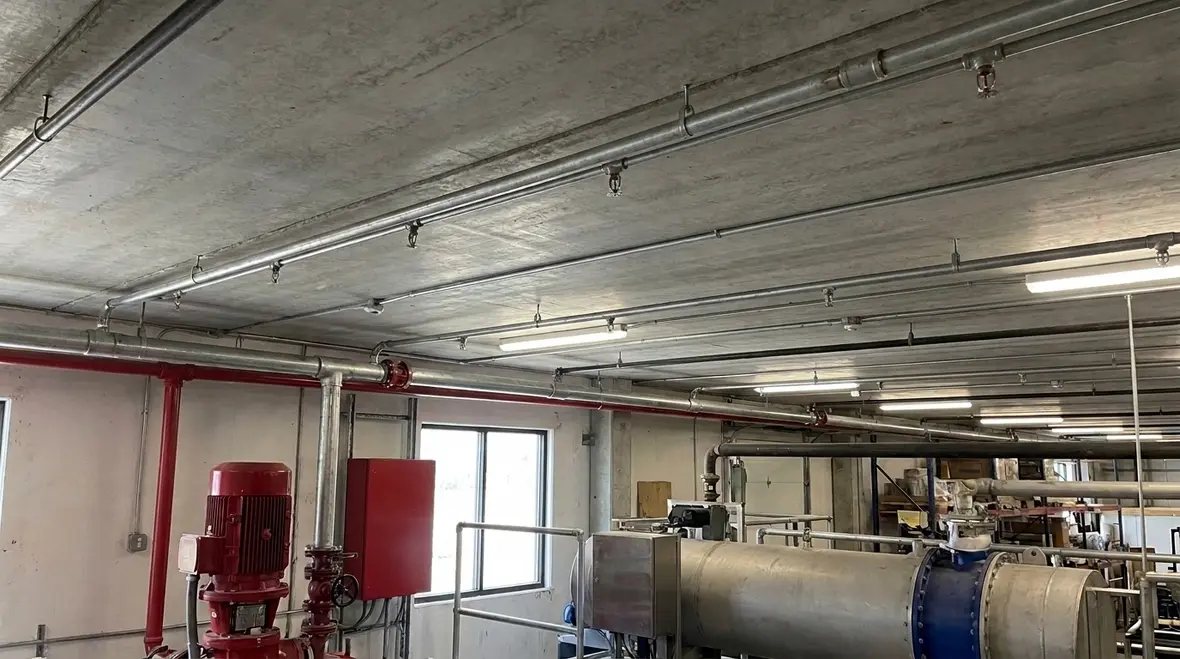
NFPA 35 Section 11.2: Automatic Sprinkler Protection
Quick Answer: NFPA 35 Section 11.2 establishes when and how automatic sprinkler systems protect hazardous processes and spaces. It focuses on selecting appropriate protection arrangements, ensuring the system remains dependable, and maintaining performance through inspection, testing, and repairs that match the specific chemical and operational risks.
If your team is also reviewing water supply readiness and pump reliability, Kord Fire Protection’s fire pump service fits naturally into this conversation because sprinkler performance only works when pressure, flow, and system support equipment are ready to do their job without drama.
What NFPA 35 Section 11.2 requires in plain terms
NFPA 35 governs the control of flammable and combustible hazards in processes and related industrial operations. Within that framework, Section 11.2 addresses automatic sprinkler protection for the facilities, rooms, and process areas where sprinkler protection is required or where it is used as part of a compliant fire protection approach. In practice, facilities implementing a NFPA 35 automatic sprinkler protection plant must ensure the system design and ongoing readiness align with both the standard and the facility’s operating hazards.
Where Section 11.2 applies and why hazard understanding drives design
Automatic sprinkler protection under NFPA 35 is not a one size fits all requirement. Section 11.2 is applied based on the hazardous nature of the process, the materials present, the way materials are handled, and the potential fire scenarios. For commercial, industrial, and retail occupancies that involve process-like functions (such as solvent handling, chemical transfers, aerosolized materials, or adjacent storage areas), the scope is often misunderstood as a simple “sprinklers required” rule.
From a compliance standpoint, the most common failure point is mismatched hazard classification during design or during later operational changes. Examples include:
- Process changes that increase volatility or change the burning characteristics of available fuels.
- Changes to storage height, rack configuration, packaging type, or packaging quantity.
- New equipment that creates concealed spaces, obstructions, or different plume behavior.
- Inadequate review of the interface between sprinklers and process protection measures such as detection, shutdown, and ventilation control.
Facilities should treat Section 11.2 as a systems requirement, not just a hardware requirement. A compliant NFPA 35 automatic sprinkler protection plant depends on correct hazard mapping, correct sprinkler arrangement, and correct ongoing system health.
How automatic sprinkler systems deliver protection under NFPA 35
Sprinklers control or suppress fire by discharging water at the appropriate location and time, but Section 11.2 expectations extend beyond “having sprinklers.” The system’s core mechanisms must support the intended hazard response.
1) Water supply and system performance readiness
Commercial facilities typically use a combination of municipal supply, storage, pumps, and supervisory controls. Under a NFPA 35 approach, maintaining pressure and flow availability becomes critical, especially where process hazards drive higher expectations for rapid activation and effective coverage.
Key readiness considerations include:
- Fire pump performance, including jockey pump alignment and automatic start reliability.
- Pressure maintenance and water delivery verification during routine testing.
- Controller health, power reliability, and supervisory monitoring function.
- Valve positions, tamper status, and waterway obstructions.
2) Sprinkler selection and discharge characteristics
Sprinkler performance depends on temperature rating, response type, spray pattern, and installation criteria. In NFPA 35 contexts, the objective often involves controlling a fire scenario that can be more intense, faster developing, or more sensitive to ventilation and process conditions than ordinary combustibles.
Common installation and compliance risk points include:
- Wrong sprinkler thermal rating or response selection for the ambient environment.
- Incorrect spacing, coverage, or obstruction rules that reduce effectiveness.
- Improper positioning in relation to beams, soffits, ducts, and hanging obstructions.
- Use of incompatible fittings, substitute components, or unapproved repair parts after maintenance.
3) Actuation sequence, detection integration, and operational control
Even when the system is a sprinkler system, many process facilities rely on coordinated response. Section 11.2 expectations interact with overall life safety and hazard control strategies. Where shutdown, isolation, or ventilation control supports the fire outcome, the sprinkler system must remain the primary suppression or control layer while other controls reduce the fuel load.
What “inspection and maintenance” looks like in the real world
One of the most practical compliance challenges in a NFPA 35 automatic sprinkler protection plant is maintaining readiness without disrupting production. The system must be inspected, tested, and maintained so it can perform when it matters, even after operational changes, maintenance activities, and seasonal building condition swings.
Routine inspection items that drive ongoing compliance
In commercial facilities, inspection and maintenance programs usually include:
- Visual inspections of sprinkler piping, hangers, and support conditions.
- Supervisory signal verification for dry, preaction, or special systems.
- Inspection of gauges, flow switches, tamper switches, and control panel indicators.
- Verification that valves remain accessible, sealed where applicable, and in the proper position.
Testing procedures and common failure points
Testing and functional verification expose issues that visual inspections can miss. Common failure points include:
- Valve corrosion, sticking, or leakage that reduces system reliability.
- Air or water supply system imbalance causing delayed response.
- Controller faults, sensor drift, or communication failures that hide supervisory loss.
- Incorrect restoration after maintenance work, including partial valve closure or improper module reset.
Because NFPA 35 automatic sprinkler protection plant performance depends on both design and sustained health, maintenance programs should include documentation discipline. This means maintaining records of tests, repairs, system impairment status, and corrective actions in a way that supports compliance reviews.
For a deeper look at recurring inspection workflows, valve checks, and corrective action tracking, Kord Fire Protection’s comprehensive sprinkler system inspection and maintenance guide is a strong companion read.
How to manage changes and documentation for Section 11.2 compliance
Facilities often fail Section 11.2 not because the original design was wrong, but because the hazard changed after installation. Change management becomes a compliance requirement in practice, especially in industrial and process-adjacent commercial operations.
Operational changes that require sprinkler review
Trigger a formal review when any of the following occurs:
- New chemicals, new concentrations, or updated Safety Data Sheets that change fire behavior assumptions.
- New storage practices, new packaging forms, or increased quantities within the protected area.
- Modifications to ceilings, obstructions, or ducting that can alter sprinkler discharge patterns.
- Changes to process flow, ventilation strategy, or control sequences that impact the likely fire scenario.
Documentation that matters during inspections
During authority having jurisdiction review, reviewers typically look for evidence that the system remains in serviceable condition. That evidence should include:
- Current as built drawings and updated hazard or layout references.
- Inspection and test records showing compliance and corrective actions.
- Impairment logs and restoration documentation for any out of service conditions.
- Repair records including component identification and verification of correct restoration.
Kord Fire Protection supports commercial facilities by coordinating inspections, testing, maintenance, and repair verification so the NFPA 35 automatic sprinkler protection plant remains ready for real-world operation.
Frequently Asked Questions
Next step: validate readiness now, before your next inspection
If your facility relies on a NFPA 35 automatic sprinkler protection plant, confirm the system is aligned with current hazards, correct installation criteria, and a documented maintenance program. Kord Fire Protection can help evaluate inspection readiness, address reliability risks, and keep records audit ready. Contact Kord Fire Protection to schedule a compliance focused review and system health check.

Join Our Newsletter!
Get the latest fire safety tips delivered straight to your inbox From our Newsletter.



