
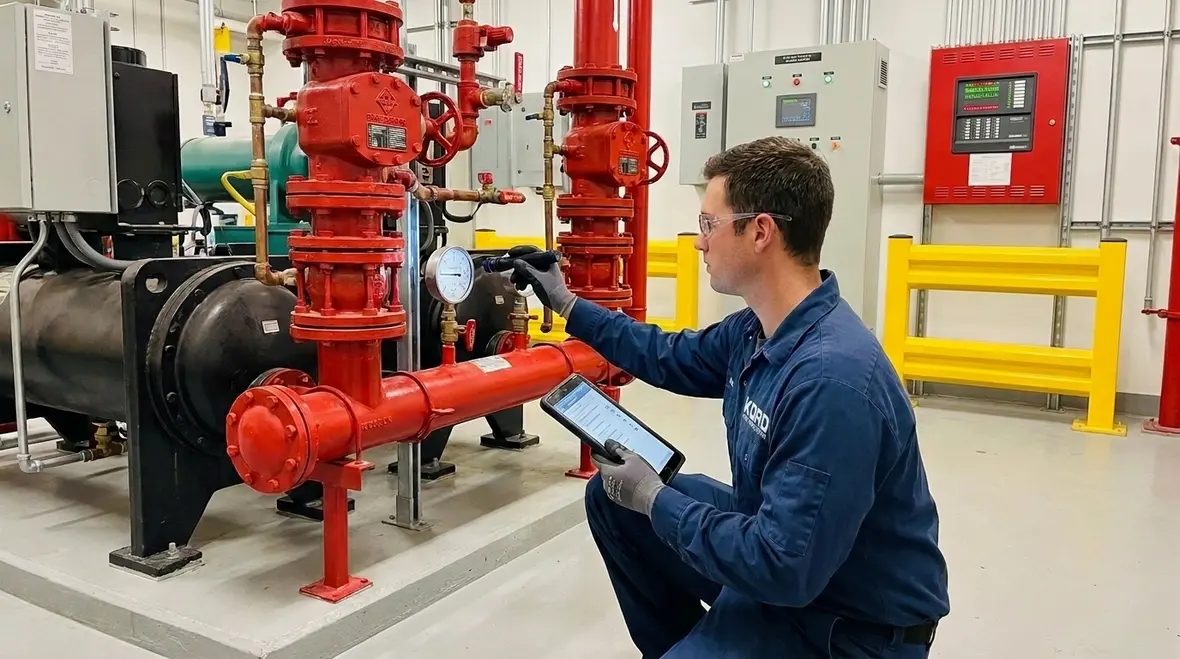
NFPA 34 Section 10.2 General: Operations and Maintenance Basics
Quick Answer: NFPA 34 Section 10.2 sets the operational and maintenance fundamentals needed to keep process fire protection systems reliable. It emphasizes documented procedures, routine inspections, timely corrective actions, and staff competency so hazards do not emerge from unmanaged deterioration or operational drift.
In commercial, industrial, and retail occupancies that involve flammable or combustible processes, NFPA 34 operations maintenance general requirements function as the practical bridge between code intent and day-to-day safety. Section 10.2 focuses on how facilities run and maintain fire protection and safety-critical equipment, not just what equipment exists. Compliance failures often stem from operational drift, missed inspection intervals, or repairs that do not restore the system to as-maintained condition.
For facilities building out stronger readiness programs, it also helps to connect these procedures with broader fire safety inspections and preventive maintenance services, so documentation, corrective actions, and real-world system performance stay aligned.
What NFPA 34 Section 10.2 is trying to prevent
NFPA 34 Section 10.2 General: Operations and Maintenance Basics targets a common pattern. Equipment can meet initial acceptance requirements, but degrade due to corrosion, contamination, mechanical wear, improper adjustments, or incomplete restoration after maintenance. Over time, the system becomes less capable while operations continue as usual. When the unexpected event happens, response is delayed or protection performance falls below required expectations.
Facilities typically experience these issues in three areas:
- Operational drift: Temporary changes become permanent, bypasses remain active, or procedures are not followed during shifts, startups, and shutdowns.
- Maintenance gaps: Inspection records are incomplete, corrective actions are delayed, or the “right” parts are replaced with substitutes that do not restore performance.
- Human factors: Staff training does not reflect current equipment layout, alarm response expectations, or procedural updates.
How operations and maintenance programs must be organized
To satisfy NFPA 34 operations maintenance general requirements, a facility must establish an organized program that supports consistent execution. In practice, Section 10.2 expectations show up as documented procedures, assigned responsibilities, inspection frequency discipline, and traceable records that demonstrate systems receive the level of attention required by design intent and hazard potential.
1) Written procedures that match real operations
Operational procedures should reflect how the facility actually runs equipment during routine production, loading or unloading activities, start up, shutdown, and nonstandard modes. These procedures should also specify what to do if conditions change, such as unusual odors, abnormal pressure readings, recurring alarms, or impaired suppression performance.
2) Responsibility assignment and access control
Compliance often fails when responsibilities are unclear. Facilities should assign roles for inspections, testing, troubleshooting, and corrective action. Access control matters because safety-critical components must be maintained without unauthorized adjustment, particularly where settings influence discharge duration, detection sensitivity, or system availability.
3) Recordkeeping that supports defensible compliance
NFPA 34 Section 10.2 relies heavily on evidence. Records should include what was checked, when it was checked, results, and the closure status of deficiencies. Effective programs capture “as found” and “as left” conditions where applicable, because that detail explains whether the system performance drifted before repairs or after.
Inspection, testing, and the maintenance mechanisms that matter
Operations and maintenance are not abstract concepts. Section 10.2 compliance depends on inspection practices that verify condition, testing that confirms functionality, and maintenance that restores performance. The failure points below show where commercial and industrial facilities most often lose reliability.
Detection and alarm pathways
- Contamination and loss of sensitivity: Dirty lenses, obstructed detectors, or sensor drift can delay actuation.
- Indicator and wiring integrity: Loose terminations, damaged cable trays, and unverified restoration after troubleshooting lead to intermittent faults.
- Alarm handling discipline: Delayed acknowledgment or incomplete investigation allows recurring faults to persist.
Suppression and protection components
- Valves and actuation hardware: Corrosion, mechanical sticking, and improper reassembly can prevent correct operation.
- Nozzle and discharge obstructions: Overspray, residue, or particulate buildup can block discharge patterns.
- Pressure integrity and flow reliability: Leaks and regulator drift may reduce effective coverage or discharge duration.
System control interfaces
Many failures occur at the handoff between fire protection equipment and operational systems. Section 10.2 expects operations to manage this interface responsibly. Controls, interlocks, shutdown sequences, and permissive logic must be maintained so that hazard reduction happens at the intended times, not after a workaround becomes routine.
Common compliance challenges in commercial facilities
Facilities often meet the letter of code during installation or commissioning, but struggle to keep up afterward. Below are frequent challenges that undermine NFPA 34 operations maintenance general requirements, along with practical ways to address them.
Short interval maintenance is not the same as effective maintenance
Some facilities shorten inspection intervals but still miss meaningful issues because they rely on checklists that do not verify performance-relevant details. Inspections should include the condition cues that predict failure, such as visible corrosion, abnormal wear, residue buildup, and evidence of repeated faults.
Corrective actions do not close the loop
A deficiency log without closure discipline creates hidden risk. Corrective actions should include cause analysis, replacement or repair that restores design intent, and verification testing after work is complete.
Contractor work that does not restore the system
Operations and Maintenance Basics also depend on restoration quality after repairs. Systems may look “back in service” but still be out of adjustment, assembled incorrectly, or missing required components. Verification testing after each service event helps prevent these errors.
Training and procedural drift
Shift changes and evolving equipment configurations create procedural drift. Training should be periodic and job-specific, and it should include what staff must do when the protection system triggers alarms, supervisory signals, or impairment conditions.
Why partnering with Kord Fire Protection improves audit readiness
Commercial operations need consistency, traceability, and performance verification. Kord Fire Protection supports facilities by implementing inspection and maintenance approaches that align with NFPA 34 operations maintenance general requirements and the realities of how systems degrade over time. This partnership helps reduce “paper compliance” by focusing on condition-based inspection findings, restoration quality, and documentation that stands up under internal review and external scrutiny.
If your organization is establishing or refreshing a maintenance program, Kord Fire Protection can help structure procedures, define inspection expectations, and support testing and corrective action closure. Learn more about practical compliance planning through this fire pump inspection, testing, and maintenance guide or explore Kord Fire Protection.
What to include in your Section 10.2 documentation package
Well-built documentation accelerates audits and improves operational control. A strong package for NFPA 34 operations maintenance general requirements typically includes the items below.
| Documentation element | Purpose in Section 10.2 compliance |
|---|---|
| Written operations and maintenance procedures | Ensures staff follow consistent steps for routine operations, impairment, and emergency response support. |
| Inspection and testing schedules | Demonstrates frequency discipline and prevents deferred maintenance that erodes reliability. |
| Inspection records and test reports | Provides evidence of “as found” conditions, outcomes, and verification after work. |
| Corrective action logs with closure verification | Tracks deficiencies from identification through resolution and confirms system performance restoration. |
| Training records | Confirms competency and reduces risk from procedural drift during shift changes. |
| Change management records | Documents how system changes, temporary overrides, and operational adjustments remain controlled. |
Frequently Asked Questions
Call to action
Review your current operations and maintenance documentation against NFPA 34 Section 10.2 and confirm that inspections, corrective actions, and verification testing close every gap. If you need a structured compliance plan or ongoing inspection and maintenance support, contact Kord Fire Protection to strengthen system reliability, reduce audit risk, and keep protection performance aligned with real operational conditions.

Join Our Newsletter!
Get the latest fire safety tips delivered straight to your inbox From our Newsletter.



