
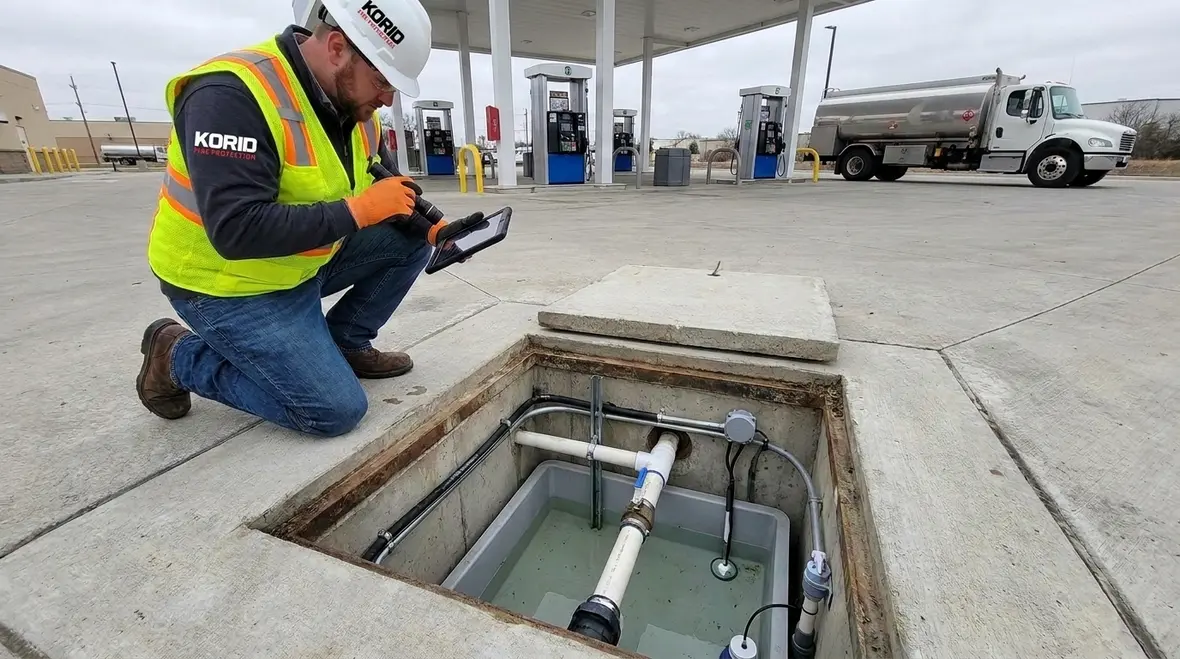
NFPA 30 Section 23.11 UST Spill Control: Compliance, Inspections, and Operational Best Practices
Quick Answer: NFPA 30 Section 23.11 establishes how underground storage tanks manage and contain spills to protect soil and groundwater. It focuses on preventing release pathways, maintaining containment systems, and verifying that monitoring, alarms, and shutoff mechanisms operate as designed.
Why NFPA 30 Section 23.11 matters for underground tank operations
NFPA 30 Section 23.11 UST spill control addresses one of the highest risk failure modes in commercial fuel storage: a release from an underground system that goes unnoticed long enough to reach sensitive receptors. Commercial facilities, retail sites, and industrial plants often run on tight maintenance windows, frequent tank traffic, and aging infrastructure. In that environment, compliance fails most often due to late detection, inadequate containment integrity, or systems that have drifted out of tolerance.
For facilities tightening up inspections and preventive maintenance workflows, Kord Fire’s fire suppression system services offer a useful example of how structured compliance support fits into broader life safety planning. For context on how NFPA 30 regulates flammable liquids across equipment and facility controls, facilities can reference this overview: how NFPA 30 regulates flammable liquids.
What “spill control” means in practice under Section 23.11
Under NFPA 30 Section 23.11 UST spill control, the intent centers on limiting the consequences of a release and enabling rapid response. That typically means three aligned capabilities:
- Prevention of release pathways, including protecting connections, piping penetrations, and tank appurtenances that can become leak sources.
- Containment and capture when a release occurs, using engineered measures that keep spilled product out of surrounding soils and drains.
- Detection and intervention, so the facility can identify abnormal conditions quickly and take controlled action, including shutoff or isolation where required.
Facilities that view spill control as a single component rather than a system often struggle during inspections. A containment system can be intact while detection fails, or detection can exist while isolation cannot be executed within an acceptable time. Section 23.11 compliance relies on both.
Common system configurations that drive compliance outcomes
Commercial UST installations can vary, but the inspection emphasis usually focuses on the operating effectiveness of spill control hardware and the integrity of the underground system. The most common configurations and their typical compliance vulnerabilities include:
1) Double wall containment and monitored annular spaces
Where double wall piping or tanks include interstitial monitoring, inspectors often look for evidence that monitoring alarms are functional and that the annular space remains within expected conditions. Failure points include sensor drift, blocked vents, degraded gaskets, or controller faults that delay alarm transmission.
2) Spill containment sumps and dispenser-area control
Spill control depends on whether releases at transitions and connections are routed into designed collection points. Vulnerabilities include cracked sumps, incorrect installation of liners, clogged drainage paths that defeat capture, and missing seals around penetrations.
3) Overfill prevention and controlled transfer procedures
Spill control also ties to operational controls that prevent releases during filling. Typical noncompliance patterns involve inadequate procedure enforcement, damaged fill ports, or poor verification practices that fail to catch abnormal fill rates or stuck floats.
Inspection and testing: what to verify before the auditor arrives
Successful compliance usually comes from disciplined verification rather than last-minute repair. For NFPA 30 Section 23.11 UST spill control readiness, facilities should implement an inspection and testing routine that covers these categories.
Tank and piping integrity checks
- Verify that seals, gaskets, and couplings remain tight and free of product residue that indicates seepage.
- Confirm that access ports, manways, and underground connections are properly sealed and secured.
- Document the condition of any spill containment components visible during scheduled openings.
Detection system verification
- Test alarms and monitoring devices per the facility’s maintenance plan, including controller diagnostics and communication paths.
- Confirm sensors and level switches respond correctly and reset properly after a simulated alarm condition.
- Maintain traceable records linking tests to specific tanks and dates.
Containment effectiveness validation
- Inspect collection points, sumps, and engineered spill pathways for blockages, cracks, corrosion, or liner damage.
- Verify that drainage and pumping arrangements route collected product to approved handling or disposal steps.
- Confirm that no unauthorized vents, drains, or openings provide an escape route for spilled product.
Operational evidence matters. Auditors commonly ask for proof that the facility maintains not only equipment condition, but also the functional performance that demonstrates spill control works when a release starts.
Where compliance breaks down: high-risk failure points
Across commercial and retail UST sites, the same problem clusters repeatedly show up during inspections and incident reviews.
1) Maintenance deferrals and “functional assumptions”
Facilities sometimes assume a system still works because there has been no reported leak. NFPA 30 Section 23.11 UST spill control requires ongoing functional confidence. Deferred maintenance on monitoring devices or containment components increases the likelihood that a hidden condition will be discovered only after damage begins.
2) Incomplete seal and penetration management
Underground penetrations and connection points concentrate risk. Even small gasket degradation can create a slow release that bypasses containment pathways. Maintenance crews need clear procedures for resealing, torque verification where applicable, and visual inspection during reassembly.
3) Alarm handling gaps during operations
Detection without effective response does not achieve spill control intent. Common gaps include unclear responsibilities for alarm response, inadequate training for shift staff, and delayed escalation to site leadership. Compliance programs should define what happens immediately after an alarm, including isolation steps and incident reporting.
4) Documentation quality issues
Even when equipment works, weak documentation can create a compliance failure. Facilities should keep consistent records of inspection dates, test outcomes, corrective actions, and equipment identifiers that match the installed UST system.
Make spill control sustainable: procedures, training, and Kord Fire support
Spill control compliance depends on how well a facility integrates requirements into daily operations and maintenance workflows. Effective programs combine written procedures, shift training, and repeatable testing schedules that verify system performance over time.
Kord Fire Protection helps commercial, industrial, and retail facilities maintain defensible compliance through structured inspections, testing coordination, and ongoing maintenance support. This approach reduces the most common audit friction points: missing test evidence, noncompliant component status, and containment integrity uncertainty.
To align spill control practices with broader flammable liquid compliance requirements, facilities can also use this reference for additional context: how NFPA 30 regulates flammable liquids.
Frequently Asked Questions
Conclusion and Call to Action
NFPA 30 Section 23.11 UST spill control succeeds when containment, detection, and response stay aligned through disciplined inspection, testing, and documentation. If your facility needs a compliance-ready verification program or support coordinating testing and maintenance across underground systems, contact Kord Fire Protection. A structured review helps confirm spill control functionality, close common failure points, and reduce audit and operational risk.

Join Our Newsletter!
Get the latest fire safety tips delivered straight to your inbox From our Newsletter.



