
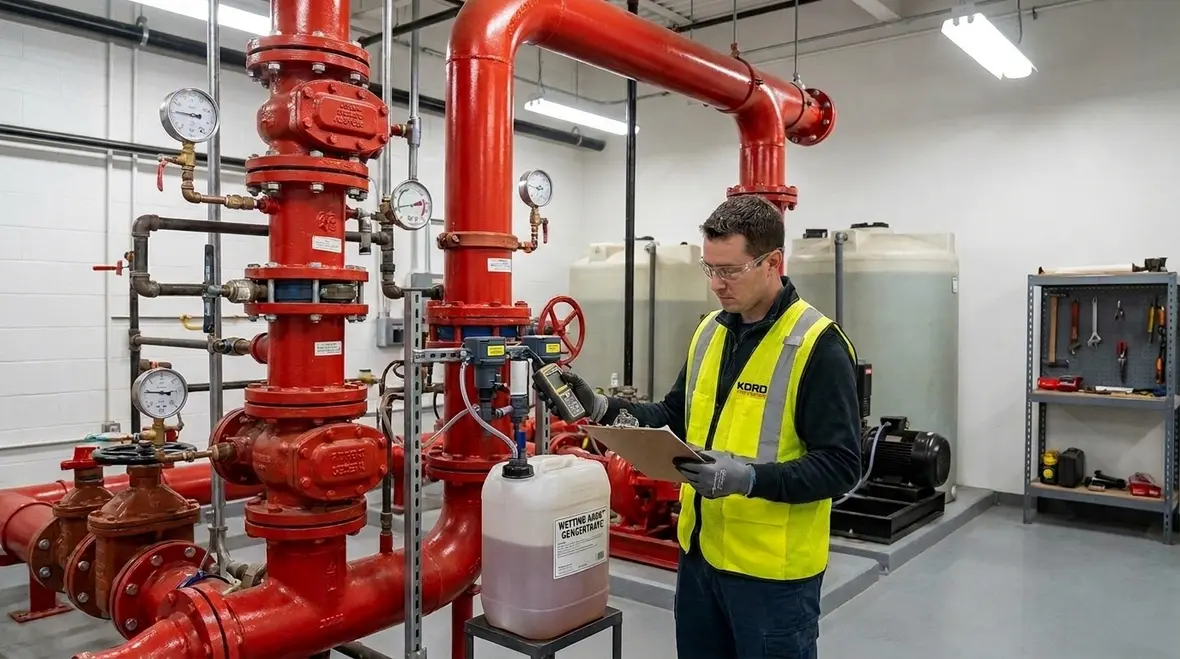
NFPA 18 Sections 1.1–1.3: Scope, Purpose, and Application of the Wetting Agents Standard
Quick Answer: NFPA 18 Sections 1.1 through 1.3 define why wetting agents are regulated, where the requirements apply, and how facilities should implement compliant foam or wetting agent systems for fire protection. The standard supports consistent performance, inspection, and reliable use across commercial, industrial, and retail occupancies.
For facilities looking at broader suppression readiness near the start of planning, it helps to connect wetting agent compliance with Australian fire sprinkler services, especially where long term maintenance, inspection workflows, and system reliability all need to line up neatly instead of arguing in separate corners.
Why NFPA 18 Addresses Wetting Agents at All
Wetting agents change how foam solutions interact with fuels, surfaces, and burning materials. In many fire scenarios, especially involving flammable and combustible liquids, the ability of the system to properly wet and penetrate is a performance requirement, not an optional improvement. That is the core intent behind the NFPA 18 scope and application of wetting agent requirements: to standardize expectations so installed systems behave predictably when actuated.
Unlike purely mechanical or distribution focused fire protection components, wetting agents influence chemistry and interface behavior. Variations in concentration, contamination, age, or incompatible additives can reduce effectiveness even if piping, nozzles, valves, and pumps function correctly.
What NFPA 18 Means by “Scope” (Section 1.1)
Section 1.1 establishes the boundary of what the wetting agents standard covers. In practical terms, the scope informs facility owners and installers which systems, components, and operational practices fall under wetting agent performance and management controls.
From a compliance standpoint, NFPA 18 scope and application of wetting agent requirements guide how a facility documents wetting agent selection, verifies the correct solution formulation, and controls handling from installation through ongoing service.
How scope impacts real facility decisions
-
System acceptance and commissioning: The wetting agent type and concentration become part of the documented acceptance baseline, not a field adjustment.
-
Change management: Any switch in concentrate, compatible additives, or storage practices triggers review for compliance. Small changes can create performance and compatibility issues.
-
Inspection planning: Scope determines which parts of the wetting agent delivery process must be included in routine checks, including testing intervals and acceptable variations.
-
Recordkeeping: Scope drives documentation expectations that AHJs often ask for during audits, including solution verification and maintenance history.
For facilities building their wetting agent program, Kord Fire Protection frequently supports compliance planning using an integrated approach. A practical overview of the overall wetting agent topic is available here: NFPA 18 overview and wetting agents from Kord Fire Protection.
Purpose: The Standard’s Performance and Consistency Goals (Section 1.2)
Section 1.2 explains why the wetting agents standard exists. The purpose centers on ensuring reliable fire protection performance, consistent solution formulation, and safe, effective operation over the life of the system.
The purpose shows up in daily operations
-
Maintaining correct concentration: Wetting agent concentration directly affects surface tension reduction and wetting behavior. Even modest dilution from improper refill practices can impact outcomes.
-
Protecting against contamination: Contaminants from improper storage containers, dirty transfer hoses, or cross connection errors can degrade performance.
-
Supporting predictable discharge conditions: Concentration verification and solution management help ensure the system discharges within expected performance parameters.
-
Ensuring ongoing readiness: The purpose includes repeatable maintenance and inspection practices, not just initial compliance at commissioning.
Wet systems fail operationally when stakeholders treat wetting agents like “bulk supplies” rather than controlled fire protection media. That is why purpose, in Section 1.2 terms, ties chemistry, storage, handling, and system verification into one compliance framework.
Application: How the Requirements Land on Facility Owners, Designers, and Contractors (Section 1.3)
Section 1.3 clarifies how the standard’s requirements should be applied. Application is where compliance becomes practical. It tells organizations which responsibilities must be addressed across design, installation, operation, and maintenance of wetting agent systems.
Key application challenges in commercial and industrial settings
-
Multi occupancy complexity: Retail centers, industrial campuses, and mixed use facilities often have shared utilities, making cross contamination and refill errors more likely if procedures are not controlled.
-
Equipment interface points: Pumps, proportioning equipment, tanks, piping, and discharge devices all influence final mixture performance. A correct wetting agent concentrate still underperforms if the delivery system is out of tolerance.
-
Environmental and storage effects: Temperature swings and long storage periods can change solution characteristics or concentrate integrity, requiring verification practices aligned with the standard.
-
Personnel turnover: Maintenance practices often suffer when responsibilities shift. Application requires standardized procedures and training that survive staffing changes.
Commercial facilities also need operational alignment between fire protection contractors and facility maintenance teams. Kord Fire Protection supports ongoing compliance needs for sprinkler and fire systems, which is critical because wetting agent readiness often depends on the broader water delivery system performance. Related service guidance can be found here: Australian fire sprinkler services from Kord Fire Protection.
Operational Procedures That Commonly Cause Noncompliance
Even when the correct wetting agent is selected, performance can drift due to avoidable process failures. The following are common failure points linked to how facilities interpret or implement the NFPA 18 scope and application of wetting agent requirements.
Concentration drift during refill and recharge
Refill procedures can introduce dilution from incorrect measurement, incomplete mixing, or substitution of the wrong concentrate. Facilities can reduce risk by using calibrated measuring tools, verified dosing methods, and documented lot tracking. Kord Fire Protection often supports recharge protocols that include verification steps suitable for ongoing inspection readiness.
Cross contamination from shared tanks or improper transfer hoses
When multiple chemicals are handled in the same maintenance area, the risk of accidental mixing increases. Contamination can also occur when transfer hoses are reused without cleaning or when containers are not dedicated. A controlled supply chain and cleaning verification process are typically required to uphold compliant application.
Inadequate system verification after maintenance
Some facilities adjust wetting agent components and assume the system remains compliant until the next annual inspection. That approach fails when the standard expects solution verification tied to maintenance activities. Verification should be treated as part of the maintenance workflow, not a later administrative task.
Proportioning and pumping equipment out of tolerance
Wetting agents rely on correct delivery. If proportioning equipment or related pumps are miscalibrated, the discharged mixture will not match intended concentration, even if the correct concentrate is stored. For facilities reviewing pump and water delivery support, additional technical context is available at FirePumps.org.
Building a Compliance Program Around Scope and Application
An effective wetting agent program translates Sections 1.1 through 1.3 into measurable, auditable practices. Facilities typically benefit from three core program elements: documented baselines, controlled change management, and routine verification tied to inspection and maintenance schedules.
Recommended program components
-
Documented wetting agent baseline: Concentration targets, concentrate identity, and installation records aligned to the wetting agent standard scope.
-
Controlled handling procedures: Dedicated containers, cleaning requirements for transfer tools, and clear dosing and refill steps to support NFPA 18 scope and application of wetting agent requirements.
-
Verification and inspection workflow: Solution verification steps performed after recharge, component service, or any change likely to impact mixture output.
-
Maintenance and records: Service history that ties actions to verification outcomes, supporting audits and reducing operational downtime during corrective work.
Kord Fire Protection positions facilities to meet these obligations through service planning, system maintenance coordination, and compliance support tailored to commercial, industrial, and retail operational realities. This reduces the common gap between “installed correctly” and “remains correct under routine facility conditions.”
Frequently Asked Questions
Call to Action
Commercial and industrial facilities benefit from a practical wetting agent compliance plan that connects NFPA 18 scope and application of wetting agent requirements to inspection workflows, recharge procedures, and equipment verification. Contact Kord Fire Protection to review your wetting agent system records, maintenance practices, and verification approach, then build a corrective action and ongoing service plan designed to keep your system audit ready.

Join Our Newsletter!
Get the latest fire safety tips delivered straight to your inbox From our Newsletter.



