
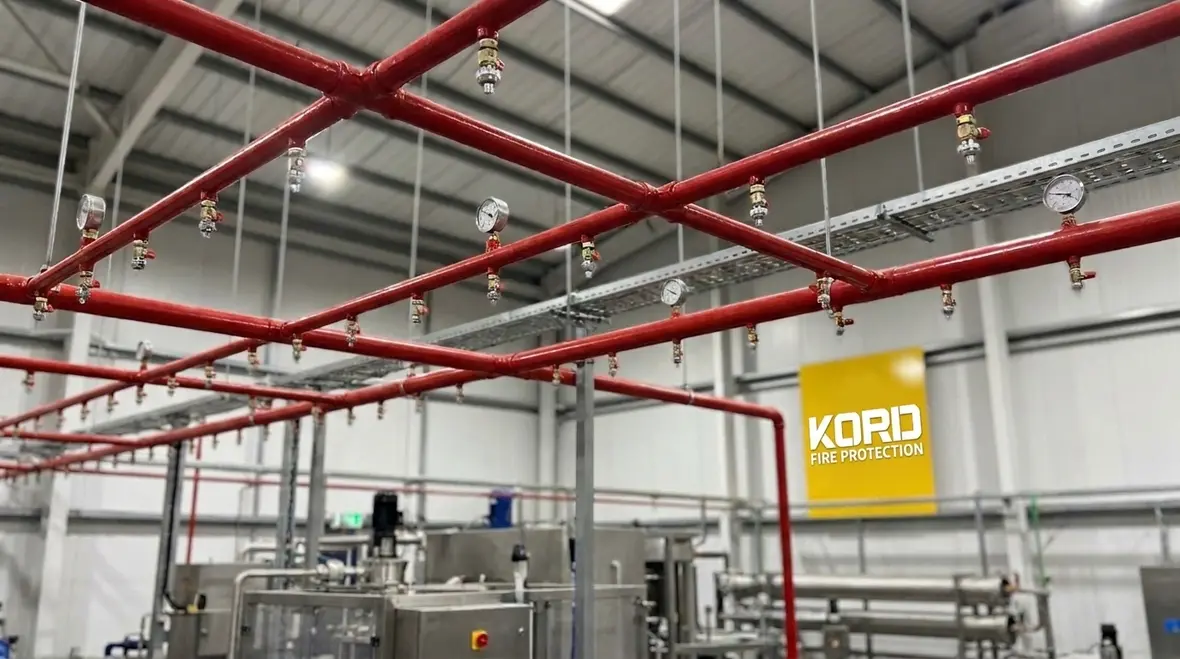
NFPA 15 Section 12.1: Deflagration vs. Detonation – What Ultra-High-Speed Water Spray Can and Cannot Do
Quick Answer
NFPA 15 Section 12.1 addresses how ultra high speed water spray systems behave across deflagration and detonation hazards. These systems can reduce flames and help mitigate certain pressure and flame effects, but they cannot reliably “stop” a true detonation. Compliance depends on matching design limits, spacing, and maintenance to the hazard classification.
Why NFPA 15 12.1 ultra-high-speed water spray limits matter in real facilities
Commercial, industrial, and retail facilities often assume that water spray is universally effective for “explosions.” NFPA 15 12.1 rejects that shortcut. The standard distinguishes deflagration from detonation because the physical mechanisms differ: how fast the reaction front propagates, how pressure waves couple to the fire, and how quickly a suppression system must act.
In practical terms, NFPA 15 12.1 ultra-high-speed water spray general deflagration detonation limits influence whether an installation supports safe operation during a credible worst case event. The “general limits” commonly referenced in design discussions typically fall in the range of 0.5% to 1.0% concentration or comparable hazard thresholds depending on the fuel, enclosure, ignition geometry, and the system’s validated performance basis.
When facilities fail compliance expectations, the failure usually comes from one of three places: the hazard was classified incorrectly, the system was designed for the wrong scenario envelope, or maintenance allowed water delivery performance to drift outside the tested conditions.
If your team is reviewing broader system readiness, it also helps to look at commercial fire suppression systems and services as part of the bigger compliance picture, especially where special hazard protection has to stay aligned with maintenance, inspection, and documentation needs.
What NFPA 15 12.1 means by deflagration and detonation
NFPA 15 Section 12.1 focuses on ultra high speed water spray performance for rapid combustion events. The standard’s intent is not theoretical. It is operational: the system must respond in time and deliver water in a form and distribution that disrupts the specific mechanisms of flame acceleration and pressure generation.
Deflagration: fast burning, pressure rise, and flame propagation
Deflagration involves subsonic propagation of the combustion zone. In many industrial vapor cloud and combustible dust scenarios, deflagration can still produce damaging overpressure. The suppression objective is typically to prevent flame acceleration, reduce heat feedback to unburned material, and limit the continuity of burning across the hazard volume.
Detonation: supersonic shock driven reaction
Detonation involves supersonic shock propagation that couples strongly to pressure dynamics. This is where water spray expectations must be corrected. Ultra high speed water mist can cool and disrupt, but it cannot reliably “counteract” a detonation shock structure in the same way it addresses slower flame dynamics. NFPA 15 12.1 treats this distinction as a fundamental limit for system effectiveness.
How ultra-high-speed water spray works (and where it stops working)
Ultra high speed water spray systems are built around creating extremely small water droplets at high velocity so the droplets can quickly interact with hot gases and reacting material. That interaction is time critical. If droplet formation and delivery deviate from the performance basis, the system may lose its ability to cool effectively, reduce burning, or control flame spread.
Primary mechanisms: cooling, momentum exchange, and flame interruption
- Cooling: Water absorbs heat, reducing reaction intensity.
- Droplet distribution: Correct nozzle selection, spacing, and coverage determine whether the spray contacts the critical combustion zone.
- Interaction time: The system must deliver the spray quickly enough to matter during rapid burning.
Common boundary conditions tied to NFPA 15 12.1 general limits
The NFPA 15 12.1 ultra-high-speed water spray general deflagration detonation limits typically depend on the hazard and enclosure conditions assumed during design and listing evaluation. Design limits in many projects are commonly discussed around 0.5% to 1.0% hazard threshold ranges. Facilities should treat those numbers as a starting point for verification, not a universal conversion.
Where systems “stop working” is usually not the water itself. It is the ability to maintain the tested droplet characteristics and coverage during credible worst case scenarios.
- Pressure and flow drift: Worn pumps, undersized jockey arrangements, throttled valves, or clogged strainers change nozzle flow and droplet formation.
- Enclosure and obstructions: Ceiling geometry, beams, racks, and ducted ventilation can block effective spray pathways.
- Activation sequence mismatch: Delayed actuation or an incorrect detection logic can remove the system from its effective time window.
Deflagration capability: what ultra-high-speed spray can do reliably
In many credible deflagration scenarios, ultra high speed water spray can provide measurable suppression benefits because the hazard is dominated by heat feedback and flame propagation rather than a dominant shock structure. The system can cool reactive gases, interrupt burning continuity, and reduce the intensity of flame development.
Where commercial installations see the best results
Ultra high speed water spray installations tend to perform best when the hazard assumptions match reality:
- Validated fuel or dust category: The design basis aligns with the specific combustible and particle size or vapor characteristics.
- Correct enclosure behavior: Door openings, ventilation rates, and internal air currents remain within the tested or approved conditions.
- Coverage that reaches the critical region: The nozzle layout accounts for likely mixing patterns and where ignition would occur.
Maintenance and inspection factors that protect performance
Deflagration suppression depends heavily on maintaining water delivery performance. Commercial sites often encounter performance drift over time. Kord Fire Protection typically addresses these issues through routine inspection and verification of system components such as:
- Nozzle cleanliness and correct condition
- Water supply pressure, flow, and strainers
- Actuation devices, valves, and confirmation of operational readiness
- Hydraulic verification where required by the engineering documentation
For broader context on maintaining NFPA 15 fixed water spray effectiveness, facilities can also review practical guidance from Kord Fire Protection on enhancing fire safety with water spray fixed systems.
Detonation limits: what it cannot realistically overcome
For true detonation, the physics shift. A detonation front is driven by shock compression and supersonic reaction propagation, which means the system must counter a rapidly evolving pressure structure. NFPA 15 12.1 ultra-high-speed water spray general deflagration detonation limits reflect that a water spray system generally cannot be relied upon as a standalone “detonation neutralization” device.
What “cannot do” usually means in compliance terms
- Cannot count on complete suppression of detonation-driven combustion: Water spray may reduce burning and cooling, but detonation is not just heat release. It is also shock dynamics.
- Cannot assume design basis transfer across hazards: A design validated for deflagration conditions should not be treated as automatically suitable for detonation.
- Cannot substitute detection reliability for physical suppression: Faster detection helps, but it does not change the fundamental performance limits for detonation.
Operational implication: protect people and property, then manage risk
Facilities typically apply a broader safety strategy that includes hazard control, safe ignition management, ventilation and dust or vapor handling practices, and mechanical or procedural safeguards. Ultra high speed water spray can be part of that package, but NFPA 15 12.1 does not support a promise that water alone will defeat detonation.
When teams need independent background on fire pumps and water supply reliability, resources from firepumps.org can support pump and water delivery understanding that ties directly into water spray performance.
Compliance challenges: how projects fail NFPA 15 12.1 in the field
Most nonconformities occur long after installation. Commercial facility standards require ongoing assurance that the system remains aligned with the original design basis.
1) Hazard classification drift
Process changes, inventory changes, and operational modifications can turn a previously acceptable deflagration scenario into something more severe. Even small changes in ventilation, production rate, or material handling can change the credible event envelope. NFPA 15 12.1 limits depend on the hazard scenario matching the design basis.
2) Hydraulic performance degradation
Systems rely on stable pressure and flow. Strainers clog. Valves stick. Filters load with sediment. If the system cannot produce the required droplet characteristics and velocity, the performance basis erodes.
3) Obstruction and reconfiguration
Retail and industrial environments change. Racks get added, mezzanines get modified, and ceiling obstructions appear. Any alteration that interferes with spray distribution can reduce effectiveness exactly where it matters most.
4) Incomplete commissioning documentation
Facilities need a maintained link between drawings, hydraulic calculations, and the as installed verification record. Without that documentation, future maintenance becomes guesswork and risk increases.
What strong ongoing service looks like (Kord Fire Protection as a compliance partner)
Ultra high speed water spray systems demand more than periodic “it looks fine” checks. Strong service ties inspection to the engineering intent and verified performance. Kord Fire Protection supports commercial clients with maintenance and compliance workflows designed to prevent the most common NFPA 15 12.1 performance failures.
- Performance focused inspections: Verification of water delivery readiness and component condition.
- Corrective action tracking: Closure of nozzle, valve, filter, and actuation issues before they impact delivery characteristics.
- Maintenance records that support audits: Documentation that helps teams demonstrate continued readiness against the design basis.
For facilities seeking an operational approach to keeping water spray fixed systems effective, review NFPA 15 water spray fixed system enhancement guidance and use it alongside the equipment listing documentation and the local authority requirements.
Frequently Asked Questions
Conclusion and Call to Action
NFPA 15 Section 12.1 draws a clear line between deflagration mitigation and detonation limits for ultra high speed water spray. Facilities that treat the system as a one size fits all explosion solution create preventable risk through hazard drift, hydraulic degradation, and layout changes. Kord Fire Protection can help maintain verified performance, document compliance readiness, and close the common gaps that undermine NFPA 15 12.1 ultra-high-speed water spray general deflagration detonation limits. Schedule a compliance and maintenance review today.

Join Our Newsletter!
Get the latest fire safety tips delivered straight to your inbox From our Newsletter.



