
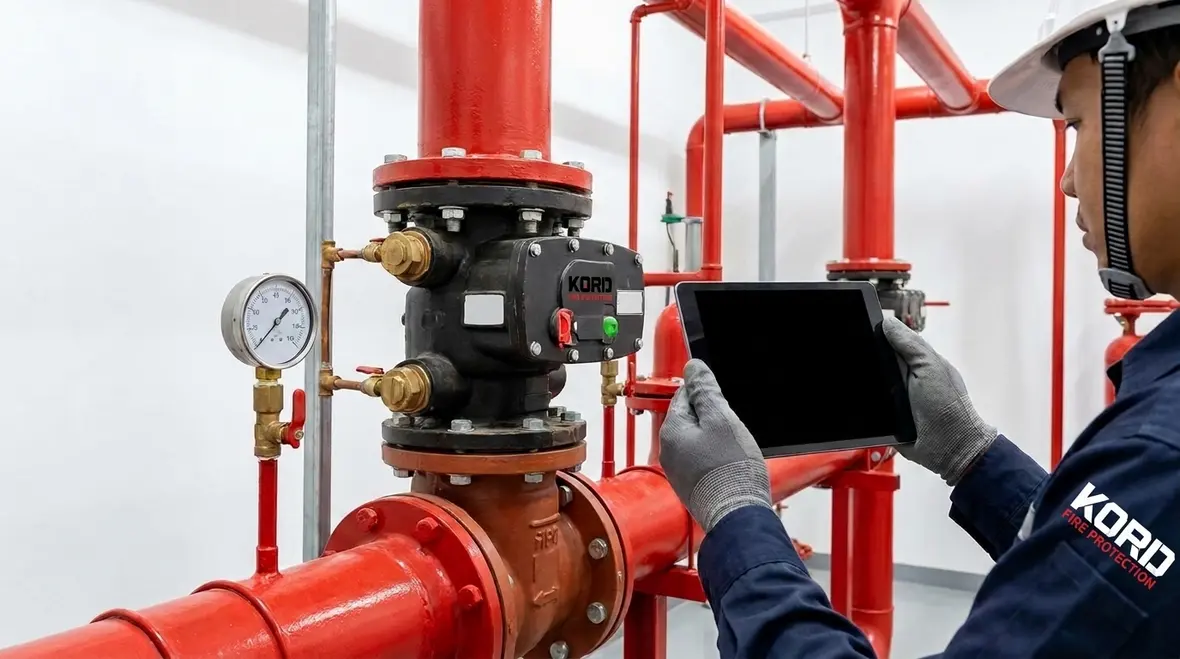
NFPA 15 Section 11.1: Inspection, Testing, and Maintenance Duties for Water Spray Systems
Quick Answer
NFPA 15 Section 11.1 assigns clear inspection, testing, and maintenance responsibilities for water spray systems to ensure reliability. Facility owners must coordinate with qualified personnel, document impairment, and address deficiencies promptly, aligning operations with the inspection and testing framework often referenced alongside NFPA 25 and NFPA 72.
For facilities building out a stronger service plan, it also helps to review fire sprinkler inspection and maintenance services early, since many of the same readiness issues show up in valves, piping, supervisory conditions, and documentation workflows.
Why NFPA 15 11.1 matters in day to day fire protection management
For commercial, industrial, and retail facilities, water spray systems protect key hazards, and their performance depends on ongoing verification. NFPA 15 11.1 inspection testing maintenance is not a one time event. It establishes expectations for routine work that keeps valves functional, piping unobstructed, and system components in a known operating condition. In practice, compliance efforts also require alignment with NFPA 25 water based systems maintenance concepts and the fire alarm coordination expectations that commonly intersect with NFPA 72.
Organizations that treat inspections as paperwork frequently discover late failure points: partially closed detection or control valves, obstructed strainers, water supply variability, missing documentation, or circuit issues that delay alarm and supervision signals. Section 11.1 addresses the duty to detect and correct these problems through planned inspection, testing, and maintenance activities.
What Section 11.1 requires: owner responsibility and duty to maintain
NFPA standards typically operate as performance and procedural frameworks. NFPA 15 Section 11.1 drives a clear principle: systems must be inspected, tested, and maintained so they remain capable of performing their intended function. While the exact enforcement mechanism depends on the authority having jurisdiction, the operational duty commonly lands on the owner or the owner’s designated representative to ensure that qualified personnel perform the required work and that deficiencies are corrected.
Owner responsibility in practical terms
Engage competent service providers capable of performing inspection and testing in accordance with the applicable NFPA requirements and manufacturer instructions.
Maintain accurate system records, including inspection and test results, corrective actions, and impairment history.
Ensure supervision and alarm interface pathways remain operational where the water spray system is tied to fire alarm signaling or supervisory monitoring.
Act on deficiencies promptly and document when system conditions are restored to service.
How NFPA 15 11.1 applies to water spray systems: key components to inspect
Water spray systems vary by design, including deluge and preaction concepts, pump arrangements, tank supply configurations, and actuator types. Section 11.1 duty execution typically focuses on the components that most often fail to perform when required. The most common problem patterns in commercial buildings include valve impairment, inadequate water supply, system leakage, and obstructions at or upstream of spray nozzles.
Valves and control equipment: common failure points
Water spray systems depend on control valves that open and close correctly and maintain the expected supervisory condition. Inspection and testing efforts often target:
Proper valve position and freedom of operation, including supervisory switch status where installed.
Correct actuator behavior for electrically or pneumatically operated components.
Reliable interlocks or sequence logic for preaction or deluge arrangements.
Absence of mechanical binding, corrosion, or packing deterioration that can slow opening times or prevent full travel.
Water supply, pressure, and pump performance
Even when all valves function correctly, system performance can fail if the water supply cannot deliver expected flow and pressure. Maintenance activities under NFPA 15 11.1 often include verification of:
Supply adequacy under realistic operating conditions.
Pump availability, control circuit health, and verification that pumps start when required.
Tank and alarm arrangements where applicable, including water level monitoring.
Operational conditions that can create reduced flow, such as partially blocked strainers or deteriorated check valves.
Nozzles, piping, and obstruction control
Spray nozzles and the piping network must remain clean and unobstructed. Routine inspection and maintenance should address:
Environmental contamination, overspray buildup, dust accumulation, and corrosion patterns.
Loose hangers or support degradation that can misalign coverage areas.
Evidence of paint overspray or physical damage to nozzle assemblies.
Piping conditions that indicate internal scaling or debris migration from supply sources.
How to plan inspection and testing under NFPA 15 11.1 alongside NFPA 25 and NFPA 72
Commercial facilities often struggle because multiple NFPA documents influence the same operational systems. Water spray systems intersect with maintenance philosophy for water based systems under NFPA 25 and with supervisory and signaling expectations under NFPA 72.
Coordination with NFPA 25
Where NFPA 15 sets inspection, testing, and maintenance duties for water spray systems, NFPA 25 provides broader water based system maintenance guidance. The practical effect for owners is that maintenance planning must cover both system specific requirements and the water based maintenance framework. This includes ensuring that valves, pumps, strainers, tanks, and related hardware receive the attention needed to prevent performance degradation.
Coordination with NFPA 72 for alarm and supervision interfaces
Many water spray installations use initiation and notification pathways that tie to fire alarm control units or supervisory monitoring. Under NFPA 72 expectations, the facility should treat alarm and supervisory circuits as part of the integrated life safety system. Failure here can create a scenario where the water spray system operates but the facility does not receive correct signals, delaying response and jeopardizing incident management.
For an integrated compliance approach, the best practice is to schedule system work so that inspections, testing, and any alarm interface verification occur together. This reduces administrative churn, avoids repeated shutdowns, and ensures consistent documentation across disciplines.
Common compliance and maintenance challenges in real facilities
Even well managed sites can miss key responsibilities. The following are typical commercial challenges that affect the effectiveness of NFPA 15 11.1 inspection testing maintenance programs and, by extension, ongoing readiness.
Impairments, closures, and partial availability
Facilities frequently have zones of work in progress, temporary outages, or seasonal changes. Without a disciplined impairment process and a clear return to service verification, a water spray system can remain degraded longer than intended. Owners must ensure impairment is documented, compensating measures are applied, and the system is verified as restored.
Documentation gaps and unclear ownership of corrective actions
A high risk pattern involves inspection reports that list deficiencies but lack a defined correction owner, completion date, and verification method. Section 11.1 duty execution depends on closing the loop. Service providers should provide clear deficiency statements, recommended corrective actions, and evidence of restoration.
Vegetation, construction debris, and finishing works
Retail and industrial rollouts frequently create contamination risk. Nozzles may be painted, covered, or indirectly blocked during renovation. Piping can collect debris after construction alterations. Maintenance programs should include visual checks tied to project schedules and change management, not just calendar driven intervals.
Partnering with Kord Fire Protection for ongoing compliance
Effective NFPA 15 11.1 inspection testing maintenance programs require more than checklists. They require field knowledge of water spray system behavior, valve and pump mechanics, and integrated signaling interfaces. Kord Fire Protection supports commercial sites with structured compliance planning, detailed inspection reporting, and remediation verification so owners can maintain readiness and reduce downtime surprises.
For additional insight on maintaining fixed water spray systems and strengthening overall performance, refer to: NFPA 15 Enhancing Fire Safety with Water Spray Fixed Systems.
Related technical resources on fire pump and system readiness can also be found at this NFPA 25 fire pump testing requirements guide.
Frequently Asked Questions
Call to action
NFPA 15 Section 11.1 compliance succeeds when inspection, testing, maintenance, and documentation run as one process. Contact Kord Fire Protection to schedule a practical compliance review, confirm readiness across water supply, valves, and alarm supervision, and build a maintenance plan that supports ongoing NFPA 15 11.1 inspection testing maintenance, NFPA 25 alignment, and NFPA 72 coordination.

Join Our Newsletter!
Get the latest fire safety tips delivered straight to your inbox From our Newsletter.



