
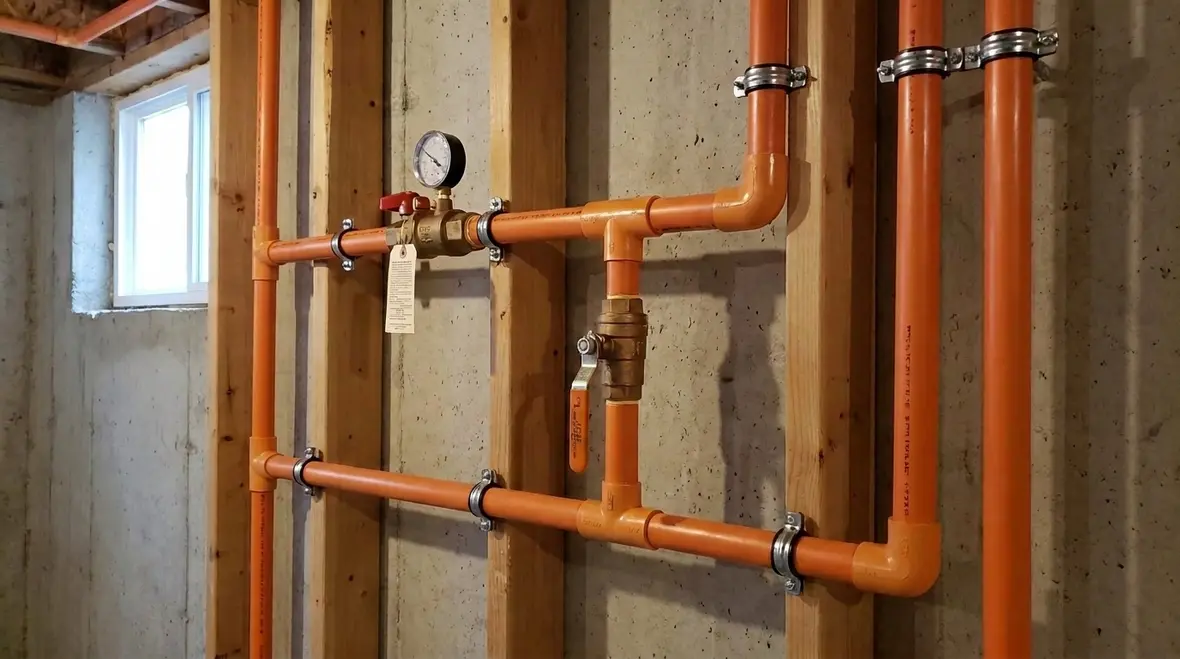
NFPA 13D Section 5.3: Water Supply Pipe Requirements for Residential Sprinkler Networks
Quick Answer: NFPA 13D Section 5.3 sets the rules for sizing, routing, and installing the water supply pipe that feeds residential sprinkler systems. It also governs fittings and connection practices so the network performs reliably under design demand and during inspection and maintenance.
For a practical service-side look at how sprinkler systems are installed, maintained, and kept inspection-ready, see Kord Fire Protection’s fire sprinkler system service page.
Why NFPA 13D Section 5.3 matters on real residential installs
Residential sprinkler systems often look straightforward until the water supply piping enters the job. NFPA 13D Section 5.3 water supply pipe fittings residential sprinkler network requirements drive how components connect, how the pipe and fittings handle pressure, and how installers protect the system from common failure points like flow restriction, trapped air, and improper connection geometry.
In commercial and industrial environments, the same discipline matters because residential branches can connect into larger domestic fire water systems, shared risers, or pump rooms that facility teams must maintain. For ongoing compliance, inspections, and testing, Kord Fire Protection supports facilities with procedures aligned to typical enforcement expectations and practical operational realities. For a systems level perspective on installation practices, review NFPA 13 overview for automatic fire sprinkler system installation.
What Section 5.3 requires for the water supply pipe and fittings
Section 5.3 focuses on the piping that delivers water from the supply source to the sprinkler distribution network. The goal remains consistent: the water supply must remain capable of delivering the required flow to all remote design points at the expected operating conditions.
1) Pipe and fittings must suit the system design conditions
Section 5.3 drives compatibility between pipe materials, fittings, pressure ratings, and the expected hydraulic demand. Installers typically address this by selecting fittings that maintain the internal flow path and by using joining methods that do not introduce weak joints or constrictions.
Compliance risk increases when trades use “equivalent” fittings without confirming design suitability. Common examples include substituting fittings that change bore diameter, introducing unnecessary adapters, or using connection methods not aligned with the system’s listed or approved practices.
2) Connection quality determines long term system performance
Water supply joints often become the operational weak point because they can be exposed to vibration, thermal cycling, and maintenance activity. Section 5.3 expectations align with the need for secure, properly prepared connections that resist leaks and remain structurally sound.
- Mechanical integrity: Proper thread engagement, gasket seating, torque control, and alignment reduce the probability of micro leaks that fail over time.
- Internal flow continuity: Fittings should not create sharp transitions or obstructions that can reduce flow to sprinklers.
- Correct orientation and routing: Misalignment and improvised rerouting can create uneven stress and unnecessary elbows that increase friction loss.
3) Installation practices must preserve intended hydraulics
Water supply piping influences total system pressure available at the sprinklers through friction loss and minor losses at fittings. Section 5.3 requirements emphasize that the piping network must meet the hydraulic design, meaning the installer must avoid changes that unintentionally increase resistance.
Maintenance teams also feel the effect. If a facility later adds new branches, replaces fittings, or adds strainers and regulators without recalculating, the system can drift out of compliance even when the installation originally passed.
How to handle water supply pipe routing and system reliability during operation
Routing choices affect more than code compliance. They influence operational reliability, inspection access, and how quickly the system responds during actuation.
Maintain proper support and protect against stress
Improper support can lead to joint separation, vibration fatigue, and misalignment at fittings. This becomes especially important near changes of direction, where fittings experience additional mechanical stress.
Avoid dead zones and air management issues
Air handling problems can delay water delivery or produce inconsistent performance. While system configuration depends on the overall sprinkler approach and locality requirements, installers should avoid creating conditions that trap air in portions of the supply path.
Facility compliance teams also monitor for recurring symptoms that indicate trapped air or inadequate priming. A disciplined maintenance cycle helps identify the issue before it impacts testing outcomes.
Plan access for inspection, maintenance, and functional testing
Even when piping meets the minimum requirements, poor access makes it difficult to verify valve positions, observe drip, confirm water flow during test, and inspect fittings and unions for leakage.
Kord Fire Protection often recommends detailing that supports routine checks and faster corrective work, reducing downtime for commercial and retail sites where sprinkler systems remain operationally critical.
Common compliance challenges with residential water supply pipe fittings
Section 5.3 language often gets interpreted through the lens of “approved materials and proper installation,” but the most frequent field issues come from real execution gaps.
Issue 1: Unapproved fitting substitutions
Contractors may substitute fittings due to availability, cost, or familiarity. Even if a fitting “fits the pipe,” it can be incompatible with the system’s hydraulic assumptions or connection requirements. In practice, substitutions can also complicate future inspection documentation.
Issue 2: Incorrect coupling preparation and joining defects
Joining errors can include poor prep, incomplete bonding, improper torque or thread assembly, and misaligned installation. These defects may not leak immediately. They can still create long term corrosion risk or weaken the joint after thermal cycles.
Issue 3: Added fittings that increase friction loss
Every added elbow, adapter, or reducer can increase minor losses and total friction. In a design where margins already exist, this may push the system outside the required flow performance. This risk increases when renovations or service work adds new components without updating calculations.
Issue 4: Inadequate documentation for maintenance and enforcement
Commercial facilities and multi unit housing often require proof of what was installed and how it was verified. Missing documentation makes it harder to defend compliance and can delay remediation when a defect is discovered during inspection.
For broader pump and water supply considerations that often interface with these systems, see firepumps.org.
Inspection and maintenance actions that support ongoing compliance
NFPA 13D Section 5.3 sets installation expectations, but compliance remains a maintenance responsibility. Water supply pipe fittings must stay in serviceable condition so the system delivers required flow during testing and, critically, during fire operation.
Visual inspection focus areas
- Joint condition around fittings, unions, couplings, and threaded connections
- Evidence of seepage or corrosion staining at connection points
- Valve tamper indicators and correct valve position for supply and control components
- Physical support condition near supply routing changes and long spans
Functional testing alignment with system hydraulics
Maintenance teams should confirm that water flow during testing matches expectations and that system behavior reflects the designed piping resistance. If testing outcomes drift, the service team should inspect fittings, check for obstructions, and confirm that no unauthorized modifications occurred.
Corrective work must preserve “fit for purpose” performance
Repair replacements should match the original material and configuration strategy, not just the external dimensions. When replacements use different internal geometries or connection methods, the system’s flow performance can change.
Kord Fire Protection supports facilities with a compliance driven approach that includes installation verification habits, maintenance planning, and practical follow through after testing results. This reduces the probability of repeat failures and protects operational continuity for commercial and industrial sites.
Frequently Asked Questions
Next step
If you manage compliance for residential, mixed use, retail, or industrial facilities with sprinkler systems tied to a shared water supply, engage Kord Fire Protection early. A review of your water supply pipe fittings residential sprinkler network requirements helps prevent rework, supports inspection readiness, and keeps your system performance within design intent. Contact Kord Fire Protection to plan an audit, maintenance schedule, and documentation support for ongoing NFPA based compliance.

Join Our Newsletter!
Get the latest fire safety tips delivered straight to your inbox From our Newsletter.



